
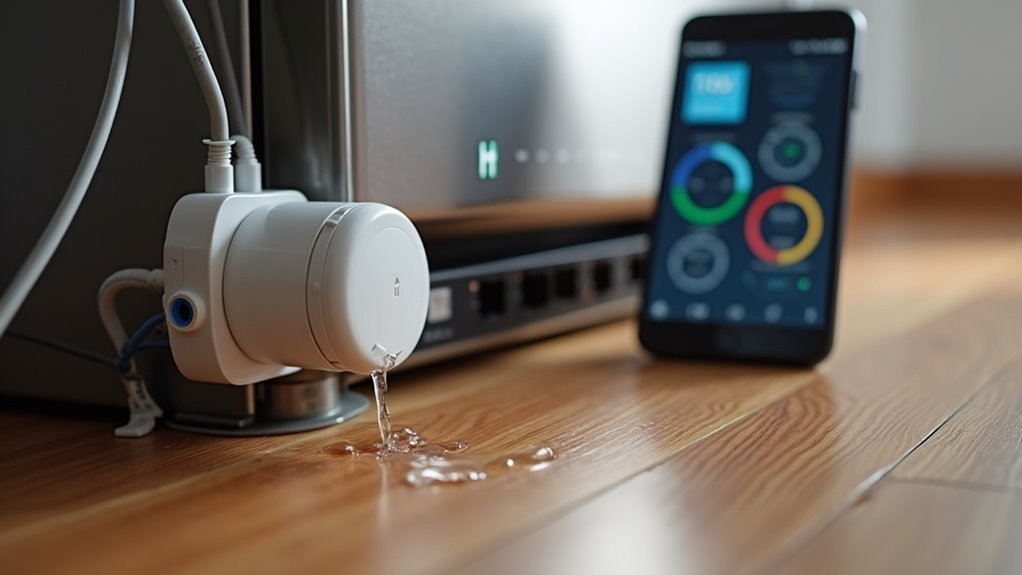
You’ve probably experienced that sinking feeling when you discover water damage that’s been happening for days or weeks without your knowledge. Traditional water leak sensors often trap you into expensive proprietary ecosystems or leave you with limited notification options when disaster strikes. MQTT changes this equation entirely by transforming your basic leak detection into a powerful, interconnected system that works exactly how you need it to—but there’s much more to contemplate.
Real-Time Water Detection Alerts Across Multiple Platforms

When water starts pooling where it shouldn’t, you need to know immediately—not hours later when the damage is already done. MQTT enables your water leak sensor to transmit data instantly, ensuring you receive alerts the moment moisture is detected. This real-time communication eliminates dangerous delays that could cost you thousands in repairs.
What makes MQTT particularly powerful is its ability to integrate with multiple smart home platforms simultaneously. Your water leak sensor can send notifications to your smartphone, tablet, smart display, and any other connected device you own.
Whether you’re at work, traveling, or simply in another room, you’ll receive immediate alerts across all your devices, ensuring you never miss a critical water detection event that requires urgent attention.
Seamless Integration With Home Assistant and Smart Home Systems
You’ll find that MQTT’s lightweight protocol makes connecting water leak sensors to Home Assistant remarkably straightforward, requiring minimal configuration to establish reliable communication between devices.
The protocol’s standardized messaging format guarantees your sensors work seamlessly across different smart home platforms, whether you’re using Samsung SmartThings, Hubitat, or OpenHAB alongside Home Assistant.
This multi-platform compatibility means you won’t face vendor lock-in issues and can easily expand your water monitoring system with sensors from various manufacturers.
MQTT Protocol Benefits
Efficiency defines MQTT’s core advantage for water leak sensor integration with Home Assistant and smart home systems. You’ll benefit from its lightweight messaging protocol that consumes minimal bandwidth and energy while ensuring reliable data transmission.
The publish/subscribe model lets you connect multiple sensors simultaneously, creating thorough leak monitoring throughout your home without overwhelming your network.
MQTT’s seamless compatibility with smart home technology enables automated responses when leaks occur. You can configure automatic water valve shutoffs, trigger emergency alarms, or send instant notifications to your devices.
Remote access capabilities allow you to monitor sensor data from anywhere, while the protocol’s versatility supports integration with various platforms beyond Home Assistant. This flexibility enhances your overall home automation system’s effectiveness and responsiveness.
Multi-Platform Device Compatibility
MQTT’s true strength emerges through its universal compatibility with diverse smart home platforms and devices.
You’ll discover that connecting your water leak sensors through MQTT eliminates vendor lock-in, allowing you to choose from various manufacturers like Aqara, WOLF Guard, or DIY solutions while maintaining consistent communication across your entire ecosystem.
Home Assistant integration becomes effortless when you use platforms like OpenMQTTGateway, which manages multiple sensors without requiring proprietary hubs.
You can create sophisticated automation rules that trigger instant mobile alerts or automatically shut off water supply when a water leak is detected.
This flexibility means you’re not restricted to single-brand ecosystems, giving you freedom to expand and customize your leak detection network using the best devices available.
Cost-Effective Alternative to Proprietary Hub Requirements
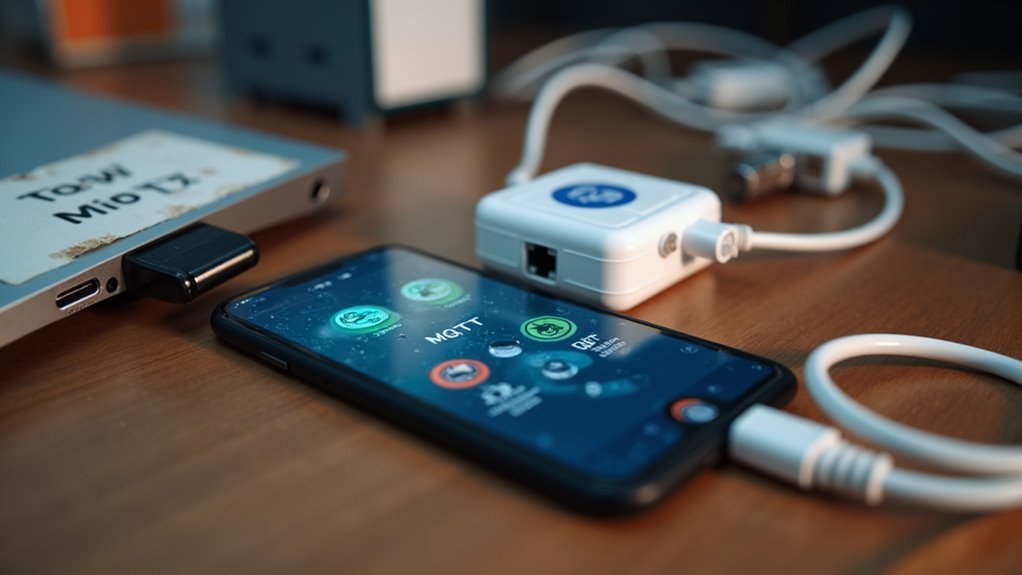
You’ll save money by choosing MQTT water leak sensors over proprietary alternatives that require expensive hubs.
These open protocol sensors connect directly to your existing network, cutting out the middleman costs that manufacturers typically charge for their specialized hardware.
You’re not locked into a single brand’s ecosystem, which means you can shop for the best sensor prices without worrying about compatibility fees.
Eliminate Hub Dependency
While proprietary hubs can cost hundreds of dollars and lock you into specific ecosystems, connecting water leak sensors directly to MQTT eliminates these expensive middlemen entirely.
You’ll save money by avoiding costly hub purchases while gaining complete freedom in your smart water monitoring setup. MQTT’s open protocol lets you choose sensors based on performance and price, not manufacturer restrictions.
You can mix 433MHz, Zigbee, and WiFi sensors without worrying about compatibility issues.
This flexibility means you’re not trapped in one vendor’s ecosystem if they discontinue products or raise prices. Your sensors communicate directly with your chosen platform, whether it’s Home Assistant, OpenHAB, or custom solutions.
You maintain full control over your data and system configuration without depending on proprietary hardware.
Reduce Setup Costs
Since proprietary hubs often cost $100-300 or more, switching to MQTT-compatible water leak sensors delivers immediate savings that make a real difference in your budget.
You’ll find excellent options like the WOLF Guard Water Leak sensor for just $10, providing reliable protection without breaking the bank. If you’re technically inclined, DIY solutions using ESP8266 microcontrollers cost around $5 per sensor, dramatically reducing your investment.
You’re not limited to single-brand ecosystems either. MQTT lets you mix sensors from different manufacturers, choosing the most cost-effective option for each location.
When water leaks threaten your property, you need affordable detection that doesn’t compromise quality. Open-source platforms like Home Assistant handle automation and alerts without expensive licensing fees, maximizing your protection while minimizing costs.
Open Protocol Benefits
When you choose MQTT for your water leak sensors, you’re embracing an open protocol that eliminates vendor lock-in and expensive proprietary requirements.
Unlike closed systems that force you into specific ecosystems, MQTT gives you the freedom to select any compatible water sensor from various manufacturers. You’ll avoid costly proprietary hubs and their recurring subscription fees that drain your budget over time.
This open standard means you can integrate sensors from different brands into one unified system, creating a customized solution that fits your exact needs.
You’ll also benefit from a larger community of developers and manufacturers supporting MQTT, ensuring continued innovation and competitive pricing. Your investment remains protected as you can easily upgrade or replace components without starting from scratch.
Enhanced Automation Capabilities for Emergency Response

Once you’ve integrated water leak sensors with MQTT, your emergency response capabilities expand dramatically beyond simple detection.
Your leak detectors become part of a thorough automation network that reacts instantly when water threats emerge.
You can configure automated responses that trigger multiple protective actions simultaneously. When a sensor detects moisture, your system can immediately send smartphone notifications, activate audible alarms, and automatically shut off main water valves to prevent flooding.
These coordinated responses happen within seconds, minimizing potential damage.
Instant automated responses within seconds dramatically reduce water damage potential when leak sensors trigger emergency protocols.
MQTT’s lightweight messaging enables your leak detectors to communicate seamlessly with other smart devices.
You can program lighting systems to illuminate affected areas and HVAC systems to increase ventilation, reducing humidity and moisture buildup.
This multi-device coordination transforms basic leak detection into an intelligent emergency management system.
Remote Monitoring and Notifications When Away From Home
While you’re traveling for work or enjoying a vacation, MQTT-connected water leak sensors maintain constant vigilance over your home’s vulnerable areas.
Remote monitoring through MQTT means you’ll receive immediate alerts on your mobile device the moment water’s detected, regardless of your distance from home. Smart home platforms like Home Assistant seamlessly integrate with MQTT systems, delivering notifications that cut through the noise when emergencies arise.
You don’t need to worry about costly surprises when you return. MQTT enables you to monitor multiple sensors from a centralized system, giving you complete oversight of your home’s protection network.
You can check sensor status, troubleshoot issues, and verify everything’s functioning properly—all from wherever life takes you, ensuring peace of mind throughout your travels.
Multiple Sensor Management Through Single MQTT Gateway
As your home’s water leak protection network grows, managing multiple sensors through a single MQTT gateway transforms what could become a complex web of devices into a streamlined monitoring system.
You’ll connect various brands and types of multiple water leak detectors into one cohesive platform, eliminating the need for separate gateways or hubs.
This centralized approach cuts costs considerably while reducing space requirements in your setup. You’ll access all sensor data through one interface, making automation creation and notification management straightforward.
One centralized interface streamlines automation setup and cuts hardware costs while simplifying water leak monitoring across your entire property.
When you need to expand your protection coverage, MQTT’s flexibility allows easy scalability—you can add sensors without major configuration changes or hardware upgrades.
The gateway handles numerous sensors simultaneously, simplifying your home automation architecture while maintaining reliable, real-time monitoring across your entire property.
Battery Life Optimization With Efficient Communication Protocol
When you deploy MQTT for your water leak sensors, you’re implementing one of the most battery-efficient communication protocols available for IoT devices. This lightweight protocol enables your sensors to remain in sleep mode most of the time, only transmitting small messages when leaks occur.
You’ll benefit from MQTT’s publish/subscribe model, which eliminates continuous polling and reduces unnecessary battery drain through efficient communication with your central server.
The protocol’s Quality of Service levels guarantee reliable message delivery, preventing repeated transmissions that waste power.
For battery life optimization, MQTT proves exceptionally effective – sensors like the Aqara Water Leak Sensor demonstrate this efficiency by operating up to two years on a single battery, making MQTT ideal for long-term, maintenance-free water monitoring systems.
Customizable Alert Thresholds and Response Actions
Beyond basic detection capabilities, MQTT-enabled water leak sensors offer sophisticated customization options that let you fine-tune alert thresholds and automate response actions based on your specific needs.
You can set customizable alert thresholds based on water amount detected, distinguishing between minor spills and major leaks. This prevents false alarms from small splashes while ensuring serious threats trigger immediate responses.
When thresholds are exceeded, automated notifications instantly reach your mobile devices. You’ll receive persistent alerts until acknowledged, with notification frequency adjusting based on severity levels you’ve configured.
Integration with smart home systems enables automated responses like shutting off main water supplies or activating smart valves. You can tailor these preferences completely—creating a personalized protection system that responds exactly how you want when water damage threatens your property.
Smart Valve Integration for Automatic Water Shutoff
Smart valve integration transforms your water leak protection system from reactive to proactive by automatically stopping water flow the moment sensors detect moisture.
When you connect water leak sensors to MQTT and pair them with smart valves, you create an automated emergency response that can prevent catastrophic water damage.
You can program smart valves to instantly shut off your main water supply upon receiving signals from leak sensors.
Using platforms like Home Assistant, you’ll set automation rules that trigger valve closure when sensor states change to “wet.”
This smart valve integration guarantees immediate action without requiring your physical presence.
The result? You’ll dramatically reduce repair costs by stopping leaks before they cause extensive damage, while MQTT compatibility assures seamless integration across various devices and platforms.
Platform-Independent Compatibility for Future System Changes
You’ll appreciate MQTT’s platform-independent nature when you decide to upgrade or change your home automation system down the road.
Your water leak sensors won’t become obsolete because MQTT isn’t tied to any specific vendor or platform.
This flexibility means you can migrate from one system to another without replacing your existing sensors or losing functionality.
Avoiding Vendor Lock-in
When you choose MQTT for your water leak sensors, you’re making a strategic decision that prevents vendor lock-in and preserves your freedom to evolve your smart home system. You’ll avoid being trapped by proprietary protocols that force expensive upgrades or complete system replacements when manufacturers discontinue products or change their platforms.
| Vendor Lock-in Scenario | MQTT Freedom |
|---|---|
| Forced costly upgrades | Choose any compatible device |
| Limited sensor options | Access diverse manufacturer ecosystem |
| System abandonment risk | Future-proof investment protection |
MQTT’s open standard means you can mix sensors from different manufacturers, preventing water damage while maintaining flexibility. You’re not betting your home’s protection on a single company’s longevity. This independence guarantees your investment remains valuable regardless of market changes or vendor decisions.
Seamless System Migration
Because MQTT operates as a platform-agnostic protocol, your water leak sensors won’t trap you within a single home automation ecosystem. When you decide to upgrade or switch platforms, your sensors maintain their functionality without requiring complete replacement or extensive reconfiguration.
This seamless system migration capability protects your investment while providing peace of mind about future technology decisions. You’ll retain access to your sensor data, automation rules, and monitoring capabilities regardless of which platform you choose next. The standardized MQTT communication guarantees your devices continue working efficiently across different systems.
Your centralized sensor management remains intact during changes, allowing you to monitor and control everything from a single interface. This flexibility eliminates the anxiety of being locked into outdated technology and empowers you to evolve your smart home system as new solutions emerge.
Reduced False Alarms With Advanced Message Filtering
False alarms from water leak sensors can frustrate homeowners and lead to alarm fatigue, but MQTT’s advanced message filtering capabilities offer a sophisticated solution to this common problem.
You’ll benefit from sophisticated filtering that distinguishes between genuine leaks and temporary moisture events.
MQTT brokers provide three key filtering advantages:
MQTT brokers deliver three essential filtering advantages that dramatically reduce false alarms and enhance water leak detection reliability.
- Threshold Configuration – You can set specific moisture levels that trigger alerts, preventing notifications from minor humidity fluctuations.
- Duration-Based Filtering – Your water detector won’t send alerts unless wet conditions persist beyond predetermined timeframes.
- Machine Learning Integration – The system learns from historical data to improve accuracy and reduce unnecessary notifications.
MQTT’s lightweight protocol enables real-time adjustments to filtering rules, allowing you to categorize alerts by severity and prioritize critical situations effectively.
Scalable Network Architecture for Large Property Coverage
You’ll find that MQTT’s lightweight architecture lets you manage multiple water leak sensors across different zones without straining your network infrastructure.
Your centralized data collection system can effortlessly handle dozens or even hundreds of sensors, each reporting their status to a single broker that coordinates all communications.
This scalable approach means you can start with a few critical areas and expand coverage throughout your entire property without redesigning your monitoring network.
Multi-Zone Sensor Management
When you’re managing water leak detection across multiple zones of a large property, MQTT’s scalable network architecture becomes essential for maintaining reliable communication between numerous sensors.
You can assign unique identifiers to each sensor through your MQTT broker, creating organized tracking systems that monitor everything from basement utility rooms to upper floor bathrooms and your main water line connections.
Strategic multi-zone management involves:
- Zone-based sensor grouping – Organize sensors by building sections or risk levels
- Centralized monitoring dashboard – View all zones simultaneously through platforms like Home Assistant
- Automated response protocols – Configure zone-specific actions when leaks occur
This approach guarantees you’ll detect problems quickly across expansive properties while maintaining system performance, even when managing dozens of sensors simultaneously.
Centralized Data Collection
While traditional water monitoring systems require individual connections to each sensor, MQTT transforms your approach by funneling all sensor data through a single, centralized collection point. This architecture eliminates the complexity of managing multiple communication pathways across your property.
Your centralized system processes data from basement sensors detecting water pooling, bathroom monitors tracking humidity spikes, and outdoor devices measuring ground saturation levels. MQTT’s lightweight protocol guarantees efficient bandwidth usage while maintaining reliable communication across extensive coverage areas.
| Property Zone | Sensor Type | Data Frequency |
|---|---|---|
| Basement | Flood Detection | Every 30 seconds |
| Kitchen | Leak Monitoring | Continuous |
| Outdoor | Ground Moisture | Every 5 minutes |
| HVAC System | Condensation | Every 2 minutes |
This centralized approach seamlessly integrates with your existing home automation systems, enabling immediate automated responses when leaks occur.
Event Logging and Historical Data Analysis
Because water leak sensors connected to MQTT capture detailed timestamps and sensor states during each detection event, you’ll gain extensive real-time logging capabilities that transform how you monitor and respond to potential water damage.
This all-encompassing event tracking creates valuable historical datasets that reveal vital patterns about when and where water might leak in your home.
Historical data analysis delivers three key advantages:
- Pattern Recognition – Identify recurring leak locations and timing patterns to guide preventive maintenance
- Documentation Support – Generate detailed reports for insurance claims with timestamped incident records
- Maintenance Planning – Make data-driven decisions about plumbing inspections and component replacements based on leak frequency trends
You’ll discover specific areas prone to problems and optimize your home maintenance schedule using concrete evidence rather than guesswork.
Integration With Professional Monitoring Services
As MQTT-enabled water leak sensors connect seamlessly with professional monitoring services, you’ll achieve enterprise-level protection that operates around the clock without requiring your constant attention.
These services receive real-time data transmission through MQTT’s lightweight protocol, ensuring immediate response during emergencies without consuming excessive bandwidth.
When a water leak occurs, automated alerts instantly notify both you and service providers simultaneously. This dual notification system eliminates delays that could worsen damage.
Professional monitoring teams provide 24/7 surveillance, catching issues you might miss while sleeping or traveling.
MQTT’s compatibility with various smart home platforms enhances integration reliability with existing monitoring services.
You’ll benefit from proactive monitoring that reduces significant water damage risks through immediate professional intervention and coordinated emergency response protocols.
Frequently Asked Questions
What Is the Purpose of a Water Leak Detection System?
A water leak detection system protects your property by monitoring moisture levels and alerting you immediately when leaks occur. You’ll prevent costly water damage, avoid expensive repairs, and maintain your home’s safety through early detection.
What Is the Purpose of the Water Sensor?
The water sensor’s purpose is detecting water presence in areas where it shouldn’t exist. You’ll receive immediate alerts when leaks occur, allowing you to take quick action before water causes expensive damage to your property.
Are Water Leak Sensors Worth It?
You’ll find water leak sensors worthwhile since they prevent thousands in damage costs. They’re low-maintenance with two-year battery life, provide early detection, and you can place them easily in high-risk areas.
What Is the Use of Aqara Water Leak Sensor?
You’ll use Aqara water leak sensors to detect flooding early around appliances, pipes, and basements. They’ll send instant alerts to your phone, preventing costly water damage through automated home monitoring systems.



Leave a Reply