You’ve probably noticed how expensive professional multi-zone audio installations can be, often running thousands of dollars for what seems like basic functionality. Creating your own system isn’t just about saving money—though you’ll cut costs by 60-70%. It’s about gaining complete control over every aspect of your home’s audio experience, from speaker placement to sound quality. But there’s a catch that most DIY enthusiasts don’t discover until they’re halfway through installation.
Understanding Multi-Zone Audio Technology and Its Applications
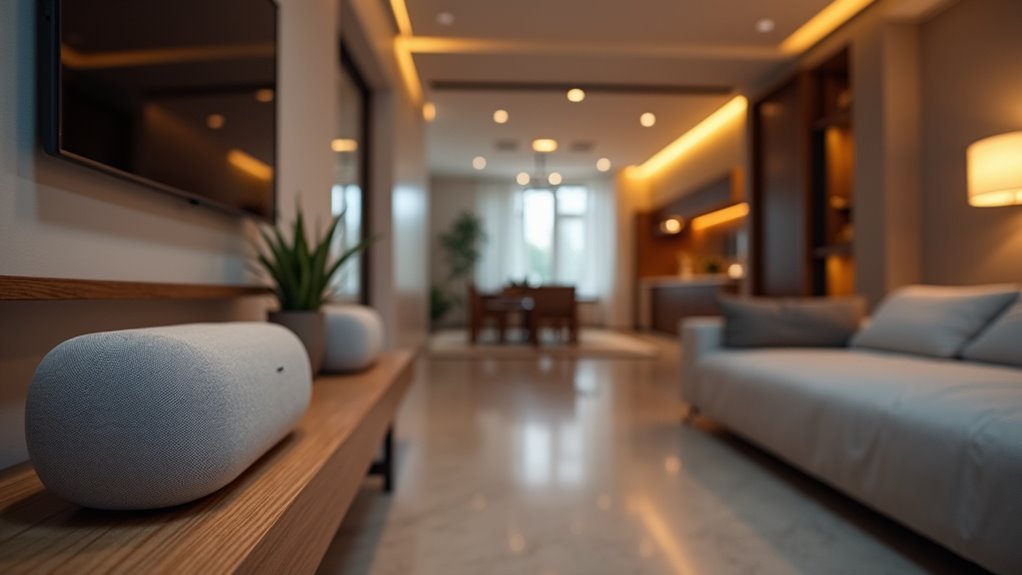
Multi-zone audio systems revolutionize how you experience sound throughout your home by allowing independent control of audio playback in different rooms or areas.
This technology enables you to create personalized sound experiences tailored to your preferences while supporting various audio sources simultaneously. You can enjoy different music or content in each zone, maximizing flexibility in your home entertainment setup.
Multi-zone configurations work through wired or wireless audio connections, adapting to your home’s layout and installation needs.
Advanced amplifiers and receivers integrate seamlessly with mobile apps, giving you convenient control over music streaming and audio settings from anywhere in your house.
You can even create sub-zones within larger areas, allowing efficient management of audio levels and preferences in adjacent spaces for enhanced customization.
Cost Savings Through DIY Installation and Equipment Selection
You’ll save hundreds or even thousands of dollars by skipping professional installation fees that typically range from $500 to over $2,000.
Instead of purchasing expensive preconfigured systems from premium brands, you can build your own setup using budget-friendly equipment like DTS PlayFi or Dayton Audio’s HiFly ecosystem.
This DIY approach lets you customize your multi-zone audio system to match your specific needs while keeping costs under control.
Skip Professional Installation
While professional installation might seem like the safer route, tackling a multi-zone audio setup yourself can slash your project costs by $500 to $2,000.
Modern wireless systems like Sonos and HEOS feature plug-and-play technology that eliminates the need for specialized skills or tools. You’ll find their user-friendly mobile apps make configuration straightforward, guiding you through each setup step without technical expertise.
For your multi-room audio system, you can choose between wireless convenience or wired reliability using Cat6 cables.
DIY installation gives you complete control over placement and timing while avoiding scheduling hassles with contractors. Budget-conscious homeowners can integrate cost-effective options like Amazon Echo Dots, creating an impressive audio network that rivals professionally installed systems at a fraction of the cost.
Choose Budget Equipment
Three key equipment categories can greatly reduce your multi-zone audio costs without sacrificing quality.
First, prioritize budget equipment like Dayton Audio HiFly ecosystem or Amazon Echo Dots for effective audio distribution across multiple zones. These options provide solid performance at a fraction of premium costs.
Second, invest in affordable multi-zone systems from proven brands like Denon HEOS and Yamaha MusicCast. These receivers integrate seamlessly with existing setups while maintaining flexibility.
Third, implement cost-effective control solutions using in-wall speaker volume controls and A/B selector switches. You’ll manage multiple zones without purchasing additional amplifiers, greatly reducing equipment expenses.
Research community feedback and user experiences to identify the best budget options for your specific audio requirements, ensuring maximum savings and satisfaction.
Complete Control Over Audio Quality and System Performance
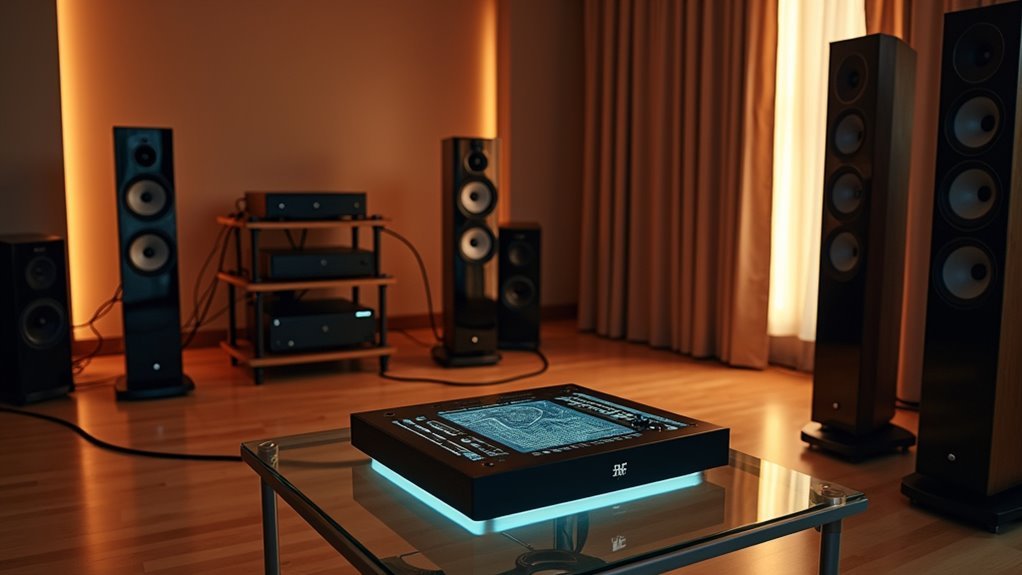
You’ll achieve superior audio performance by managing your amplifier’s power distribution across zones, ensuring each room receives ideal wattage for clear, distortion-free sound.
Your speaker configuration becomes completely flexible, allowing you to mix and match different driver types, impedances, and placement strategies that complement each room’s acoustics.
You’re no longer limited to single audio sources, as your system can simultaneously stream different content to each zone while maintaining independent control over format compatibility and playback quality.
Amplifier Power Management
Although many audio enthusiasts focus solely on speaker selection, mastering amplifier power management forms the foundation of any successful multi-zone audio system.
You’ll need to select amplifiers with adequate wattage for each zone, ensuring consistent audio levels across varying room sizes and speaker types without sacrificing clarity.
Proper amplifier power management prevents distortion and overloading that can degrade performance throughout your multi-zone home.
You can configure your audio systems to support different sources simultaneously, allowing diverse listening preferences across rooms without compromising quality.
Implement independent volume controls for each zone, enabling you to tailor sound levels based on personal preferences and room acoustics.
Regular monitoring and adjustment of amplifier settings, including gain and equalization, considerably improves audio fidelity and system reliability for long-term enjoyment.
Speaker Configuration Flexibility
When designing your multi-zone audio system, speaker configuration flexibility empowers you to customize each zone’s acoustic performance according to its unique requirements and intended use.
You’ll select ideal speaker types—whether in-ceiling for seamless integration, floor-standing for powerful sound, or outdoor speakers for weather resistance—based on each room’s acoustics and purpose.
Your multi-room audio system benefits from independent amplifiers and receivers that let you manage audio quality separately for each zone.
You’ll match high-fidelity components to your listening preferences, creating tailored sound experiences throughout your home.
Configurable volume controls provide independent adjustments for different activities, while zone-combining capabilities offer synchronized playbook in shared spaces or diverse audio experiences in separate areas, maximizing your system’s versatility.
Audio Source Independence
Beyond speaker placement and configuration, audio source independence gives you complete autonomy over what plays in each zone and how it sounds. Custom multi-zone setups let you stream Spotify in your living room while simultaneously playing podcasts in the kitchen. You’re not restricted to single-source limitations that plague commercial systems.
| Zone | Audio Source | Quality Setting |
|---|---|---|
| Living Room | Spotify Premium | High-fidelity |
| Kitchen | Podcast App | Standard |
| Bedroom | Local Files | Lossless |
| Office | Internet Radio | Compressed |
| Patio | Bluetooth Device | Variable |
This multi-room music flexibility means each family member can enjoy their preferred content without compromise. Audio source independence also allows you to prioritize sound quality where it matters most, using premium amplifiers for critical listening areas while choosing economical options elsewhere.
Customizing Speaker Placement for Your Home Layout
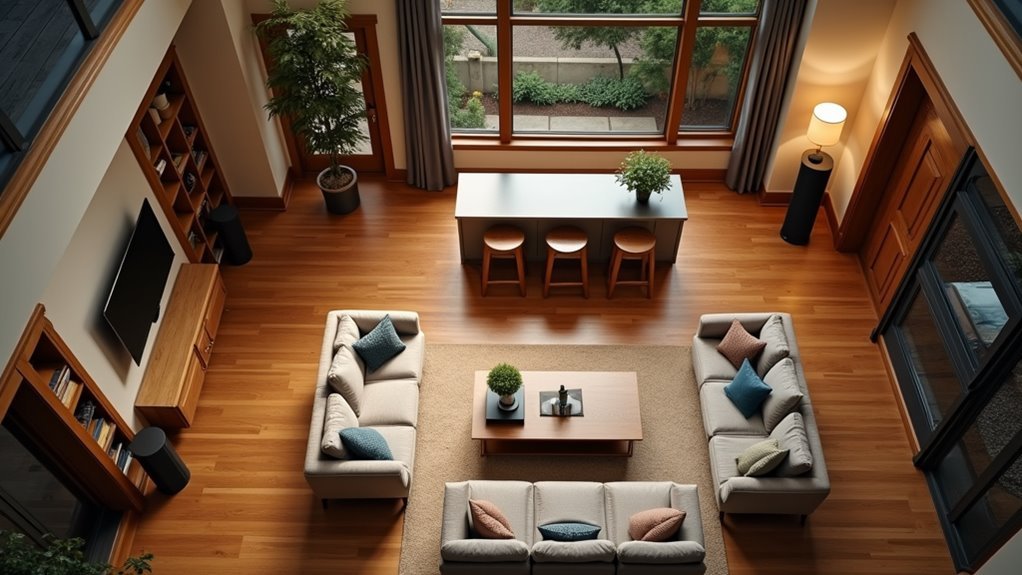
Since every home presents unique architectural challenges and acoustic properties, you’ll need to strategically position speakers throughout your space to maximize sound quality and coverage.
Customizing speaker placement requires careful consideration of room dimensions, furniture placement, and daily usage patterns to achieve peak audio clarity.
Your speaker placement strategy should include:
- Living room floor-standing speakers positioned at ear level flanking your main seating area for immersive entertainment
- Kitchen in-ceiling speakers discretely installed above work areas for hands-free music during meal preparation
- Bedroom bookshelf speakers mounted on nightstands or wall brackets for intimate listening sessions
- Outdoor patio speakers weatherproofed and angled toward seating areas for backyard gatherings
Zone control technology enables you to tailor each area’s audio experience while maintaining seamless integration throughout your home’s unique layout.
Flexibility to Choose Between Wired and Wireless Solutions
While speaker placement forms the foundation of your multi-zone setup, you’ll also need to decide between wired and wireless connectivity solutions that match your home’s infrastructure and installation capabilities.
Wired speakers using Cat6 cables deliver consistent audio quality and rock-solid stability, making them perfect for larger homes or areas with spotty Wi-Fi. However, they often require professional installation, increasing upfront costs.
Wireless solutions like Sonos or HEOS offer incredible flexibility and easy installation without extensive cabling. You can start small and expand your multi-zone audio system gradually as your budget allows.
Both options support simultaneous playback across multiple zones, so your choice ultimately depends on your specific installation preferences, space constraints, and desired audio quality standards.
Building a Scalable System That Grows With Your Needs
Regardless of whether you choose wired or wireless connectivity, smart planning from the start guarantees your multi-zone audio system can expand alongside your changing needs and budget.
A scalable multi-zone audio setup lets you begin with basic components and gradually add speakers or zones without major overhauls.
By selecting modular components like Sonos or Denon HEOS, you’ll ascertain seamless integration of new devices into your existing network.
Modular audio systems from trusted brands ensure effortless expansion as your entertainment needs grow over time.
Consider these expansion strategies:
- Start small – Begin with 2-3 zones in frequently used areas
- Choose compatible brands – Select equipment designed to work together
- Plan your wiring routes – Even wireless systems benefit from strategic placement
- Invest in quality hubs – Ascertain your centralized control system can handle future additions
This approach saves money while avoiding compatibility headaches down the road.
Integrating Multiple Music Sources and Streaming Services
Today’s multi-zone audio systems excel at bringing together dozens of music sources under one unified control interface.
You’ll access streaming services like Spotify, Tidal, and Amazon Music HD directly through modern multi-room platforms such as HEOS or Sonos. These network-ready devices eliminate the need for physical media while providing simultaneous playback of different content across zones.
Your centralized control app becomes the command center for managing diverse audio sources throughout your home. You can create customized playlists for specific rooms or occasions, switching between music services effortlessly.
Advanced receivers often include built-in voice assistant compatibility, letting you control playback through simple voice commands. This integration transforms how you experience audio, offering unprecedented flexibility in delivering personalized soundtracks to every corner of your living space.
Creating Independent Volume Control for Each Zone
You’ll want zone-specific volume controls that let you adjust audio levels independently in each room without affecting other areas.
This independent audio management becomes essential when different zones have varying room sizes, acoustic properties, or user preferences for sound levels.
Setting up separate volume controls guarantees everyone can enjoy their ideal listening experience while maintaining complete control over their designated space.
Zone-Specific Volume Controls
While multi-zone audio systems deliver sound throughout your home, zone-specific volume controls guarantee each room maintains its ideal audio level without affecting others.
You’ll achieve this independent volume control through in-wall controls or smartphone apps, eliminating trips to your main receiver. This setup prevents sound overload in smaller rooms while reducing distortion for enhanced audio quality.
Your multi-zone receivers often include built-in volume settings, letting you adjust each zone’s output directly through the device interface or mobile app.
Here’s what you can implement:
- In-wall volume controls for permanent, accessible adjustment panels
- Smartphone app management for wireless control from anywhere
- Separate amplifiers per zone ensuring excellent power distribution
- Built-in receiver settings for centralized volume management
Independent Audio Management
Independent audio management transforms your multi-zone system into a personalized entertainment hub where each room operates as its own distinct audio environment.
You’ll control volume and audio sources separately for each zone, ensuring tailored listening experiences that match personal preferences and activities throughout your home.
Multi-zone receivers with built-in zone controls enable simultaneous playback of different music without interference, accommodating diverse household tastes.
You can access convenient volume management through in-wall controls or app-based adjustments, letting you mute or modify sound levels without accessing main equipment.
Multi-room audio systems like Sonos or Denon HEOS offer dedicated apps for independent audio management of each zone.
Proper system design with compatible equipment prevents amplifier overloading, ensuring your sound systems deliver reliable performance and consistent quality across all zones.
Selecting the Right Receivers and Amplifiers for Your Setup
Since the receiver serves as the central hub of your multi-zone audio system, choosing one with the right features will determine how effectively you can distribute sound throughout your home.
Multi-zone receivers with 9- or 11-channel outputs provide the flexibility you need for independent audio sources across different zones.
When selecting receivers and amplifiers, focus on these key features:
- Zone 2 speaker outputs and preamp outputs for additional zone flexibility
- Smartphone app compatibility for seamless control across all rooms
- Proper impedance handling to support multiple 8-ohm speakers without overloading
- Powered outputs for extra zones to simplify setup and eliminate extra amplifiers
These features guarantee your multi-zone system delivers peak performance while maintaining easy operation throughout your entire home.
Planning for Future Technology Upgrades and Expansion
When building your multi-zone audio system, you’ll want to choose modular components that can grow with your needs and accommodate new technologies.
Focus on selecting equipment that adheres to current compatibility standards like Wi-Fi 6, Bluetooth 5.0, and supports multiple streaming protocols to guarantee seamless integration with future devices.
Invest in scalable infrastructure from the start—including robust wiring and network capabilities—so you won’t need costly overhauls when expanding your system or upgrading to newer audio technologies.
Modular System Design Benefits
As technology continues to evolve at a rapid pace, you’ll find that investing in a modular multi-zone audio system offers significant advantages over traditional all-in-one solutions.
This modular system design provides unmatched flexibility, allowing you to build your sound system according to your specific needs and budget constraints.
Here are four key benefits you’ll experience:
- Gradual expansion – Start with basic components and add premium equipment as your budget allows.
- Future-proof compatibility – Seamlessly integrate new streaming services and audio formats with existing hardware.
- Easy reconfiguration – Adapt speaker zones and layouts when your home setup changes.
- Cost-effective upgrades – Replace individual components rather than purchasing entirely new systems.
This approach maximizes your investment’s longevity while ensuring your audio setup remains technologically current and personally satisfying.
Technology Compatibility Standards
While modular design provides the foundation for a flexible audio system, selecting components with robust technology compatibility standards becomes equally essential for long-term success.
You’ll want amplifiers and receivers supporting HEOS, AirPlay 2, DTS PlayFi, and Chromecast to guarantee your multi-zone audio setup integrates seamlessly with current and future devices. These standards enhance versatility while accommodating new streaming services as they emerge.
Don’t overlook your WiFi network’s role in system performance. Installing a wired Cat6 backbone provides reliable connectivity, minimizing latency while maximizing audio quality across zones.
Choose equipment offering firmware updates to maintain compatibility with emerging technologies and protocols. Planning for modular expansions by selecting systems that easily accommodate additional zones helps your setup evolve with changing preferences and technological advances.
Scalable Infrastructure Investment
Since technology evolves rapidly, you’ll benefit from treating your multi-zone audio investment as a long-term infrastructure project rather than a one-time purchase.
A scalable multi-zone audio setup lets you expand gradually without replacing existing components, maximizing your investment value.
Planning ahead guarantees your system adapts to emerging audio standards:
- Install Cat6 cables for superior wired connection quality that handles future bandwidth demands from advanced streaming technologies.
- Choose modular designs from brands like Sonos and Denon HEOS that support seamless zone additions.
- Implement centralized control systems with mobile app integration for flexible multi-zone management.
- Select compatible components that work with developing audio standards, extending your system’s lifespan.
This strategic approach protects your investment while maintaining cutting-edge performance.
Troubleshooting Common Multi-Zone Audio Installation Challenges
Even with careful planning, multi-zone audio installations can present frustrating challenges that’ll test your patience and troubleshooting skills. You’ll encounter connectivity problems, audio dropouts, and sync issues that prevent your zones from functioning properly.
| Problem | Cause | Solution |
|---|---|---|
| Missing audio in zones | Incompatible components | Check compatibility and configuration |
| Connectivity issues | Outdated firmware | Update all device firmware regularly |
| Audio routing problems | Incorrect app settings | Use smartphone app for troubleshooting |
| Sound dropouts | Faulty wiring | Inspect and secure all connections |
When you can’t play different music across zones simultaneously or experience sync problems, you’ll need a dedicated multi-zone amplifier. Your audio setup requires proper troubleshooting techniques to identify root causes quickly and implement effective solutions.
Optimizing Your Home Network for Seamless Audio Streaming
Your multi-zone audio system’s performance depends heavily on the strength and reliability of your home network infrastructure. Without proper enhancement, you’ll experience frustrating dropouts, buffering delays, and inconsistent audio quality across different zones.
A robust Wi-Fi connection forms the backbone of seamless audio streaming throughout your home.
Here’s how to improve your network for multi-zone excellence:
- Install a mesh Wi-Fi system – Eliminate dead spots and guarantee consistent coverage in every room where you’ve placed speakers.
- Use Cat6 cables for wired connections – Connect key components with high-bandwidth cables for superior performance and stability.
- Enable Quality of Service (QoS) settings – Prioritize audio streaming traffic over other network activities to prevent interruptions.
- Update network hardware regularly – Keep firmware current to maintain peak performance and prevent connectivity issues.
Comparing Popular Multi-Zone Audio Brands and Systems
Once you’ve established a solid network foundation, selecting the right multi-zone audio system becomes your next priority.
Sonos leads with user-friendly integration, seamlessly connecting music services while delivering high-quality audio throughout your home with minimal setup effort.
Denon HEOS provides robust multi-room speaker capabilities, letting you play different sources simultaneously across zones through its dedicated app management system.
Yamaha MusicCast excels in wireless streaming, allowing multiple device connections for customized audio experiences in every room.
Paradigm DTS PlayFi caters to audiophiles with high-resolution streaming across wired and wireless setups.
For budget-conscious users, Dayton Audio’s HiFly ecosystem offers essential multi-zone features without breaking the bank.
Each system integrates well with existing home theater setups, ensuring your speakers deliver peak performance regardless of your chosen platform.
Maximizing Property Value Through Professional-Grade Audio Distribution
While selecting the perfect multi-zone system matters, the real financial payoff comes from professional installation that transforms your audio investment into tangible property value.
Professional-grade audio distribution doesn’t just enhance your daily experience—it’s a strategic investment that can increase your home’s market value by 5-10%.
Your multi-room audio system creates measurable returns through:
- Premium positioning – Your home stands out in competitive markets with luxury entertainment features
- Faster sales cycles – Tech-savvy buyers gravitate toward homes with integrated smart systems
- Higher sale prices – Professional installations command premium pricing from discerning buyers
- Enhanced functionality – Entertainment-ready spaces appeal to buyers who prioritize gatherings and social hosting
You’re not just installing speakers—you’re creating a sophisticated ecosystem that differentiates your property and attracts buyers seeking modern convenience.
Frequently Asked Questions
What Does a Multi Zone Receiver Do?
A multi-zone receiver distributes audio signals to multiple rooms, letting you play different sources in each area. You’ll control volume, music selection, and settings independently while enjoying synchronized or separate playback throughout your home.
What Is a Multi-Zone Audio System?
A multi-zone audio system lets you control different music in separate areas of your home independently. You’ll manage each zone through a smartphone app, customizing audio experiences across multiple rooms simultaneously.
What Do I Need for Multi-Room Audio?
You’ll need a reliable Wi-Fi connection, network-ready speakers or receivers, a smartphone app for control, Cat6 cables for wired zones, and multi-zone amplifiers depending on your setup’s complexity.
How Does Multiroom Work?
You’ll connect speakers throughout your home using wired or wireless connections. A central hub distributes audio signals to different zones, while smartphone apps let you control what plays where independently.