You’ve probably dreamed of walking through your home with music that follows you seamlessly from room to room, but transforming that vision into reality requires more than just buying expensive speakers and hoping for the best. The difference between a mediocre setup that frustrates you daily and a professional-grade system that becomes an integral part of your lifestyle lies in understanding the critical decisions you’ll face before purchasing a single component.
Understanding Multi-Room Audio System Fundamentals

The foundation of any multi-room audio system lies in its ability to distribute music seamlessly throughout your home while giving you complete control over what plays where.
You’ll manage everything through dedicated smartphone or tablet apps connected to your wireless network, letting you stream different tracks to each room or sync the entire house.
Your multiroom audio system operates through either closed or open architectures. Closed systems use speakers from one manufacturer with proprietary apps, while open systems integrate various brands through protocols like AirPlay or Google Cast.
When evaluating options, you’ll need to assess sound quality requirements for each room size, compatibility with your preferred audio sources, and whether voice control integration matters.
This seamless integration transforms how you experience music throughout your living space.
Assessing Your Home’s Audio Requirements and Layout
Before selecting equipment and technology, you’ll need to map out your home’s unique audio landscape to guarantee peak performance from your multi-room system. Start by evaluating each room’s dimensions and layout to determine ideal speaker placement that guarantees even sound distribution without obstacles from furniture or architectural features.
Next, analyze your home’s acoustics, considering how wall materials and room size affect audio quality. Different spaces may require specific speaker types to achieve consistent performance throughout your house.
Define your system’s primary purpose—entertainment, ambiance, or both—then identify how many audio zones you want to create. Each zone needs dedicated speakers and individual controls, allowing family members to enjoy personalized listening experiences while maintaining seamless integration across your entire home audio network.
Choosing Between Open and Closed System Architectures

Which system architecture will best serve your home’s audio needs? You’ll need to weigh the trade-offs between open systems and closed systems to optimize your audio experience.
Closed systems offer streamlined setup through proprietary apps and single-manufacturer speakers, delivering excellent compatibility with existing devices. However, you’re locked into one brand’s ecosystem, risking disruption if they change their operating system.
Open systems provide flexibility by integrating various speaker brands through protocols like AirPlay or Google Cast. You’ll gain customization options and reduce dependence on single manufacturers, though you’ll need to carefully verify component compatibility.
| Feature | Closed Systems | Open Systems |
|---|---|---|
| Setup Complexity | Simple | Moderate |
| Brand Flexibility | Limited | High |
| Customization | Basic | Extensive |
| Future-Proofing | Risky | Better |
| Technical Knowledge | Minimal | Some Required |
Selecting Your Central Audio Hub and Server Components
Two core components form the foundation of any effective whole-home audio system: your central hub and server.
You’ll want to choose a central audio hub that supports multiple streaming services while remaining compatible with your preferred audio sources. This guarantees seamless integration throughout your home.
Look for server components that handle high-resolution audio formats and provide adequate storage for your entire music library.
Your central audio hub should feature robust multiroom capabilities, enabling you to control different zones and create unique audio experiences in each space.
Consider wireless protocols like AirPlay 2, Google Cast, or proprietary systems that facilitate smooth communication between devices.
Don’t overlook the user interface—a well-designed app greatly enhances your overall experience.
Planning Network Infrastructure for Seamless Connectivity

Once you’ve selected your central hub and server components, your home’s network infrastructure becomes the backbone that determines whether your whole-home audio system delivers flawless performance or frustrating dropouts.
You’ll need a robust dual-band Wi-Fi router supporting both 2.4GHz and 5GHz frequencies to handle multiple speakers without interference. For stationary devices and your streaming media player, prioritize wired Ethernet connections to minimize latency issues and guarantee stable audio quality.
Consider installing a mesh Wi-Fi system in larger homes to ensure strong connectivity throughout every room of your whole-home system.
Test your bandwidth regularly, aiming for at least 25 Mbps to support high-definition streaming. Don’t forget network switches if you’re managing numerous wired connections, ensuring every audio component maintains reliable network access for seamless operation.
Speaker Selection and Placement Strategies by Room Type
While your network infrastructure provides the foundation, selecting the right speakers and positioning them correctly transforms each room into an acoustically optimized listening environment. Your speaker selection should match each space’s unique requirements and acoustics.
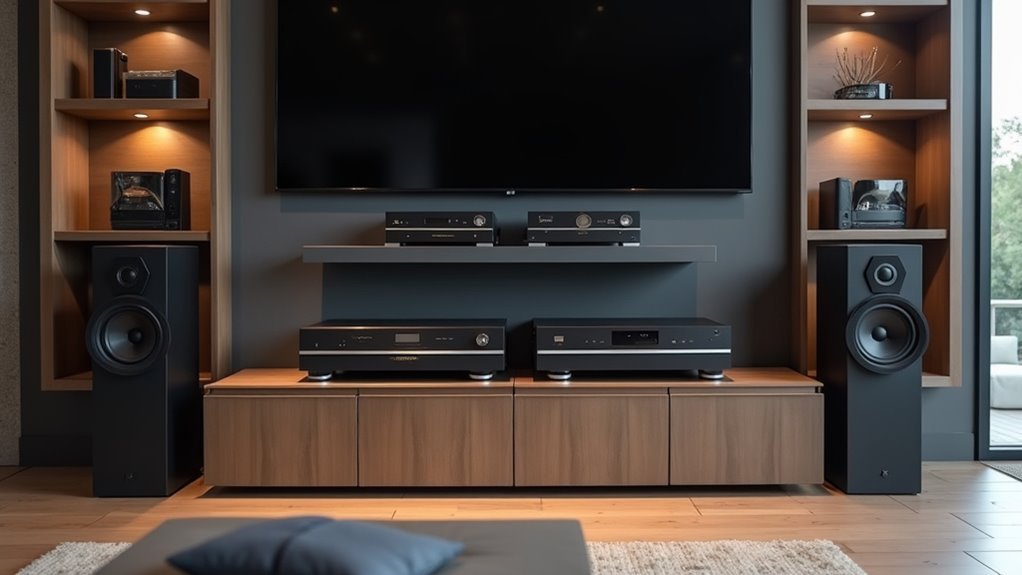
For living rooms, choose floor-standing or high-quality bookshelf speakers that create a robust soundstage complementing larger spaces. In bedrooms, in-wall or in-ceiling audio devices provide discreet solutions while maintaining aesthetic appeal. Outdoor areas need weather-resistant speakers designed to withstand elements during gatherings.
Strategic placement strategies considerably impact sound quality. Position subwoofers in corners or along walls to maximize low-frequency performance.
Always assess room dimensions and acoustics before finalizing placement decisions, ensuring balanced audio distribution throughout each space for an immersive listening experience.
Wired Vs Wireless Implementation Considerations
When planning your whole-home audio system, you’ll face an essential decision between wired and wireless implementations that directly impacts both sound quality and installation complexity.
Wired systems deliver superior audio fidelity and zero latency, but they’re constrained by permanent cable runs and limited flexibility after installation.
Wireless solutions offer unmatched placement freedom and easier setup, though they may introduce slight audio delays and potential interference issues that could affect your listening experience.
Sound Quality Differences
Sound quality represents the most critical factor you’ll consider when choosing between wired and wireless whole-home audio implementations.
Wired audio systems deliver superior consistency through stable connections that minimize signal loss and interference. You’ll experience reliable performance without the latency and compression issues that can plague wireless speakers in larger homes with multiple devices.
However, high-quality wireless protocols like AirPlay 2 and Google Cast can provide impressive sound quality that rivals wired setups. The key lies in choosing audio systems that support these advanced features.
Your room size matters greatly—larger spaces often benefit from wired connections to maintain ideal distribution without degradation.
Consider future wireless technology advancements when planning your listening experience, as emerging protocols continue improving audio fidelity and format compatibility.
Installation Flexibility Factors
Installation flexibility becomes equally important as sound quality when designing your whole-home audio system.
Wired systems demand extensive planning since you’ll need to route cables through walls and consider permanent placement decisions during your audio setup phase. However, they reward this upfront effort with rock-solid connections and consistent performance.
Wireless implementations offer remarkable freedom in speaker positioning, letting you relocate components without rewiring entire rooms. You’ll appreciate this flexibility when redecorating or optimizing acoustics.
Wireless systems also enable effortless multi-room streaming without maintaining constant phone connections.
Consider balancing both approaches to maximize installation flexibility. Use wired connections for dedicated listening rooms where performance matters most, while implementing wireless solutions in casual spaces where convenience and aesthetics take priority over absolute fidelity.
Building Your DIY Audio Server Setup
Building your own audio server represents one of the most cost-effective paths to creating a sophisticated whole-home audio system.
You’ll start by selecting a dedicated computer or NAS device as your central hub for storing and streaming music files throughout your network. Choose software like Plex, Jellyfin, or Kodi to organize your library effectively. Store your music in FLAC format to maintain high-resolution audio quality across all audio components.
Your music system becomes seamless when you integrate protocols like AirPlay, DLNA, or Chromecast, enabling effortless streaming to compatible speakers in different rooms.
Multiroom audio integration through AirPlay, DLNA, and Chromecast transforms your home into a seamlessly connected musical environment.
For multiroom systems to perform at their best, make sure your server has adequate processing power, sufficient memory, and a reliable wired or strong Wi-Fi connection to handle simultaneous streaming sessions without interruption.
Configuring Multi-Zone Audio Distribution
The magic of multi-zone audio distribution lies in its ability to transform your home into a personalized soundscape where each room becomes an independent listening environment.
You’ll need to strategically place speakers throughout different zones, with each area requiring a dedicated pair for ideal audio coverage. Your installation process centers around a central hub that manages all zones, letting you control volume and source selection through one intuitive app.
Wireless protocols like AirPlay 2 streamline your multi-zone setup by eliminating complex wiring requirements.
Focus on room acoustics during installation to guarantee sound quality remains consistent across all areas. When selecting components, prioritize systems that’ll integrate seamlessly with emerging technologies, allowing you to expand your multi-zone network as your audio needs grow.
Integrating Streaming Services and Local Media Sources
You’ll want your whole-home audio system to seamlessly blend streaming services with your personal music collection for maximum flexibility.
Modern multiroom systems excel at streaming platform compatibility, supporting popular services like Spotify, Apple Music, and Amazon Music alongside local media sources.
The key is choosing a system that integrates both content types through unified control apps and open protocols like AirPlay or DLNA.
Streaming Platform Compatibility
When selecting a whole-home audio system, streaming platform compatibility becomes essential for accessing your favorite music across every room.
You’ll want audio products that support major streaming services like Spotify, Apple Music, Amazon Music, and Tidal, guaranteeing seamless access to vast music catalogs. Compatibility with your personal music libraries stored on NAS drives or computers is equally important for complete integration.
Consider these key compatibility factors:
- Open Protocol Support – Choose systems utilizing AirPlay 2 or Google Cast for device-agnostic streaming without brand limitations.
- Unified Control Interface – Select apps that consolidate multiple streaming services into one convenient dashboard.
- Budget Considerations – Factor in ongoing subscription fees when calculating your total system investment.
These compatibility features guarantee you’ll enjoy unrestricted access to all your music sources throughout your home.
Local Source Integration
Beyond streaming service access, modern whole-home audio systems excel at integrating your existing media collections with digital platforms for complete entertainment coverage. You can seamlessly blend local media sources like CDs, vinyl records, and digital files stored on network drives with your favorite streaming services. This integration creates personalized listening options tailored to each zone’s unique requirements.
Your system’s compatibility with AirPlay 2 and Google Cast protocols enables effortless streaming from mobile devices to multiple speakers without maintaining constant phone connections.
Voice control capabilities through Amazon Alexa and Google Assistant provide hands-free access to both streaming content and local collections. You’ll customize each room’s audio experience by assigning different streaming services and local sources, ensuring every family member enjoys their preferred entertainment throughout your home.
Smart Home Automation and Voice Control Integration
As smart home technology continues to evolve, integrating your whole-home audio system with voice control platforms like Amazon Alexa, Google Assistant, and Apple HomeKit transforms how you interact with music throughout your living space.
You’ll enjoy hands-free control over volume adjustments, track changes, and zone management through simple voice commands.
Popular systems like Sonos and Bose offer seamless voice integration, while automation features let you create sophisticated scenes combining lighting and audio for specific activities.
Key benefits of smart home audio integration include:
- Unified Control – Manage your whole-home audio alongside other smart devices through one interface
- Scheduled Playback – Set automatic music schedules for different times and zones
- Scene Creation – Design custom environments for movie nights, parties, or relaxation
This automation streamlines your entire home management experience.
Acoustic Treatment and Sound Optimization Techniques
While smart integration controls your music seamlessly, enhancing your room’s acoustics guarantees you’ll hear every detail with crystal clarity.
Acoustic treatments transform your space by absorbing sound waves and reducing unwanted reverberation that muddles audio clarity. Install acoustic panels on walls where sound bounces most, and place bass traps in corners to control low-frequency energy that creates boomy, undefined bass.
Diffusers scatter sound waves strategically, preventing harsh reflections while maintaining your room’s natural ambiance. The ideal placement of these treatments depends on your room’s dimensions and existing furnishings.
Position speakers away from walls and consider your listening position when planning treatment locations.
Investing in high-quality acoustic materials delivers noticeable improvements in your listening experience, ensuring your whole-home audio system performs at its absolute best.
Professional Installation Vs DIY Setup Approaches
When you’re ready to install your whole-home audio system, you’ll face a crucial decision between hiring professional installers or tackling the project yourself.
Professional installation brings expertise in ideal speaker placement and acoustic treatment, ensuring your system delivers peak performance tailored to each room’s characteristics. You’ll also receive ongoing support and personalized consultations to match your specific audio needs.
DIY setups offer significant advantages:
- Cost savings – You’ll eliminate labor expenses and markup on equipment
- Creative control – You can customize every aspect according to your preferences
- Learning experience – You’ll gain valuable knowledge about your system’s operation
However, DIY approaches require substantial time investment and technical learning to achieve your desired sound quality across multiple zones.
System Testing, Calibration, and Future Expansion Planning
Regardless of whether you chose professional installation or handled the setup yourself, your whole-home audio system now requires detailed testing and calibration to achieve peak performance.
Start by conducting extensive system testing to verify all speakers function properly and deliver balanced audio across different zones. Focus on calibration by adjusting speaker levels, equalization, and delay settings to optimize sound quality based on your room acoustics and speaker placement.
Test your streaming sources and app functionalities regularly to guarantee seamless integration and reliable performance throughout the entire system.
Plan for future expansion by selecting components that allow easy upgrades, such as adding new speakers or integrating advanced audio formats.
Document your system setup and calibration settings for reference, making troubleshooting and reconfiguration simpler as your audio needs evolve.
Frequently Asked Questions
Can I Make My Own Surround Sound System?
You can absolutely create your own surround sound system by selecting compatible speakers, an AV receiver, and audio sources. You’ll need at least five speakers and a subwoofer for a basic 5.1 setup.
What Is the Best Sound System Layout?
You’ll want speakers at ear level in a triangular formation for stereo setups. Place them away from walls to minimize reflections, add subwoofers for bass, and follow Dolby’s guidelines for surround sound.
How to Get the Most Out of Your Surround Sound System?
You’ll maximize your surround sound by positioning speakers at proper angles, calibrating levels with room correction technology, adding acoustic treatments, incorporating quality subwoofers, and regularly updating firmware for peak performance.
What Is the Best Home Audio System?
You’ll want quality speakers paired with a reliable amplifier and versatile streaming source. Consider multiroom systems like Sonos for flexibility, or focus on Hi-Fi components if you’re prioritizing audiophile-grade sound reproduction.