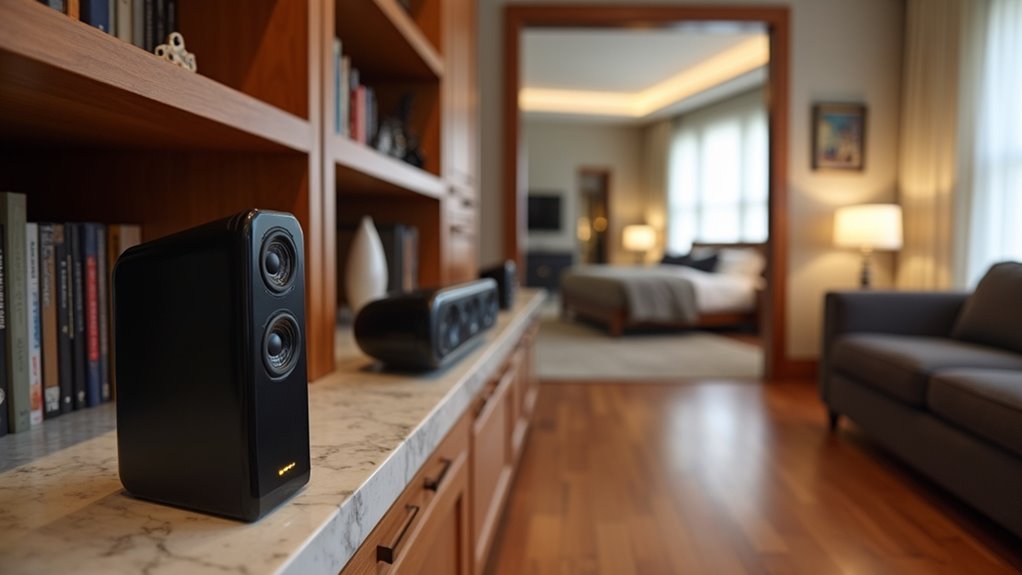
You’ve probably experienced that frustrating moment when your internet goes down, but your expensive multi-room speakers suddenly become glorified paperweights. What if you could bypass this dependency entirely? Your Sonos speakers and similar systems can actually function independently from internet access, creating a self-contained audio ecosystem that won’t leave you in silence. The secret lies in understanding how these devices communicate locally and what setup configurations reveal their true offline potential.
How Sonos Functions on Local Networks Without Internet Access

While many smart speakers require constant internet connectivity, Sonos operates differently by maintaining functionality through your local network even when offline.
Your Sonos speakers communicate directly with each other through your home network, allowing seamless multi-room audio without internet dependence. This home audio system’s architecture enables you to stream music from local sources like NAS devices or shared folders on your network.
The key requirement is ensuring all your Sonos speakers run matching firmware versions for peak compatibility.
Once you’ve initiated playback before losing internet connection, your music continues uninterrupted across all zones. Your home network becomes the backbone for speaker communication, maintaining synchronized audio throughout your house even when external connectivity fails completely.
Setting Up Wi-Fi Networks for Offline Multi-Room Audio
Before setting up your offline multi-room audio system, you’ll need to configure your Wi-Fi network to support local communication between speakers. Start by ensuring all your Sonos speakers run the same software version through the Sonos app. Configure your router to broadcast IP addresses without internet connectivity, creating a local network environment.
| Setup Component | With Internet | Without Internet |
|---|---|---|
| Router Configuration | Automatic DHCP | Manual DHCP setup |
| Speaker Communication | Cloud + Local | Local only |
| Music Source Access | Streaming + Local | Local files only |
| Sonos App Functionality | Full features | Limited features |
| Network Stability | Variable | Consistent |
Consider using separate modem and router hardware to maintain local playback during internet outages. When using mobile hotspots, rename them to match your existing wi-fi network credentials for seamless speaker connectivity.
Local Music Storage Solutions for Internet-Free Playback

You’ll need reliable local storage to keep your multi-room audio system running without internet access.
A Network Attached Storage (NAS) server offers the most robust solution, though you can also store music directly on computers or dedicated devices within your network.
Before building your library, you must verify that your audio files use compatible formats that your speakers can recognize and play back seamlessly.
NAS Server Setup
One powerful solution for achieving true offline multi-room audio involves setting up a NAS (Network Attached Storage) server that transforms your home network into a personal music streaming ecosystem.
You’ll connect the NAS server directly to your router, ensuring all Sonos speakers share the same local network for seamless communication. Through the Sonos app, you can add your NAS as a music library source, granting access to your entire collection of local music files without internet dependency.
Before deployment, update both your NAS and Sonos speakers to the latest firmware versions to prevent connectivity issues.
Once configured properly, you’ll enjoy uninterrupted access to your vast music library, completely bypassing streaming service limitations and internet outages while maintaining full multi-room functionality.
Device Storage Options
Beyond dedicated NAS servers, several device storage options can house your music collection for internet-free Sonos playbook. Your desktop or laptop computer serves as an excellent network storage solution, storing music files locally while remaining accessible to Sonos speakers through your home network.
External hard drives connected to computers expand storage capacity without requiring additional hardware investments. You must own music files outright since streaming services like Spotify block downloaded tracks from playing on Sonos due to DRM restrictions.
USB drives plugged into compatible routers can also function as simple network storage. Each option enables reliable local music playback during internet outages, provided your devices maintain the same firmware version and stay connected to your local network for seamless communication.
File Format Compatibility
Several audio formats work seamlessly with Sonos speakers for offline playback, but you’ll need to verify compatibility before building your local music library.
File format compatibility becomes essential when you’re setting up new speakers for internet-free music playing across multiple rooms.
Your Sonos system supports these vital formats for best performance:
- MP3 – The most widely compatible format offering excellent compression and quality balance
- AAC – Apple’s preferred format providing superior audio quality at lower bitrates
- WAV – Uncompressed format delivering pristine audio quality but requiring more storage space
- FLAC – Lossless compression maintaining original audio fidelity while reducing file sizes
Remember that downloaded tracks from streaming services won’t work due to DRM restrictions, so you’ll need personally owned music files for successful offline playback.
Troubleshooting Connection Issues During Internet Outages
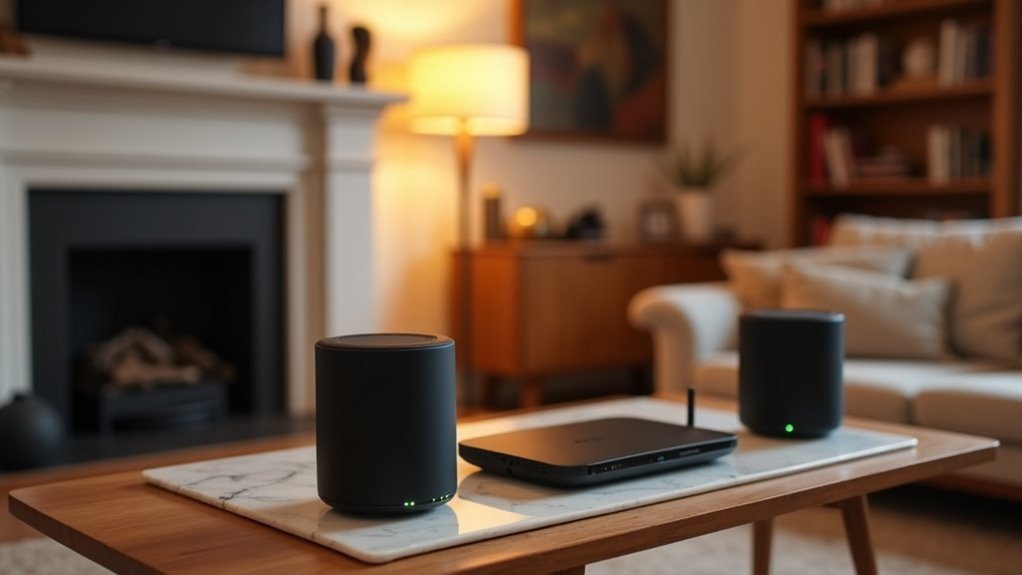
When your internet goes down, you might find your Sonos speakers can still play music if they were already streaming before the disconnection—but only if all your units run the same software version.
Sonos speakers maintain playback during internet outages only when all devices share identical software versions across your system.
However, offline troubleshooting becomes tricky when your Sonos app can’t locate the system during outages, making mobile or PC control nearly impossible.
Your local music playback depends on your router broadcasting IP addresses. If you unplug your modem, you’ll disrupt this local network communication.
To avoid this issue, use separate modem and router setups—this prevents network access disruption during internet downtime.
AirPlay might still work during outages, but remember that not all Sonos models support this feature, which limits your playback options considerably.
Router Configuration for Maintaining Local Network Communication
Your router’s configuration directly impacts whether your Sonos speakers can communicate locally during internet outages.
You’ll get better results with a separate modem and router setup since unplugging just the modem won’t disrupt your local network, unlike combined modem-router units that kill all connectivity when internet goes down.
The key is ensuring your router properly broadcasts IP addresses to all devices so they can find and communicate with each other even when external internet isn’t available.
Separate Modem Router Benefits
Although internet outages can disrupt your streaming services, a separate modem and router setup guarantees your Sonos speakers maintain local network communication when you need it most.
When you’re enjoying music at home, speakers without internet access can still function perfectly through your local network.
The separate modem router benefits include:
- Uninterrupted local playback – Your router continues broadcasting IP addresses even when the modem’s unplugged
- Enhanced connectivity management – You’ll avoid complications that plague combined modem/router units during outages
- Improved streaming performance – Dedicated router settings optimize local music streaming capabilities
- Cost efficiency – You’ll prevent additional ISP charges associated with dual router configurations
This configuration assures your multi-room audio system remains operational regardless of internet connectivity status.
Combined Unit Network Disruption
Combined modem/router units create significant network disruption problems that undermine your Sonos system’s local network communication capabilities.
When you unplug these combined devices during internet outages, you’re not just losing internet access—you’re completely severing the local network that enables your speakers to communicate with each other. This disruption causes immediate connectivity issues that prevent multi-room audio playback.
The problem stems from how combined units handle network infrastructure. Unlike separate modem and router configurations, these all-in-one devices don’t maintain local network functionality when disconnected from internet service.
Your Sonos speakers rely on consistent local network access to coordinate playback across rooms. Without this foundation, even stored music becomes inaccessible, defeating the purpose of offline multi-room audio systems entirely.
Local IP Address Broadcasting
When internet service fails, your router must continue broadcasting IP addresses to maintain the local network infrastructure that keeps Sonos speakers connected. Your router’s DHCP service guarantees devices can communicate locally even without internet access.
To maintain reliable local network access during outages:
- Configure your router to operate independently from internet connectivity.
- Enable DHCP reservation for consistent IP addresses across your Sonos speakers.
- Update router firmware regularly to prevent communication disruptions.
- Verify wireless settings support local device discovery protocols.
A properly configured router creates a stable foundation for your multi-room audio system.
When your Sonos speakers maintain their network connections through consistent IP addressing, you’ll enjoy uninterrupted local playback from network-attached storage or mobile devices, regardless of your internet service provider’s reliability issues.
Alternative Streaming Methods When Internet Service Fails
Since internet outages can disrupt your typical streaming routine, you’ll need reliable backup methods to keep your multi-room audio system running.
Your Sonos speakers can maintain local network playbook from network-attached storage or computer-based music libraries when properly configured. Start music playback before disconnecting from the internet, as your speakers will continue playing even without web access.
Make certain your router remains powered and functional during outages, since it’s essential for maintaining local network communication between devices.
AirPlay offers another alternative for compatible Sonos models, allowing direct streaming from Apple devices without internet connectivity. However, you’ll lose mobile app control during outages, so plan your music selections beforehand.
Keep all speakers updated to identical firmware versions for seamless offline operation.
Mobile Hotspot Setup for Portable Sonos Connectivity
Beyond preparing for home internet outages, you’ll often want to take your Sonos speakers on trips or to temporary locations where your home network isn’t available.
Mobile hotspot setup provides the perfect solution for maintaining Sonos connectivity anywhere you go.
Here’s how to configure portable connectivity:
- Create a matching network – Set up your mobile hotspot using your home Wi-Fi’s exact SSID and password so your Sonos speakers automatically recognize it.
- Use two devices – Configure the hotspot on one device (like your iPhone) while controlling Sonos through another device (like an iPad).
- Power on speakers – Once the hotspot’s active, turn on your Sonos speakers and they’ll connect seamlessly.
- Reset settings afterward – Restore your original hotspot name and password when returning home.
Network Hardware Requirements for Offline Multi-Room Systems
You’ll need specific network hardware to create a reliable offline multi-room system that works independently of your internet connection.
The key difference lies in choosing a separate router setup rather than relying on a combined modem/router unit, which can disrupt local communication when internet issues arise.
Your device compatibility requirements also play a vital role in ensuring all speakers can communicate effectively on the same local network.
Router Vs Modem Setup
How does your network hardware configuration affect multi-room speaker performance during internet outages? Your router vs modem setup determines whether you’ll see your Sonos speakers continue working when the internet goes down.
Make sure you understand these critical configuration differences:
- Separate modem and router – Keeps your local network alive during outages, allowing continued speaker communication.
- Combined modem/router units – Disrupts local network when unplugged, breaking speaker connectivity entirely.
- Proper IP address broadcasting – Essential for speakers to find each other without internet access.
- Avoid multiple routers – Creates connectivity issues and potential ISP charges.
A well-configured local network supports file sharing and playback offline, provided all devices maintain the same firmware version for seamless communication.
Local Network Configuration
Understanding the hardware foundation sets the stage for optimizing your network’s actual configuration settings.
You’ll need to configure your router to broadcast IP addresses properly, guaranteeing your Sonos speakers maintain connections for offline control. Set your router’s DHCP settings to assign consistent IP addresses to each speaker, preventing connectivity issues during internet outages.
Keep your router powered while disconnecting the modem to maintain local network communication. This setup allows devices to share music locally without internet access, similar to how video games connect players on local networks.
Configure your network name and password, but avoid linking personal details like your E-mail address to maintain security. Confirm all speakers run identical firmware versions for seamless multi-room synchronization across your offline network.
Device Compatibility Requirements
Before establishing your offline multi-room setup, verify your network hardware meets specific compatibility standards that facilitate seamless speaker communication.
Your equipment must work together to maintain local connectivity even when internet access fails.
Essential compatibility requirements include:
- Router separation – Use a dedicated router independent from your modem to preserve local network function during internet outages.
- Firmware synchronization – Confirm all speakers and controlling devices run identical software/firmware versions for proper communication.
- IP broadcasting capability – Configure devices to correctly broadcast IP addresses enabling local playbook and control without internet.
- Network credential matching – Maintain identical network credentials across mobile hotspots and controlling devices for seamless operation away from home.
These requirements guarantee uninterrupted music playback regardless of internet connectivity status.
Managing Music Libraries Across Multiple Devices
When you’re setting up offline multi-room speakers, you’ll need to create a cohesive music ecosystem that works seamlessly across all your devices, even without internet access.
Store all music files locally on devices connected to your network and implement a Network-Attached Storage (NAS) system to centralize your library. This allows every Sonos speaker to access your collection without internet connectivity.
Ensure all devices run identical software versions to maintain compatibility during outages. Organize your files using consistent naming conventions and structured folder hierarchies—this makes browsing effortless on Sonos interfaces.
You’ll want clear artist folders, album subdivisions, and properly tagged metadata.
Keep your Sonos app and connected devices updated regularly for peak performance and smooth local library management.
Peer-to-Peer Speaker Communication Without Internet
Since Sonos speakers operate on your local network infrastructure, they’ll maintain direct communication with each other even when your internet connection drops.
Your speakers use peer-to-peer communication through your router’s IP address broadcasting system, creating a self-contained network for multi-room playback.
For successful offline communication, you’ll need:
- Matching software versions across all Sonos units to guarantee compatibility
- Stable Wi-Fi connection to your local router for device detection
- Same network access for all speakers you want to group together
- Local music sources like NAS systems or stored files for playback
Your Sonos app remains functional for controlling locally stored music after initial setup.
This peer-to-peer architecture means you can enjoy synchronized multi-room audio throughout your home without relying on external internet services.
NAS Systems for Centralized Local Music Storage
You can dramatically expand your offline multi-room audio capabilities by implementing a Network Attached Storage (NAS) system that centralizes all your music files in one accessible location.
This setup transforms your entire music collection into a shared resource that every Sonos speaker on your network can access instantly, even when your internet connection fails.
The seamless integration between NAS systems and Sonos devices creates a robust local streaming environment that rivals cloud-based services while keeping your music completely under your control.
NAS Setup Benefits
While cloud streaming dominates today’s music landscape, a Network Attached Storage (NAS) system offers unmatched control over your multi-room audio setup by creating a centralized hub for your entire music library.
You’ll experience significant advantages with a NAS configuration:
- Internet Independence – Your Sonos speakers access music directly from the local network, ensuring uninterrupted playback during outages.
- Unlimited Storage – Expand capacity without monthly subscription fees or data restrictions.
- Format Flexibility – Support various audio formats that streaming services don’t offer.
- Automatic Synchronization – New files sync seamlessly, keeping your library current.
You can share music across all network devices while maintaining complete ownership of your collection.
Advanced NAS software simplifies playlist management and streaming options, delivering a superior offline multi-room experience.
Sonos NAS Integration
Sonos speakers integrate effortlessly with NAS systems, transforming your centralized storage into a powerful multi-room audio source. You’ll stream your entire music library without needing an internet connection, provided your NAS is properly configured on your local network.
Setting up the integration requires using the Sonos app to browse and add your music folders from the NAS. You’ll need to verify all devices run the same firmware version for seamless compatibility.
Your NAS will support popular formats like MP3 and FLAC, giving you flexibility with your music collection. Managing large libraries becomes straightforward since you’re accessing centralized storage across multiple speakers in different rooms.
Remember that maintaining a stable local network is essential—any network disruptions will affect your Sonos system’s ability to access stored files.
Software Version Compatibility for Offline Operations
Although internet connectivity isn’t required for local playbook, maintaining consistent software versions across all your Sonos devices becomes critical for seamless offline operations.
You’ll need to guarantee every speaker runs identical firmware to avoid compatibility headaches when your internet goes down. Version mismatches can prevent your devices from communicating properly, leaving you without music when you need it most.
Firmware mismatches across Sonos speakers will disrupt device communication and leave you musicless during internet outages.
Here’s what you must do for reliable offline functionality:
- Update all Sonos devices to the same firmware version before internet outages occur.
- Keep your Sonos app updated to match your speaker software versions.
- Verify your local network configuration remains stable during connectivity issues.
- Test offline playback regularly to confirm all devices communicate successfully.
Data Usage Considerations When Using Mobile Networks
When you’re using mobile networks to power your Sonos speakers, data consumption becomes a critical factor that’ll impact both your listening experience and your wallet. Streaming music typically consumes around 1 MB per minute, which accumulates rapidly during extended playback sessions.
You’ll want to monitor your usage carefully since exceeding your plan’s data limit can trigger additional charges. Mobile data speeds directly affect streaming quality—slower connections may cause buffering or reduced audio fidelity.
To conserve data, consider switching to lower quality audio settings instead of high-quality streaming that quickly depletes your allowance.
If you’re traveling internationally, be particularly cautious about roaming charges, which can be substantially higher than domestic rates and lead to unexpected expenses on your mobile bill.
Optimizing Network Settings for Seamless Offline Performance
Since network configuration plays a pivotal role in offline functionality, you’ll need to establish the proper foundation before disconnecting from the internet. Proper setup guarantees your multi-room speakers continue operating smoothly during outages or when you deliberately go offline.
Network configuration serves as the backbone of offline functionality, requiring careful preparation to ensure uninterrupted multi-room speaker performance during internet outages.
Follow these essential optimization steps:
- Update everything first – Confirm all speakers, router, and control devices run identical software/firmware versions before disconnecting.
- Use separate modem and router – This setup prevents local network disruption during internet outages.
- Configure IP address broadcasting – Verify your router actively broadcasts IP addresses to enable local playback.
- Create dedicated local network – Set up file sharing capabilities that function independently of internet connectivity.
You’ll also want to rename your mobile hotspot to match your home network’s SSID and password for automatic speaker connection when traveling.
Frequently Asked Questions
Can You Use Wireless Speakers Without Internet?
You can use wireless speakers without internet by streaming local music from devices on your same network. You’ll maintain playback if internet’s lost after starting, though you can’t control them through apps.
Can a Smart Speaker Work Without Internet?
You can use smart speakers without internet for local music playback if they’re connected to your Wi-Fi network. However, you’ll lose streaming services, voice assistants, and most app-based controls.
Can I Use My Sonos Without Internet?
You can use your Sonos without internet for local music playback. You’ll need all speakers on matching firmware versions and a functioning local network to control them through the app.
How Do I Use Alexa Speakers Without Internet?
You can’t access Alexa’s voice features without internet, but you’ll still use basic functions like Bluetooth music playback, alarms, and timers that were previously set while connected.