You’re probably wasting water and money if your irrigation system runs the same schedule year-round. Most homeowners set their sprinklers once and forget about them, but seasonal changes demand different watering strategies. Your summer settings won’t work in fall, and spring requirements differ entirely from winter needs. Smart automation adjustments can slash your water bills while keeping your landscape healthier than ever—but only if you know these three critical setup strategies.
Optimize Your Controller Settings for Each Season

As seasons change throughout the year, your irrigation system’s watering schedule must adapt to match your landscape’s evolving needs.
Your irrigation controller’s seasonal adjustment feature lets you modify run times by percentage, ensuring ideal soil moisture levels year-round. Set 100% during peak summer months (July-September), 80% for shifting periods (May-June, October), 50% during mild seasons (March-April, November), and 20% in winter (December-February).
Adjust irrigation run times seasonally: 100% summer, 80% spring/fall transitions, 50% mild seasons, and 20% winter for optimal efficiency.
These seasonal adjustments enhance water usage while maintaining efficient water distribution across all zones. Program your controller quarterly to align with changing weather patterns and prevent costly repairs from over or under-watering.
Never exceed 100% adjustment to maintain proper water management. Consult your owner’s manual for climate-specific guidance to enhance water efficiency throughout every season.
Monitor Water Usage Data to Maximize Efficiency
Beyond adjusting your controller settings, tracking your system’s water consumption patterns reveals opportunities to cut usage by up to 40% while maintaining healthy landscapes.
When you monitor water usage data consistently, your irrigation system is essential for identifying mainline breaks and station malfunctions before they cause significant water wastage.
Real-time sensors measuring water flow, evapotranspiration, and soil moisture automatically trigger smart field actions that conserve water.
Rain sensors prevent unnecessary watering during precipitation, ensuring ideal performance throughout changing weather conditions.
Detailed analytics help you spot potential problems at specific locations, from main lines to individual stations.
Continuous monitoring sends immediate alerts when issues arise, allowing quick responses that protect your well-maintained system.
This data-driven approach makes seasonal irrigation automation more efficient and cost-effective.
Schedule Regular System Maintenance and Adjustments
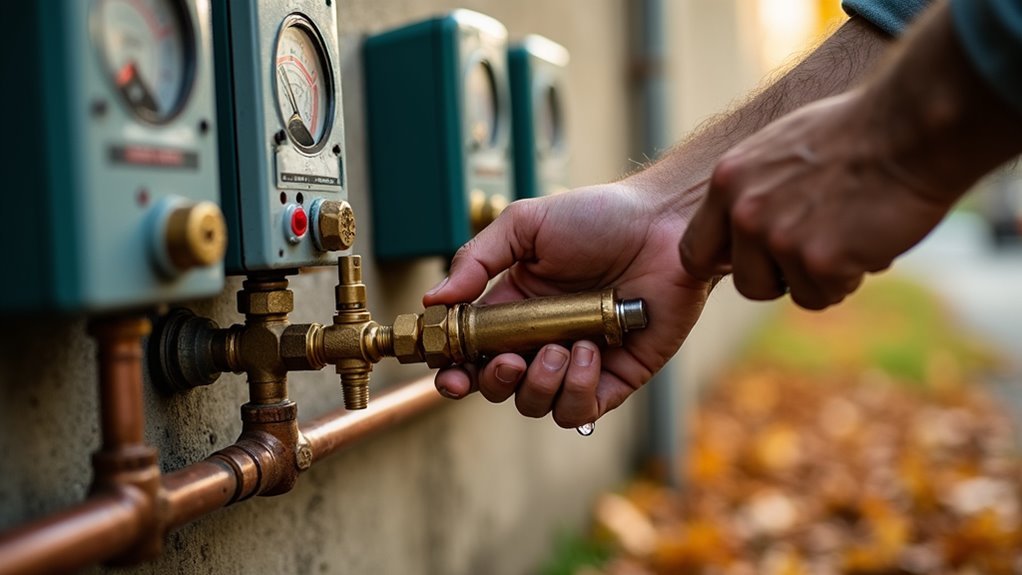
While monitoring your water usage provides valuable insights, maintaining peak system performance requires establishing a consistent maintenance schedule that addresses both seasonal adjustments and component care.
Schedule your system maintenance quarterly to guarantee ideal performance throughout the year. Inspect all components regularly for leaks and blockages that waste water and compromise efficiency.
Use your irrigation controller’s seasonal adjust feature to automatically modify run times – set 100% during summer and reduce to 20% in winter months. These adjustments prevent overwatering while meeting your plants’ changing hydration needs.
Conduct routine system audits to identify problem areas and guarantee uniform watering across your landscape. Consistent maintenance protects your investment while promoting overall landscape health and water conservation.
Frequently Asked Questions
What Is the 200/200 Rule for Drip Irrigation?
The 200/200 rule limits your drip irrigation zones to 200 feet of tubing and 200 gallons per hour. You’ll maintain proper pressure, guarantee even water distribution, and prevent plant stress while optimizing system performance.
How to Setup an Automatic Irrigation System?
First, evaluate your landscape’s plant types and soil conditions. Install an irrigation controller with seasonal adjustment features. Add moisture, rain, and evapotranspiration sensors. Regular maintenance prevents clogs and leaks from wasting water.
What Is One Disadvantage of an Automatic Watering System?
You’ll risk overwatering your plants with automatic systems, which can create soggy soil conditions and lead to root rot. The system won’t adjust for unexpected rainfall or weather changes.
How Often and How Long Should Automated Sprinklers Be Left Running?
You should run automated sprinklers for 20-30 minutes per zone, typically 2-3 times weekly. Water early morning or late evening to minimize evaporation and adjust frequency based on seasonal needs and soil moisture levels.