

You’re probably watching your water bill climb while your garden struggles through dry spells, wondering if there’s a smarter way to keep your plants thriving without breaking the bank. The truth is, most homeowners waste up to 50% of their irrigation water through inefficient methods that barely reach plant roots. What if you could cut your water usage in half while actually improving your garden’s health and resilience?
Understanding Your Garden’s Water Requirements
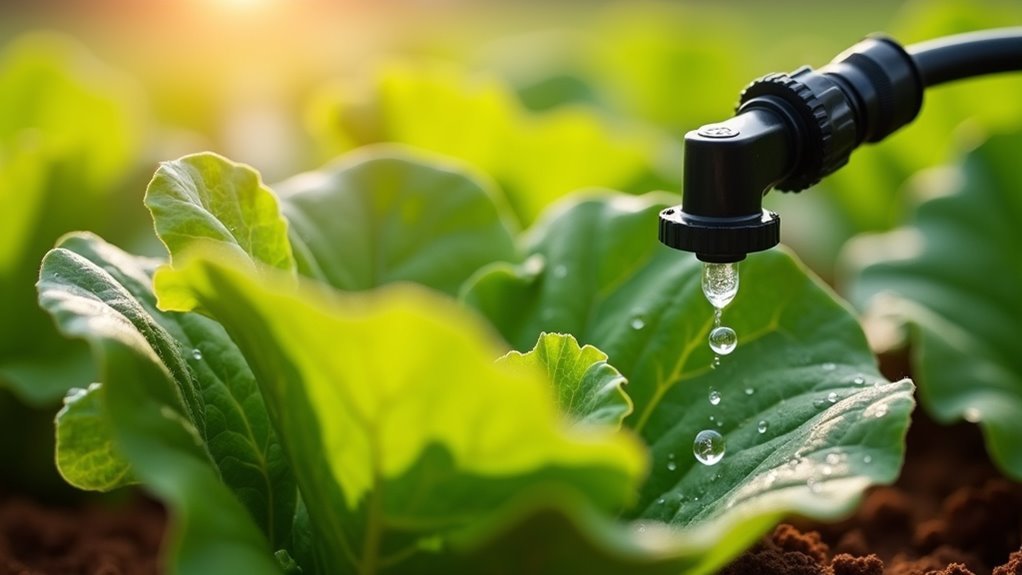
Why do so many gardeners struggle with watering their plants effectively? They don’t understand their garden’s specific water requirements.
You’ll need to assess your plants’ individual needs by examining their types, light exposure, and soil composition. This knowledge forms the foundation for efficient irrigation.
Understanding your plants’ unique requirements through careful assessment of species, sunlight, and soil creates the backbone of successful watering strategies.
Install soil moisture sensors throughout your garden to monitor moisture levels accurately. These tools help you establish baseline watering needs for different areas.
Track local rainfall with a rain gauge, then adjust your supplemental irrigation accordingly.
Group plants with similar water demands together to minimize waste and maximize effectiveness.
You’ll also need to adjust watering schedules regularly based on environmental changes and plant growth stages, ensuring ideal water usage throughout the growing season.
Installing Drip Irrigation Systems for Maximum Efficiency
When you install a drip irrigation system, you’re investing in the most water-efficient method available for garden irrigation. This efficient irrigation system delivers water directly to plant roots through tubes and emitters, dramatically reducing evaporation losses while maximizing water conservation.
Position emitters 12-18 inches apart for ideal coverage. Use 1 gallon-per-hour emitters for most plants and 2 gallon-per-hour emitters for thirstier varieties. Install pressure-compensating emitters on slopes to guarantee even water distribution.
Regular maintenance keeps your system running smoothly. Check for clogged emitters and flush the mainline monthly to prevent sediment buildup.
Set automated timers for 20-30 minutes per zone, watering 2-3 times weekly. This schedule promotes deeper root growth while reducing overall water usage.
Mulching Strategies That Lock in Soil Moisture
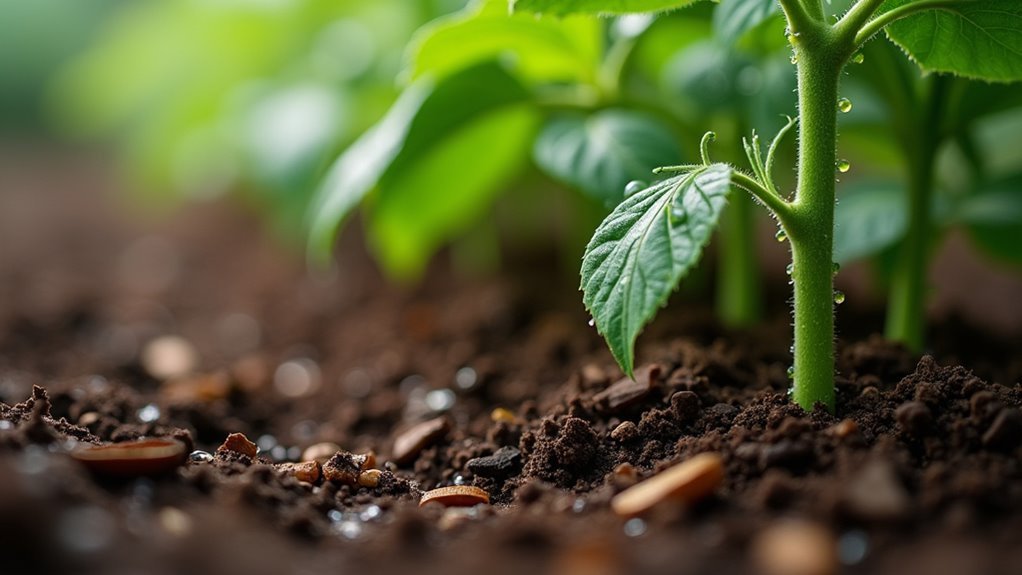
You’ll maximize water retention by selecting the right mulch materials for your specific garden conditions and climate.
Apply organic mulches like wood chips or shredded leaves at a 2-4 inch depth to create an effective moisture barrier without suffocating plant roots.
Maintain your mulch’s effectiveness by renewing thin spots and adding new layers seasonally to guarantee consistent soil moisture protection year-round.
Best Mulch Material Types
Selecting the right mulch material can make the difference between a thriving, water-efficient garden and one that struggles with moisture loss. Organic mulch options like wood chips, pine straw, and grass clippings deliver superior water retention while improving your soil’s structure as they decompose.
You’ll want to choose materials that match your specific plants’ needs. Pine straw works exceptionally well for acid-loving plants like azaleas and blueberries, while hardwood mulch provides excellent general-purpose coverage.
Shredded leaves and straw offer additional benefits by attracting beneficial microorganisms that create healthier soil ecosystems.
Consider availability and cost when selecting your mulch. Grass clippings from your own lawn provide free, readily available material, while wood chips often come from local tree services at minimal cost.
Proper Application Depth Techniques
Achieving ideal mulch depth requires precision, as too little won’t provide adequate moisture protection while too much can suffocate plant roots and create pest harbors.
You’ll want to apply 2-4 inches of organic mulch around your plants to maximize water retention benefits. This depth effectively suppresses weeds while maintaining optimal soil temperature for enhanced moisture conservation.
Your mulch provides excellent barriers that reduce evaporation rates by up to 30%, keeping precious water locked in the soil longer. As organic materials decompose, they’ll improve your soil’s water-holding capacity, creating a self-sustaining moisture system.
You’ll notice reduced watering frequency, especially during hot, dry periods. Remember to keep mulch several inches away from plant stems to prevent moisture-related diseases and pest issues.
Seasonal Mulch Maintenance Tips
Maintaining your mulch throughout the changing seasons guarantees maximum water retention benefits year-round.
You’ll need to refresh your organic mulches annually or biannually to maintain their 2-4 inch depth and effectiveness. Check your mulch layer each spring and fall, adding fresh material where it’s thinned or decomposed.
Different seasons require strategic adjustments to conserve water effectively.
Spring’s the ideal time for complete mulch renewal, while fall offers opportunities to add decomposing leaves that’ll enrich your soil.
Summer maintenance involves spot-checking thin areas and replenishing as needed.
Seasonal mulching success depends on choosing appropriate materials for each period.
Pine straw works excellently for winter insulation, while shredded leaves provide quick soil enrichment during growing seasons.
This rotating approach guarantees consistent moisture retention and soil health improvement throughout the year.
Smart Controller Technology for Automated Watering
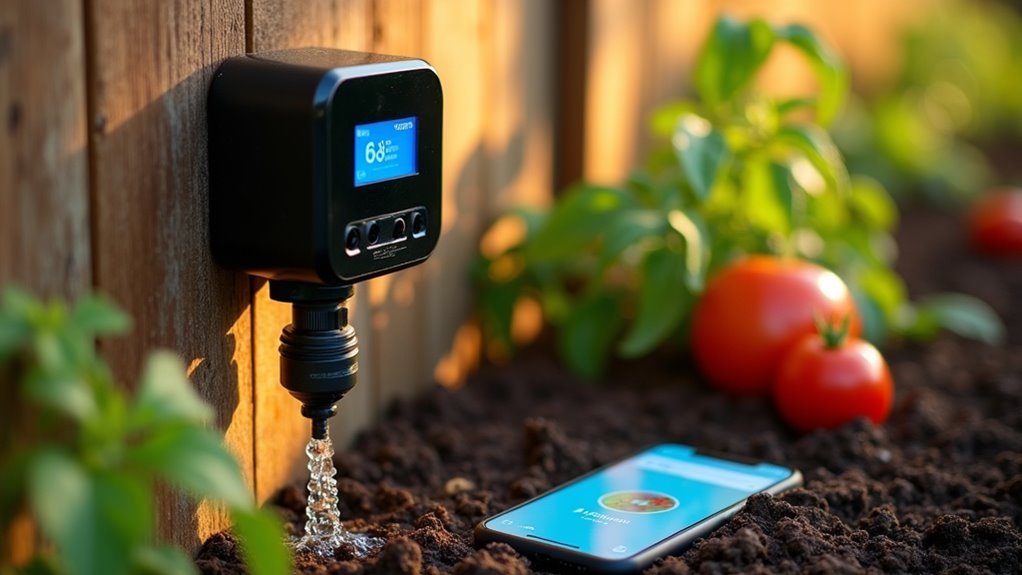
Revolution in irrigation management has arrived through smart controller technology that transforms how you water your landscape. Smart controllers automatically adjust watering schedules using real-time weather data and soil moisture levels, ensuring your plants receive ideal irrigation while preventing costly overwatering.
These systems dramatically improve water efficiency by reducing usage up to 30% compared to traditional timers, watering only when necessary.
You can retrofit rain sensors to existing systems, automatically suspending automated watering during rainfall. Mobile app integration lets you monitor and control your irrigation remotely, enhancing convenience and system management.
Advanced controllers track historical data, helping you optimize schedules based on past performance and seasonal changes. This technology delivers precise, intelligent watering that conserves water while maintaining healthy landscapes year-round.
Rainwater Harvesting and Collection Methods
You’ll find that setting up a rain barrel system is one of the most straightforward ways to start harvesting rainwater for your garden irrigation needs.
Your basic setup requires connecting gutters and downspouts to direct roof runoff into a 55-gallon barrel, which can save you up to 1,300 gallons annually.
Once you’ve got your basic collection system running, you can optimize it by adding first-flush diverters and ensuring proper slope angles to maximize both water quality and collection efficiency.
Rain Barrel Setup
Setting up a single 55-gallon rain barrel can save you up to 1,300 gallons of water annually while providing your garden with a free, sustainable irrigation source. Position your rain barrel directly under downspouts to maximize collection efficiency. You’ll need to confirm your gutters are debris-free for ideal water flow into your rainwater harvesting system.
| Setup Component | Purpose | Key Consideration |
|---|---|---|
| First-flush diverter | Prevents contamination | Diverts initial dirty runoff |
| Food-grade materials | Maintains water quality | Essential for safe garden use |
| Local regulations | Legal compliance | Check restrictions before installation |
Before installing your rain barrel, verify local regulations regarding rainwater collection methods. Some areas restrict how you can collect rainwater, so compliance protects your investment in this efficient water-saving system.
Collection System Optimization
While a basic rain barrel provides substantial water savings, maximizing your entire collection system can triple or quadruple your harvesting capacity.
You’ll want to install gutters and downspouts that effectively capture rainwater from your roof, increasing collection while directing runoff away from your foundation.
Position your water collection system with a slight slope to guarantee ideal flow towards storage containers, enhancing efficiency.
Install first-flush diverters to improve water quality by diverting initial runoff containing contaminants before harvested rainwater enters storage.
Use food-grade materials for gutters and pipes to keep your collected water safe for garden use.
This all-encompassing approach creates an efficient solution that can save thousands of gallons annually, providing reliable supplemental irrigation during dry spells.
Grouping Plants by Water Needs
When you group plants by their water requirements, you’ll create a more efficient irrigation system that prevents overwatering drought-tolerant species while ensuring moisture-loving varieties get what they need.
Position drought-resistant plants farther from sprinklers and water sources to greatly reduce water usage, since these plants thrive with less frequent watering.
This strategic grouping saves time on watering routines while minimizing waste through streamlined gardening. You’ll also foster healthier plant ecosystems by reducing moisture competition, leading to improved growth and liveliness across your garden.
For best results, place thirsty vegetables like tomatoes alongside other water-loving plants, while keeping succulents and low-water herbs in separate areas.
This targeted approach maximizes both plant health and water conservation.
Soil Moisture Sensors for Precision Watering
Since you’ve organized your plants by water needs, soil moisture sensors can take your precision watering to the next level by providing real-time data on actual soil conditions.
These devices can reduce water consumption by up to 50% compared to traditional watering methods by ensuring you water only when necessary.
You can connect soil moisture sensors to Smart Irrigation systems for automated watering schedules based on actual moisture levels rather than guesswork.
Set customizable thresholds that trigger irrigation when your plants need water, catering to different species’ requirements.
Wireless models transmit data to mobile apps, letting you monitor conditions remotely.
This technology prevents overwatering while promoting deeper root growth, creating healthier, more resilient plants that’ll thrive with ideal moisture management.
Deep Watering Techniques That Encourage Root Growth
You’ll achieve better water conservation by applying water slowly through methods like drip irrigation or soaker hoses, which deliver moisture directly to plant roots.
This gradual approach allows water to penetrate at least six inches deep into the soil, creating ideal conditions for robust root development.
When you encourage roots to grow deeper through consistent deep watering sessions, your plants become more drought-resistant and require less frequent irrigation overall.
Slow Water Application Methods
Although many gardeners rush through their watering routines, slow water application methods transform how plants develop by encouraging roots to reach deeper into the soil. You’ll saturate soil to six-inch depths while minimizing runoff and evaporation. Drip irrigation and soaker hoses deliver water directly to plant bases at gradual rates, proving especially effective for clay soils.
| Method | Application Rate | Best For |
|---|---|---|
| Drip Irrigation | 1-2 GPH | Vegetable gardens |
| Soaker Hoses | 0.5-1 GPH | Flower beds |
| Deep Watering Stakes | Variable | Trees/shrubs |
These slow watering techniques reduce watering frequency while fostering stronger root systems. You’ll achieve superior water efficiency by allowing complete soil penetration rather than surface saturation. Consistent deep watering practices considerably lower water consumption while maintaining plant health and enhancing overall garden resilience.
Optimal Soil Penetration Depth
When you water deeply enough to reach six to eight inches below the surface, you’re training your plants to develop robust root systems that can withstand drought conditions.
Deep watering encourages roots to grow downward rather than spreading horizontally near the surface, creating stronger plants that require less frequent irrigation.
Water-saving irrigation methods like drip irrigation deliver moisture directly to the root zone, ensuring ideal penetration depth without waste.
This approach prevents hardpan formation, which blocks water movement through soil layers.
Key strategies for achieving ideal depth:
- Water slowly and steadily – Allow time for complete soil saturation rather than quick surface applications.
- Check penetration with a soil probe – Verify water reaches the six-inch minimum depth.
- Adjust timing based on soil type – Sandy soils drain faster than clay, requiring different watering durations.
Root Development Benefits
Beyond achieving ideal soil penetration, the way you water directly shapes how your plant roots develop and strengthen over time. Deep watering techniques encourage roots to grow deeper by saturating soil to six inches, creating stronger, more resilient plants. When you water deeply rather than frequently, you’ll reduce watering sessions as plants develop robust root systems that access moisture from lower soil layers.
| Watering Method | Root Growth Pattern |
|---|---|
| Deep, infrequent | Extensive downward growth |
| Shallow, frequent | Surface-level clustering |
| Slow saturation | Even distribution throughout soil |
| Quick surface watering | Concentrated near topsoil |
This approach prevents hard pan soil formation that inhibits root growth and water absorption. Slow watering allows moisture to penetrate effectively, reaching deeper roots and supporting overall plant health throughout the growing season.
Timing Your Irrigation for Optimal Water Retention
Since evaporation can steal up to 30% of your irrigation water during peak heat hours, you’ll want to schedule your watering sessions for early morning or late evening.
Timing your irrigation before 9 AM or after 6 PM maximizes water absorption while cooler temperatures reduce evaporation considerably.
Consistent watering schedules during these ideal windows encourage deeper root development, creating drought-resistant plants.
You can simplify this process by using automated timers that maintain regular watering patterns without daily intervention.
Key Benefits of Proper Irrigation Timing:
- Enhanced Water Retention – Cooler temperatures prevent moisture loss to atmosphere
- Improved Plant Health – Deeper root systems develop from consistent moisture availability
- Seasonal Adaptability – Adjusting schedules based on temperature changes maximizes efficiency
Remember to modify your watering schedules seasonally as temperatures fluctuate throughout the year.
Micro-Sprinkler Systems for Targeted Coverage
Precision becomes paramount when you’re looking to maximize water efficiency in smaller garden spaces.
Micro-sprinkler systems deliver targeted water coverage while using 30% less water than traditional sprinklers by applying water directly to soil. You’ll benefit from adjustable nozzles that create various spray patterns, allowing customization based on your specific plant types and spacing requirements.
These systems operate at low pressure (15-30 PSI), reducing energy consumption and preventing runoff.
You should place them 6-8 feet apart for vegetable gardens and 10-12 feet for fruit trees to guarantee even distribution without oversaturation.
Preventing Water Runoff and Maximizing Absorption
You’ll maximize your irrigation efficiency by implementing slow, deep watering techniques that allow water to penetrate soil layers rather than rushing across the surface.
When you water slowly using drip irrigation or soaker hoses, you’re giving soil time to absorb moisture completely, which reduces wasteful runoff and delivers water directly to plant root zones.
You can further enhance soil absorption by adding organic matter and mulch, creating an environment where every drop of water serves its intended purpose.
Slow Deep Watering
One of the most effective irrigation strategies involves applying water slowly and deeply to encourage penetration up to six inches below the surface. This slow deep watering approach promotes stronger root development and enhances your plants’ drought resistance.
By delivering moisture gradually, you’ll minimize runoff while maximizing soil absorption.
Drip irrigation and soaker hoses excel at facilitating this technique by targeting water directly at plant bases, reducing evaporation losses considerably.
You’ll find that watering deeply once or twice weekly proves more beneficial than frequent shallow sessions.
Key Benefits of Slow Deep Watering:
- Stronger Root Systems – Deep moisture encourages roots to grow downward, improving drought tolerance
- Reduced Watering Frequency – Less frequent sessions maintain ideal soil moisture levels
- Enhanced Water Conservation – Minimal waste through reduced runoff and evaporation
Soil Absorption Enhancement
While slow deep watering provides the foundation for efficient irrigation, enhancing your soil’s natural absorption capacity prevents precious water from running off your landscape before plants can benefit.
You’ll dramatically improve water absorption by incorporating organic soil amendments like compost, which increases your soil’s water-holding capacity and creates better structure for infiltration.
Mulching around plants creates a protective barrier that reduces evaporation while allowing water to penetrate slowly into the ground.
Consider installing rain gardens in low-lying areas to capture runoff and channel it back into the soil.
These techniques work together to transform compacted or clay soils into moisture-retaining systems that maximize every drop you apply.
Wicking Bed Construction for Self-Watering Gardens
Because wicking beds operate on the principle of capillary action, they’re revolutionizing how gardeners approach water conservation and plant care. This self-watering system draws moisture from a bottom reservoir, ensuring consistent hydration while dramatically reducing watering frequency.
To build your wicking bed, you’ll need food-grade containers or raised beds with waterproof lining. Here’s your construction sequence:
- Create the reservoir foundation – Fill the bottom with gravel or scoria rock, then cover with landscape fabric.
- Add sufficient soil depth – Install at least 12 inches of quality soil above the fabric for ideal root development.
- Install monitoring system – Add clear tubing fill pipes for easy water level visibility.
Wicking beds deliver exceptional water conservation benefits while maintaining healthy plant growth through their efficient moisture distribution system.
Regular Maintenance of Irrigation Equipment
Three critical maintenance tasks will keep your irrigation systems running effectively and prevent costly water waste. Regular maintenance prevents small problems from becoming expensive repairs while maximizing water flow throughout your garden.
| Task | Frequency | Impact |
|---|---|---|
| Inspect for leaks/clogs | Weekly | Prevents 20+ gallon daily waste |
| Clean filters | Every 3-4 months | Maintains pressure/effectiveness |
| Flush mainlines | Monthly | Removes sediment buildup |
You’ll need to check emitter placement weekly during growing season to guarantee ideal distribution and eliminate dry spots. Store removable components indoors during winter months to protect them from freezing damage. Monthly mainline flushing removes sediment that obstructs water delivery, while quarterly filter cleaning prevents pressure drops that reduce system effectiveness.
Measuring and Monitoring Water Usage Efficiency
Once you’ve established proper maintenance routines, tracking your water usage becomes essential for identifying waste and optimizing efficiency.
Measuring water usage through systematic monitoring helps you understand your garden’s actual water needs and reveals opportunities for improvement.
Start by keeping detailed records of irrigation times and quantities to spot trends in your watering practices.
Install soil moisture sensors for real-time data that prevents overwatering and guides scheduling decisions.
Rain gauges help you adjust irrigation after rainfall events, eliminating unnecessary water applications.
Here are three key monitoring strategies:
- Install flow meters on irrigation lines for precise water output measurements
- Analyze monthly water bills to track consumption changes over time
- Document irrigation practices to identify patterns and inefficiencies
This thorough approach guarantees your irrigation practices remain both effective and water-conscious.
Frequently Asked Questions
What Irrigation Method Saves the Most Water?
You’ll save the most water using drip irrigation, which delivers water directly to plant roots. This method reduces your water usage by up to 60% compared to traditional sprinklers by minimizing evaporation.
Are Ollas Better Than Drip Irrigation?
You’ll find ollas work better for small gardens and drought-prone areas since they’re simpler and reduce watering by 50%. However, you’d prefer drip irrigation for larger spaces with diverse plants.
What Is the Best Irrigation Method for Gardens?
You’ll find drip irrigation’s the most efficient method, using 60% less water than sprinklers. It delivers water directly to plant roots, minimizing evaporation and runoff while encouraging healthy growth patterns.
What to Do When Your Garden Gets Too Much Water?
When you’ve got too much water, check for yellowing leaves indicating waterlogging. Install drainage solutions like French drains, use raised beds, apply mulch for absorption, and reduce your irrigation frequency immediately.


Leave a Reply