You’ve probably realized that choosing the right smart home control hub isn’t as straightforward as picking up any device from the shelf. With dozens of options available, each supporting different protocols and offering varying levels of compatibility, you’re facing a decision that’ll impact every future smart device purchase you make. The wrong choice now could leave you locked into a limited ecosystem or force you to replace your hub entirely when you want to expand your setup.
Choose a Hub That Supports Multiple Communication Protocols

When selecting a smart home control hub, you’ll want to prioritize models that support multiple communication protocols like Wi-Fi, Zigbee, and Z-Wave. This multi-protocol support guarantees your smart hub can communicate with devices from various manufacturers, regardless of their communication standards.
You’ll gain access to a broader ecosystem of compatible products, enhancing your home’s overall functionality.
Advanced hubs supporting the Matter standard offer seamless interoperability between different device ecosystems, making future upgrades simpler. Multi-protocol compatibility also reduces Wi-Fi network congestion by distributing device communication across different channels, improving overall performance.
When choosing your hub, verify compatibility with both current devices and future purchases. This approach future-proofs your investment, securing your smart home system remains flexible and expandable as technology evolves.
Prioritize Device Compatibility Across Different Brands
You’ll want to choose a hub that works seamlessly with devices from multiple manufacturers, not just one brand’s ecosystem.
Cross-brand protocol standards like Matter and Zigbee guarantee your hub can communicate with a wider range of smart devices, giving you more flexibility in building your smart home.
This multi-ecosystem approach also protects your investment by allowing future device expansion without being locked into a single manufacturer’s product line.
Cross-Brand Protocol Standards
Since smart home devices from different manufacturers often use incompatible communication methods, you’ll need to prioritize cross-brand protocol standards when selecting your control hub.
The Matter standard represents the future of interoperability, ensuring connecting smart home devices works seamlessly across brands while reducing market fragmentation.
Look for established protocols like Zigbee and Z-Wave, which enable effective communication between various manufacturers’ devices, though support varies by brand and hub.
Thread offers another robust option, providing low-power mesh networking that lets devices connect directly without traditional hubs.
When shopping, seek devices with “Works with Alexa” or “Google Home compatible” labels, indicating adherence to ecosystem standards.
Consider open-source platforms like Home Assistant for maximum flexibility in integrating multiple brands and protocols.
Multi-Ecosystem Hub Selection
Choosing the right multi-ecosystem hub becomes essential as your smart home grows beyond a single brand’s offerings. You’ll want to prioritize hubs supporting the Matter standard, which enhances compatibility across different manufacturers. Check manufacturer websites for extensive compatibility lists covering Google Home, Amazon Alexa, and Apple HomeKit ecosystems.
| Feature | Importance |
|---|---|
| Matter Standard Support | Enhanced cross-brand compatibility |
| Zigbee/Z-Wave Protocols | Wider device integration options |
| Dual Voice Assistant Support | Flexible control methods |
| Regular Firmware Updates | Ongoing device compatibility |
Select a multi-ecosystem hub utilizing Zigbee and Z-Wave protocols, as they’re widely supported connectivity standards. Confirm your hub integrates seamlessly with at least two major voice assistants for maximum flexibility. Verify the manufacturer provides regular firmware updates to maintain compatibility with new devices and improve functionality over time.
Future Device Expansion
Planning for future device expansion requires careful attention to cross-brand compatibility when selecting your smart home hub.
You’ll want to prioritize hubs that support a wide range of devices across different manufacturers, ensuring flexibility as your smart home grows. Look for hubs supporting the Matter standard, which enhances interoperability among various brands and simplifies integration.
Before purchasing any hub, research the manufacturer’s website for their compatible device list. This step saves time and prevents frustration when adding new gadgets later.
Choose hubs enabling seamless communication between Zigbee, Z-Wave, and Wi-Fi devices to maximize your product variety options.
Consider hubs offering multi-user support and personalized accounts, allowing different family members to control their preferred devices without conflicts during expansion.
Select a Hub With Intuitive Setup and Management Features
The complexity of smart home technology shouldn’t intimidate you during setup or daily use. Choose a smart home hub that’s easy to use with plug-and-play functionality to minimize installation headaches and get your family involved quickly.
Look for intuitive app interfaces that make it simple to control devices without confusing menus or complicated processes. Status light indicators are essential for identifying connection problems at a glance, boosting your troubleshooting confidence.
Select hubs supporting multiple user profiles so each family member can personalize their device control experience. Prioritize streamlined management features like room-based device grouping and routine creation.
These organizational tools let you automate your home efficiently while maintaining straightforward control over your expanding smart ecosystem.
Ensure Strong Voice Assistant Integration Options

When selecting a smart home control hub, you’ll want to verify it works seamlessly with popular voice platforms like Amazon Alexa, Google Assistant, and Apple Siri to maximize your control options.
Look for hubs that can handle complex voice commands beyond simple on/off functions, such as adjusting multiple device settings or executing custom routines with a single phrase.
The best hubs will process natural language commands and provide clear verbal responses, making your smart home interactions feel effortless and intuitive.
Compatible Voice Platforms
Voice integration stands as one of the most essential features you’ll want in your smart home control hub. When selecting your hub, prioritize compatibility with major compatible voice platforms including Amazon Alexa, Google Assistant, and Apple Siri. This guarantees maximum functionality across your connected devices and simplifies daily interactions.
Look for hubs offering extensive voice command support and routine automation capabilities. You’ll appreciate being able to adjust your thermostat or turn off lights through simple verbal instructions.
Devices like the Google Nest Hub demonstrate excellent voice responsiveness while handling complex commands effectively.
Don’t forget to verify that your hub integrates seamlessly with third-party devices featuring built-in voice assistant technology, allowing direct interaction without routing commands through the central hub.
Command Complexity Capabilities
Beyond simple on/off commands, advanced smart home hubs excel at processing sophisticated multi-device instructions that transform how you interact with your connected ecosystem.
Your smart home hub’s command complexity capabilities enable voice commands like “Good night” to simultaneously turn off lights, lock doors, and adjust thermostats across multiple rooms.
Modern hubs supporting the Matter standard enhance these capabilities by ensuring seamless integration across different device brands.
You’ll find that sophisticated voice commands can respond to specific conditions, such as automatically activating porch lights after sunset.
Many hub apps provide pre-built templates that simplify creating these complex routines without requiring technical expertise.
This advanced functionality transforms your daily interactions, enabling hands-free control that streamlines household management and greatly enhances convenience through intelligent automation.
Consider Your Budget and Feature Requirements
Budget constraints often dictate which smart home hub you’ll ultimately choose, but you shouldn’t let price alone drive your decision. You need to evaluate the cost versus specific features you require, as higher prices don’t always guarantee better functionality.
| Price Range | Hub Examples | Key Features |
|---|---|---|
| Under $100 | Aqara Hub M2, Amazon Echo | Essential controls, basic automation |
| $200-$300 | Mid-tier options | Enhanced integrations, voice control |
| $350+ | Brilliant All-in-One | Advanced functionalities, premium design |
Consider future needs for device compatibility when budgeting. Choosing a budget-friendly hub with limited support could restrict your ability to expand your smart home ecosystem later. Always check for ongoing promotions or discounts from retailers to enhance your setup affordably.
Look for Multi-User Profile Support

How many people in your household will actually use the smart home hub? If you’ve got multiple family members who’ll interact with your connected devices, you’ll want multi-user profile support.
This feature lets each person create their own account with personalized control over settings and routines. Your teenager won’t accidentally mess with your morning coffee schedule, and your spouse can have their own lighting preferences.
Look for a smart home hub that makes account management simple. You should be able to easily add or remove users as needed.
Guest access features are also valuable – visitors can control specific devices without accessing your main settings. Hubs like the Google Nest Hub excel at this, creating a truly shared smart home experience that works for everyone.
Verify Network Requirements and Wi-Fi Capabilities
Your smart home hub’s performance depends entirely on your home’s network infrastructure. You’ll need to assess your Wi-Fi capabilities and verify they meet your devices’ network requirements. Most smart devices operate best on 2.4 GHz for extended range, while some prefer 5 GHz for speed.
| Network Aspect | Recommendation |
|---|---|
| Frequency Band | 2.4 GHz for range, 5 GHz for speed |
| Device Capacity | Modern routers handle 250+ devices |
| Coverage Solution | Mesh system for larger homes |
| Maintenance | Regular firmware updates |
Check that your router can support multiple connected devices without performance degradation. For larger homes, consider upgrading to a mesh Wi-Fi system to eliminate dead zones. Regularly monitor bandwidth and latency, as poor connectivity causes communication delays. Keep your router firmware updated to enhance digital security and improve compatibility with newer smart home devices.
Evaluate Security Features and Privacy Controls
When you’re choosing a smart home control hub, you’ll need to scrutinize how the device handles your personal information and protects your network.
Look for hubs that offer strong authentication methods and robust encryption to safeguard your data from unauthorized access.
You should also examine what privacy controls are available, ensuring you can manage data collection practices and maintain control over your personal information.
Data Collection Practices
While smart home hubs offer convenient automation, they’re also data collection powerhouses that gather detailed information about your daily routines, voice interactions, and device usage patterns.
You’ll want to scrutinize each manufacturer’s privacy policy to understand exactly what data they’re collecting and how they’re using it. Look for companies that provide transparent data collection practices, including clear options to delete stored information and robust privacy controls.
Research the manufacturer’s track record regarding security vulnerabilities and past data breaches before making your decision.
Some ecosystems like Apple HomeKit implement stricter privacy measures than others.
Prioritize hubs that offer features like multi-factor authentication and physical mute buttons for microphone-equipped devices to give you greater control over your personal data.
Authentication and Encryption
Beyond understanding what data companies collect, you’ll need to examine the security measures that protect your information once it’s gathered. When evaluating smart home hubs, prioritize those offering end-to-end encryption to safeguard data transmission between devices. Multi-factor authentication adds significant protection by requiring verification from multiple sources before granting access.
| Security Feature | What to Look For |
|---|---|
| Encryption | End-to-end protection for data transmission |
| Authentication | Multi-factor verification requirements |
| Privacy Controls | User-managed settings for data deletion |
| Software Updates | Regular security patches from manufacturer |
| Privacy Policy | Clear transparency about data usage |
Don’t overlook privacy management features that let you delete voice recordings and control third-party data sharing. Regular software updates are essential—they contain vital security patches protecting against emerging vulnerabilities.
Privacy Setting Controls
Since manufacturers ship smart home hubs with default privacy settings that often favor data collection over user privacy, you’ll want to explore your device’s privacy controls immediately after setup.
Navigate to your hub’s app and thoroughly review each privacy setting option. Adjust data collection preferences to limit what information manufacturers gather about your usage patterns and daily routines.
Look for features that let you delete voice recordings and browsing history regularly. Enable robust security measures like end-to-end encryption and multi-factor authentication when available.
Read the manufacturer’s privacy policy carefully to understand how they’ll use and store your personal data. Consider using physical mute buttons on devices with microphones or cameras when you need guaranteed privacy from recording capabilities.
Plan for Future Expansion and Device Additions
As your smart home evolves, you’ll want a control hub that can grow alongside your changing needs and technological advances. Choose a smart home hub that supports the Matter standard to guarantee compatibility with emerging products and future-proof your investment.
When adding new devices, prioritize those that explicitly state compatibility with your chosen hub to prevent integration headaches.
Consider investing in a hub with multiple profile support, allowing family members to personalize their experience without conflicts.
Verify your devices work seamlessly together by regularly reviewing your inventory and updating when new technologies emerge.
Stay informed about ecosystem expansions and partnerships that introduce additional device support, broadening your smart home’s capabilities and automation potential.
Research Community Support and Troubleshooting Resources
When you encounter setup challenges or device conflicts with your smart home hub, tapping into community support and troubleshooting resources can save you hours of frustration.
Start by exploring dedicated online communities and forums where experienced users share practical solutions for common smart devices issues. Check your manufacturer’s website for thorough FAQs and troubleshooting guides tailored to your specific hub model.
Don’t overlook social media platforms and tech blogs that regularly post updates about known problems and fixes. YouTube channels offer visual tutorials that make complex troubleshooting steps easier to follow.
When community resources aren’t enough, contact customer support directly through chat or phone for personalized assistance with unique configuration problems or advanced technical issues.
Frequently Asked Questions
What Is the Best Way to Control Smart Home Devices?
You’ll get the best control by choosing a compatible hub that works with multiple ecosystems like Alexa or Google Home, then setting up voice commands and automated routines for seamless operation.
Where Do I Put My Smart Home Hub?
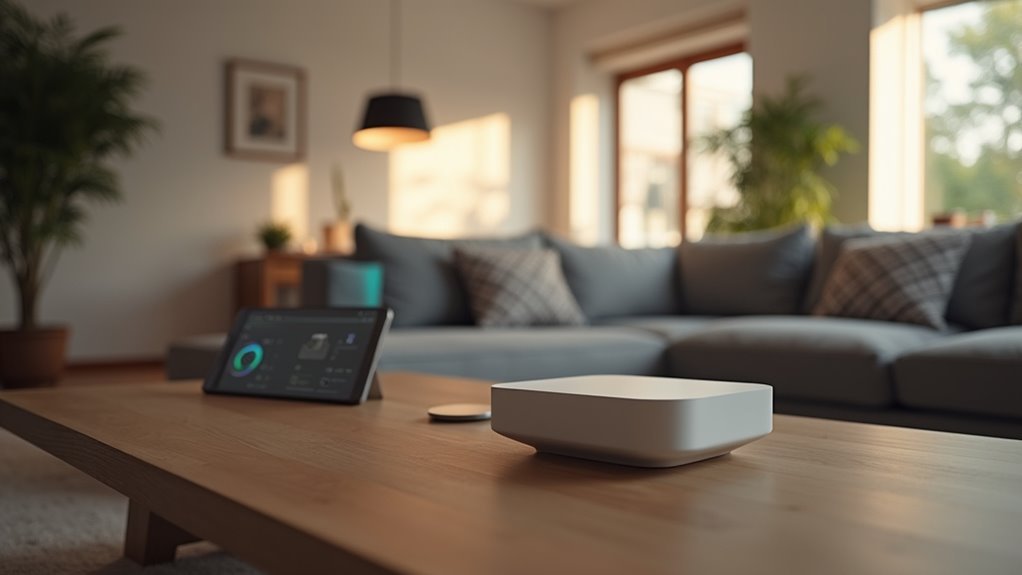
You’ll want to place your smart home hub in a central, elevated location like a shelf or table. Keep it away from electronic interference and close to your Wi-Fi router for ideal connectivity.
What Is the Point of a Smart Home Hub?
You’ll centralize control of all your smart devices through one system. It connects different protocols like Zigbee and Z-Wave, enables voice control, and creates seamless automation while reducing network congestion.
What Are the Pros and Cons of Smart Hubs?
You’ll enjoy centralized control of multiple devices through one interface with voice commands and broad compatibility. However, you’ll face ecosystem limitations, potentially fewer device options, and restricted features depending on your chosen hub.