
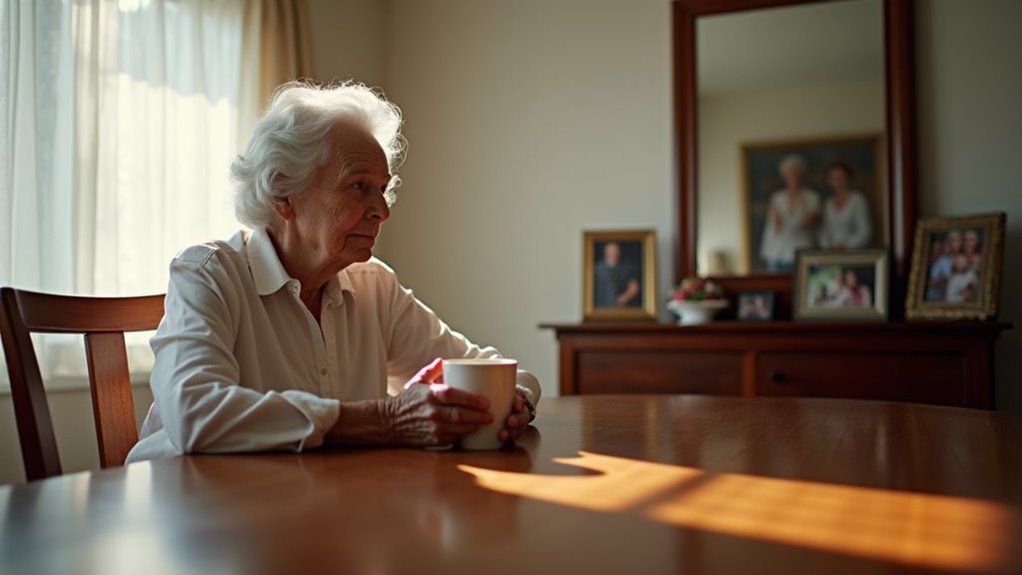
You can’t be everywhere at once, but you can’t ignore the nagging worry about your aging parents living alone. Whether they’re across town or across the country, that constant concern about their safety, health, and daily well-being weighs heavily on your mind. The question isn’t whether you should monitor them—it’s how to do it effectively without overstepping boundaries or compromising their independence. The solution lies in finding the right balance.
Safety and Security Peace of Mind

When you’re caring for elderly parents from a distance, technology transforms worry into reassurance through extensive monitoring solutions. Medical alert systems provide instant emergency assistance, giving you peace of mind knowing help arrives quickly when needed.
Technology bridges the gap between distance and care, turning anxious moments into confident knowledge that your elderly parents remain safe and protected.
Video monitoring options let you visually check your parents’ well-being while respecting their privacy and maintaining their independence.
Remote health monitoring devices track essential signs continuously, alerting you to potential health concerns before they become serious. Smart pill dispensers prevent dangerous medication errors by ensuring proper adherence to prescribed schedules.
Regular video calls keep you connected to their daily routines and any condition changes.
These monitoring devices create thorough safety and security networks that bridge geographical distances, allowing you to provide attentive care remotely.
Early Detection of Health Changes
You’ll need to stay alert for subtle changes in your elderly parent’s behavior, appearance, and daily routines that could signal developing health issues.
Recognizing warning signs early—like changes in mobility, confusion, or neglecting personal hygiene—can help you intervene before minor problems become serious medical crises.
Recognizing Warning Signs
How can you spot the subtle shifts that signal your elderly parent needs more support? Watch for declining hygiene or neglected housekeeping, as these changes often indicate struggles with daily self-care tasks.
Pay attention to repetitive questions or confusion about time and place—these can be early warning signs of memory loss requiring professional assessment.
Notice if your parent experiences unintentional weight loss, which may result from cooking difficulties or social isolation. Significant mood changes, like increased sadness or withdrawal, can signal underlying health concerns needing immediate attention.
Also monitor their social engagement levels. When parents reduce participation in activities or limit interactions with friends, they’re likely experiencing loneliness or depression. These behavioral shifts require your intervention and possibly professional support.
Preventing Medical Emergencies
Since early detection often means the difference between a minor health issue and a life-threatening emergency, establishing consistent monitoring routines becomes your most powerful prevention tool.
Wearable devices provide real-time crucial signs data, letting you spot anomalies before they escalate into crises. Smart pill dispensers guarantee proper medication adherence, preventing dangerous complications from missed doses that could lead to hospitalizations.
Fall detection systems like Philips Lifeline® enable immediate emergency response, dramatically reducing injury severity.
Regular video calls allow you to visually assess your parents’ health and well-being, catching subtle changes in hygiene or behavior that signal developing problems. Weight fluctuations and memory changes often indicate underlying conditions requiring prompt medical attention.
This proactive monitoring approach transforms potential emergencies into manageable health concerns.
Medication Adherence and Management

You can greatly improve your elderly parent’s medication safety by investing in smart pill dispensers that automatically alert them when it’s time for their doses.
These devices let you track whether medications are taken as prescribed through connected apps, giving you peace of mind about compliance.
Most systems also include emergency communication features that instantly notify you or healthcare providers if doses are missed or if your parent needs immediate assistance.
Smart Pill Dispensers
When managing medication becomes challenging for your elderly parents, smart pill dispensers offer an innovative solution that transforms daily health routines. These devices provide medication alerts that guarantee your parents take their prescriptions on time, eliminating the worry of missed doses that can compromise their health.
Advanced features like facial recognition and PIN verification assure the right person receives the correct medication. You’ll receive real-time updates through connected apps that track adherence patterns, allowing you to monitor when doses are taken or skipped.
Many dispensers include two-way video calling functionality, enabling immediate communication when issues arise.
For long-distance caregiving, smart pill dispensers bridge the gap between physical presence and effective care management, providing peace of mind while maintaining your parents’ independence.
Tracking Medication Compliance
Beyond simply dispensing medications at the right times, these smart devices excel at creating extensive compliance records that transform how you monitor your parents’ health management.
Tracking medication compliance becomes effortless when smart pill dispensers automatically log every dose taken or missed, providing detailed adherence statistics that you can access instantly.
Remote monitoring capabilities allow you to identify patterns and intervene quickly when problems arise. You’ll receive real-time notifications if your parent misses doses or takes medications incorrectly, enabling timely responses that prevent health complications.
These extensive records also prove invaluable during medical appointments, giving healthcare providers accurate data to adjust treatment plans. The peace of mind that comes from knowing your parent’s medication regimen is properly managed can’t be overstated.
Emergency Communication Features
Smart pill dispensers have evolved to include sophisticated emergency communication features that create critical safety nets for your elderly parents. These alert systems provide immediate access to professional response teams when medication-related emergencies occur. Your parents can instantly connect with trained personnel who’ll assess situations and coordinate appropriate medical intervention.
The monitoring system integrates multiple communication channels to guarantee reliable emergency response:
| Feature Type | Response Method | Connection Time |
|---|---|---|
| Voice Communication | Direct phone line | Under 30 seconds |
| Video Calling | Two-way visual contact | Real-time |
| Text Alerts | SMS notifications | Immediate |
| Mobile App | Caregiver notifications | Instant push alerts |
| Professional Monitoring | 24/7 response teams | Always available |
This extensive emergency communication network means you’ll receive immediate notifications while guaranteeing your parents have professional medical support available whenever they need assistance with their medications.
Fall Prevention and Emergency Response

Although falls represent one of the most serious health risks for elderly adults, modern technology offers powerful tools to both prevent these incidents and guarantee rapid response when they occur.
Fall detection systems like Philips Lifeline® medical alert devices can distinguish between actual falls and normal activities, ensuring emergency responses activate only when necessary. These wearable pendants and wristbands provide water-resistant, continuous protection while monitoring your aging parents from afar.
Two-way voice communication connects seniors directly with response teams during emergencies. Wearable health trackers monitor essential signs and activity levels, giving you critical data to assess fall risk remotely.
However, technology works best alongside regular home safety assessments, including proper handrails and adequate lighting installations.
Maintaining Independence While Ensuring Care
Remote monitoring technology empowers your elderly parents to live independently while giving you the oversight needed to guarantee their well-being. This approach creates the perfect balance between respecting their autonomy and providing crucial care and support.
Remote monitoring technology creates the perfect balance between elderly independence and family peace of mind through respectful oversight.
When monitoring elderly parents, you’re investing in solutions that preserve their dignity while ensuring safety:
- Smart medication dispensers track adherence and send alerts, helping parents manage their health independently.
- Wearable devices monitor essential signs and detect emergencies, providing instant communication when help’s needed.
- Regular video check-ins maintain emotional connections while allowing visual assessment of their living conditions.
This technology-driven independence means your parents can engage in daily activities confidently, knowing support systems are in place.
You’ll have peace of mind while they maintain control over their lives.
Regular Communication and Connection
You’ll maintain stronger connections with your elderly parents by establishing a weekly video call schedule that provides regular visual check-ins on their health and well-being.
Technology workshops at senior centers can help your parents become comfortable with video calling platforms, making communication easier and more consistent.
You should also guarantee your parents have reliable emergency communication access, including backup methods like landlines or simple cell phones they can use confidently.
Weekly Video Call Schedule
When distance separates you from your elderly parents, establishing a weekly video call schedule becomes one of the most effective ways to maintain meaningful connection and monitor their well-being.
Video calls through platforms like Zoom or FaceTime allow you to see their faces, assess their environment, and catch subtle changes that phone conversations might miss.
Setting up consistent communication helps you:
- Stay informed about daily routines and emerging health concerns
- Detect early warning signs of cognitive or physical decline
- Reduce isolation and strengthen emotional bonds through visual interaction
Encourage your elderly parents to attend technology workshops at senior centers if they’re uncomfortable with video calling.
As caregivers, you’ll find these scheduled check-ins invaluable for prompt intervention when necessary.
Technology Workshop Benefits
Many seniors feel intimidated by video calling technology, but technology workshops at community centers and libraries offer the perfect solution to bridge this digital gap.
These workshops teach your elderly parents essential skills for using Zoom and FaceTime, enabling regular video calls that maintain strong family connections. You’ll find that participants also learn smart device navigation for medication management and health monitoring applications.
Technology workshops introduce seniors to remote monitoring solutions like wearable devices and emergency alert systems, enhancing their safety while you’re away.
Your parents will gain confidence using technology, reducing isolation through improved digital literacy. Regular workshop attendance creates community connections with peers while developing skills vital for senior care and maintaining long-distance family relationships.
Emergency Communication Access
Emergency communication access forms the cornerstone of effective elderly parent monitoring, as reliable contact methods can mean the difference between timely assistance and dangerous delays.
You’ll want to establish multiple communication pathways that your parents can easily use during both routine check-ins and urgent situations.
Consider implementing these essential emergency communication tools:
- Multiple device options – Guarantee they’ve both landline and mobile phones with large, clearly labeled emergency contacts
- Medical alert systems – Provide wearable devices that connect directly to emergency services with one-button activation
- Video calling capabilities – Enable visual assessment during emergencies to better understand the situation and coordinate appropriate response
Regular practice with these systems helps your parents feel confident using them for daily activities and guarantees they’ll receive the support they need when emergencies arise.
Monitoring Daily Living Activities
Observing your elderly parent’s daily routines can reveal essential insights into their physical and cognitive health that might otherwise go unnoticed. When monitoring becomes part of your care strategy, you’ll spot concerning changes like declining personal hygiene, poor home maintenance, or disrupted sleep patterns that signal potential health issues.
Smart home devices and wearable technology make tracking daily routines easier by sending alerts when unusual patterns occur. You’ll receive notifications about missed medications, extended periods of inactivity, or irregular meal times.
Regular video check-ins provide visual confirmation of their well-being while maintaining personal connection. These monitoring tools help seniors maintain independence while ensuring their safety.
Identifying Signs of Cognitive Decline
You’ll need to watch for memory loss warning signs like repeated questions, forgotten conversations, or misplaced items that occur more frequently than normal forgetfulness.
Behavioral changes indicators include increased confusion, anxiety, or withdrawal from activities your parent once enjoyed.
Daily function decline becomes apparent when familiar tasks like cooking, managing money, or maintaining personal hygiene become increasingly difficult for them to complete independently.
Memory Loss Warning Signs
When should you become concerned about your elderly parent’s memory? Memory loss during aging isn’t always normal, and recognizing warning signs helps you determine when senior care intervention becomes necessary.
Watch for these critical indicators:
- Repetitive questioning – Your parent asks the same questions repeatedly, forgetting previous responses within minutes or hours.
- Getting lost in familiar places – They become confused traversing neighborhoods they’ve known for years, indicating spatial awareness problems.
- Time and place confusion – Forgetting current seasons, days of the week, or their location suggests significant cognitive decline.
Additional warning signs include neglecting personal hygiene, abandoning household chores, and experiencing dramatic mood changes like increased apathy or anxiety.
These behaviors often reflect underlying cognitive issues affecting daily living skills and emotional regulation.
Behavioral Changes Indicators
Beyond memory lapses, dramatic shifts in your parent’s daily behaviors often reveal the earliest stages of cognitive decline.
You’ll notice changes in hygiene habits when your parent neglects personal grooming or maintains increasingly cluttered living spaces. These behavioral changes signal declining cognitive abilities affecting daily functioning.
Watch for significant mood alterations—increased irritability, withdrawal from social interactions, or sudden disinterest in previously enjoyed activities.
These shifts often indicate underlying cognitive or emotional concerns requiring attention for your parents healthcare.
Social withdrawal becomes particularly telling. When your parent reduces communication with friends and family or stops participating in regular activities, it’s a critical indicator of potential health issues.
Unintentional weight loss from cooking difficulties also signals cognitive decline affecting nutrition-related decision-making abilities.
Daily Function Decline
Daily function decline manifests most clearly in your parent’s ability to perform routine tasks they’ve handled independently for decades.
When cognitive decline begins affecting daily functioning, you’ll notice changes that shouldn’t be ignored.
Watch for these key indicators:
- Personal care neglect – Unkempt appearance, poor hygiene, or cluttered living spaces signal declining self-maintenance abilities
- Kitchen difficulties – Trouble cooking familiar meals, expired food in refrigerators, or significant weight loss from eating poorly
- Social withdrawal – Canceling regular activities, avoiding phone calls, or isolating from longtime friends and family members
Social isolation often compounds these problems, creating a cycle where reduced interaction accelerates functional decline.
You’ll want to address these changes promptly, as they typically worsen without intervention and support.
Coordinating Care From Multiple Locations
Although managing your elderly parent’s care becomes more challenging when family members live in different cities or states, coordinating effectively across distances is entirely achievable with the right approach.
You’ll need strong communication strategies, including scheduled video calls to assess your parent’s well-being and discuss health concerns with other caregivers.
Technology becomes your greatest ally in this coordination effort. Smart pill dispensers and remote monitoring systems track medication adherence and essential health metrics, ensuring consistent care across different caregivers.
Caregiving apps like Carely or Lotsa Helping Hands streamline communication and task management among family members.
Don’t overlook local support networks. Engage neighbors and community services for regular check-ins.
Establish a clear emergency plan with accessible healthcare provider contacts, ensuring immediate support regardless of your location.
Technology Solutions for Remote Oversight
When physical distance separates you from your elderly parent, modern technology bridges that gap with sophisticated monitoring solutions that provide peace of mind without compromising their independence.
These technology solutions transform traditional home care into smart homes equipped with extensive oversight capabilities:
- Video monitoring systems like TENVIS wireless cameras offer motion-triggered alerts and two-way audio communication for real-time interaction.
- Smart pill dispensers such as Pria use facial recognition to guarantee medication adherence and send reminders automatically.
- Wearable devices including FitBit and Apple Watch monitor essential signs and activity levels, notifying caregivers through smartphone apps.
Fall detection systems like Philips Lifeline® differentiate between normal movements and actual emergencies, providing immediate assistance.
Home security systems from SimpliSafe and Ring Alarm enhance safety while respecting privacy, sending remote alerts when needed.
Building Local Support Networks
While technology provides invaluable remote monitoring capabilities, creating a robust local support network guarantees your elderly parent has human connections and immediate assistance when needed.
Building local support networks starts with recruiting neighbors, friends, and community members who can provide regular check-ins and practical assistance. You’ll want to engage senior services that facilitate social interactions and activities, helping reduce your parent’s isolation.
Building meaningful relationships with neighbors and community members creates essential safety nets that provide both emotional support and practical daily assistance.
Church volunteers and community groups offer consistent companionship while handling errands or meal preparation. Contact local resources like Milestones at 855-410-6222 for tailored service information.
Establish relationships with nearby family members or friends who can assist with caregiving tasks, enhancing your ability to monitor and respond to your parent’s needs effectively.
Managing Medical Appointments and Healthcare
Beyond establishing support networks in your parent’s community, coordinating their medical care from a distance requires strategic planning and smart technology use.
Managing medical appointments becomes easier when you leverage online scheduling platforms that let you coordinate visits and follow-ups efficiently.
Modern healthcare technology offers several remote monitoring solutions:
- Remote health monitoring devices that track essential signs and alert you to concerning changes
- Smart pill dispensers and medication management tools that guarantee adherence to prescribed regimens
- Virtual consultations that reduce unnecessary in-person visits while maintaining quality care
You’ll find that regular communication with healthcare professionals creates a collaborative approach to your parent’s treatment.
This connectivity keeps you informed about any changes in their care plan, guaranteeing timely interventions when health issues arise.
Reducing Caregiver Stress and Guilt
Although distance caregiving brings unique challenges, you can greatly reduce the stress and guilt that often accompany this responsibility through strategic planning and mindset shifts.
Remote monitoring technologies like smart pill dispensers and medical alert systems guarantee your loved ones receive timely medication and emergency assistance, considerably alleviating your anxiety about their safety.
Regular video calls help reduce guilt by letting you visually assess their well-being while maintaining emotional connections.
Building local support networks with neighbors or home care aides distributes caregiving responsibilities, decreasing your emotional burden.
Engaging community services enhances your parents’ social connections, reducing isolation while providing peace of mind.
Installing safety measures like fall detection devices minimizes risks and helps you feel more secure about their living environment, ultimately reducing caregiver stress.
Creating Comprehensive Care Plans
Your plan should include these essential elements:
- Medication management tools like smart pill dispensers and detailed emergency contact lists
- Remote monitoring technology including wearable devices and home security systems for real-time health updates
- Regular communication schedules with weekly video calls and local support network coordination
You’ll need flexibility in your approach. Review and adjust your plan regularly to accommodate health changes or living situation shifts.
Involving neighbors and home care services enhances your resources, ensuring your parent receives thorough daily assistance and companionship.
Frequently Asked Questions
How to Care for Elderly Parents From Afar?
You’ll need to schedule regular video calls, use remote monitoring technology, implement medication management tools, encourage social activities, and collaborate with local support networks to effectively care for your elderly parents remotely.
What Is the 40-70 Rule for Aging Parents?
The 40-70 rule suggests you should start actively monitoring your parents’ health when you’re 40 and they’re 70. It’s time to discuss care plans, finances, and living arrangements proactively.
Why Am I so Impatient With My Elderly Mother?
You’re experiencing caregiver stress from managing your mother’s declining independence and changing behaviors. The emotional toll, combined with your own responsibilities and generational communication differences, naturally creates frustration and impatience.
What Happens When You Can’t Take Care of an Elderly Parent?
When you can’t care for your elderly parent, they’ll face health declines, safety risks, and daily living struggles. You’ll experience guilt and stress while they risk falls, medication errors, and dangerous isolation without proper support.


Leave a Reply