You’re probably checking your kitchen appliances manually more often than you’d like to admit. Walking to the fridge to verify temperatures, wondering if your dishwasher’s running efficiently, or worrying about whether you left the oven on while you’re away from home. Remote monitoring systems can eliminate these daily concerns and transform how you manage your kitchen operations. The question isn’t whether you need them—it’s which ones will give you the biggest return on investment.
Refrigerator and Freezer Temperature Monitoring Solutions
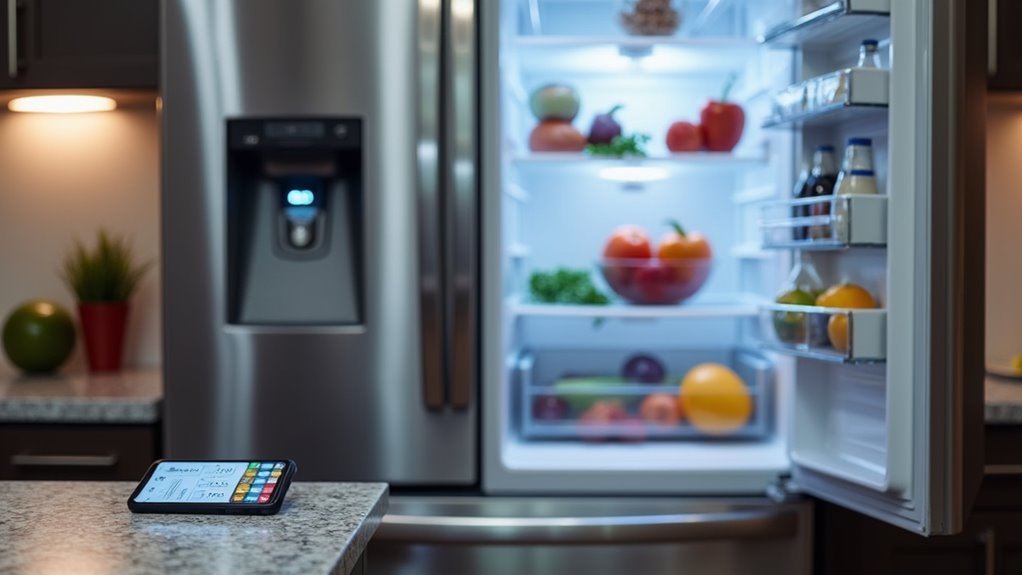
When you’re managing a commercial kitchen, maintaining proper refrigerator and freezer temperatures isn’t just about food quality—it’s critical for safety compliance and preventing costly spoilage.
Remote monitoring systems for refrigerators and freezers automatically alert you via email or text when temperatures deviate from safe ranges, ensuring food safety and restaurant compliance. These systems continuously log temperature data, eliminating manual tracking and streamlining compliance with health regulations.
You’ll gain valuable insights for diagnosing issues through ambient temperature analysis, enabling quick identification of potential problems before they cause food spoilage.
Smart Oven and Range Safety Monitoring Systems
Beyond temperature monitoring for cold storage, smart ovens and range safety systems provide equally important protection for your hot cooking equipment.
These monitoring systems send mobile notifications when temperatures exceed safe cooking levels, preventing potential kitchen hazards. You’ll benefit from remote monitoring capabilities that let you track cooking progress from anywhere in your home.
Smart ovens integrate seamlessly with smart home ecosystems, enabling automation features like preheating based on your cooking preferences.
Temperature monitoring sensors guarantee food safety by alerting you to deviations that could result in undercooked meals. These systems store your cooking history and preferences, helping you replicate successful recipes while logging temperature spikes for safety compliance checks.
Dishwasher Performance and Leak Detection Monitors
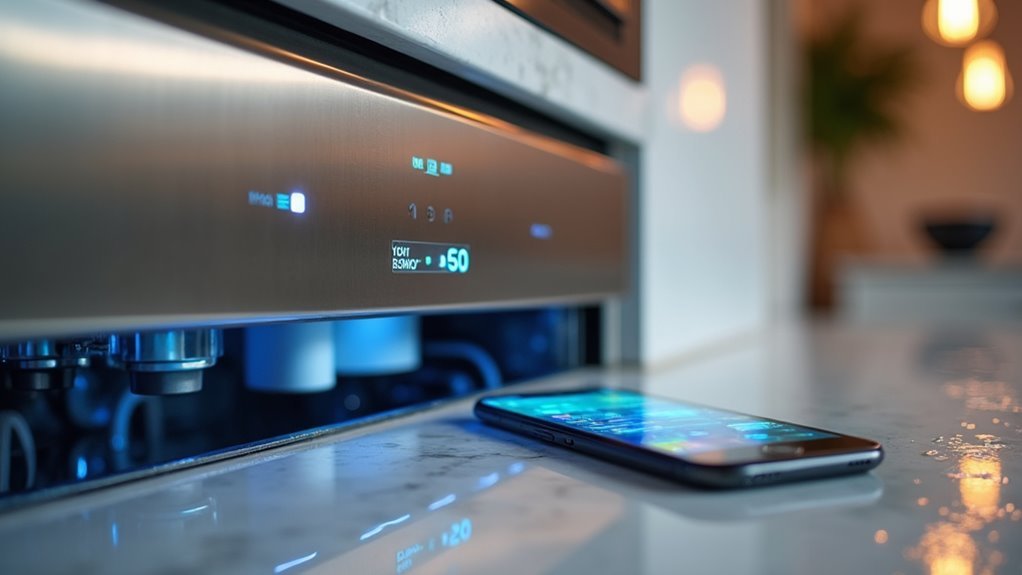
While hot cooking equipment requires careful temperature oversight, your dishwasher performance monitors and leak detection systems offer equally valuable protection for your kitchen’s water safety and efficiency.
These monitoring systems track water usage and cycle efficiency, helping you identify appliance inefficiencies while optimizing energy consumption. Leak detection monitors provide immediate alerts to prevent costly water damage, while advanced systems remotely notify you via email or text about temperature fluctuations or prolonged cycles.
Smart dishwashing monitors deliver real-time efficiency tracking and instant leak alerts, transforming kitchen water management into proactive protection.
- Steam billowing from your smartphone as leak alerts instantly reach you
- Performance data flowing across your screen like digital waterfalls
- Energy savings accumulating like coins dropping into your utility bills piggy bank
- Monitoring technology weaving invisible safety nets throughout your kitchen
- Efficiency meters glowing green as your dishwasher optimizes its cycles
Coffee Maker and Small Appliance Usage Trackers
You can monitor your coffee maker and other small kitchen appliances through smart plug monitoring systems that track real-time energy consumption.
These devices reveal exactly how much power each appliance draws during operation and standby modes, helping you identify energy-wasting “vampire loads.”
Energy usage tracking capabilities let you spot inefficient appliances and optimize their operation schedules to reduce your electricity bills.
Smart Plug Monitoring
Smart plugs transform ordinary kitchen appliances into intelligent energy monitors that reveal exactly how much power your coffee maker, toaster, or blender consumes throughout the day.
These devices provide real-time data on energy consumption patterns while identifying vampire loads that drain power even when appliances aren’t actively running. You’ll gain remote control capabilities through mobile apps, allowing you to schedule appliance operation during off-peak hours for maximum energy savings.
- Watching your coffee maker’s daily energy costs drop from $2.50 to $1.20 through strategic scheduling
- Discovering your microwave consumes 15 watts in standby mode, costing $18 annually
- Setting automatic shutdown timers for forgotten countertop appliances
- Monitoring peak usage hours to optimize your energy efficiency strategy
- Integrating smart plugs with home automation systems for seamless kitchen management
Energy Usage Tracking
Coffee makers and small kitchen appliances become transparent energy consumers when equipped with dedicated usage trackers that reveal their true electrical appetites.
These energy monitoring systems detect vampire loads, exposing how much power your devices draw while sitting idle. You’ll gain real-time monitoring capabilities that transform guesswork into actionable data about your kitchen’s energy usage patterns.
Smart plugs and dedicated energy monitors let you schedule high-consumption appliances during off-peak rates, delivering immediate cost savings. Users typically reduce their energy bills by 7% to 10% through informed habit adjustments.
Advanced systems employ machine learning to recognize unique appliance energy signatures, providing granular insights into specific usage trends. You’ll discover which devices secretly drain power and optimize their operation for maximum efficiency and reduced costs.
Ice Maker and Water Dispenser Monitoring Devices
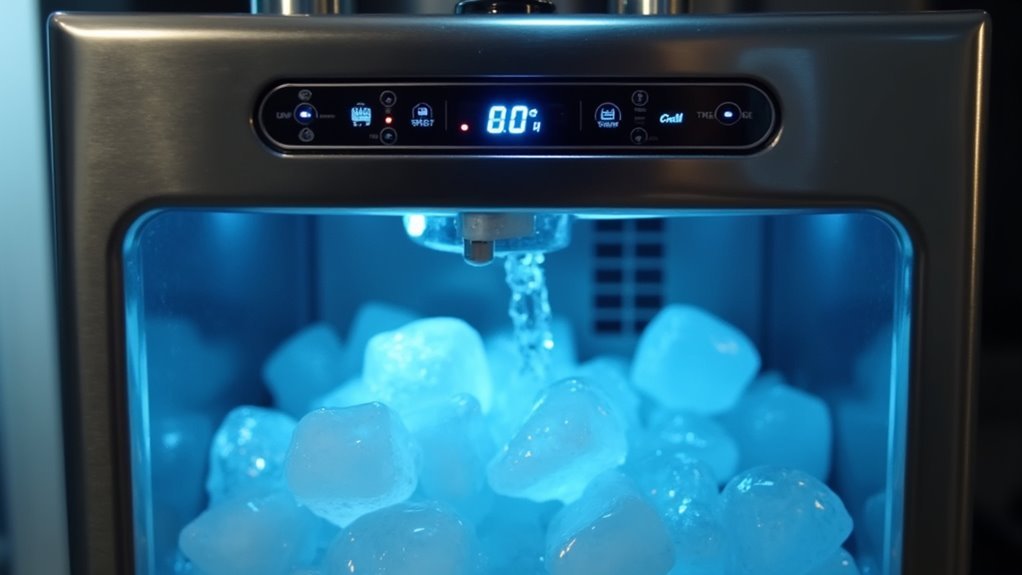
Three critical components make ice maker and water dispenser monitoring devices essential for commercial kitchen operations: temperature tracking, automated compliance logging, and real-time alert systems.
These monitoring devices continuously track your ice maker’s operational status while automatically logging temperature data for health regulations compliance, eliminating manual staff workload.
Modern remote monitoring technology sends text or email alerts when temperature anomalies occur, enabling immediate corrective actions.
Instant notifications prevent costly equipment failures by alerting managers the moment temperature readings indicate potential ice maker problems.
By analyzing ambient temperature patterns, you’ll identify potential issues before they escalate into costly equipment failures requiring extensive maintenance.
- Steam rising from malfunctioning ice dispensers during peak dinner rush
- Smartphones buzzing with temperature alerts at 2 AM
- Digital dashboards displaying real-time operational metrics across multiple locations
- Maintenance crews arriving before equipment completely fails
- Consistent ice cubes flowing smoothly during busy foodservice operations
This investment improves resource management while reducing waste from equipment malfunctions.
Microwave and Convection Oven Remote Diagnostics
While ice makers and water dispensers benefit from continuous temperature monitoring, microwave and convection oven remote diagnostics offer operators extensive insights into cooking performance and equipment health.
These remote monitoring systems deliver real-time alerts for temperature inconsistencies, ensuring food safety standards while maintaining equipment efficiency. You’ll access historical performance data that identifies maintenance needs and helps achieve regulatory compliance.
Advanced technology automatically logs cooking times and temperatures, eliminating manual tracking to streamline kitchen processes.
High-efficiency convection ovens with integrated diagnostics optimize cooking performance while reducing energy consumption, delivering better ROI.
You’ll experience significant cost savings through minimized downtime and improved operational efficiency. This technology transforms your foodservice operations by providing thorough oversight of critical cooking equipment performance.
Kitchen Exhaust and Ventilation System Monitors
Kitchen exhaust and ventilation system monitors provide essential oversight of air quality and safety in commercial foodservice operations, delivering real-time alerts when airflow drops below acceptable thresholds.
These sophisticated monitors continuously track your kitchen exhaust and ventilation system performance, guaranteeing peak airflow while preventing harmful gases buildup. You’ll receive instant email or text notifications when air quality deteriorates, enabling swift corrective action.
Advanced monitors integrate seamlessly with building management systems, automatically adjusting fan operation based on real-time cooking activity. This smart automation delivers substantial energy savings by enhancing ventilation during non-peak hours.
Most importantly, continuous monitoring guarantees compliance with health and safety regulations.
- Steam billowing freely through properly functioning exhaust hoods
- Clean air circulating throughout busy kitchen workstations
- Automated fans adjusting speed based on cooking intensity
- Digital dashboards displaying real-time air quality metrics
- Alert notifications preventing dangerous gas accumulation
Frequently Asked Questions
Is a Home Energy Monitor Worth It?
You’ll likely save 7-10% on energy bills, making most monitors worthwhile investments. If you’re actively engaged and implement behavioral changes, you could achieve up to 20% savings, easily offsetting the initial cost.
What Is the Best Way to Monitor Electricity Usage?
You’ll get best results by installing a whole-home energy monitor like Sense or Emporia Vue that tracks real-time usage and identifies individual appliances, then actively engaging with the data daily.
What Is the Alternative to Sense?
You can choose the Emporia Energy Gen 3 Vue as an alternative. It costs $100, provides real-time monitoring without machine learning, and relies on your input for appliance identification instead.
How Can I Monitor My Whole House Electricity?
You can install a whole-house energy monitor like Sense or Emporia Vue directly to your electrical panel. These devices track real-time consumption, identify individual appliances, and connect to smartphone apps for remote monitoring.