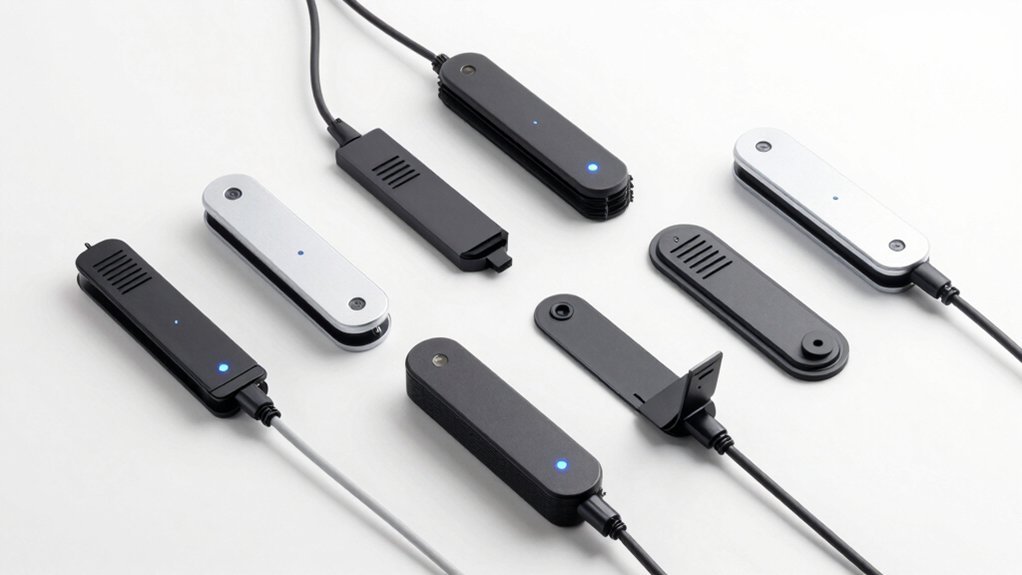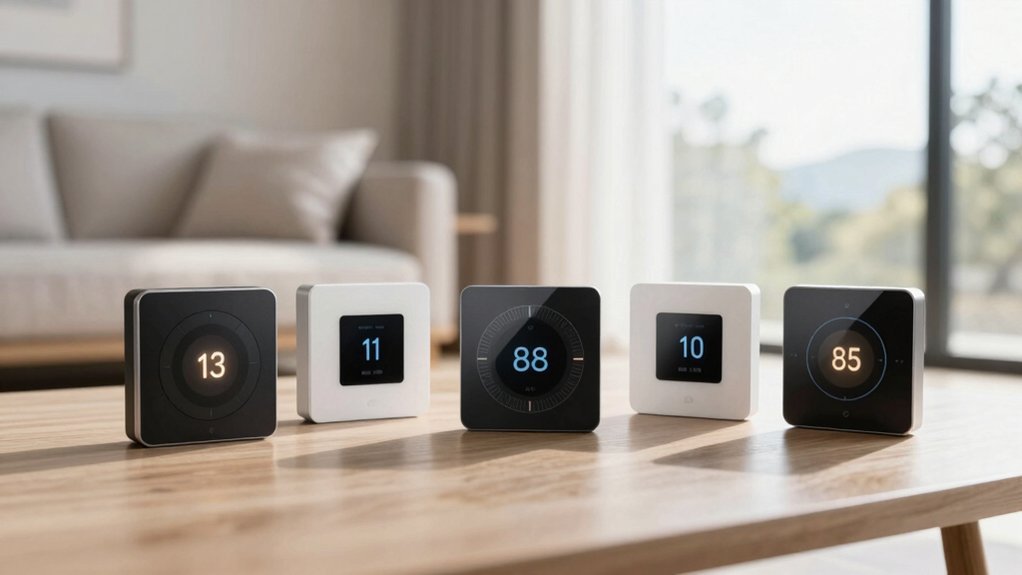
You’re probably spending more on energy than necessary because your home isn’t responding intelligently to temperature changes. Modern smart sensors don’t just measure—they learn your habits, alert you to problems before they cost you money, and integrate seamlessly with your existing systems. But which sensors truly deliver on their promises? We’ll break down the top performers and what actually matters when you’re choosing.
| GoveeLife WiFi Hygrometer Thermometer Sensor 3 Pack |  | Best Smart Home Integration | Temperature Accuracy: ±0.54°F / ±0.3°C | Humidity Accuracy: ±3% RH | Data Refresh Rate: Every 2 seconds | CHECK ON AMAZON | Read Our Analysis |
| Govee Indoor Hygrometer Thermometer with Bluetooth (3-Pack) |  | Best Display & Readability | Temperature Accuracy: ±0.54°F | Humidity Accuracy: ±3% RH (40% improvement) | Data Refresh Rate: Up to 2 seconds | CHECK ON AMAZON | Read Our Analysis |
| Govee Digital Hygrometer Thermometer with Bluetooth App Control |  | Best Compact Design | Temperature Accuracy: ±0.54°F | Humidity Accuracy: ±3% RH | Data Refresh Rate: Up to 2 seconds | CHECK ON AMAZON | Read Our Analysis |
| Govee WiFi Thermometer Hygrometer with Bluetooth Sensor |  | Best Hybrid Connectivity | Temperature Accuracy: ±0.54°F / ±0.3°C | Humidity Accuracy: ±3% RH | Data Refresh Rate: Every 2 seconds | CHECK ON AMAZON | Read Our Analysis |
| YoLink Smart Temperature & Humidity Sensor (2-Pack) |  | Best Long-Range Coverage | Temperature Accuracy: Not specified | Humidity Accuracy: Not specified | Data Refresh Rate: Not specified | CHECK ON AMAZON | Read Our Analysis |
More Details on Our Top Picks
GoveeLife WiFi Hygrometer Thermometer Sensor 3 Pack
Why settle for a single temperature monitor when you can deploy three? The GoveeLife WiFi Hygrometer Thermometer Sensor 3 Pack gives you comprehensive coverage across your home. You’ll get high-precision readings with temperature accuracy of ±0.54°F and humidity ±3% RH, refreshing every 2 seconds. The app notifies you instantly when conditions shift, and you can preset alarms for temperature and humidity thresholds. With 2-year battery life and a compact, portable design, you’ll easily monitor wine cellars, basements, greenhouses, and bedrooms. The gateway pairs up to 10 sensors, and you’ll access 20-day trend charts plus two years of historical data—all through the intuitive app interface.
- Temperature Accuracy:±0.54°F / ±0.3°C
- Humidity Accuracy:±3% RH
- Data Refresh Rate:Every 2 seconds
- Data Storage & Export:20-day trend charts; export from past 2 years
- Battery Life:2 years
- Remote Monitoring Range:WiFi (via gateway); up to 10 sensors pairable
- Additional Feature:Pairs up to 10 sensors
- Additional Feature:Compact design with lanyard
- Additional Feature:20-day trend charts included
Govee Indoor Hygrometer Thermometer with Bluetooth (3-Pack)
If you’re monitoring conditions across multiple rooms—whether you’re tending a greenhouse, protecting a wine collection, or keeping tabs on your baby’s nursery—the Govee Indoor Hygrometer Thermometer 3-Pack delivers reliable, affordable coverage. Each unit features a 3-inch LCD display with Swiss-made sensors that measure temperature to ±0.54°F and humidity to ±3% RH. You’ll get instant app alerts when conditions drift outside your preferred range, plus up to 2 years of exportable data for tracking trends. With 60-meter Bluetooth range and 2-second refresh speeds, you’ll monitor your spaces accurately without unnecessary complexity.
- Temperature Accuracy:±0.54°F
- Humidity Accuracy:±3% RH (40% improvement)
- Data Refresh Rate:Up to 2 seconds
- Data Storage & Export:20-day online storage; export past 2 years to CSV
- Battery Life:Not specified
- Remote Monitoring Range:196ft/60m Bluetooth
- Additional Feature:3-inch bright LCD display
- Additional Feature:Comfort indicators: dry/comfort/wet
- Additional Feature:Swiss-made smart sensor
Govee Digital Hygrometer Thermometer with Bluetooth App Control
The Govee Digital Hygrometer Thermometer H5075 stands out for anyone monitoring conditions across multiple rooms or spaces without constant manual checking. You’ll appreciate the Swiss-made sensor’s impressive accuracy—±0.54°F for temperature and ±3% RH for humidity—with readings refreshing every two seconds. The bright 3-inch LCD display shows comfort indicators instantly, while Bluetooth connectivity extends 164ft so you can monitor from anywhere via the smart app. You’ll receive alerts when conditions drift out of range, and you can track Max/Min records plus 20-day curve graphs. The ability to export two years of data in CSV format makes this ideal for greenhouses, wine cellars, or any environment requiring detailed environmental tracking.
- Temperature Accuracy:±0.54°F
- Humidity Accuracy:±3% RH
- Data Refresh Rate:Up to 2 seconds
- Data Storage & Export:20-day curve graphs; export past 2 years to CSV
- Battery Life:Not specified
- Remote Monitoring Range:164ft Bluetooth
- Additional Feature:Max/Min temperature records
- Additional Feature:164ft Bluetooth remote control
- Additional Feature:Large easy-to-read numbers
Govee WiFi Thermometer Hygrometer with Bluetooth Sensor
For those who need precise environmental monitoring across multiple rooms, Govee’s H5103 WiFi Thermometer Hygrometer delivers Swiss-made accuracy with the convenience of remote access. You’ll get temperature readings within ±0.54°F and humidity within ±3% RH, refreshing every two seconds. The electronic ink display stays readable without draining your batteries—expect roughly six months per AA pair. Via the Govee Home App, you’ll monitor real-time data from anywhere using 2.4G WiFi or Bluetooth. Set smart alerts for temperature and humidity ranges, and you’ll receive instant notifications when readings drift outside your preset parameters. You can also export two years of historical data for trend analysis.
- Temperature Accuracy:±0.54°F / ±0.3°C
- Humidity Accuracy:±3% RH
- Data Refresh Rate:Every 2 seconds
- Data Storage & Export:13-day data graphs; export past 2 years
- Battery Life:~6 months (1.5V AA alkaline)
- Remote Monitoring Range:WiFi or Bluetooth (2.4G WiFi only)
- Additional Feature:Electronic ink screen display
- Additional Feature:6-month battery life
- Additional Feature:Dual connectivity: WiFi + Bluetooth
YoLink Smart Temperature & Humidity Sensor (2-Pack)
Looking to monitor multiple rooms without worrying about WiFi dead zones? YoLink’s 2-pack sensor uses LoRa technology to reach up to 1/4 mile, easily penetrating basements, garages, and metal structures where WiFi fails. You’ll monitor temperature and humidity simultaneously across two locations, receiving alerts via push notifications, email, or SMS. The hub connects through Ethernet or WiFi, while sensors run for up to two years on batteries. You’ll get twenty free SMS alerts monthly and can expand your setup with additional YoLink sensors. Alexa integration lets you check temperatures by voice, and IFTTT compatibility opens automation possibilities for your smart home.
- Temperature Accuracy:Not specified
- Humidity Accuracy:Not specified
- Data Refresh Rate:Not specified
- Data Storage & Export:Not specified
- Battery Life:Up to 2 years
- Remote Monitoring Range:Up to 1/4 mile LoRa range
- Additional Feature:LoRa long-range up 1/4 mile
- Additional Feature:Works in metal enclosures
- Additional Feature:SMS/email/push notifications included
Factors to Consider When Choosing Smart Temperature Sensors
You’ll want to evaluate connectivity range and coverage to ensure your sensor reaches your hub reliably, then assess accuracy and sensor quality so you’re getting trustworthy temperature readings. Battery life and power options matter substantially since you won’t want frequent replacements, and you should confirm the device offers robust data storage and export capabilities for tracking trends over time. Finally, check that the alert notification system meets your needs so you’re promptly informed of temperature changes that matter to your home.
Connectivity Range and Coverage
How far can your smart temperature sensor actually reach? The answer depends on your connectivity choice. WiFi sensors let you monitor remotely from anywhere with internet, though they’ll need a 2.4 GHz network and a local hub. Bluetooth-only options work within tens to a few hundred feet, requiring proximity or a connected device for data access. If you’re covering larger spaces or multiple areas, LoRa-based sensors excel with long-range, low-power coverage extending up to a quarter-mile in open air. Some systems combine WiFi and Bluetooth, giving you both remote access and local alerts. Your chosen method also determines how you’ll receive data—through local storage, cloud export, or SMS/email notifications.
Accuracy and Sensor Quality
What separates a reliable smart temperature sensor from an unreliable one? Accuracy and sensor quality. You’ll want devices advertising temperature accuracy around ±0.54°F (±0.3°C) and humidity accuracy near ±3% RH—these tight tolerances ensure dependable indoor climate tracking. Look for sensors with 2-second refresh rates that detect rapid environmental changes in real time. Swiss-made components frequently indicate high-quality construction and stable long-term performance. Dual-sensor or high-precision models reduce variability across readings, improving consistency between devices. Quality sensors maintain small day-to-day drift, enabling you to track accurate max/min records and meaningful trends. Don’t compromise on sensor quality; it’s the foundation for your smart home’s environmental intelligence.
Battery Life and Power
Battery life is significantly the most overlooked factor when selecting a smart temperature sensor, yet it directly impacts your long-term maintenance costs and system reliability. You’ll find arguably variations across technologies: traditional Bluetooth and Wi-Fi sensors typically last months on standard batteries, while LoRa-based models can run for years thanks to superior power efficiency.
Your refresh rate matters considerably. If you’re updating readings every two seconds, you’ll drain batteries faster than sensors checking temperature every few minutes. Consider whether you need real-time data or if less frequent updates suit your needs.
Evaluate battery type options carefully. Replaceable AA alkaline batteries offer convenience, while rechargeable alternatives reduce waste. Some models feature power-saving sleep modes and local storage that extend endurance significantly. Balance your monitoring requirements against maintenance intervals you’re willing to manage.
Data Storage and Export
Where’s your temperature data going, and can you actually access it when you need it? Most sensors offer free cloud storage with a 20-day window for recent history, letting you review patterns without extra costs. You’ll want to check each model’s export capabilities—many support CSV format covering up to two years of data, perfect for analyzing seasonal trends. Some devices store information locally on the device or app, giving you offline access before syncing to the cloud. Data visualization through curve graphs and charts helps you spot temperature patterns easily. However, export availability varies significantly by product; some provide continuous exports while others limit you to predefined timeframes. Verify these features match your tracking needs before purchasing.
Alert Notification Systems
Once you’ve settled on how you’ll access and store your temperature data, you’ll want to contemplate how you’ll actually get notified when things go wrong. You can receive alerts via app, email, SMS, or push notifications when readings exceed your preset thresholds. Real-time alerts prompt immediate action, though refresh rates vary—some systems update every 2 seconds, others less frequently. Consider how quickly you need notifications delivered. Critical alerts often bypass silent modes, ensuring you’ll see them even in quiet environments. This feature matters if you’re monitoring sensitive spaces like wine cellars or nurseries. Verify that your chosen system supports multiple notification channels so you’ll never miss important temperature changes, regardless of your location or device availability.
Display and User Interface
How you interact with your temperature sensor matters just as much as the data it collects. You’ll find displays ranging from 3-inch LCDs with large numbers to electronic ink screens that consume minimal power and remain readable under various lighting conditions. Most units show max/min temperature and humidity readings, letting you assess historical trends instantly. Comfort indicators display whether conditions are dry, comfortable, or wet—eliminating guesswork about your environment. Refresh rates typically update every 2 seconds, giving you near real-time environmental feedback. Many sensors complement their on-device displays with mobile apps featuring curve graphs and trend visualizations, providing deeper historical insight into your home’s climate patterns and helping you make informed adjustments.
Installation and Setup Ease
Setting up your smart temperature sensor shouldn’t require a tech degree or hours of frustration. Most modern sensors get you connected within a minute through dedicated mobile apps—you’ll simply select your device and follow straightforward pairing steps. However, compatibility matters: some sensors demand 2.4 GHz Wi-Fi networks exclusively, which could be problematic if your router only supports 5G or older standards.
Consider whether you need a hub-based system or prefer direct connectivity. Hubs extend coverage across multiple sensors and your home but add complexity. Direct Bluetooth pairing works well for single rooms, though range typically maxes out around 164 feet.
Look for sensors offering data export options and cloud storage—features like 20-day online backup simplify historical monitoring without extra configuration hassles.
Price and Value Proposition
What’s the true cost of a smart temperature sensor beyond its sticker price? You’ll need to evaluate several factors that impact long-term value. Compare per-unit costs in multi-packs, as 3-pack options often reduce expenses versus single purchases. Check data storage limits—20 days online and 2-year export capabilities—to ensure they meet your analytics needs. Factor in connectivity costs; 2.4 GHz Wi-Fi differs significantly from LoRa hub requirements. Consider battery replacement expenses against remote alert features like app, email, and SMS notifications. Finally, assess whether higher accuracy (±0.3% RH) and faster refresh rates justify premium pricing for your specific needs. These elements collectively determine whether you’re truly getting value for your investment.
Frequently Asked Questions
Do Smart Temperature Sensors Work Without Wifi or Internet Connection?
Yes, you can use most smart temperature sensors without WiFi or internet. You’ll operate them locally through Bluetooth or a hub, though you won’t access remote monitoring or learning features that require cloud connectivity for full functionality.
How Long Do Smart Temperature Sensor Batteries Typically Last Before Replacement?
You’ll typically get 1-2 years of battery life from most smart temperature sensors, though some premium models last 3-5 years. Your actual battery longevity depends on how frequently the sensor transmits data and your specific device’s efficiency.
Can Smart Temperature Sensors Integrate With Existing Smart Home Systems Like Alexa?
You can absolutely integrate most smart temperature sensors with Alexa. You’ll connect your sensors through their dedicated app, then enable the Alexa skill. You’ll control temperature settings and receive alerts directly through your Alexa device.
What Is the Temperature and Humidity Range Accuracy of These Sensors?
You’ll find most modern smart temperature sensors maintain accuracy within ±1°C for temperature and ±3% for humidity. You should verify specific models’ specs, as premium sensors offer tighter tolerances, while budget options typically show wider ranges.
Are Smart Temperature Sensors Safe to Use Around Pets and Children?
Yes, you’ll find most smart temperature sensors are safe around pets and children. They’re typically wall-mounted, contain no toxic materials, and don’t emit harmful radiation. You should still keep small parts away from curious toddlers.