You’re probably wondering how to automate your home without installing motion sensors everywhere. Smart occupancy sensors can transform your space, but there’s a catch—choosing the right one matters. Different ecosystems, detection methods, and battery lives create real trade-offs. We’ll walk you through seven top options so you can find exactly what fits your setup.
| Lutron Caseta Smart Motion Sensor (PD-OSENS-WH) | 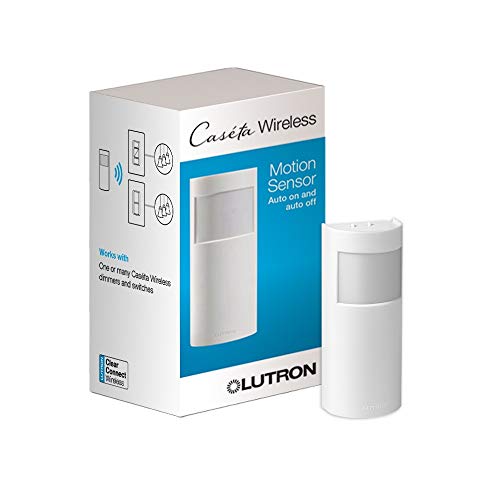 | Best for Customization | Detection Technology: Passive infrared motion detection | Detection Range: Up to 60 feet | Smart Ecosystem Compatibility: Lutron Caseta devices only | CHECK ON AMAZON | Read Our Analysis |
| Kasa Smart Motion Sensor Light Switch 2-Pack |  | Best Value | Detection Technology: Advanced motion detection with daylight sensing | Detection Range: Not specified | Smart Ecosystem Compatibility: Alexa, Google Assistant, SmartThings | CHECK ON AMAZON | Read Our Analysis |
| TP-Link Tapo Motion Sensor with Smart Detection (T100) |  | Budget-Friendly Pick | Detection Technology: Passive infrared motion detection | Detection Range: Up to 23 feet (7 meters) | Smart Ecosystem Compatibility: Tapo app and devices | CHECK ON AMAZON | Read Our Analysis |
| Meross Matter Human Presence Sensor with Motion Detection | Most Advanced Detection | Detection Technology: 3-in-1 (mmWave radar, PIR, light sensor) | Detection Range: Up to 12 meters (motion); 6 meters (presence) | Smart Ecosystem Compatibility: HomeKit, Alexa, Google Home, Home Assistant, Matter | CHECK ON AMAZON | Read Our Analysis | |
| Kasa Smart Motion Sensor Dimmer Switch (2-Pack) |  | Best Dimming Control | Detection Technology: Advanced motion detection with daylight sensing | Detection Range: Not specified | Smart Ecosystem Compatibility: Alexa, Google Assistant, SmartThings, Kasa ecosystem | CHECK ON AMAZON | Read Our Analysis |
| GoveeLife Human Presence Sensor with mmWave Radar | Most Accurate Presence | Detection Technology: mmWave radar and infrared dual detection | Detection Range: Up to 26 feet | Smart Ecosystem Compatibility: Alexa, Google Assistant, IFTTT | CHECK ON AMAZON | Read Our Analysis | |
| ecobee Smart Sensor 2 Pack for Smart Thermostats |  | Best for Thermostats | Detection Technology: Occupancy and motion detection | Detection Range: Up to 60 feet | Smart Ecosystem Compatibility: ecobee Smart Thermostats only | CHECK ON AMAZON | Read Our Analysis |
More Details on Our Top Picks
Lutron Caseta Smart Motion Sensor (PD-OSENS-WH)
If you’re seeking a motion sensor that combines exceptional battery life with seamless smart home integration, the Lutron Caseta Smart Motion Sensor delivers. This white model (PD-OSENS-WH) detects fine motion across a 180° field of view and reaches up to 60 feet. You’ll appreciate its 10-year battery life—three times longer than industry standards—requiring no wiring for installation. The sensor controls multiple Caseta devices simultaneously, including switches, dimmers, fan controls, and smart shades. You can customize active hours, set triggers based on time or sunrise/sunset, and adjust light levels per device. A Caseta Smart Hub unlocks app-based scheduling and advanced customization for your automation needs.
- Detection Technology:Passive infrared motion detection
- Detection Range:Up to 60 feet
- Smart Ecosystem Compatibility:Lutron Caseta devices only
- Power Source:Battery-powered (10-year life)
- Hub Requirement:Requires Caseta Smart Hub (L-BDG2-WH)
- Automation Capabilities:Customizable per-device settings; time-based and sunrise/sunset triggers
- Additional Feature:10-year battery life
- Additional Feature:Controls multiple device types
- Additional Feature:180° detection field
Kasa Smart Motion Sensor Light Switch 2-Pack
Looking for a reliable motion sensor that doesn’t require a hub or complex installation? The Kasa Smart Motion Sensor Light Switch 2-Pack delivers hands-free lighting control with advanced motion detection. You’ll appreciate the daylight detection feature, which prevents unnecessary daytime activation, while Smart Mode and Away Mode let you customize automation routines. The switches work seamlessly with Alexa and Google Assistant for voice control, plus you can manage everything through the free Kasa app from anywhere. They’re compatible with most bulb types up to 600W and feature UL certification. With over 7 million trusted users worldwide, this 2-pack provides straightforward, dependable smart home automation.
- Detection Technology:Advanced motion detection with daylight sensing
- Detection Range:Not specified
- Smart Ecosystem Compatibility:Alexa, Google Assistant, SmartThings
- Power Source:Hardwired (requires neutral wire)
- Hub Requirement:No hub required
- Automation Capabilities:Away Mode; scene and action groupings
- Additional Feature:Daylight detection prevents activation
- Additional Feature:Includes 2-pack bundle
- Additional Feature:Voice control included
TP-Link Tapo Motion Sensor with Smart Detection (T100)
The TP-Link Tapo Motion Sensor with Smart Detection (T100) stands out as an excellent choice for users who want reliable motion detection without breaking the bank. You’ll appreciate its 120-degree detection range spanning up to 23 feet, with adjustable sensitivity settings. The sensor pairs with the Tapo Hub H100, enabling smart automation to control your lighting and other devices. You get real-time app notifications and can customize detection timeframes. With a single CR2450 battery lasting up to two years, you’ll enjoy minimal maintenance. Its flexible mounting options—adhesive or magnetic—work seamlessly for indoor spaces. The hub supports up to 64 sensors, making it scalable for comprehensive home coverage.
- Detection Technology:Passive infrared motion detection
- Detection Range:Up to 23 feet (7 meters)
- Smart Ecosystem Compatibility:Tapo app and devices
- Power Source:Battery-powered (up to 2 years)
- Hub Requirement:Requires Tapo Hub H100
- Automation Capabilities:Smart Actions for device control
- Additional Feature:Adjustable detection range options
- Additional Feature:Supports up to 64 sensors
- Additional Feature:2-year battery longevity
Meross Matter Human Presence Sensor with Motion Detection
Want a sensor that detects presence even when nobody’s moving? The Meross Matter Human Presence Sensor combines mmWave radar, PIR, and light sensing into one compact device. You’ll get motion detection up to 12 meters and presence detection up to 6 meters, making it ideal for automating lights and climate control. Its pet-proof shield prevents false triggers from animals or robot vacuums. The sensor works seamlessly with HomeKit, Alexa, Google Home, and Home Assistant via Matter, requiring no hub for most ecosystems. Wall-mounted with a 180° adjustable pivot and 360° rotation, it’s both versatile and reliable for your smart home.
- Detection Technology:3-in-1 (mmWave radar, PIR, light sensor)
- Detection Range:Up to 12 meters (motion); 6 meters (presence)
- Smart Ecosystem Compatibility:HomeKit, Alexa, Google Home, Home Assistant, Matter
- Power Source:Corded electric (continuous power)
- Hub Requirement:No hub required (Matter hub optional)
- Automation Capabilities:Local control; multi-ecosystem automation
- Additional Feature:3-in-1 sensing (radar/PIR/light)
- Additional Feature:Pet-proof shield included
- Additional Feature:Corded electric power
Kasa Smart Motion Sensor Dimmer Switch (2-Pack)
Need hands-free lighting that adapts to natural light without requiring a separate hub? The Kasa Smart Motion Sensor Dimmer Switch delivers exactly that. This 2-pack combines advanced motion detection with daylight sensing, so lights automatically activate when you enter a room and shut off after a preset duration—but only when it’s actually dark outside. You’ll control brightness from 1–100% via voice commands through Alexa or Google Assistant, or use the Kasa app remotely. It supports up to 150W of dimmable LED bulbs and requires neutral wiring. Setup’s straightforward with guided app installation, and you’re backed by a 2-year warranty and 7 million trusted users.
- Detection Technology:Advanced motion detection with daylight sensing
- Detection Range:Not specified
- Smart Ecosystem Compatibility:Alexa, Google Assistant, SmartThings, Kasa ecosystem
- Power Source:Hardwired (requires neutral wire)
- Hub Requirement:No hub required
- Automation Capabilities:Away Mode; dimming with brightness control; scene and action groupings
- Additional Feature:Dimmable brightness 1-100%
- Additional Feature:Dimmer switch functionality
- Additional Feature:Adjustable brightness by routine
GoveeLife Human Presence Sensor with mmWave Radar
Looking for a sensor that won’t mistake your cat for an intruder? The GoveeLife Human Presence Sensor uses dual mmWave radar and infrared detection to distinguish human presence from pets and plants. You’ll get accurate distance and duration readings up to 26 feet away. It supports Alexa, Google Assistant, and IFTTT for seamless automation. The 360° rotating, 120° folding design adapts to any room layout. You can toggle between high and normal detection modes based on your habits. Just ensure continuous power and a 2.4 GHz Wi-Fi connection for reliable performance in your home automation setup.
- Detection Technology:mmWave radar and infrared dual detection
- Detection Range:Up to 26 feet
- Smart Ecosystem Compatibility:Alexa, Google Assistant, IFTTT
- Power Source:Continuously powered
- Hub Requirement:No hub required
- Automation Capabilities:Flexible automation based on presence, duration, and distance
- Additional Feature:Detects presence and duration
- Additional Feature:Measures distance to device
- Additional Feature:High/normal mode selectable
ecobee Smart Sensor 2 Pack for Smart Thermostats
If you’re tired of heating or cooling empty rooms while your bedroom stays uncomfortable, the ecobee Smart Sensor 2 Pack is your solution. These wireless sensors communicate room temperature and occupancy to your ecobee thermostat from up to 60 feet away, even through walls and floors. Your thermostat then adjusts automatically, preventing energy waste in unoccupied spaces while maintaining your preferred comfort level. Installation’s straightforward—just place sensors magnetically on stands or use self-adhesive brackets at least five feet high. The sensors also detect unexpected motion and send real-time security alerts when armed with ecobee Smart Security. You’ll see temperature variations across specific home areas directly in the ecobee app, giving you precise control over your home’s climate.
- Detection Technology:Occupancy and motion detection
- Detection Range:Up to 60 feet
- Smart Ecosystem Compatibility:ecobee Smart Thermostats only
- Power Source:Battery-powered
- Hub Requirement:Works with ecobee thermostat (no separate hub)
- Automation Capabilities:Temperature adjustment per room; security alerts when armed
- Additional Feature:60 ft range through walls
- Additional Feature:Temperature reading capability
- Additional Feature:Unexpected motion detection alerts
Factors to Consider When Choosing Smart Occupancy Sensors
When you’re selecting a smart occupancy sensor, you’ll want to evaluate its power source and battery life to ensure it won’t drain your resources or require constant maintenance. You should also assess the detection range and accuracy, along with how well it integrates with your existing smart home ecosystem and setup requirements. Finally, consider what motion detection customization options you can access, since these features directly impact how the sensor performs in your specific spaces.
Power Source and Battery Life
The power source you choose fundamentally shapes your sensor’s reliability, maintenance demands, and installation flexibility. Battery-powered sensors offer installation freedom without wiring requirements, but you’ll need periodic replacements—typically spanning months to years depending on usage and battery type. Hardwired sensors eliminate this maintenance burden by providing continuous power, making them ideal for permanent installations. If you’re uncertain which approach suits your needs, consider hybrid models that combine battery backup with corded power, ensuring functionality during outages. Energy-aware sensors optimize battery life by tracking motion frequency and activating lower power modes during infrequent occupancy periods. Your installation style also matters—wall or ceiling mounting may facilitate hardwired options, while freestanding placements often favor battery-powered alternatives.
Detection Range and Accuracy
How well can your sensor detect occupancy across your space? Detection range varies significantly, spanning from 7 meters to 12 meters depending on your sensor’s technology. You’ll find that many modern devices combine PIR, mmWave radar, and infrared technologies to enhance accuracy and minimize false triggers.
Your sensor’s adjustable viewing angles and sensitivity settings let you customize detection for your room’s layout, reducing both missed detections and false positives. Consider whether you need motion-only detection or presence sensing that captures static occupancy too. Dual-detection sensors that measure distance and duration provide more nuanced occupancy data, giving you better insights into how your space is actually being used. This precision matters significantly for optimizing lighting, HVAC, and security systems.
Smart Home Ecosystem Compatibility
Your smart occupancy sensor is only as useful as its ability to communicate with your existing smart home setup. You’ll want to verify compatibility with your primary ecosystem—whether that’s Matter, HomeKit, Alexa, Google Assistant, or SmartThings.
Some sensors work directly through Wi-Fi, while others require a hub or bridge for full automation capabilities. If you’re using multiple platforms, prioritize devices with native cross-ecosystem support or Matter compatibility, though these may need a compatible hub.
Consider how your sensor integrates with multi-device automations. You’ll likely want presence data triggering lighting, climate, or security actions across your entire home. Verify that your chosen sensor supports the scenes, groups, and routines your ecosystem offers before committing.
Installation Requirements and Setup
Before you commit to a smart occupancy sensor, you’ll need to understand its installation demands—they’re more varied than you might expect. Some sensors connect directly via Wi-Fi, requiring only an app download and minimal setup. Others demand a dedicated hub or bridge, adding complexity and cost to your installation.
Power requirements significantly impact placement flexibility. Battery-powered models offer freedom to mount anywhere without electrical access, though you’ll replace batteries periodically. Hardwired options provide continuous operation but restrict installation to outlets or existing wiring.
Consider your room layout too. Detection range varies from 30 to 60 feet, and field of view ranges from narrow to 120-degree angles. You’ll want to position sensors strategically to cover entry points and avoid false triggers from pets or passing traffic.
Motion Detection Customization Options
Why settle for a one-size-fits-all sensor when you can fine-tune detection to match your specific needs? You’ll want to look for sensors offering adjustable range, sensitivity, and viewing angle—typically spanning 3–120 degrees FOV with ranges up to 60 feet or more. This flexibility lets you target specific zones while minimizing false triggers.
Many advanced sensors distinguish between motion and presence detection. Motion requires continuous activity, while presence persists without movement, giving you control over how long automation stays active. Additionally, look for daylight or ambient light sensing, which prevents daytime false positives by ignoring activation when sufficient light’s present.
Multi-sensor fusion technology—combining PIR with radar or mmWave—further enhances accuracy by filtering out pet movement and appliance interference.
Device Control Capabilities
How effectively a sensor automates your space depends on what devices it can control and how intelligently it manages them. Look for sensors that control multiple device types—lights, dimmers, fans, and shades—with individual level settings for each. You’ll want automatic detection-to-action capabilities that turn devices on during occupancy and off during vacancy, while adjusting brightness and levels appropriately. Ambient light sensing prevents unnecessary activation, reducing energy waste. Consider whether you need hub-based customization for scheduling and cross-device routines, or if Wi-Fi-only operation suits your needs. Multi-protocol support through Matter, HomeKit, Alexa, Google, or SmartThings expands compatibility with your existing ecosystem and provides real-time occupancy data to other smart home controllers.
Frequently Asked Questions
How Do Smart Occupancy Sensors Compare in Battery Life and Replacement Frequency Costs?
You’ll find battery life varies substantially—premium models last 3-5 years, while budget options need replacement annually. You’re looking at $15-50 per sensor yearly in replacement costs, depending on your chosen brand’s efficiency and technology tier.
What Is the Average Installation Time for Smart Occupancy Sensors in Existing Homes?
You’ll typically spend 15-30 minutes installing smart occupancy sensors in your existing home. Most models require no wiring—you’ll just mount them on walls or ceilings using adhesive strips or screws, then sync them to your home’s Wi-Fi network.
Can Smart Occupancy Sensors Function Without Internet or Wi-Fi Connectivity?
You can operate many smart occupancy sensors without internet or Wi-Fi by using local wireless protocols like Zigbee or Z-Wave. However, you’ll lose remote access and cloud features if you’re not connected.
Do Occupancy Sensors Work Effectively Through Walls, Glass, or Other Physical Barriers?
You’ll find that most occupancy sensors don’t work effectively through walls or dense barriers. However, they perform well through glass and light materials. You should consider your specific installation environment when choosing sensors.
What Privacy Concerns Exist With Always-On Occupancy Sensors in Residential Spaces?
You’ll want to contemplate that always-on occupancy sensors can track your movement patterns, potentially revealing your daily routines, habits, and when you’re home. You’re also exposing intimate behavioral data that third parties might access or misuse without proper safeguards.