

You’re probably tired of walking into empty rooms with lights blazing and heating systems running at full capacity. Installing budget-friendly occupancy sensors can slash your energy bills by 20-30% without requiring expensive smart home overhauls. While many homeowners assume these devices cost hundreds of dollars, several reliable options under $50 deliver professional-grade performance. The key lies in knowing which features matter most for your specific needs.
Essential Features to Look for in Budget Occupancy Sensors
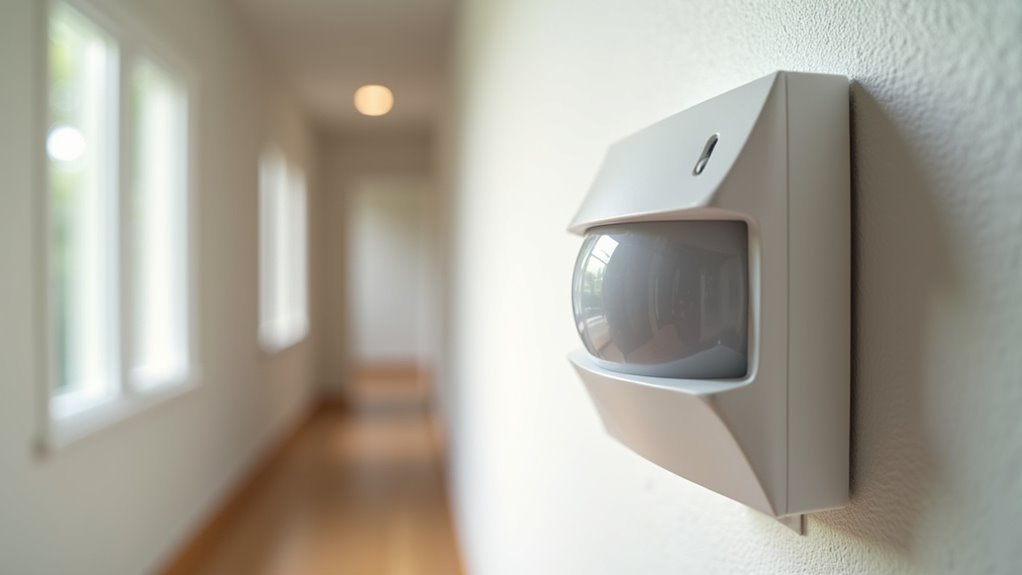
When shopping for budget-friendly occupancy sensors, you’ll want to prioritize adjustable time delay settings that range from 5 seconds to 30 minutes. This customization lets you match the sensor’s response to your specific room usage patterns, preventing premature shutoffs or waste.
Next, evaluate the coverage area to guarantee it matches your space requirements. Quality sensors can effectively monitor areas from 450 to 1900 square feet. Look for models utilizing Passive Infrared (PIR) technology or microwave detection for reliable motion sensing accuracy.
Essential energy-efficient features include auto ON/OFF capabilities and ambient light recognition, which prevents unnecessary activation in well-lit environments.
Finally, verify the sensors are UL listed and comply with safety standards like California Title 24 for guaranteed reliability and performance.
Top Wireless Motion Sensors Under $50
When you’re shopping for wireless motion sensors under $50, you’ll find that PIR (passive infrared) technology dominates this price range because it’s reliable and energy-efficient for detecting human movement.
Battery life varies greatly between models, with some sensors lasting up to two years while others may need replacement every few months depending on usage and quality.
Your choice should also consider smart hub compatibility, as some sensors work with multiple platforms while others require specific ecosystems to function properly.
PIR Technology Benefits
PIR technology stands out as the most practical choice for budget-conscious homeowners seeking reliable occupancy detection. Your PIR sensor delivers exceptional motion detection by sensing infrared radiation changes when people move through rooms.
You’ll appreciate the impressive coverage range of up to 20 feet with detection angles spanning 90 to 180 degrees, eliminating blind spots in your monitoring areas.
The low power consumption feature guarantees your sensors won’t drain batteries quickly, often lasting several years before replacement. This extended battery life makes PIR sensors incredibly cost-effective for long-term use.
You can easily integrate these devices into your existing smart home ecosystem, connecting seamlessly with Amazon Alexa and Google Home platforms.
Budget-friendly options like the Kangaroo Motion Sensor provide professional-grade performance at under $20, making advanced occupancy monitoring accessible to everyone.
Battery Life Comparison
Battery longevity becomes the deciding factor when you’re comparing wireless motion sensors under $50. You’ll find significant differences in power efficiency among budget-friendly options that directly impact long-term value.
| Motion Sensor | Battery Life |
|---|---|
| Aqara Motion Sensor P1 | Up to 5 years |
| THIRDREALITY Zigbee | Up to 2 years |
| Centralite Micro | Beyond 1 year |
| Kangaroo Motion Sensor | Several months |
| Wyze Cam Pan v2 | Outlet-powered |
The Aqara Motion Sensor stands out with its double CR2450 battery setup, delivering exceptional longevity. THIRDREALITY’s Zigbee model offers reliable performance for smart home users, while Centralite provides solid value despite its bulkier design. You’ll want to take into account replacement costs when evaluating these motion sensors, as frequent battery changes can diminish budget savings over time.
Smart Hub Compatibility
While price often drives your initial decision, smart hub compatibility determines whether your budget motion sensor will actually work with your existing home automation setup.
The Aqara Motion Sensor P1 requires an Aqara hub but integrates seamlessly with Amazon Alexa, Google Home, and Apple Home, making it versatile for most smart home ecosystems.
Centralite’s Micro Motion Sensor offers broader compatibility through Zigbee support, working with various hubs including SmartThings.
THIRDREALITY’s sensor also leverages Zigbee connectivity for flexible smart hub integration.
These sensors excel at triggering automation through platforms like IFTTT, allowing you to create sophisticated routines.
When choosing your sensor, verify compatibility with your current smart devices to guarantee smooth operation within your home’s automation network.
Smart PIR Detectors With Long Battery Life
You’ll find that smart PIR detectors offer exceptional value through their passive infrared technology, which accurately distinguishes human movement from environmental changes to prevent false alarms.
These sensors excel at battery optimization, with premium models like the TEKTELIC VIVID lasting up to 10 years and budget options such as the Aqara Motion Sensor P1 providing five years of reliable operation.
Their low-power design guarantees you won’t constantly replace batteries while maintaining consistent performance across coverage areas up to 450 square feet.
PIR Technology Benefits
Since PIR technology detects motion by sensing infrared radiation changes from people within range, you’ll get enhanced occupancy detection accuracy that outperforms basic motion sensors.
Unlike simple temperature sensor devices, PIR sensors focus specifically on human movement patterns, dramatically reducing false positives from non-living sources like swaying curtains or air conditioning fluctuations.
You’ll appreciate the remarkably low power consumption that enables years of battery operation, making these sensors incredibly cost-effective for long-term installations.
Many models offer adjustable sensitivity settings, letting you customize detection parameters for your specific space while minimizing disturbances from pets or environmental factors.
When you install PIR-based occupancy sensors in lighting systems, you’ll detect motion more reliably while achieving energy savings up to 24%.
Battery Optimization Features
Modern smart PIR detectors achieve up to 10 years of battery life through sophisticated power management systems that fundamentally change how you approach occupancy sensor installations.
These sensors deliver exceptional energy efficiency by activating only when detecting human movement, drastically reducing unnecessary power drain.
Key battery optimization features include:
- Low power consumption design operating on 3V-5V with minimal energy requirements
- Self-adaptive technology that adjusts settings based on occupancy patterns
- Advanced PIR technology minimizing false triggers and power waste
- Intelligent sleep modes conserving energy during periods of inactivity
- Optimized detection algorithms balancing sensitivity with power efficiency
You’ll dramatically reduce maintenance costs and operational expenses while ensuring reliable performance.
Smart PIR detectors like the TEKTELIC VIVID Smart Room Sensor exemplify this technology.
Best Multi-Function Room Sensors for Small Budgets
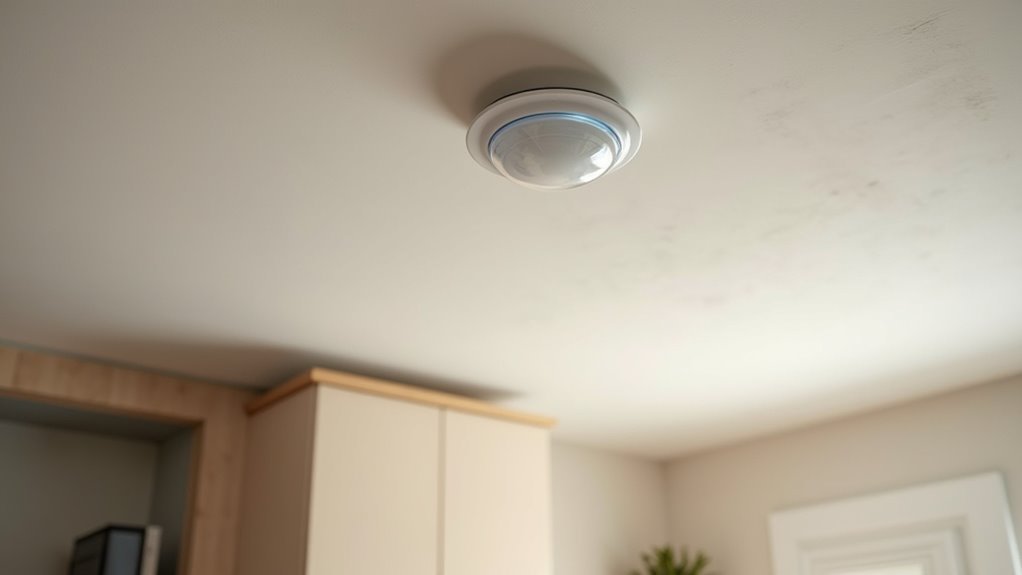
When you’re shopping for room occupancy sensors on a tight budget, multi-function devices deliver the most bang for your buck by combining several sensing capabilities into one affordable unit.
The TEKTELIC VIVID Smart Room Sensor stands out for budget-friendly installations, offering motion sensors alongside temperature, humidity, and ambient light detection. Its compact design houses all these features while providing an impressive 10-year battery life.
Smart sensors like the Aqara Motion Sensor P1 seamlessly integrate with major platforms while monitoring environmental conditions beyond just movement.
The Centralite Micro Motion Sensor, priced around $27, offers versatile hub compatibility.
For extremely tight budgets, the Kangaroo Motion Sensor at $14.41 provides Wi-Fi connectivity perfect for smaller spaces, proving you don’t need expensive equipment for effective occupancy detection.
DIY Installation Tips for Maximum Sensor Performance
Proper installation can make the difference between a sensor that delivers reliable occupancy detection and one that constantly triggers false alarms or misses movement entirely.
Poor installation turns reliable sensors into sources of constant frustration with missed detections and endless false alarms.
While most room occupancy motion sensors are easy to install, following key guidelines guarantees peak performance.
- Mount sensors 6-8 feet high to avoid floor dead spots and reduce pet-triggered false alarms
- Guarantee clear line of sight by avoiding furniture or wall obstructions that block detection
- Adjust sensitivity settings to fine-tune response and prevent minor disturbance triggers
- Verify coverage area matches your space needs, typically 450-1900 sq. ft. per manufacturer specs
- Follow manufacturer installation instructions precisely for proper wiring and sensor angles
These steps maximize your sensor’s effectiveness and energy-saving capabilities while minimizing troubleshooting headaches.
Comparing Coverage Areas and Detection Accuracy

After mastering installation techniques, you’ll need to evaluate how different sensors perform in your specific space. Budget-friendly motion sensors typically offer coverage areas between 450 to 1900 square feet, making them versatile for various room sizes.
You’ll find that Passive Infrared (PIR) technology considerably improves detection accuracy by focusing on human movement patterns rather than general motion.
Look for sensors with adjustable sensitivity settings that let you customize responsiveness to your environment. This feature helps minimize false triggers from pets or moving objects.
Many budget models provide 360° coverage patterns, ensuring thorough room monitoring without dead spots. When comparing options, consider sensors with time delay features that prevent unnecessary activations.
Proper placement at 6-8 feet maximizes detection capability while maintaining reliable performance across your entire space.
Energy Savings Calculator for Your Investment
Since you’ve identified the right sensor for your space, calculating your potential energy savings helps justify the investment and set realistic expectations.
Motion sensors can reduce your home’s lighting costs by up to 24%, making occupancy sensors a smart financial choice.
Use these factors to calculate your investment return:
- Current monthly electricity bill for lighting systems
- Average hours lights stay on unnecessarily each day
- Local energy rate per kilowatt-hour
- Number of rooms where you’ll install sensors
- Sensor lifespan of approximately 10 years
With sensor costs ranging from $29.99 to $292.99, most homeowners see payback within two years.
The energy savings calculator considers your specific usage patterns and rates, providing accurate projections.
Over a decade, these devices typically save hundreds of dollars while reducing environmental impact.
Frequently Asked Questions
Are Occupancy Sensors Worth It?
You’ll save up to 24% on lighting costs with occupancy sensors that automatically turn off lights in empty rooms. They’re cost-effective investments that pay for themselves through reduced energy bills.
What Is a Drawback to Some Lighting Occupancy Sensors?
You’ll face false triggers and false-offs in high-traffic areas, leading to unnecessary energy consumption. Some sensors also have limited detection ranges, leaving larger spaces unmonitored with lights staying on.
Are Occupancy Sensors Expensive?
You’ll find occupancy sensors aren’t expensive, ranging from $29.99 to $292.99. You can grab budget-friendly options with essential PIR technology, and you’ll save up to 24% on lighting costs long-term.
How Much Energy Can Occupancy Sensors Save?
You can save up to 24% on lighting costs with occupancy sensors. They’ll automatically turn off lights when rooms aren’t occupied and optimize your HVAC systems, considerably reducing wasted electricity and lowering utility bills.


Leave a Reply