

You’ve likely struggled with unreliable motion detection in your smart home setup, wondering if there’s a better way to know when someone’s actually home. Traditional sensors often miss stationary people or trigger false alarms from pets and environmental changes. The solution lies in choosing the right detection technology for your specific needs. Three advanced Arduino-compatible sensors can transform your home automation from guesswork into precise, reliable presence monitoring that works exactly how you’d expect.
Mmwave Radar Sensors for Static Human Detection
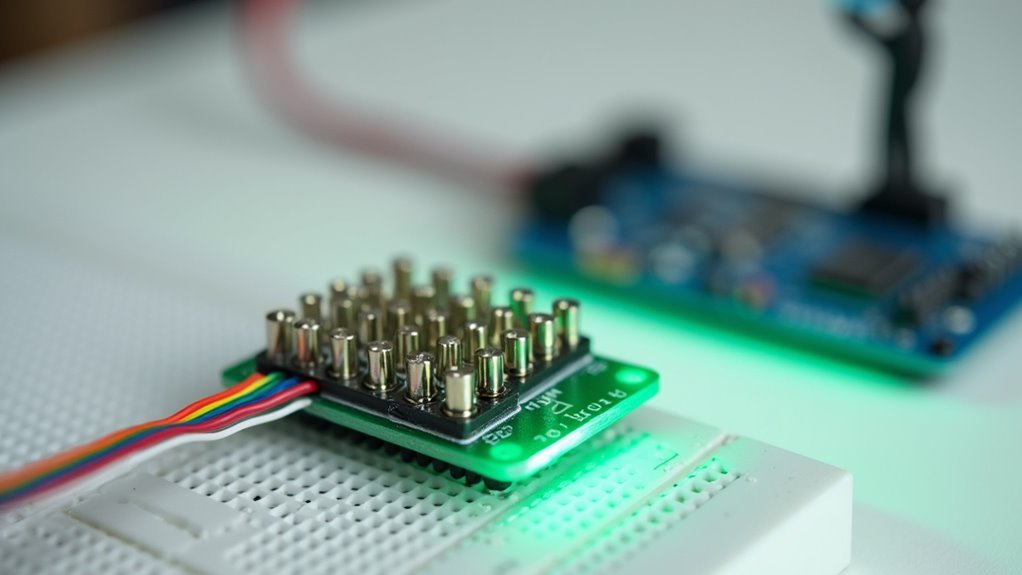
When you need reliable human detection that works regardless of lighting conditions or temperature changes, mmWave radar sensors deliver unmatched performance for static presence monitoring.
These sensors utilize high-frequency electromagnetic waves to detect human presence with exceptional accuracy, reaching detection ranges up to 9 meters. Unlike traditional motion detection systems, mmWave technology excels at identifying both moving and stationary individuals.
You’ll appreciate that these presence sensors can differentiate between humans and smaller animals, ensuring accurate detection results.
The MR60BHA2 and MR60FDA2 models integrate seamlessly with Arduino projects and smart home systems like Home Assistant. Your privacy remains protected since no personal images or identity information are captured.
Privacy-focused detection with seamless Arduino and Home Assistant integration—no personal data captured, just reliable presence monitoring.
With adjustable sensitivity settings, each mmwave sensor provides consistent, reliable performance for automated home presence detection applications.
PIR Motion Sensors With Environmental Monitoring
While mmWave sensors excel at static detection, PIR motion sensors offer a cost-effective solution that combines presence detection with thorough environmental monitoring capabilities.
You’ll find these sensors detect motion within a 10-meter range by sensing infrared radiation changes from warm bodies. When you integrate additional temperature and humidity sensors, you’re creating a detailed smart home system that optimizes HVAC operations based on occupancy and environmental conditions.
Your PIR sensor setup provides adjustable sensitivity settings, letting you minimize false positives from pets.
This environmental monitoring integration enables automated lighting and climate control that responds to both human presence and indoor conditions.
You’ll achieve enhanced comfort while maximizing energy efficiency through this dual-purpose home presence detection approach.
Thermal Imaging Sensors for Reliable Presence Tracking
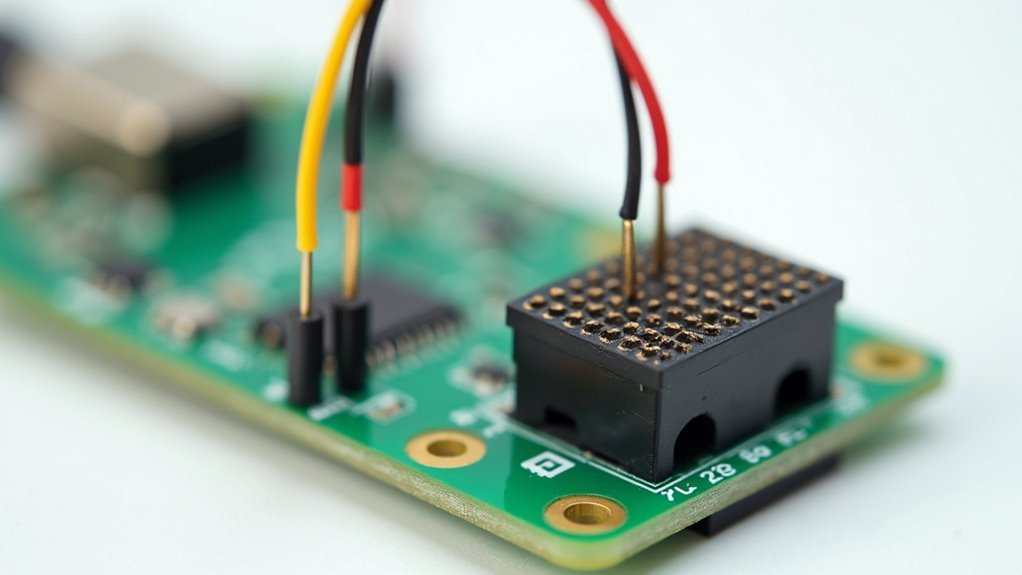
Although PIR sensors provide excellent motion detection capabilities, thermal imaging sensors like the MLX90640 deliver superior presence tracking by detecting body heat signatures rather than movement alone.
You’ll appreciate their high sensitivity in distinguishing between humans and pets through temperature differences, greatly reducing false alarms. These thermal imaging sensors excel at Human Presence Detection even when people remain stationary or sleep, making them ideal for thorough monitoring.
The MLX90640’s wide field of view and -40°C to 300°C temperature range guarantees reliable performance across diverse indoor environments.
The MLX90640’s exceptional temperature range and expansive field of view ensure dependable operation across varied indoor settings.
You’ll find these sensors particularly valuable because they function consistently in any lighting condition, relying on infrared radiation rather than visible light.
Arduino integration remains straightforward with available libraries, allowing you to implement sophisticated thermal-based presence detection systems effortlessly.
Frequently Asked Questions
Which Sensor Is Best for Motion Detection?
You’ll find PIR sensors work best for basic motion detection since they’re reliable, affordable, and detect infrared changes from moving bodies up to 10 meters effectively.
What Is a Proximity Sensor to Detect Human Presence?
A proximity sensor detects when you’re nearby without requiring movement, using infrared, ultrasonic, or capacitive technology. It’ll trigger actions when you enter a room, even if you’re standing completely still.
Does Arduino Have a Motion Sensor?
Arduino doesn’t include a built-in motion sensor, but you can easily connect external sensors like PIR modules, ultrasonic sensors, or mmWave radar sensors to detect movement and human presence in your projects.
How Does a Human Presence Sensor Work?
Human presence sensors detect you by emitting electromagnetic waves or measuring infrared radiation from your body heat. They’ll sense movement, breathing, or temperature changes, then send signals to trigger automated responses in your environment.


Leave a Reply