
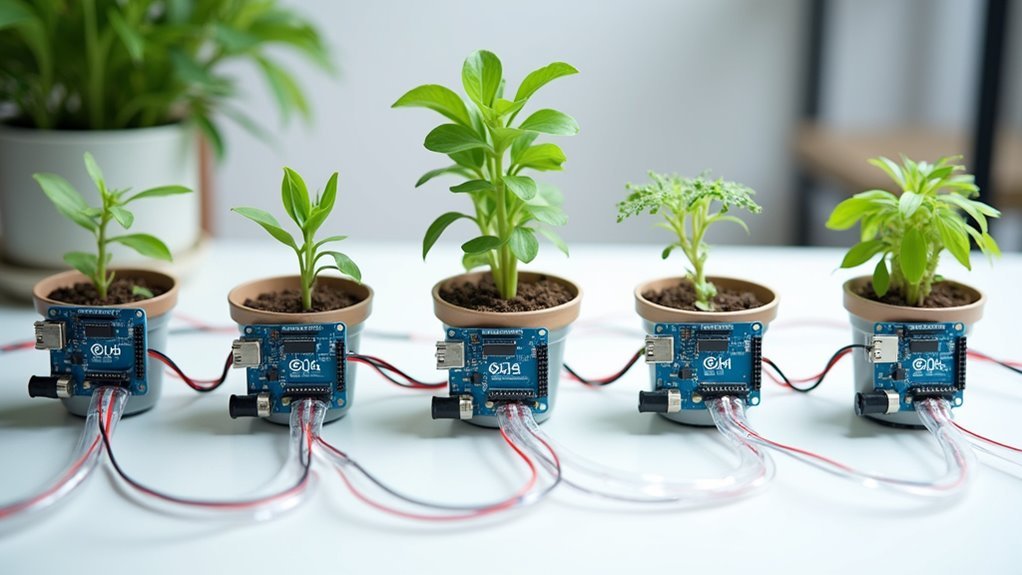
You’ve probably wondered how tech-savvy gardeners keep their plants perfectly watered without constantly checking soil conditions or weather forecasts. Arduino-based irrigation systems offer exactly that solution, transforming your garden management from guesswork into precision automation. These five projects range from simple moisture-activated watering to sophisticated multi-zone controllers that adapt to weather patterns and connect to the cloud. Each system addresses different garden sizes and complexity levels, but they all share one critical advantage that’ll change your approach to gardening forever.
Arduino Edge Control Multi-Zone Smart Farm Irrigation
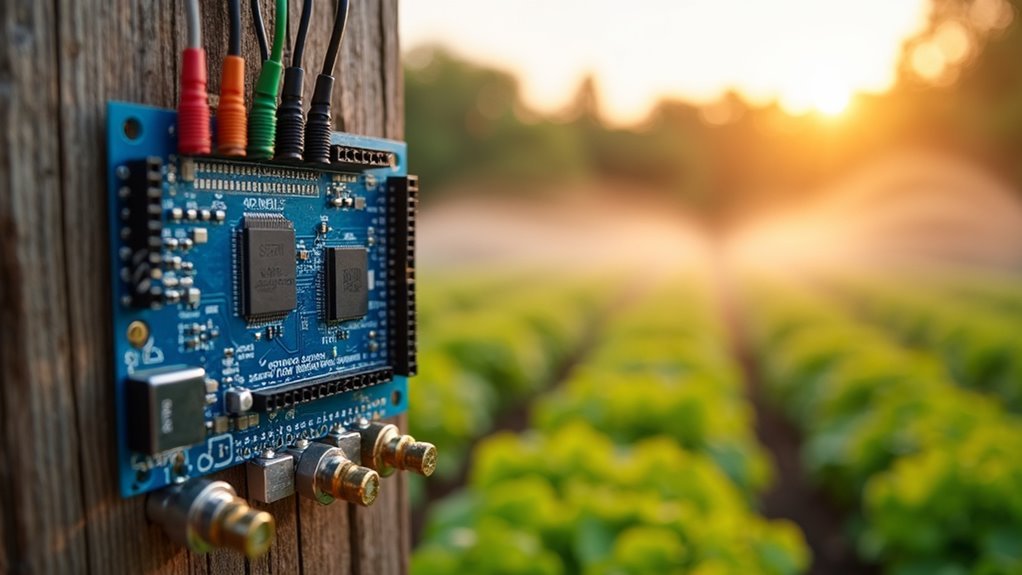
When you’re managing multiple garden zones with different watering needs, the Arduino Edge Control delivers a thorough solution that transforms traditional irrigation into an intelligent, automated system.
This setup controls independent watering zones through motorized ball valves, letting you customize schedules for each area. The differential pressure sensor monitors your tank’s water level, preventing dry runs and ensuring consistent supply.
You’ll connect via Wi-Fi to Arduino Cloud for remote programming, while real-time weather data automatically adjusts your automatic irrigation schedules based on rainfall forecasts.
The LCD screen displays system status and water levels for easy monitoring. You can expand zones and add Soil Moisture Sensor units as your garden grows, creating a scalable watering solution.
Basic Automatic Plant Watering System With Soil Moisture Detection
Whether you’re a beginner looking to automate your houseplants or need a simple solution for small garden beds, a basic automatic plant watering system with soil moisture detection offers the perfect entry point into smart irrigation.
You’ll use an Arduino UNO to control a water pump through a relay module based on readings from your soil moisture sensor. The sensor measures moisture levels from 0 (wet) to 1023 (dry), activating automatic watering only when readings drop below your predefined threshold. This prevents overwatering while maintaining ideal plant health.
With simple data analysis of moisture patterns, you’ll optimize watering schedules. The required components—soil moisture sensor, water pump, relay module, and power supply—make this project accessible for electronics beginners.
Weather-Integrated Arduino Irrigation Controller With Cloud Connectivity
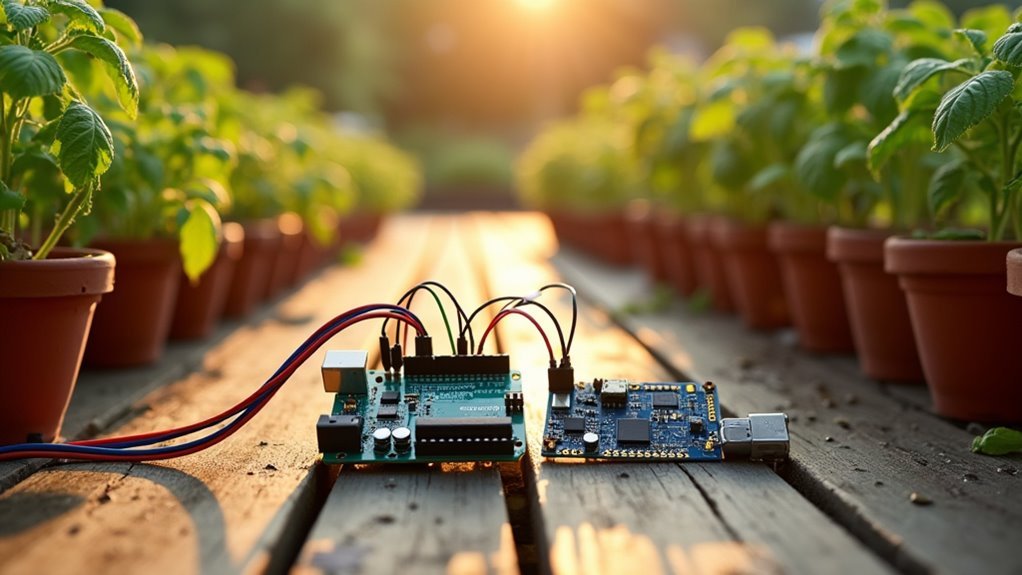
Four advanced irrigation zones await your control with the Weather-Integrated Arduino Irrigation Controller, a sophisticated system that combines real-time weather data with cloud connectivity to revolutionize your watering management.
This Arduino irrigation system uses the MKR WiFi 1010 and Edge Control to connect with Arduino Cloud, enabling remote programming and real-time monitoring. You’ll prevent unnecessary watering during expected rainfall through API-based weather data integration, optimizing water usage efficiently.
Each zone operates independently through motorized ball valves triggered by moisture sensor readings and weather forecasts.
The built-in RTC tracks irrigation times and water consumption, providing valuable insights with daily monitoring resets. A differential pressure sensor monitors your tank’s water level, preventing pump dry runs and ensuring consistent system operation for maximum efficiency.
Multi-Sensor Arduino Garden Automation With Temperature and Humidity Monitoring
As environmental conditions fluctuate throughout the day, your Multi-Sensor Arduino Garden Automation system transforms plant care by integrating temperature and humidity monitoring with intelligent irrigation control.
You’ll use an Arduino UNO or Mega as your central control unit, connecting BME280 sensors to capture real-time environmental data. Your multi-sensor setup continuously tracks temperature and humidity levels, automatically adjusting irrigation schedules to optimize water usage during high-temperature periods.
The system prevents overwatering by monitoring soil moisture alongside atmospheric conditions. You can view all sensor data on an integrated OLED screen for immediate feedback.
Smart moisture monitoring eliminates guesswork while the OLED display provides instant environmental data visualization for precise garden management.
Through relay modules, your Arduino irrigation system automatically activates water pumps based on sensor readings, maintaining consistent soil moisture levels for healthy plant growth.
Expandable 16-Zone Arduino Irrigation System for Large Gardens
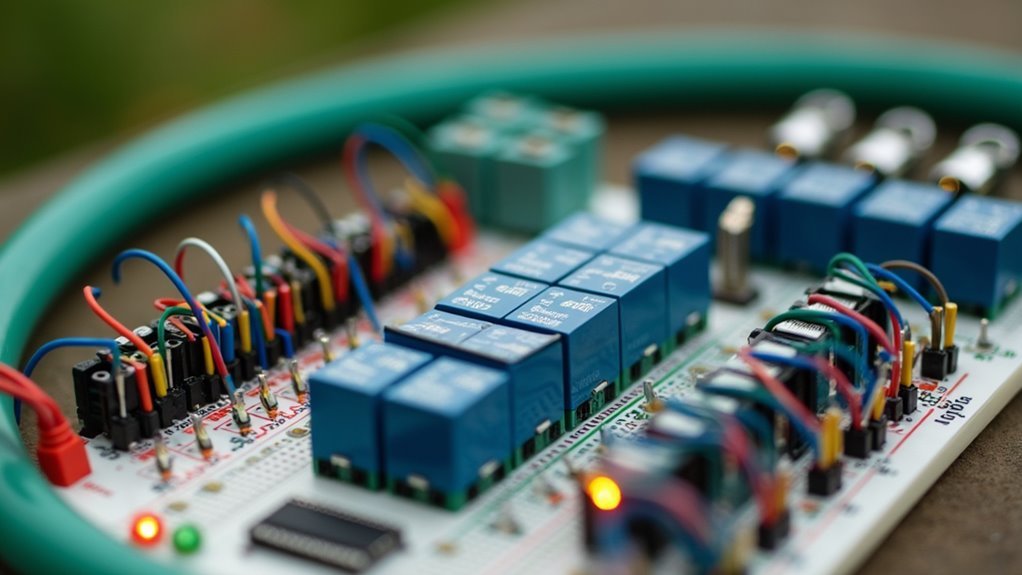
Managing extensive garden spaces requires sophisticated irrigation control that can handle multiple zones simultaneously while enhancing water distribution for different plant varieties and soil types. You’ll find that an expandable Arduino irrigation system delivers precise control across 16 separate zones, each equipped with dedicated soil moisture sensors for accurate monitoring.
| Feature | Capability |
|---|---|
| Zone Control | Individual programming per area |
| Remote Access | Wi-Fi connectivity via smartphone |
| Smart Scheduling | Weather data APIs integration |
Your system’s Wi-Fi connectivity enables remote adjustments through mobile apps, while customizable watering schedules accommodate diverse plant requirements. The integration of weather data APIs automatically suspends irrigation during forecasted rainfall, maximizing water conservation. Each zone operates independently, ensuring efficient resource allocation across your entire property.
Frequently Asked Questions
How Do You Automatically Water Plants With Arduino?
You’ll connect a soil moisture sensor to your Arduino to detect dry conditions. When moisture drops below your set threshold, the Arduino triggers a relay that activates a water pump to irrigate your plants automatically.
What Is the Use of Arduino in a Smart Irrigation System?
You’ll use Arduino as your system’s brain to automatically control watering based on sensor data. It monitors soil moisture, processes weather information, and adjusts irrigation schedules, helping you conserve water while maintaining ideal plant health.
Can I Do My Own Irrigation System?
You can absolutely create your own irrigation system using basic components like timers, valves, and sensors. With Arduino boards, you’ll build automated systems that monitor soil moisture and control watering schedules remotely.
How to Make a Smart Irrigation System?
You’ll need an Arduino board, soil moisture sensors, and motorized valves. Connect Wi-Fi for remote control, add weather API integration, and program watering schedules based on real-time soil conditions and environmental data.


Leave a Reply