
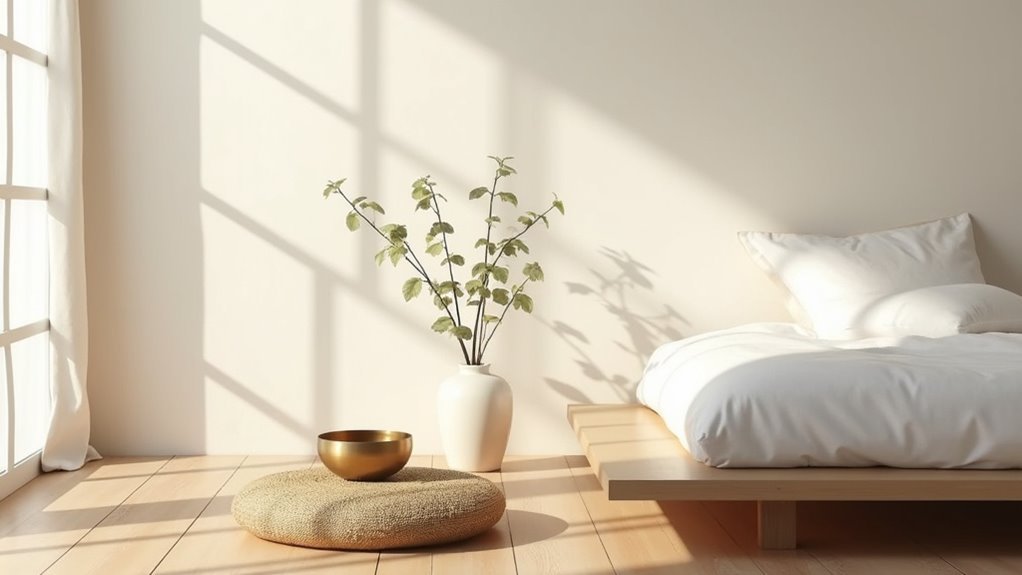
You don’t need an entire room dedicated to meditation when your bedroom can serve as the perfect sanctuary. The space where you already find rest and rejuvenation holds untapped potential for deepening your mindfulness practice. With a few strategic adjustments to lighting, seating, and atmosphere, you’ll discover how easily your personal retreat transforms into a calming oasis that supports both better sleep and meaningful meditation sessions.
Why Your Bedroom Makes the Perfect Meditation Sanctuary
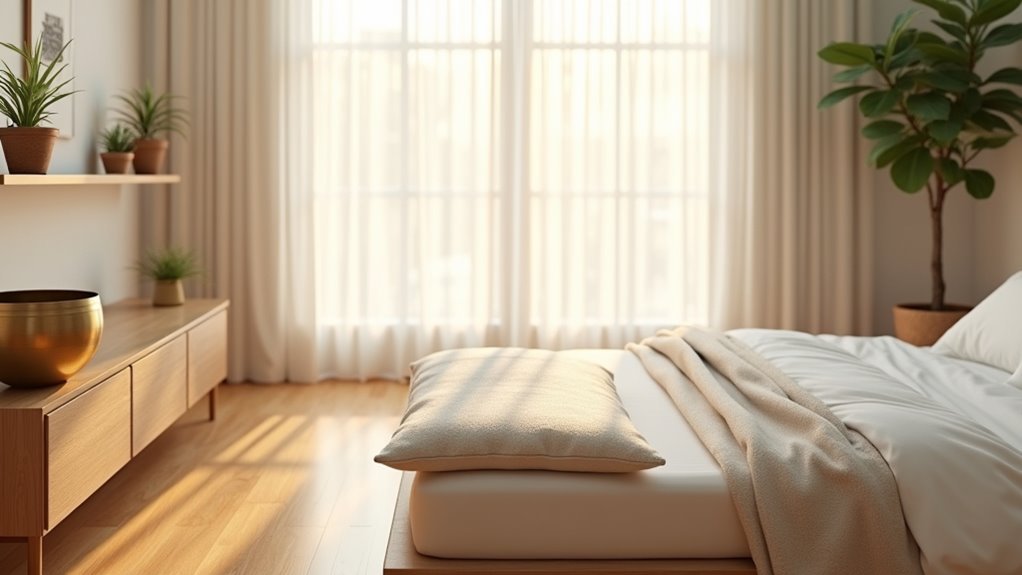
While many people search for the perfect meditation spot outside their homes, your bedroom already offers everything you need for a peaceful practice. Your bedroom naturally provides minimal distractions, creating an ideal environment for consistent meditation practice.
Your bedroom transforms into the perfect meditation sanctuary, offering natural tranquility and minimal distractions right where you already feel most comfortable.
The intimate space fosters safety and comfort, enhancing your ability to relax and focus deeply. You’ll find it easier to maintain regular sessions when meditation becomes part of your existing routine.
Transform your space by incorporating calming colors and soft textures that promote tranquility. Natural light streaming through your windows creates an uplifting atmosphere, while essential oils add soothing scents that deepen your experience.
This combination creates a serene atmosphere that supports your mental well-being and mindfulness journey.
Choosing the Ideal Corner or Area Within Your Bedroom
You’ll want to start by evaluating the available space in your bedroom to find a corner that’s away from foot traffic and daily distractions.
Check how much room you’ll have for a yoga mat and movement, ensuring you won’t feel cramped during your practice.
Consider the lighting quality and air circulation in each potential spot, as natural light and fresh airflow create the most inviting meditation environment.
Assess Space and Privacy
Before selecting your meditation corner, carefully walk through your bedroom and identify areas that feel naturally separated from daily activities.
You’ll want to assess space requirements by ensuring there’s enough room for a yoga mat and free movement during your practice. Check if the area receives natural light from a window, as this enhances ambiance and positively influences your mood during sessions.
Next, evaluate privacy levels in potential spots. Sit quietly in each location to gauge noise levels and determine which areas minimize distractions most effectively.
Consider adding room dividers or curtains to create a more secluded meditation area. This separation from high-traffic zones near entrances or electronic devices helps establish a peaceful environment that promotes deeper reflection and tranquility.
Consider Lighting and Airflow
Natural light transforms any meditation corner into a sanctuary of calm, so position your chosen area near a window that welcomes gentle sunlight throughout the day.
This natural lighting enhances the calming atmosphere and promotes tranquility during your practice.
Ensure proper airflow by selecting a spot near a window or adding a small fan.
Good ventilation maintains comfort and helps you stay focused during meditation sessions.
For evening practice, incorporate soft lighting options like Himalayan salt lamps or battery-operated candles.
These create warm, soothing ambiance without harsh brightness that disrupts relaxation.
Test your chosen area by sitting quietly and evaluating noise levels.
You’ll want to identify potential disturbances that could interrupt your peaceful environment, ensuring your meditation space supports consistent, uninterrupted practice.
Essential Elements for Bedroom Meditation Success
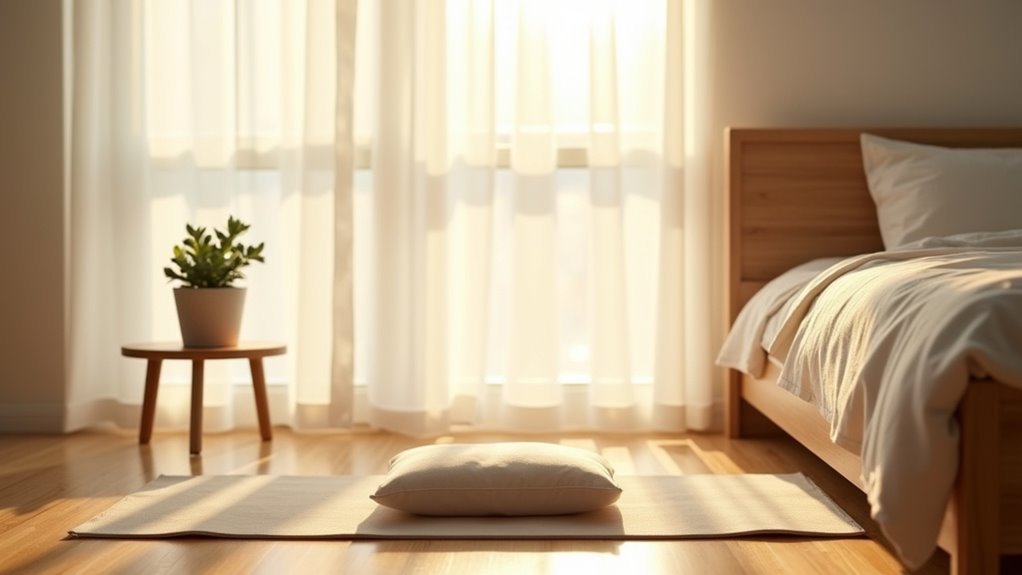
Once you’ve selected your meditation corner, you’ll need to focus on the essential elements that transform an ordinary bedroom space into a sanctuary for mindful practice.
The right lighting and ambiance setup creates the foundation for deep relaxation, while comfortable seating solutions guarantee you can maintain proper posture throughout your sessions.
These two core components work together to support both your physical comfort and mental clarity during meditation.
Lighting and Ambiance Setup
When you’re creating a meditation sanctuary within your bedroom, the lighting you choose becomes the foundation that sets your entire mood and mindset. Full-spectrum light bulbs mimic natural sunlight, enhancing your mood while creating a calming atmosphere.
You’ll find Himalayan salt lamps provide warm, soothing light that purifies the air simultaneously.
Consider flameless candles for cozy ambiance without fire risks. They’ll maintain that peaceful meditation experience you’re seeking.
Choose ambient lighting in calming colors like blue, green, or soft pink to promote deep relaxation.
Install dimmable lights or smart lighting options for ultimate control. You can easily adjust brightness levels, transforming your space from bright and energizing to soft and peaceful.
This flexibility guarantees your bedroom shifts perfectly into your meditation sanctuary whenever needed.
Comfortable Seating Solutions
Your meditation space reaches its full potential when you pair that carefully crafted lighting with seating that supports your body throughout your practice.
Comfortable seating forms the foundation of effective meditation spaces, whether you choose floor cushions, supportive yoga mats, or flexible poufs that adapt to your preferred posture.
Ergonomic seating options like meditation benches or chairs with back support prevent discomfort during extended sessions. Soft textiles such as velvet or cotton covers create an inviting atmosphere that encourages deeper relaxation.
Consider adjustable seating like bean bags or inflatable chairs that accommodate different meditation styles.
Add personal touches through colors that promote tranquility or decorative pillows that resonate with your emotional needs, transforming your bedroom into a personalized sanctuary.
Smart Lighting Solutions for Automated Ambiance
Since technology can transform your meditation space into a responsive sanctuary, smart lighting solutions offer unprecedented control over your bedroom’s ambiance. You’ll find smart bulbs and LED strips create ideal ambiance through programmable brightness and color temperature adjustments throughout the day.
Voice-activated assistants enable hands-free lighting control during sessions, while automated dimming gradually reduces light levels as meditation time approaches, signaling your brain to prepare for relaxation. Integration with meditation apps synchronizes lighting with guided sessions, providing coordinated visual cues that enhance your mindfulness practice.
| Feature | Benefit | Examples |
|---|---|---|
| Pre-set scenes | Simulate natural light changes | Dawn/dusk routines |
| Circadian alignment | Promotes calming atmosphere | Warm evening tones |
| App integration | Enhanced meditation experience | Synchronized soundscapes |
| Voice control | Hands-free adjustments | “Dim lights for meditation” |
Sound Management and Acoustic Considerations
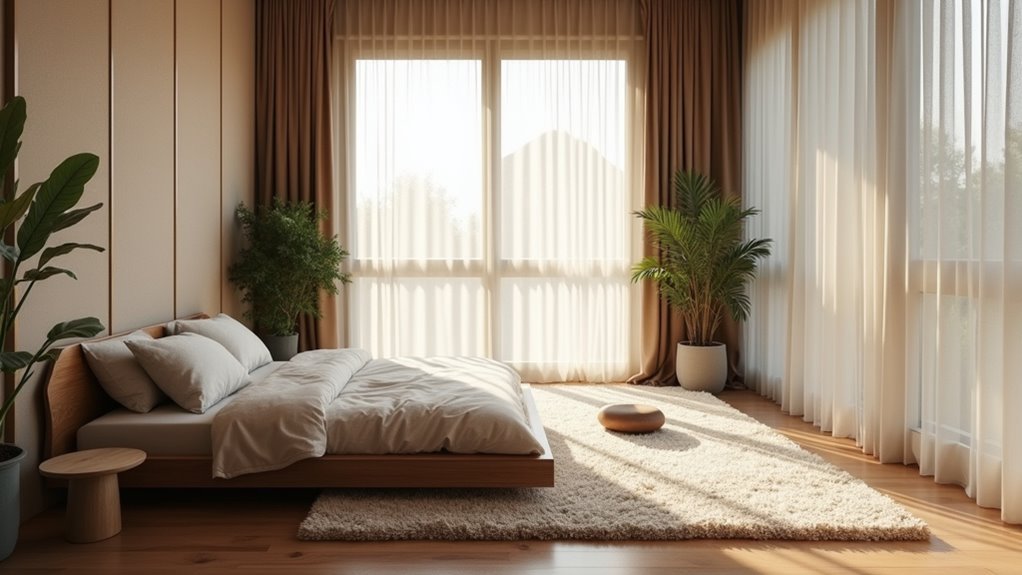
While lighting sets the visual tone for your meditation space, sound management determines whether you’ll achieve true mental clarity or constant distraction.
You’ll want to create a quiet environment by strategically placing acoustic panels on walls to absorb unwanted noise pollution from neighboring rooms or street traffic.
Transform your bedroom into an acoustically optimized meditation space using soft furnishings like thick curtains, plush carpets, and upholstered cushions.
Soft furnishings like thick curtains and plush carpets naturally absorb sound while creating a comfortable meditation environment.
These elements naturally dampen sound while adding comfort to your practice area.
Consider positioning your meditation corner away from high-traffic zones and seal any gaps around windows or doors.
A white noise machine or natural soundscape recordings can mask remaining disruptions, creating consistent auditory conditions that support deeper focus and relaxation during your sessions.
Decluttering Strategies for Mental Clarity
Physical clutter creates mental chaos, making it nearly impossible to achieve the deep focus meditation requires. When you design a meditation space, decluttering becomes essential for mental clarity and inner peace.
Start by regularly evaluating your bedroom, removing items that don’t serve your peaceful space. Implement the “one in, one out” rule—for every new item you bring in, remove another to prevent accumulation.
Create designated storage solutions like baskets or shelves for meditation accessories, keeping surfaces clear while maintaining easy access to cushions and aromatherapy supplies.
Schedule seasonal decluttering sessions to refresh your environment mindfully.
Embrace minimalism by limiting decor to only essential items that truly resonate with you, reducing visual distractions and enhancing your meditation sanctuary’s calming atmosphere.
Incorporating Natural Elements and Air-Purifying Plants
You’ll transform your meditation space by selecting the right air-purifying plants that actively remove toxins while adding natural beauty to your room.
Natural materials like bamboo, stone, and wood create grounding energy that enhances your practice and connects you to nature’s calming influence.
Consider rotating your plants seasonally to maintain fresh energy and ideal air quality throughout the year.
Best Air-Purifying Plants
Since clean air forms the foundation of any effective meditation practice, incorporating air-purifying plants into your bedroom sanctuary creates an environment that naturally supports deeper relaxation and mindfulness.
Peace Lilies excel at removing formaldehyde and benzene toxins, creating a cleaner meditation space that’ll enhance your practice.
Snake Plants convert carbon dioxide into oxygen overnight, making them perfect bedroom companions for nighttime meditation sessions.
Spider Plants eliminate up to 90% of harmful chemicals while requiring minimal care—ideal for busy practitioners.
English Ivy reduces airborne mold and allergens, particularly beneficial if you struggle with allergies.
These serene indoor plants don’t just purify air; they bring natural beauty and tranquility that transforms your bedroom into a peaceful sanctuary for relaxation.
Natural Material Choices
When you choose natural materials for your bedroom meditation space, you’re creating an authentic connection to the earth that deepens your practice and calms your mind. Wood, stone, and bamboo deliver both visual warmth and grounding energy that enhances tranquility.
| Material Type | Benefits for Meditation |
|---|---|
| Wood furnishings | Creates warmth and natural grounding |
| Stone elements | Provides stability and earthy energy |
| Bamboo accessories | Offers sustainable, lightweight serenity |
| Cotton cushions | Delivers soft, breathable comfort |
| Wool textiles | Adds cozy, natural insulation |
Natural textiles like cotton, wool, and jute enhance tactile comfort while maintaining organic authenticity. Combined with air-purifying plants and natural light streaming through windows, these materials create a serene atmosphere that supports both your indoor plants’ growth and your meditation practice’s depth.
Seasonal Plant Rotation
Building on this foundation of natural materials, seasonal plant rotation amplifies your meditation space’s connection to nature’s rhythms while maximizing air purification benefits.
You’ll create a calm atmosphere by incorporating air-purifying plants like snake plants, peace lilies, and pothos, which can reduce airborne toxins by up to 87% within 24 hours while boosting oxygen levels.
Each season offers opportunities to select plants that thrive in varying light and humidity conditions, keeping your space visually dynamic.
This practice becomes a mindful ritual that deepens your nature connection, helping reduce stress naturally.
As you rotate plants regularly, you’ll engage with natural cycles, reinforcing present-moment awareness essential for effective meditation while maintaining ideal air quality year-round.
Color Psychology for Restful Meditation Spaces
As you design your bedroom meditation space, the colors you choose will profoundly influence your ability to achieve deep relaxation and mental clarity.
Color psychology reveals that calming hues like blue and green naturally evoke tranquility, making them perfect for restful meditation spaces. These cool tones lower your heart rate and breathing, creating a serene environment that supports deeper focus.
Soft pastels, particularly light pinks and lavenders, establish a soothing atmosphere that reduces stress and enhances emotional well-being.
You’ll find that avoiding sharp contrasts helps maintain prolonged concentration during practice.
Consider adopting a monochromatic scheme using varying shades of one color to achieve visual harmony.
This approach minimizes distractions while fostering unity and balance, transforming your bedroom into an ideal sanctuary for meditation.
Comfortable Seating and Floor Options
Three essential seating elements form the foundation of your bedroom meditation sanctuary: proper support, breathable comfort, and adaptable positioning.
You’ll want comfortable seating options like floor cushions made from cotton or linen materials that prevent overheating during extended sessions. These breathable fabrics enhance relaxation while maintaining proper posture.
Create your meditation base using yoga mats or soft area rugs that define your space and provide cushioning.
Your meditation foundation starts with defining the space—choose yoga mats or soft rugs that offer both boundary and comfort.
Layer these elements by placing firm mats beneath softer rugs for improved texture and sound insulation.
Consider adjustable solutions like a meditation stool or reclining chair that accommodate different meditation styles.
Poufs and meditation benches offer additional versatility, ensuring you’ll find the perfect position for deep relaxation and focused practice.
Technology Integration for Seamless Practice
While traditional meditation emphasizes simplicity, thoughtfully chosen technology can actually deepen your practice by eliminating distractions and creating consistent conditions for mindfulness.
Transform your meditation space with smart lighting systems like Philips Hue, adjusting color temperature and intensity to match your practice needs. Meditation apps such as Headspace or Calm provide guided sessions and timers while maintaining consistency through reminders.
| Technology | Purpose |
|---|---|
| Smart lighting systems | Adjust brightness and color for ideal ambiance |
| Aromatherapy diffusers | Control soothing scents via smartphone apps |
| Automated curtains | Regulate natural light and temperature automatically |
Enhance your sessions with Bluetooth speakers delivering soothing sounds or meditation music. Smartphone-controlled aromatherapy diffusers let you customize relaxing scents like lavender. Automated curtains create perfect lighting conditions, making your bedroom meditation space consistently inviting.
Maintaining Your Bedroom Meditation Space Year-Round
Creating your bedroom meditation space is just the beginning—sustaining its tranquil atmosphere requires ongoing attention throughout the year. Regular assessments guarantee your space remains comfortable and functional while seasonal adjustments keep it fresh and inspiring.
Incorporate air-purifying plants like peace lilies or snake plants to enhance aesthetics and improve air quality consistently. You’ll breathe easier knowing these green companions work year-round.
Establish a cleaning routine that keeps your meditation space clutter-free. A tidy environment directly supports clearer thinking and deeper practice sessions.
Use aromatherapy diffusers with seasonal scents—pine during winter months and citrus throughout summer—to refresh your space naturally.
Maintain adjustable lighting through Himalayan salt lamps or dimmable LEDs, creating a calming ambiance regardless of outside weather conditions.
Frequently Asked Questions
How to Create a Calming Meditation Space at Home?
Choose a quiet corner away from distractions. Use soft lighting like salt lamps, add calming scents through diffusers, keep it clutter-free with storage baskets, and personalize with meaningful decor like crystals.
What Are the Calming Colors for Meditation Room?
You’ll find cool tones like blue, green, and lavender most calming for meditation. Choose soft neutrals such as beige and off-white, plus gentle pastels. Avoid bright, contrasting colors that’ll distract your focus.
How to Design a Zen Room?
Choose a quiet location away from distractions. Use cool, calming colors like blue and green. Maximize natural light from east or west windows. Keep décor minimal and add plants, soft textures, and soothing scents.
What Is a Zin Room?
You’ll create a designated space that promotes tranquility and mindfulness. It’s your personal retreat from daily distractions, featuring minimalist design with natural materials, plants, and soothing elements that encourage meditation and peaceful activities.


Leave a Reply