
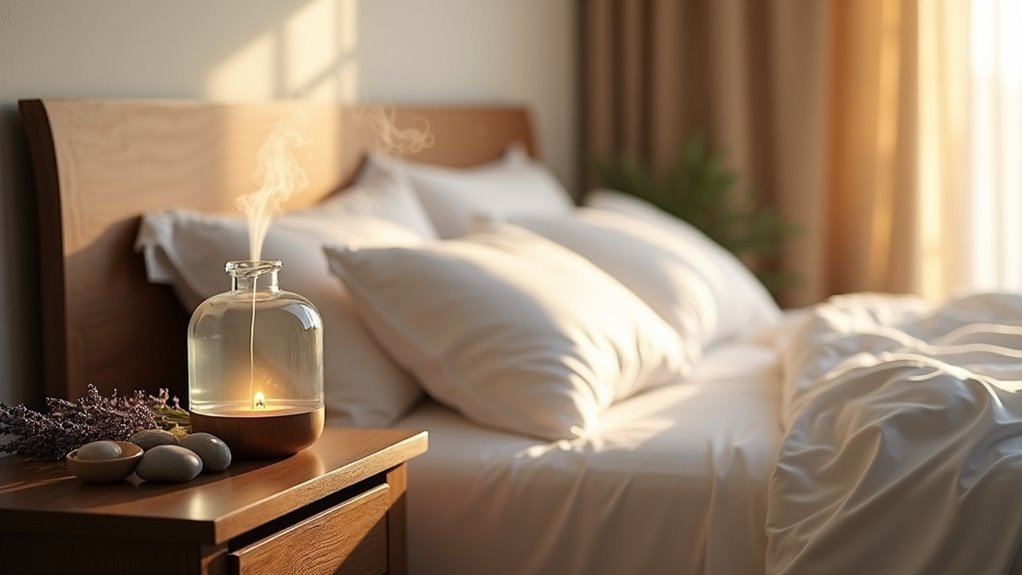
You’ve probably noticed how certain scents instantly transport you to specific memories or moods, but you might not realize how powerfully your bedroom’s fragrance affects your sleep quality. The wrong scent can keep you tossing and turning, while the right aromatherapy blend can help you drift off 30% faster and achieve deeper sleep cycles. What’s happening in your nose directly impacts what’s happening in your brain.
The Science Behind Scent and Sleep Quality

When you breathe in a soothing scent before bed, you’re activating a powerful biological pathway that directly influences your sleep quality. Your olfactory system connects directly to the limbic system, which controls emotions and stress responses. This connection explains why calming scents like lavender can dramatically reduce anxiety and promote relaxation.
Breathing in calming scents before bed activates your olfactory system’s direct connection to the brain’s emotion and stress control centers.
Research shows that aromatherapy doesn’t just make you feel better—it actually changes your brain activity during sleep. Specific scents enhance slow-wave activity during deep sleep phases, making your rest more restorative.
Your sensitivity to smells naturally decreases at night, making calming fragrances particularly effective for bedtime use.
Clinical trials consistently demonstrate that incorporating pleasant scents into your sleep environment can improve sleep quality, increase sleep duration, and help you achieve deeper, more rejuvenating rest.
Best Essential Oils for Bedroom Sleep Enhancement
You’ll find that certain essential oils consistently outperform others when it comes to promoting quality sleep in your bedroom.
Lavender, chamomile, jasmine, cedarwood, ylang ylang, and sandalwood top the list due to their scientifically-backed sedative and anxiety-reducing properties.
The key isn’t just choosing the right oil—it’s also understanding which application method works best for your specific sleep needs and bedroom setup.
Top Sleep-Promoting Oils
Essential oils can transform your bedroom into a sleep sanctuary, with certain varieties offering scientifically-backed benefits that’ll help you drift off faster and sleep more soundly.
Lavender essential oil leads the pack with extensive research proving its calming properties reduce anxiety and enhance your sleep quality markedly.
Chamomile oil works by soothing muscle tension and helping you promote relaxation throughout your body.
Jasmine essential oil tackles stress while potentially reducing depression symptoms for more restful nights.
Cedarwood oil provides grounding effects that ease anxiety, creating the perfect calming scents for your bedroom environment.
Finally, ylang ylang essential oil calms your nervous system and lowers heart rate when incorporated into bedtime routines.
Application Methods Comparison
Knowing which sleep-promoting oils work best means nothing without understanding how to use them effectively in your bedroom.
Diffusers offer the most consistent aromatherapy experience, dispersing calming scents like lavender throughout your space for hours.
Scented candles create immediate ambiance but require extinguishing before sleep.
Room sprays and pillow sprays provide quick application when you need instant relaxation.
Essential oils applied to pulse points deliver direct benefits as you unwind.
Bath soaks combine warm water therapy with aromatherapy for maximum muscle relaxation.
Each method serves different timing needs – diffusers for continuous exposure, candles for evening wind-down, sprays for immediate effect, and baths for pre-sleep preparation.
Choose methods that fit your bedtime routine for better sleep.
Worst Bedroom Scents That Disrupt Sleep

Why would certain scents sabotage your sleep when you’re trying to create the perfect bedroom sanctuary?
Unlike aromatherapy for sleep that promotes calming effects, specific fragrances can disrupt sleep by triggering unwanted energy or alertness. Citrus scents like lemon and orange stimulate the nervous system, energizing your brain when you need relaxation.
Peppermint’s menthol component enhances alertness and memory recall, creating the opposite environment you want for better sleep. These invigorating fragrances activate brain areas responsible for wakefulness, interfering with the peaceful atmosphere essential for quality rest.
Strong, stimulating scents create distraction and restlessness, preventing your bedroom from becoming the sleep-promoting sanctuary you deserve.
Choose your bedroom fragrance wisely to protect your sleep quality.
Smart Diffuser Placement and Timing Strategies
You’ll maximize your smart diffuser’s effectiveness by positioning it strategically within your bedroom’s layout and syncing its operation with your natural sleep patterns.
The placement determines how evenly scents distribute throughout your space, while proper timing guarantees aromatherapy benefits align with your body’s preparation for rest.
Getting the concentration levels right prevents overwhelming your senses and maintains the subtle fragrance presence that best supports quality sleep.
Optimal Diffuser Room Positioning
Where should you position your diffuser to create the perfect aromatic atmosphere in your master bedroom? For ideal scent distribution, place your diffuser 3-5 feet from your bed to avoid overwhelming your senses during sleep.
Position it at a height of 3-4 feet above ground, as scents naturally rise and create a more immersive experience.
Location matters greatly for effective room positioning. Place your diffuser near airflow sources like windows or fans to enhance calming scent dispersion throughout the space.
Experiment with different spots – bedside tables, dressers, or other surfaces – to discover what works best for your preferences.
Set your diffuser’s timer to activate 30 minutes before bedtime, allowing the relaxation-promoting aromas to fill your room as you prepare for sleep.
Sleep Cycle Timing Methods
When you sync your smart diffuser with your natural sleep cycle, you’ll create a seamless shift from wakefulness to rest.
Strategic timing transforms your aromatherapy routine into a powerful sleep enhancement tool that works with your body’s natural rhythms.
Effective sleep cycle timing methods include:
- Pre-bedtime activation: Set your smart diffusers to release soothing fragrances 30 minutes before your target sleep time
- Essential oils rotation: Experiment with calming scents like lavender and chamomile to find your ideal blend
- Intensity adjustment: Lower diffuser settings during nighttime hours to maintain gentle aromatherapy without sensory overload
- Sleep quality monitoring: Track how different timing affects your rest patterns using sleep apps
- Bedtime routine integration: Coordinate fragrance release with other relaxation activities for enhanced effectiveness
Essential Oil Concentration Levels
Three critical factors determine whether your smart diffuser enhances or disrupts your sleep: concentration strength, strategic placement, and precise timing.
Essential oil concentration levels should stay between 0.1% to 0.5% for ideal levels that won’t overwhelm your senses. Higher concentrations can actually harm sleep quality rather than promote it.
For effective diffuser placement, position your device on a bedside table or room corner to achieve proper fragrance distribution without direct facial exposure.
Start your diffuser 30 minutes before bedtime to establish calming scents throughout the space.
Use timer settings for controlled release during the night, maintaining consistent relaxation.
Experiment with intermittent versus continuous diffusion modes to discover your personal preference for the most restful sleep environment.
DIY Aromatherapy Solutions for Your Sleep Space
Creating your own aromatherapy solutions transforms your bedroom into a personalized sanctuary while saving money on expensive commercial products.
These DIY approaches let you harness calming fragrances and essential oils to improve sleep quality through targeted aromatherapy applications.
Start crafting these simple solutions tonight:
- Linen spray – Mix 10-15 drops of lavender with water in a spray bottle for bedtime misting
- DIY scented sachets – Fill fabric bags with dried lavender, chamomile, or jasmine for continuous soothing aromas
- Homemade diffuser – Combine 5-10 drops of calming oils with water in a small bowl
- Relaxing bath soak – Add lavender or sandalwood to Epsom salts before bedtime
- Personal sleep-inducing roller – Blend carrier oils with ylang ylang or cedarwood for pulse point application
Essential Oil Concentration and Safety Guidelines

Although essential oils offer powerful aromatherapeutic benefits for your bedroom, proper concentration and safety practices guarantee you’ll enjoy their effects without adverse reactions. For topical application, maintain a dilution of 2-5% by mixing 12-30 drops of essential oil per ounce of carrier oil. Always conduct a patch test before widespread use to check for sensitivities.
| Application Method | Essential Oil Amount | Base Amount |
|---|---|---|
| Topical Dilution | 12-30 drops | 1 ounce carrier oil |
| Diffuser Use | 3-5 drops | 100ml water |
| Patch Testing | 1-2 drops | Small skin area |
| Storage Requirement | N/A | Dark glass bottles |
Follow safety guidelines by consulting healthcare providers if you’re pregnant or have health conditions. Proper storage in dark bottles away from heat maintains potency and prevents degradation of your essential oils.
Creating Personalized Scent Blends for Relaxation
When you craft your own scent blends, you’ll discover combinations that speak directly to your relaxation needs and personal preferences.
Creating personalized essential oil mixtures transforms your bedtime routine into a calming ritual that can improve sleep quality and reduce anxiety.
Here’s how to develop your perfect relaxation blend:
- Start with proven calming essential oils like lavender, chamomile, and sandalwood for their tranquility-promoting properties.
- Experiment with ratios in your diffuser or roll-on applications to find what works best.
- Use base oils such as jojoba or sweet almond for safe topical application on pulse points.
- Add complementary scents like ylang ylang or bergamot to enhance mood and relaxation.
- Keep a scent journal tracking different combinations’ effectiveness for better sleep outcomes.
Automated Scent Control Systems and Smart Home Integration
Once you’ve perfected your personal scent blends, smart technology can automate their delivery to create the ideal bedroom atmosphere without any effort on your part.
Automated scent control systems integrate seamlessly with smart home technology, letting you program calming fragrances like lavender or chamomile to release before bedtime for improved sleep quality.
Smart home integration allows you to schedule soothing lavender and chamomile scents to automatically release at bedtime for better sleep.
Smart diffusers connect to your smartphone or voice-activated devices, enabling remote control and scheduling.
Advanced systems use occupancy sensors to detect your presence and automatically create a relaxation-promoting environment.
You can customize scent profiles by combining multiple essential oils, crafting unique bedtime aroma combinations.
Studies show consistent automated scent control reduces sleep latency and enhances overall sleep quality through optimized bedroom atmospheres.
Maintaining Your Bedroom Aromatherapy Setup
While technology handles the automation, your aromatherapy setup requires regular maintenance to deliver consistent results. Proper care guarantees your calming scents continue to improve sleep and enhance your overall aromatherapy experience.
- Use proven essential oils like lavender and chamomile consistently through diffusers, candles, or sachets to boost sleep quality.
- Replace blends every few weeks so your fragrance remains fresh and potent for maximum effectiveness.
- Create a personalized scent by layering calming essential oils that match your preferences for deeper relaxation.
- Clean diffusers regularly to prevent buildup and maintain scent purity throughout your aromatherapy sessions.
- Start your bedtime routine by introducing fragrance 30 minutes before sleep, allowing scents to fill the room completely.
This maintenance approach keeps your bedroom aromatherapy working efficiently.
Frequently Asked Questions
How Do I Get Rid of the Smell in My Bedroom Sleep?
Open your windows daily for ventilation, wash bedding weekly, place baking soda containers around the room, add air-purifying plants like spider plants, and use essential oil diffusers with lavender for fresh, sleep-promoting air.
What Is the Best Scent to Help Sleep?
You’ll find lavender works best for sleep since it contains linalool and linalyl acetate that reduce anxiety. Chamomile’s also excellent because its apigenin binds to brain receptors, promoting relaxation and faster sleep onset.
What Is the Best Scent for Relaxing Bedroom?
You’ll find lavender works best for creating a relaxing bedroom atmosphere. It’s proven to reduce anxiety and lower your heart rate. Chamomile and jasmine also help ease stress while promoting restful sleep.
How Do You Optimize Bedroom for Sleep?
You’ll optimize your bedroom by keeping it dark, quiet, and cool. Establish consistent bedtime routines, incorporate calming scents like lavender through diffusers, and experiment with different aromatherapy combinations to find what works best for you.


Leave a Reply