
You’ve probably noticed how expensive commercial smart home hubs can be, especially when they don’t offer the customization you actually want. Building your own hub isn’t just about saving money—it’s about creating a system that works exactly how you need it to. Whether you’re after complete device integration, custom programming flexibility, or budget-friendly monitoring, three standout options can transform your approach to home automation without breaking the bank.
Raspberry Pi Home Assistant Hub for Complete Device Integration
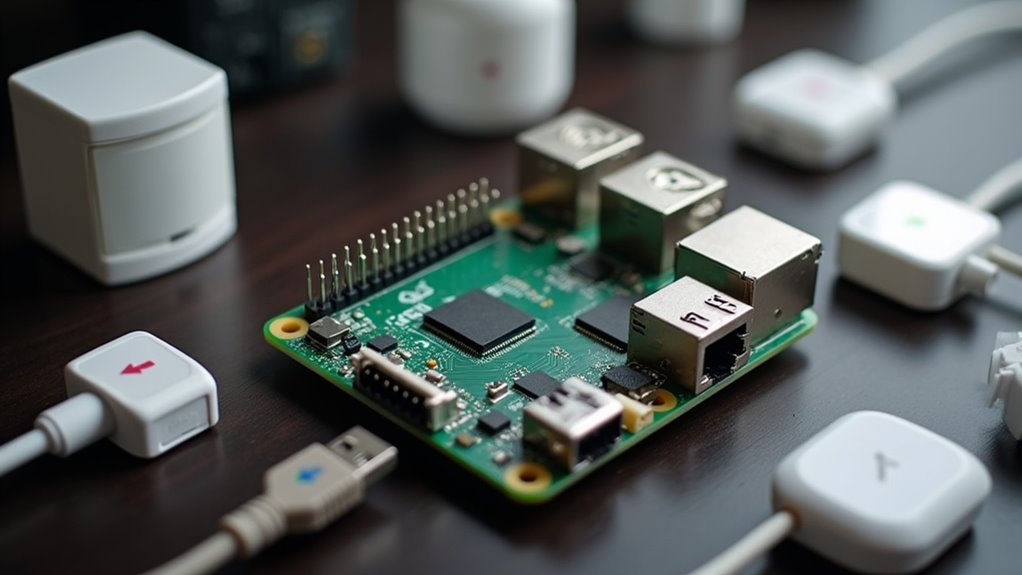
When you transform a Raspberry Pi into a Home Assistant hub, you’ll create a powerful central command station that integrates smart devices from virtually any manufacturer into one seamless interface.
Transform your Raspberry Pi into a unified smart home command center that seamlessly connects devices from any manufacturer.
This versatile platform supports multiple communication protocols including Zigbee, Z-Wave, and Wi-Fi, connecting everything from lights to security systems effortlessly.
You’ll customize automation routines using YAML configuration files, giving you complete control over your smart home’s behavior.
The system expands easily with add-ons that connect thousands of compatible smart home devices and services. You can even integrate popular voice assistants like Amazon Alexa and Google Assistant.
This cost-effective solution delivers enterprise-level device integration at a fraction of commercial hub prices, especially when using existing Raspberry Pi hardware you already own.
Arduino-Based Hub for Custom Automation Programming
While Home Assistant excels at device integration, building an Arduino-based hub gives you complete programming freedom to craft custom automation programming solutions from the ground up.
You’ll create a smart home system tailored precisely to your needs using the Arduino IDE’s user-friendly platform for writing custom code.
Your Arduino-based hub connects various sensors and modules like temperature detectors, motion sensors, and relays for thorough automation.
The system supports multiple communication protocols:
- Wi-Fi communication for internet connectivity and remote control
- Zigbee and Z-Wave protocols for smart devices integration
- Bluetooth for local device pairing and control
Community-driven projects provide extensive online resources, tutorials, and pre-built libraries to accelerate development.
You’ll access countless examples and troubleshooting guides from fellow makers.
ESP32 Smart Controller for Budget-Friendly Home Monitoring
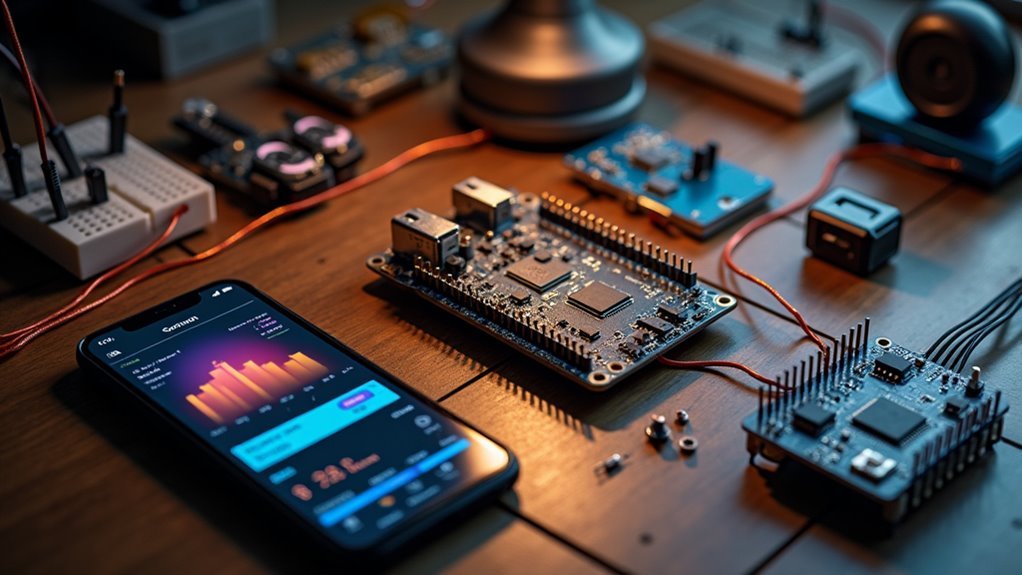
Building on the Arduino foundation, the ESP32 takes budget-friendly home monitoring to the next level with its dual-core processor and built-in Wi-Fi and Bluetooth capabilities.
You’ll appreciate its 240 MHz clock speed that handles multiple sensors simultaneously, monitoring temperature, humidity, and motion throughout your space. The ESP32 supports both Arduino and MicroPython programming environments, accommodating different skill levels for custom automation projects.
You can integrate your ESP32 controller into your smart home ecosystem using platforms like Home Assistant or ESPHome. These tools enable remote access and control through mobile apps or voice commands.
Connect various sensors to automate actions based on environmental data, creating an all-encompassing home monitoring system that won’t break your budget while delivering professional-grade functionality.
Frequently Asked Questions
What Is the Best Home Hub to Buy?
You’ll want the Aeotec Smart Home Hub as the best overall choice. It’s compatible with Wi-Fi, Bluetooth, Zigbee, Z-Wave, and Matter, giving you maximum versatility for integrating virtually any smart device.
Are Home Hubs Worth It?
Yes, you’ll find home hubs worthwhile if you’ve got multiple smart devices. They’ll streamline your automation, improve device compatibility, boost energy efficiency, and simplify management through one centralized app instead of juggling several.
Which Brand Is Best for Home Automation?
Amazon Alexa’s your best bet for home automation since it’s compatible with the most smart devices and ecosystems. You’ll find it works seamlessly with nearly everything, making setup and expansion straightforward.
Which Hub Is Better?
You’ll find the Aeotec Smart Home Hub’s the best overall choice due to its versatility with multiple protocols. However, if you’re budget-conscious, Amazon’s Echo devices offer excellent value and compatibility.

Leave a Reply