

You’re managing your aquarium’s temperature manually, aren’t you? That’s exhausting. Smart controllers take the guesswork out of heating, cooling, and monitoring—but they’re not all created equal. Some models offer dual probes and real-time alerts, while others fall short when connectivity drops. The right choice depends on your tank’s specific needs and your budget. Let’s explore what separates the top performers.
| AC Infinity Outlet AI+ Smart WiFi Power Strip | 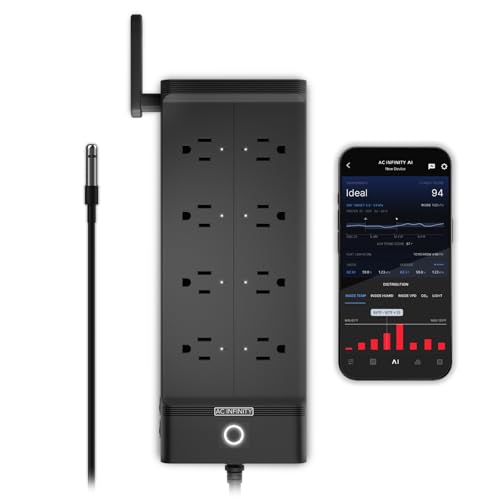 | Most Versatile System | WiFi Connectivity: WiFi app control with real-time alerts and data charts | Temperature Control Range: Dual-zone temperature and humidity tracking (range not specified) | Maximum Power Output: 1800W max capacity | CHECK ON AMAZON | Read Our Analysis |
| Inkbird ITC-306A WiFi Temperature Controller for Aquarium |  | Best Aquarium-Specific | WiFi Connectivity: 2.4 GHz WiFi with app notifications | Temperature Control Range: 20.0–35.0°C (68.0–95.0°F) setting range | Maximum Power Output: 1100W capacity | CHECK ON AMAZON | Read Our Analysis |
| Inkbird WiFi ITC-308 Digital Temperature Controller Thermostat |  | Best Dual-Purpose Control | WiFi Connectivity: 2.4 GHz WiFi with iOS and Android app support | Temperature Control Range: Temperature control range not specified | Maximum Power Output: 1100W maximum output load | CHECK ON AMAZON | Read Our Analysis |
| INKBIRDPLUS Smart Temperature Controller Outlet with LCD Display |  | Best Plug-and-Play | WiFi Connectivity: No WiFi (manual control only) | Temperature Control Range: -40 to 120°C (-40 to 248°F) calibration range | Maximum Power Output: Not specified | CHECK ON AMAZON | Read Our Analysis |
| Kactoily Smart Aquarium Monitor WiFi Fish Tank Tester | 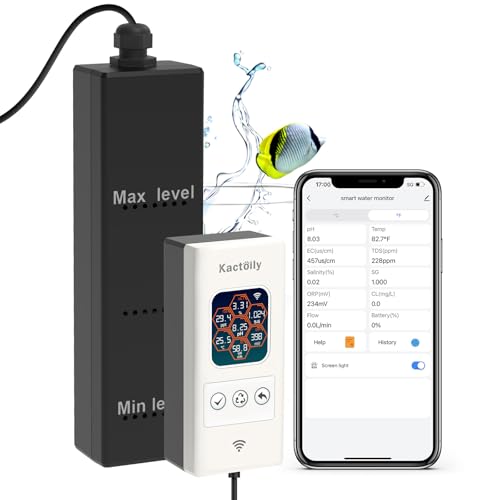 | Most Advanced Monitoring | WiFi Connectivity: 24/7 WiFi monitoring with Tuya Smart app access | Temperature Control Range: Temperature monitoring (range not specified) | Maximum Power Output: Not specified (monitoring only, no power output) | CHECK ON AMAZON | Read Our Analysis |
More Details on Our Top Picks
AC Infinity Outlet AI+ Smart WiFi Power Strip
Looking for granular control over your aquarium’s equipment? The AC Infinity Outlet AI+ Smart WiFi Power Strip lets you program each outlet independently with climate triggers and schedules. You’ll monitor dual-zone temperature, humidity, and VPD in real-time through the WiFi app, receiving instant alerts and data charts. The system’s AI syncs your heaters, lights, and pumps to maintain a unified environment. With 1800W capacity and built-in surge protection, it safely handles multiple devices. Optional sensors track CO₂ and hydro parameters for advanced setups, giving you the precision monitoring serious aquarists demand.
- WiFi Connectivity:WiFi app control with real-time alerts and data charts
- Temperature Control Range:Dual-zone temperature and humidity tracking (range not specified)
- Maximum Power Output:1800W max capacity
- Dual Probe/Sensor System:Optional dual-zone temperature and humidity sensors (sold separately)
- Alert and Alarm Features:Real-time alerts via WiFi app
- Display Type:Mobile app interface
- Additional Feature:AI climate targeting synchronization
- Additional Feature:Individual outlet programming capability
- Additional Feature:Multiple environment type support
Inkbird ITC-306A WiFi Temperature Controller for Aquarium
Need reliable temperature management without complicated setup? The Inkbird ITC-306A WiFi Temperature Controller delivers plug-and-play simplicity for your aquarium. You’ll control heating between 20–35°C via the mobile app using 2.4 GHz Wi-Fi, and the dual-relay system protects against overheating. Two temperature probes provide redundancy, alerting you if readings diverge by more than 3°C. You can set custom heating cycles from 1–72 hours with automatic alarms if targets aren’t met. At 1100W capacity, it’s compatible with most heaters. With a 4.4/5 rating from 900 reviews, this controller combines affordability with essential aquarium temperature management features.
- WiFi Connectivity:2.4 GHz WiFi with app notifications
- Temperature Control Range:20.0–35.0°C (68.0–95.0°F) setting range
- Maximum Power Output:1100W capacity
- Dual Probe/Sensor System:Two temperature probes for reliability
- Alert and Alarm Features:Temperature difference alert and overheat cutoff; alarm if heating time exceeds preset duration
- Display Type:No display specified
- Additional Feature:Two relay heater protection
- Additional Feature:Temperature difference probe alerts
- Additional Feature:Custom heating time alarm
Inkbird WiFi ITC-308 Digital Temperature Controller Thermostat
The Inkbird WiFi ITC-308 is your best bet if you’re managing multiple temperature zones across different aquariums or breeding tanks. This dual relay controller switches between heating and cooling equipment automatically, maintaining precise conditions across your setup. You’ll control everything remotely via the Inkbird app on iOS or Android through 2.4 GHz WiFi connectivity. The thermostat supports both Celsius and Fahrenheit displays, lets you calibrate temperature readings, and includes compressor delay protection for your refrigeration equipment. High and low-temperature alarms notify you immediately if conditions drift or sensors malfunction. With a maximum output of 1100W at 110V and plug-and-play setup, you’re managing complex temperature requirements effortlessly.
- WiFi Connectivity:2.4 GHz WiFi with iOS and Android app support
- Temperature Control Range:Temperature control range not specified
- Maximum Power Output:1100W maximum output load
- Dual Probe/Sensor System:Dual relay outputs for heating and cooling
- Alert and Alarm Features:High and low-temperature alarms with sensor malfunction alerts
- Display Type:Digital display (specifics not detailed)
- Additional Feature:Dual relay heating/cooling outputs
- Additional Feature:Compressor delay protection feature
- Additional Feature:High/low temperature alarm modes
INKBIRDPLUS Smart Temperature Controller Outlet with LCD Display
Want precise temperature control without the complexity? The INKBIRDPLUS Smart Temperature Controller Outlet delivers dual-mode heating and cooling for your aquarium setup. You’ll appreciate the high-brightness backlit LCD displaying real-time temperature, set points, and countdowns. Four customizable timing modes let you automate heating or cooling cycles based on your schedule. The device maintains ±1°C accuracy with calibration capability from -40 to 120°C. Its backup memory automatically saves your settings during power outages, resuming where you left off. At just 5.4 ounces with a compact design, it integrates seamlessly into any tank environment while keeping your aquatic ecosystem stable.
- WiFi Connectivity:No WiFi (manual control only)
- Temperature Control Range:-40 to 120°C (-40 to 248°F) calibration range
- Maximum Power Output:Not specified
- Dual Probe/Sensor System:Single sensor (hand control)
- Alert and Alarm Features:High and low-temperature alarms (manual display)
- Display Type:High-brightness backlit LCD display
- Additional Feature:Four customizable timing modes
- Additional Feature:Automatic power-cut memory backup
- Additional Feature:Heating and cooling dual-mode
Kactoily Smart Aquarium Monitor WiFi Fish Tank Tester
Are you managing multiple tank types or running a saltwater setup that demands precise water chemistry control? The Kactoily Smart Aquarium Monitor WiFi Fish Tank Tester delivers optimal 7-in-1 monitoring—pH, TDS, EC, ORP, specific gravity, salinity, and temperature—24/7 via smartphone access. You’ll customize water parameters through the Tuya Smart app and receive instant alerts if readings exceed your presets. The cutting-edge probe provides stable, accurate data across freshwater, saltwater, and hydroponic systems. For saltwater tanks, position the probe in consistent flow areas away from protein separators. Higher ORP readings indicate greater water stability and lower ammonia/nitrite levels, giving you precise control for optimal fish farming outcomes.
- WiFi Connectivity:24/7 WiFi monitoring with Tuya Smart app access
- Temperature Control Range:Temperature monitoring (range not specified)
- Maximum Power Output:Not specified (monitoring only, no power output)
- Dual Probe/Sensor System:Single 7-in-1 multi-parameter probe
- Alert and Alarm Features:Customizable alerts via app, phone, or SMS for parameter exceedances
- Display Type:Smartphone app interface
- Additional Feature:Seven-in-one water parameter monitoring
- Additional Feature:SMS and app notifications
- Additional Feature:Saltwater and hydroponic compatibility
Factors to Consider When Choosing Smart Aquarium Controllers
When you’re selecting a smart aquarium controller, you’ll want to prioritize temperature range and accuracy to keep your aquatic environment stable, along with reliable WiFi connectivity and an intuitive app that lets you monitor conditions remotely. You should also evaluate dual relay output capability, alarm systems, and notifications—features that alert you to problems before they become critical. Finally, confirm the controller’s power capacity matches your tank setup and that it’s compatible with your existing equipment.
Temperature Range and Accuracy
Why does temperature control matter so much in your aquarium? Temperature stability directly impacts fish health and tank ecosystems. You’ll want a controller with a range matching your species’ needs—typically 20.0–35.0°C, though some sense wider spans from −40 to 100°C for flexibility.
Accuracy is equally critical. Look for models offering 1°C/1°F precision through calibration capabilities, ensuring readings stay true to actual conditions. Dual-probe designs give you added reliability by cross-checking sensor data and reducing drift over time.
Adjustable setpoints with high/low alarms let you catch temperature excursions before they harm your tank. Compressor delay features protect cooling equipment while calibration options maintain long-term accuracy. These specifications transform a basic thermostat into a dependable safeguard for your aquatic environment.
WiFi Connectivity and App Control
Smart aquarium controllers gain real power when you can monitor and adjust them from anywhere. Most devices connect via 2.4 GHz WiFi, letting you access your tank through a smartphone app regardless of location. You’ll set target temperatures, create schedules, and receive instant alerts about sensor readings or anomalies. The best controllers offer both cloud and local-network access, protecting you during internet outages or router failures. Within the app, you’ll find comprehensive data logs displaying temperature, humidity, and other metrics as interactive charts and dashboards. This connectivity transforms passive monitoring into active management, ensuring your aquatic environment stays stable even when you’re away.
Dual Relay Output Capability
How do you maintain precise temperature control when your aquarium needs both heating and cooling? Dual relay outputs give you the answer. With two independent relays, you can control a heater and cooler simultaneously, eliminating temperature swings that stress your aquatic life.
Each relay handles loads up to 1100–1800 watts, accommodating standard heaters and pumps without additional equipment. You’ll benefit from separate tuning for heating and cooling actions, which reduces overshoot and speeds recovery times.
This capability also enhances safety through fail-safe configurations like overheat cutoffs. When you’re selecting a smart controller, verify it supports dual relays with proper wiring and surge protection. This investment ensures stable environmental conditions and protects your aquarium ecosystem effectively.
Alarm Systems and Notifications
When your aquarium’s temperature spikes or pH drifts unexpectedly, you’ll want immediate notification—not a delayed discovery. Smart controllers with app-based alerts keep you informed in real-time when readings exceed your set thresholds, ensuring you can respond quickly to problems.
Look for systems offering multiple alert channels—app notifications, SMS, and email—so you’re notified regardless of what you’re doing. Dual-detection systems with two probes add reliability by triggering alarms if readings diverge beyond acceptable limits, catching sensor malfunctions before they compromise your tank.
Customizable thresholds let you tailor alarms for temperature, pH, ORP, and other metrics specific to your species and setup. Temperature alerts should include high/low notifications and flag whether sensors malfunction or preset targets aren’t reached within specified timeframes.
Power Capacity and Compatibility
Selecting the right controller means matching its electrical capacity to your equipment’s actual demands. You’ll want to verify the maximum wattage rating—typically 1100–1800 W—against your combined heater, pump, and lighting loads to prevent breaker trips.
Confirm 120 V compatibility and check whether you prefer 2.4 GHz Wi-Fi or wired connections; communication dropouts can disrupt your power schedule and tank stability. Dual relays or multiple outlets give you independent control over heating and cooling systems, which proves essential for maintaining precise temperatures.
You should also prioritize surge protection features that match your total load capacity. Finally, ensure the controller’s timing modes and temperature setpoints account for your equipment’s startup surges and your aquarium’s thermal lag, preventing dangerous temperature swings.
Sensor Quality and Reliability
Once you’ve matched your controller’s power capacity to your equipment, you’ll need sensors that accurately monitor your tank’s conditions. Look for probes with reliable sensing ranges, like temperature sensors functioning from -40 to 100°C, ensuring stability across fluctuating environments.
Dual-probe configurations give you a significant advantage by cross-checking readings and reducing errors from sensor drift or poor placement. Regular calibration options—including temperature adjustments and offset corrections—maintain long-term accuracy in your aquarium’s dynamic conditions.
Quality monitors provide alarms when readings deviate beyond preset thresholds, enabling quick corrective action before problems escalate. Don’t overlook probe maintenance and placement either; positioning sensors away from heaters and ensuring consistent water flow deliver trustworthy, stable measurements that you can actually rely on.
Frequently Asked Questions
How Much Does a Quality Smart Aquarium Controller Typically Cost?
You’ll typically spend between $150 to $500 for a quality smart aquarium controller. Basic models start around $100, while advanced systems with multiple sensors and smartphone integration can reach $800 or more.
Can Smart Aquarium Controllers Work Without a Wifi Connection?
You can operate most smart aquarium controllers without WiFi, though you’ll lose remote access features. They’ll function locally using built-in schedules and manual controls, but you won’t monitor or adjust settings from your smartphone.
What Is the Average Lifespan of Smart Aquarium Controller Sensors?
You’ll typically find smart aquarium controller sensors last between three to five years. However, you can extend their lifespan substantially by cleaning them regularly and replacing them promptly when they drift out of calibration.
Do Smart Aquarium Controllers Require Professional Installation or Setup?
You won’t need professional installation for most smart aquarium controllers. They’re designed for DIY setup with user-friendly apps and clear instructions. You’ll simply mount sensors, connect to Wi-Fi, and calibrate through your smartphone.
Are Smart Aquarium Controllers Compatible With Existing Tank Equipment?
You’ll find that most smart aquarium controllers work well with your existing equipment. They’re designed to integrate with standard pumps, filters, and heaters. However, you should verify compatibility specs before purchasing to guarantee they’ll fit your specific setup.


Leave a Reply