
You’ve invested in a multi-room audio setup, but you’re frustrated when speakers fall out of sync, creating that annoying echo effect throughout your home. Whether you’re streaming your morning playlist or hosting a dinner party, synchronized audio can make or break the experience. The good news is that three proven methods can eliminate timing issues and deliver the seamless whole-home sound you’re after, each with distinct advantages depending on your specific setup.
Configure Network-Based Synchronization Using Dedicated Audio Protocols
When setting up multi-room audio, you’ll want to leverage dedicated audio protocols like AirPlay 2, Google Cast, and DTS Play-Fi that use your home’s Wi-Fi network to create seamless synchronization between speakers.
These protocols transform your existing audio equipment into a cohesive music system without requiring proprietary hardware restrictions.
AirPlay 2 delivers synchronized playback across Apple devices while supporting high-resolution streaming and individual speaker control.
AirPlay 2 enables seamless multi-device synchronization with high-resolution audio streaming and precise individual speaker management across Apple ecosystems.
Google Cast integrates hi-fi components from various manufacturers, allowing you to use streaming services across different brands seamlessly.
DTS Play-Fi maintains exceptional audio quality with minimal latency when synchronizing multiple sources.
You’ll find these dedicated protocols simplify setup procedures, enhance sound quality, and provide flexibility in selecting components for your multiroom audio configuration, making them superior to basic Bluetooth connections.
Implement Master-Slave Device Architecture for Precise Timing Control
Building on network-based synchronization, you can achieve even tighter timing control by implementing a master-slave device architecture within your multi-room audio system.
You’ll designate one device as the master to control timing and playback synchronization for all slave devices, considerably reducing audio lag across your multi-room setups. The master manages the audio stream and sends synchronized signals to slaves, which decode and play simultaneously for consistent sound coherence.
Consider utilizing protocols like DTS Play-Fi or Apple AirPlay 2, specifically designed for multi-room audio streaming with low latency and high fidelity. These protocols enhance your master-slave device architecture’s effectiveness.
Don’t forget regular firmware updates on both master and slave devices—they’re essential for maintaining ideal performance and compatibility with evolving synchronization technologies.
Deploy Centralized Server Solutions for Whole-Home Audio Distribution
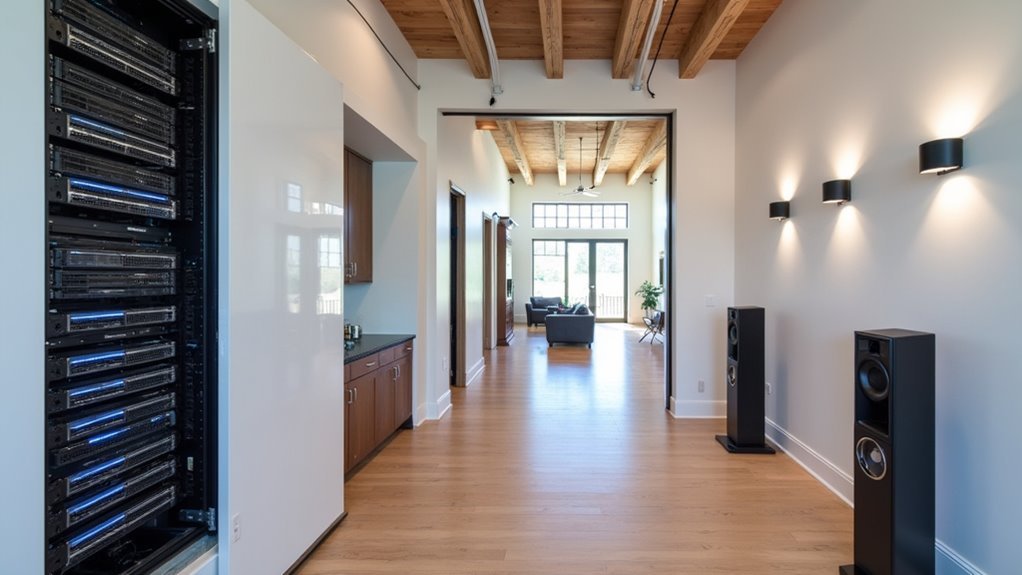
For extensive whole-home audio distribution, you’ll want to deploy centralized server solutions that establish a robust client-server architecture across your entire network.
Snapcast exemplifies this approach by installing a Snapserver on dedicated hardware like Ubuntu Server while distributing Snapclients across various devices throughout your home. This configuration enables precise multiroom audio synchronization, ensuring identical streaming audio reaches all connected wireless speakers simultaneously.
These centralized server solutions integrate seamlessly with existing audio playback software like MPD, supporting diverse source inputs from local files to online services.
Frequently Asked Questions
How to Connect Speakers in Multiple Rooms?
You’ll need multi-room wireless systems like Sonos or Bose. Verify speaker compatibility, use strong Wi-Fi for stable streaming, then follow manufacturer setup guidelines and configure your app to recognize each device.
Is There a Way to Sync Multiple Bluetooth Speakers?
You can sync multiple Bluetooth speakers using manufacturer apps like JBL’s PartyBoost or third-party apps like AmpMe. However, you’ll experience range limitations and potential audio quality drops with distance.
How to Get Music in Every Room?
You’ll need a multi-room audio system like Sonos or speakers supporting AirPlay 2. Start with wireless speakers, guarantee strong Wi-Fi coverage, then expand room-by-room using a single app to control everything.
How to Set up Multi Room Music?
You’ll need compatible speakers on the same Wi-Fi network. Download your manufacturer’s app like Sonos Controller or Google Home. Group speakers together, then select music to stream simultaneously across all rooms.

Leave a Reply