

You’ve probably wondered how self-watering systems keep your plants thriving without constant attention. Inside these clever containers, there’s more engineering than you’d expect – from strategic water reservoirs to specialized wicking materials that defy gravity. The magic happens through a carefully orchestrated system of chambers, sensors, and capillary action that mimics nature’s own hydration methods. But the real innovation lies in components you can’t see from the outside.
Essential Components of Self-Watering Plant Systems
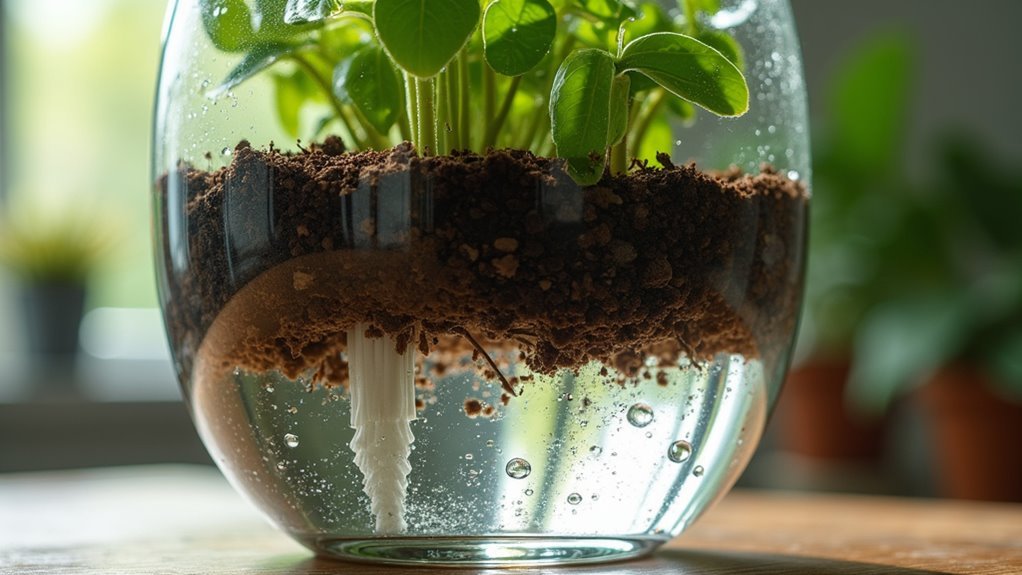
Understanding the core components of a self-watering plant system empowers you to make informed choices when selecting or building your own automated gardening solution.
Your self-watering system consists of five essential elements working together seamlessly. The growing bed sits on top, holding your lightweight, absorbent potting soil and plants. Below it, you’ll find the water reservoir that stores excess water for future use.
The wicking system connects these two levels, using absorbent materials and capillary action to draw moisture upward to your plant roots. You’ll also appreciate the water level indicator, which lets you monitor reservoir levels without opening the planter.
Together, these components maintain consistent soil moisture while minimizing your maintenance efforts.
Water Reservoir Design and Capacity Requirements
The water reservoir represents the heart of your self-watering system, directly impacting how well your plants thrive and how often you’ll need to refill the container. This component stores excess water and delivers it through capillary action as your plants require moisture.
The reservoir’s capacity varies based on planter size, with larger self watering planters holding several gallons to support multiple plants for extended periods.
Key reservoir design features include:
- Water level indicators that let you monitor capacity and know when refilling is necessary
- Strategic positioning at the bottom or side for ideal water distribution
- Drainage holes to prevent water accumulation and root rot
- Wicking systems that efficiently draw water to soil through capillary action
Proper reservoir design guarantees your plants receive consistent moisture without overwatering.
Wicking Materials and Capillary Action Mechanisms

You’ll need to select the right absorbent materials for your wicking system, as they’re the foundation of reliable water transfer from reservoir to soil.
Cotton rope, felt strips, and microfiber cloths work exceptionally well because their porous structure creates countless tiny channels that pull water upward through capillary action.
Understanding how this natural process works will help you optimize your wick placement and material choices for consistent plant hydration.
Absorbent Wick Materials
Capillary action transforms ordinary materials like cotton strips, nylon cords, or synthetic fabrics into powerful water-delivery systems for your self-watering planters.
These absorbent material options work by drawing water from your reservoir directly to plant roots through molecular attraction. You’ll find the wicking system operates continuously, with one end submerged in water while the other sits in soil.
Your chosen wick maintains consistent moisture levels by moving water upward against gravity. This gradual delivery prevents over-saturation while encouraging healthy root development.
- Cotton strips – Natural, affordable, and readily available for DIY setups
- Nylon cords – Durable synthetic option that resists degradation over time
- Specialized synthetic fabrics – Engineered for ideal water transfer and air circulation
- Proper wick placement – Guarantees continuous water flow from reservoir to soil
How Capillary Action Works
Molecular forces create an invisible ladder that pulls water upward through your wicking material, defying gravity to deliver moisture exactly where your plants need it.
This process, called capillary action, occurs when water molecules bond to the surfaces of narrow spaces in cotton or synthetic fibers. Your wick must maintain contact between the water reservoir and potting soil to function properly.
The wick’s diameter directly affects efficiency—thicker materials move more water, while thinner ones provide gentler flow.
Your soil’s moisture-retentive properties work alongside the wick to regulate water movement. This creates a self-regulating system where capillary action delivers consistent moisture without oversaturation, preventing root rot while ensuring your plants receive steady hydration through natural molecular attraction.
Growing Container and Soil Chamber Structure
While traditional planters require constant monitoring and manual watering, the growing container in a self-watering system functions as the upper section that houses your potting soil and plants in a carefully engineered environment.
This soil chamber creates ideal conditions through strategic design that promotes both drainage and aeration, giving your plant roots access to essential water and air.
The water reservoir sits beneath your soil chamber, connected through an integrated wicking system that maintains consistent moisture levels without your intervention.
- Lightweight potting soil – Absorbs moisture effectively while preventing waterlogging through proper drainage
- Strategic drainage holes – Allow excess water to escape while maintaining ideal soil moisture
- Aeration channels – Guarantee roots receive adequate oxygen for healthy development
- Wicking material integration – Connects reservoir to soil through capillary action
Water Level Indicators and Monitoring Features

You’ll find that effective water level indicators transform guesswork into precise monitoring, giving you clear visual cues about your reservoir’s status.
Smart monitoring technology takes this further by providing real-time data and automated alerts directly to your phone or device.
These reservoir capacity alerts guarantee you’re notified before water levels drop too low, preventing plant stress and maintaining consistent hydration.
Visual Water Level Indicators
Since maintaining proper water levels is essential for plant health, visual water level indicators serve as your primary tool for monitoring reservoir status in self-watering systems.
These indicators use straightforward designs like float mechanisms or clear tubes that let you monitor water availability at a glance. You’ll find some planters feature color-coded indicators that change with water levels, making it intuitive to determine refilling needs.
Key features of visual water level indicators include:
- Clear visibility – Transparent tubes or windows show exact water levels
- Float mechanisms – Simple floating devices that rise and fall with water
- Color-coded systems – Visual cues that change based on reservoir status
- Easy monitoring – Quick visual checks without removing plants
These monitoring features help you prevent overwatering by refilling only when necessary, supporting healthier plant growth through consistent care routines.
Smart Monitoring Technology
Modern self-watering planters increasingly incorporate smart monitoring technology that goes beyond basic visual indicators to provide precise, real-time water level data.
These advanced water level indicators use water displacement mechanisms to accurately display your reservoir’s status, eliminating guesswork from plant care. You’ll find digital monitoring features particularly valuable, as they send alerts directly to your smartphone when water levels require attention.
This monitoring technology prevents overwatering by clearly marking ideal levels, ensuring your plants receive consistent moisture without waterlogging risks.
Whether you’re a busy professional or beginner gardener, these smart features simplify maintenance routines. You won’t need to constantly check your self-watering planters manually, as the integrated displays and mobile notifications keep you informed about your plants’ hydration needs effortlessly.
Reservoir Capacity Alerts
Central to effective smart monitoring are the visual water level indicators that transform reservoir management from guesswork into precise maintenance.
These sophisticated systems guarantee you’ll maintain ideal reservoir capacity without constant manual checking. Float mechanisms provide immediate visual feedback as water levels change, while advanced digital sensors can send smartphone notifications when refilling becomes necessary.
- Float-based indicators rise and fall with water levels for instant visual confirmation
- Digital sensor alerts notify you via smartphone when reservoir capacity drops below ideal levels
- Color-coded markings provide intuitive guidance on when to refill your system
- Clear measurement zones eliminate guesswork in maintaining proper water levels
Regular monitoring using these water level indicators prevents both overwatering and underwatering, promoting healthier plant growth through consistent moisture management.
Drainage Systems and Overflow Protection
While self-watering systems excel at maintaining consistent moisture, they’d fail without proper drainage to prevent water accumulation that kills plants.
Drainage systems incorporate strategic holes and channels that allow excess water to escape, preventing root rot and maintaining ideal soil conditions. These overflow protection features work alongside water reservoirs to create a balanced environment where plants receive adequate moisture without becoming waterlogged.
Most quality self-watering planters include built-in overflow holes positioned at specific heights to maintain proper water levels.
The wicking mechanism draws moisture upward while ensuring proper aeration through effective drainage. For outdoor planters, this drainage becomes vital during heavy rainfall, allowing natural precipitation to exit the system and preventing over-saturation that could damage your plants’ delicate root systems.
Potting Mix Selection for Optimal Water Distribution
You’ll need lightweight, absorbent potting mixtures that facilitate capillary action and allow water to move efficiently from your reservoir to plant roots.
Peat moss, coconut coir, and perlite create an ideal combination that retains moisture while maintaining proper aeration for healthy growth.
Avoid hydrophobic mixes that repel water, as they’ll disrupt your self-watering system’s effectiveness and prevent optimal water distribution.
Lightweight Absorbent Mixtures
When selecting a potting mix for your self-watering planter, you’ll need components that balance moisture retention with proper drainage.
Lightweight absorbent mixtures are essential for these systems because they facilitate capillary action while preventing waterlogging. The right potting mix will draw water upward from the reservoir while maintaining adequate aeration around your plant’s roots.
Key components for effective lightweight absorbent mixtures include:
- Peat moss – Provides excellent water retention and organic matter
- Perlite – Creates air pockets for drainage and root aeration
- Vermiculite – Holds moisture while allowing excess water to drain
- Specialized blends – Pre-mixed formulas designed specifically for self-watering systems
Avoid hydrophobic mixes that resist water absorption, as they’ll compromise your system’s effectiveness and leave your plants struggling for consistent moisture.
Hydrophobic Mix Compatibility
Understanding which potting mixes to avoid becomes just as important as selecting the right components for your self-watering system.
Hydrophobic potting mixes create major compatibility issues with self-watering pots because they repel water rather than absorbing it. This water-resistant quality disrupts the essential capillary action between your water reservoir and plant roots.
You’ll want to steer clear of soil that becomes hydrophobic over time, as it’ll prevent proper moisture distribution throughout your container.
Instead, choose mixes containing peat moss or coconut coir that maintain consistent absorption properties. These materials guarantee reliable wicking action from the reservoir to your plants.
Monitor your potting mix regularly and replace it when you notice water beading on the surface rather than soaking in properly.
Root Zone Access and Aeration Elements
Although traditional planters rely on surface watering that often leads to uneven moisture distribution, self-watering systems revolutionize plant care through sophisticated root zone access and aeration elements.
Your self-watering planter’s design allows roots to directly access moisture from the reservoir, promoting healthy growth and nutrient uptake. The aeration elements, including patented inserts and aeration stones, enhance airflow around roots, preventing dangerous root rot while improving overall plant health.
Advanced reservoir access and patented aeration technology work together to deliver optimal moisture while preventing root rot for healthier plants.
The wicking system utilizes capillary action to guarantee water reaches soil consistently, keeping the root zone perfectly moist without waterlogging. Built-in drainage features allow excess water to escape, preventing stagnation and maintaining ideal root aeration.
- Direct reservoir access guarantees consistent moisture delivery to root systems
- Patented aeration inserts prevent root rot through enhanced airflow
- Capillary wicking maintains ideal soil moisture without oversaturation
- Integrated drainage prevents water stagnation and promotes healthy root development
Refill Ports and Water Intake Systems
While sophisticated root zone systems handle water distribution below the surface, your self-watering planter’s refill ports and water intake systems make maintenance effortless above ground.
You’ll find convenient water intake holes with removable caps that let you quickly fill the reservoir using a hose or watering can without disturbing your plants or soil.
Many planters include water level indicators, so you’ll know exactly when it’s time to refill.
Advanced designs like TruDrop planters feature double-wall construction with staggered levels, optimizing root access to water.
Your outdoor planters also include overflow holes that prevent excess water accumulation while maintaining proper drainage.
These refill ports transform what could be complicated maintenance into a simple, convenient process that keeps your plants consistently hydrated.
Sub-Irrigation Insert Technology
You’ll find that sub-irrigation insert technology relies on patented designs that transform how water reaches your plants’ root systems.
These specialized inserts create a controlled environment where moisture distribution occurs through precise capillary action from the reservoir below.
The technology’s mechanics guarantee your plants can access water directly at soil level while preventing the common problems of overwatering and root rot.
Patented Insert Design
When you examine the heart of any effective self-watering planter, you’ll discover the patented sub-irrigation insert technology that revolutionizes how plants receive moisture.
This innovative design shows exactly how self watering pots work by creating channels and openings that deliver water directly to root zones through capillary action. You’ll maintain a consistent moisture level at the soil base, mimicking nature’s own water absorption processes.
Key features of patented insert designs include:
- Capillary channels that guarantee even water distribution throughout potting soil
- Aeration stones that enhance root breathing while supplying moisture
- Reservoir access points allowing roots to reach water directly from below
- Stress-reduction systems that prevent inconsistent watering damage
This technology makes gardening accessible for busy individuals and beginners alike.
Moisture Distribution Mechanics
As water enters the reservoir beneath your planter, the sub-irrigation insert immediately begins distributing moisture through a sophisticated network of capillary channels and porous materials. The insert’s design creates controlled pathways that draw water upward naturally, ensuring your soil remains consistently moist without oversaturation.
| Component | Function | Benefit | Result |
|---|---|---|---|
| Capillary channels | Draw water upward | Controlled distribution | Even moisture levels |
| Porous materials | Filter water flow | Prevent flooding | ideal hydration |
| Aeration stones | Enhance airflow | Root oxygenation | Healthy growth |
| Water reservoir | Store excess water | Consistent supply | Reduced maintenance |
This sub-irrigation system mimics nature’s own processes, delivering water precisely where your plants need it most while maintaining proper soil aeration.
Double-Wall Construction Benefits
Double-wall construction transforms ordinary planters into sophisticated hydration systems that deliver consistent moisture while protecting your plants from temperature fluctuations.
This innovative design creates a water reservoir between two walls, enabling efficient sub-irrigation through capillary action. You’ll maintain soil moisture naturally while promoting ideal growing conditions for any healthy plant.
The insulating barrier regulates soil temperature, ensuring roots develop properly throughout seasonal changes. Your plants access water through controlled absorption that mimics natural processes, preventing both drought stress and overwatering issues.
- Temperature stability – Insulated walls protect roots from extreme heat and cold
- Extended moisture retention – Reduced evaporation keeps soil consistently hydrated
- Enhanced durability – Weather-resistant construction withstands outdoor elements
- Natural water distribution – Staggered levels promote organic absorption patterns
Sensor Integration for Smart Watering
While double-wall construction provides the foundation for consistent moisture delivery, sensor integration elevates your self-watering system into an intelligent gardening solution that responds to your plants’ exact needs.
Your smart planter monitors soil moisture levels in real-time, delivering water precisely when required. Advanced humidity sensors adjust watering schedules based on environmental conditions, while light sensors adapt to changing sunlight exposure and weather patterns.
You’ll receive smartphone alerts and can manage your watering system remotely through app connectivity. This sensor-driven approach enhances water efficiency by eliminating guesswork and delivering only necessary amounts.
The result is reduced water waste, improved plant health, and ideal growth conditions that automatically adjust to your specific environment and plant requirements.
Timer Controls and Automated Pump Systems
Building on intelligent sensor technology, timer controls and automated pump systems transform your self-watering setup into a fully autonomous gardening solution.
These components work together to create precise watering schedules that match your plants’ specific needs without any manual intervention.
Timer controls let you program exact watering intervals, ensuring consistent hydration based on plant requirements.
Meanwhile, automated pump systems deliver precise water amounts, eliminating waste while providing tailored care for different plant types.
When moisture sensors detect dry soil, they’ll trigger your pump automatically, optimizing water usage.
- Set customized watering schedules through programmable timer controls
- Deliver precise water amounts with automated pump calibration
- Monitor and control systems remotely via smartphone connectivity
- Integrate seamlessly with existing self-watering planters for enhanced convenience
Assembly Hardware and Connection Components
Proper assembly hardware forms the backbone of any reliable self-watering system, ensuring all components work together seamlessly for ideal plant care.
Quality assembly hardware serves as the foundation that keeps your self-watering system functioning reliably for optimal plant health.
You’ll find connectors and seals that secure your reservoir to the main planter body, creating watertight connections that prevent leaks. These connection components maintain proper positioning of your wicking system while allowing easy access for maintenance.
Your water level indicator relies on specialized mounting hardware that keeps it visible and functional without compromising the system’s integrity.
Quality seals around drainage holes prevent unwanted water loss while maintaining optimal soil moisture levels.
When you’re assembling your system, these components snap or twist into place, creating secure joints that withstand daily watering cycles and plant movement without loosening over time.
Frequently Asked Questions
How Does a Self-Watering Plant System Work?
You’ll find your plants draw water through a wicking system that uses capillary action. Water moves from the reservoir below into the soil, letting your plants self-regulate their moisture intake automatically.
Do You Put Rocks in the Bottom of a Self-Watering Planter?
You shouldn’t put rocks in self-watering planters. They’ll disrupt the wicking system and create air pockets that prevent proper water movement. Instead, use lightweight, absorbent potting soil designed for self-watering systems.
What Are the Disadvantages of Self-Watering Plants?
You’ll face several disadvantages: potential root rot from overwatering, unsuitability for drought-loving plants, hydrophobic soil issues, regular reservoir maintenance needs, and eventual wick replacement requirements that can affect system effectiveness.
Do You Put Soil in Self-Watering Pots?
Yes, you’ll put soil in self-watering pots’ upper growing bed. You’ll need lightweight, absorbent potting mix that wicks moisture effectively while staying well-aerated to prevent waterlogging and promote healthy root development.

Leave a Reply