
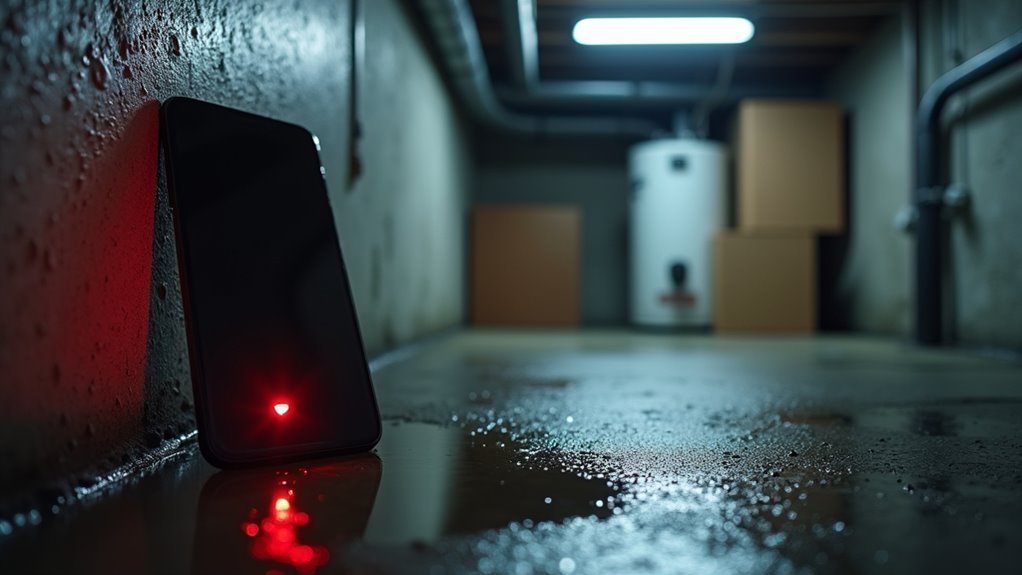
You don’t need to spend thousands on a professional flood detection system to protect your basement from water damage. Simple water sensors costing as little as $20 can save you from devastating repair bills that often reach into the tens of thousands. The key isn’t buying the most expensive equipment—it’s understanding which budget-friendly components actually work and where to place them for maximum protection.
Understanding the Real Cost of Basement Flooding

When water infiltrates your basement, the financial consequences extend far beyond what meets the eye.
You’re looking at an average of $10,900 per water damage claim, and that’s just the beginning. Your insurance company won’t cover everything, leaving you shouldering unexpected expenses for repairs and replacing personal belongings.
Mold growth compounds your problems, creating health risks that bring additional costs and stress.
You’ll face cleanup bills, restoration fees, and potential medical expenses that can devastate your budget.
Installing flood sensors and taking other proactive measures can prevent costly disasters before they start.
Prevention costs pennies compared to the thousands you’ll pay for water damage repairs and restoration.
These early warning systems alert you immediately, giving you time to respond and minimize damage.
Investing in prevention now saves you thousands later.
Essential Components for DIY Flood Alert Systems
Since basement flooding can strike without warning, you’ll need reliable water detection equipment that works around the clock. Your DIY flood alert system starts with affordable water sensors that cost as little as $20 each. These devices detect both standing and running water, providing early warnings before damage escalates.
Install smart home-compatible sensors near water heaters, around plumbing fixtures, and throughout your basement’s high-risk areas. Choose battery-operated models to guarantee flood prevention continues during power outages when you’re most vulnerable.
You can integrate these water sensors with existing alarm systems for thorough monitoring that sends alerts directly to your mobile device. Regular testing maintains reliability, and many modern sensors include self-testing features.
This setup helps you detect leaks immediately, preventing costly basement flooding damage.
Budget-Friendly Water Leak Detection Devices

Although water damage can cost thousands in repairs, you don’t need to break the bank protecting your basement. Cove’s Water Leak Detectors offer an affordable solution at just $20 per device, making them accessible for any homeowner’s budget.
These compact sensors detect as little as 1/16th of an inch of water, providing essential early warnings before minor leaks become major disasters.
You’ll appreciate their battery-operated design that continues monitoring during power outages, while built-in freeze sensors protect against burst pipes.
The water sensor alarm requires minimal maintenance – just occasional battery replacement.
Smart Sensor Placement for Maximum Coverage
You’ll maximize your basement’s flood protection by first identifying areas where water damage is most likely to occur, then positioning sensors strategically in those vulnerable spots.
Your placement strategy should focus on covering the greatest risk areas while keeping costs manageable through smart device positioning. You can achieve extensive coverage without breaking the bank by prioritizing high-impact locations and using fewer sensors more effectively.
High-Risk Area Identification
When it comes to protecting your basement from water damage, strategic sensor placement can mean the difference between catching a small leak and facing thousands of dollars in repairs.
You’ll want to focus on high-risk plumbing fixtures where water problems typically originate.
Position your water sensors around these critical areas:
- Near sinks, toilets, and showers – these fixtures experience frequent use and wear
- Around washing machines and dishwashers – appliance connections often fail unexpectedly
- By furnaces and boilers – heating systems can develop leaks that go undetected
- In areas with previous water damage – problem spots tend to repeat
- Where water naturally pools – low points collect moisture first
Smart water sensors provide real-time alerts to your phone, letting you minimize water-related disruptions before they become expensive disasters.
Strategic Device Positioning
Three key principles guide effective water sensor placement: proximity to risk sources, broad coverage patterns, and accessibility for maintenance.
You’ll want to position water detection devices directly beside your basement’s plumbing fixtures, including sump pumps, water heaters, and utility sinks.
Don’t overlook appliances like washing machines and dehumidifiers where hidden leaks often develop.
Install leak detectors in corners and low-lying areas where water naturally accumulates during flooding events.
Monitor moisture levels in crawl spaces and near foundation walls where basement waterproofing may fail.
Place sensors strategically along potential water pathways, such as floor drains and window wells.
This thorough coverage helps you prevent mold growth and avoid costly repairs by catching water intrusion before it spreads throughout your basement space.
Cost-Effective Coverage Planning
Since smart water leak detectors cost only around $20 each, you can achieve thorough basement protection without breaking your budget.
Strategic placement of these cost-effective sensors in high-risk areas creates extensive water monitoring coverage that can prevent basement flooding before it starts.
- Position sensors near your water heater, sump pump, and foundation walls where leaks commonly occur
- Install a flood alarm system that connects multiple sensors for complete basement coverage
- Choose smart sensors that detect water as small as 1/16th of an inch for early intervention
- Integrate your sensors with mobile alerts so you’ll know immediately when water appears
- Contact your home insurance provider about potential premium discounts for proactive water detection systems
This strategic approach maximizes protection while minimizing costs, making basement flood prevention accessible for any homeowner.
Setting Up Smartphone Notifications and Alerts
You’ll want to configure your water leak detectors to send instant notifications to your smartphone the moment they detect moisture or flooding.
Most smart flood sensors connect directly to your home’s Wi-Fi network, allowing you to receive alerts through dedicated mobile apps even when you’re miles away from home.
Setting up these emergency alert systems requires downloading the manufacturer’s app, connecting your devices, and customizing notification preferences to guarantee you’re immediately informed of any potential flooding situation.
Real-Time Water Detection
When water threatens your basement, every second counts in preventing catastrophic damage. Real-time water detection systems provide the instant alerts you need to respond quickly and minimize costly repairs.
- Affordable protection: Cove’s Water Leak Detectors cost just $20 per device and come pre-programmed for immediate use.
- Comprehensive monitoring: These sensors detect both standing and running water, ensuring no leak goes unnoticed.
- Smart connectivity: Integration with your home automation system enables seamless monitoring through dedicated mobile apps.
- Strategic placement: Position detectors near water heaters, washing machines, and other high-risk areas for maximum coverage.
- Proven value: With average water damage claims reaching $10,900, real-time detection represents a smart investment for homeowners seeking reliable basement protection.
Mobile App Configuration
| Configuration Setting | Recommended Action |
|---|---|
| Update Frequency | Set hourly notifications |
| Weather Alerts | Enable severe condition warnings |
| Moisture Thresholds | Configure critical level alerts |
| Device Testing | Schedule daily functionality checks |
Customize your alert settings to receive notifications when moisture reaches dangerous levels, ensuring proactive responses to potential flooding. The app sends timely updates about your basement’s status, allowing you to address issues before they become costly disasters. Regular monitoring keeps your system functioning at its best.
Emergency Alert Systems
Although water damage can strike without warning, emergency alert systems transform your smartphone into a powerful early detection tool that safeguards your basement around the clock. You can set up affordable water sensor networks starting at just $20, giving you peace of mind without expensive investments.
- Smart Integration: Connect water sensors directly to your existing home security system for seamless monitoring.
- Real-Time Notifications: Receive instant smartphone alerts the moment moisture’s detected, even when you’re away.
- Sump Pump Monitoring: Install daily testing systems like Basement Defender for $144 annually to guarantee pump readiness.
- Battery Backup Protection: Use battery-operated sensors that continue working during power outages.
- Insurance Benefits: Reduce homeowners insurance premiums while preventing costly flood damage and water damage restoration expenses.
Installation Steps for Wireless Water Sensors
Installing wireless water sensors requires just three simple steps that you can complete in minutes without any special tools or technical expertise.
First, identify leak-prone areas like water heaters, sump pumps, and plumbing fixtures where water damage typically starts.
Second, place your battery-operated sensors with gold contacts facing down on the ground in these strategic locations. The compact design lets you reposition them easily as needed.
Third, follow the step-by-step guide to activate your sensors through the accompanying app or hub, which will notify you via smartphone alerts when water’s detected. Most models come pre-programmed, so you’ll catch leaks early without complex setup procedures.
Regular battery alerts guarantee continuous protection.
Connecting Your System to Home Wi-Fi Networks
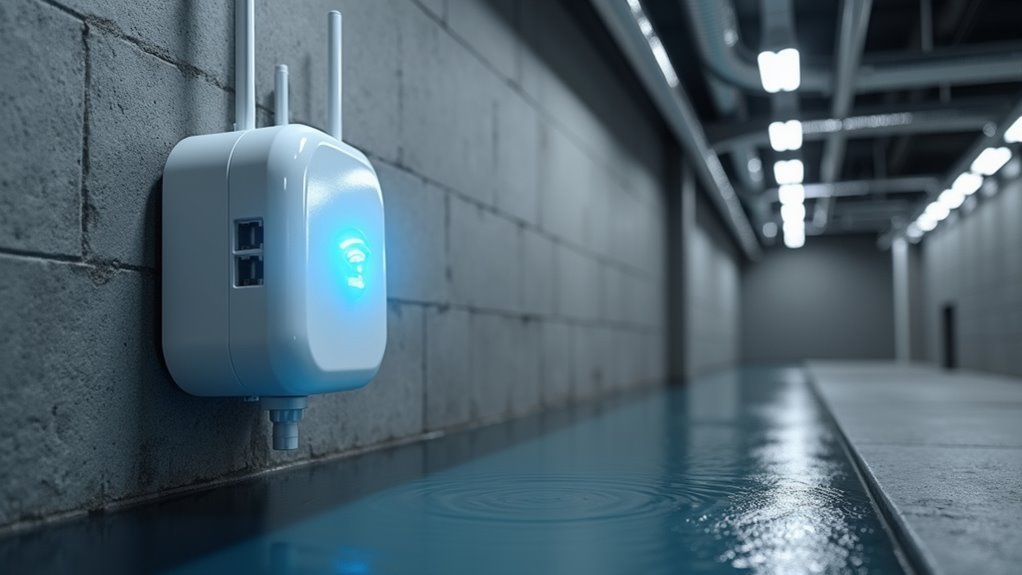
Once you’ve positioned your sensors strategically around your basement, connecting them to your home’s Wi-Fi network reveals the full potential of real-time flood monitoring.
Your 2.4GHz network enables instant alerts directly to your smartphone, keeping you informed of potential risks wherever you are.
Stay connected to your basement’s safety with instant smartphone alerts through your existing 2.4GHz Wi-Fi network, no matter your location.
- Connect sensors to your 2.4GHz Wi-Fi network for immediate smartphone notifications
- Use user-friendly mobile apps that don’t require technical expertise for system setup
- Receive hourly updates from devices like the Basement Defender Wi-Fi sump pump alarm
- Enable daily automated testing to guarantee your flood detection system functions properly
- Access affordable monitoring starting at just $144 per year for thorough basement protection
This Wi-Fi connectivity transforms basic sensors into a sophisticated early warning system, delivering peace of mind through continuous monitoring and instant alerts.
Battery-Powered vs. Hardwired Monitoring Options
When you’re selecting a flood alert system for your basement, you’ll need to decide between battery-powered and hardwired monitoring options, each offering distinct advantages for power reliability.
You’ll find that installation complexity varies considerably between these two approaches, with battery-powered units requiring minimal setup while hardwired systems demand professional electrical work.
Your choice will ultimately impact your long-term costs, as battery units offer lower upfront expenses but ongoing replacement costs, while hardwired systems require higher initial investment but reduce maintenance expenses over time.
Power Source Reliability
Power outages during severe weather events can render hardwired flood detection systems completely useless, leaving your basement vulnerable at the worst possible moment.
When storms strike and flooding becomes imminent, you need monitoring options that won’t fail when the lights go out.
Battery-powered water leak detectors offer superior reliability because they operate independently of your home’s electrical system.
Here’s why they’re your best defense:
- Continue functioning during blackouts when flooding risk peaks
- Eliminate vulnerability to electrical system failures during storms
- Provide consistent alerts regardless of power grid status
- Maintain protection when hardwired systems go dark
- Deliver peace of mind with uninterrupted monitoring
While hardwired systems may seem convenient, they’re only as reliable as your electrical supply.
Choose affordable battery-powered options for dependable basement protection.
Installation Complexity Comparison
While power reliability matters greatly, the installation process itself can make or break your flood detection plans before you ever face an actual emergency.
Battery-powered water leak detectors offer straightforward installation that you can handle yourself without any electrical work. You’ll simply place the devices where needed and connect them to your smartphone for instant monitoring alerts.
Hardwired systems require professional installation, involving electrical connections and potential home infrastructure modifications. This translates to higher upfront costs and scheduling complications with contractors.
Battery-powered options eliminate these barriers, making them the more cost-effective choice for most homeowners. You’ll avoid electrical hazards while gaining smart technology integration that delivers real-time alerts through mobile apps, providing thorough basement flood protection without complex wiring requirements.
Long-Term Cost Analysis
Beyond initial setup considerations, your choice between battery-powered and hardwired flood monitoring systems carries significant financial implications that extend well into the future.
While battery-powered detectors offer affordable entry points from $20-$800, you’ll face ongoing battery replacement costs. Hardwired systems eliminate this maintenance expense through continuous power supply.
- Battery-powered moisture detection systems require minimal technical skills, making them perfect if you relocate frequently or need quick sump pumps protection.
- Hardwired monitoring integrates with home automation, potentially reducing insurance premiums through enhanced water supply oversight.
- Average water damage claims cost $10,900, making either option a smart investment to prevent damage.
- Enhanced features in hardwired systems may qualify for additional insurance discounts.
- Both systems effectively detect water leaks, protecting your basement investment long-term.
Integrating Multiple Sensors for Comprehensive Protection
When you’re setting up water leak detection in your home, installing multiple sensors creates a thorough safety net that single-point monitoring simply can’t match.
Your extensive coverage should include high-risk areas like basements, kitchens, and near major appliances where home flood risks are highest.
Focus your water leak sensors in basements, kitchens, and around major appliances where flooding risks are most severe.
You’ll want to combine passive and active systems for maximum protection. While passive sensors provide early detection alerts through your mobile app, active systems can automatically shut off your main water supply when they detect moisture.
This dual approach in your water detection system helps prevent water damage before it becomes catastrophic.
Strategic placement near plumbing fixtures, water heaters, and sump pumps creates multiple layers of defense.
With sensors averaging $10,900 in potential claim prevention, you’re building cost-effective protection against expensive flooding disasters.
Maintenance Tips to Keep Your System Running
After installing your thorough water detection system, consistent maintenance guarantees it’ll protect your home when you need it most.
Regular upkeep prevents system failures that could leave you vulnerable to costly basement flooding.
Here’s your essential maintenance checklist:
- Test your sump pump monthly – Run water into the pit to verify it activates and pumps properly
- Check water leak detectors weekly – Confirm sensors respond correctly and replace batteries every two years
- Clean gutters twice yearly – Remove debris preventing water overflow that damages your foundation
- Inspect waterproofing annually – Examine basement sealants and coatings for cracks or deterioration
- Document all maintenance activities – Keep records to identify patterns and track system performance over time
This proactive approach guarantees your flood prevention system operates reliably when emergencies strike.
Insurance Benefits of Proactive Flood Monitoring
While maintaining your flood detection system protects your basement, it also delivers considerable financial benefits through reduced insurance premiums. Insurance companies actively reward homeowners who implement proactive strategies, recognizing that preventive solutions meaningfully reduce claims. You’ll find that water-related damage averaging $10,900 per claim makes flood monitoring systems incredibly cost-effective investments.
| Benefit Type | Annual Savings | Long-term Value |
|---|---|---|
| Premium Discounts | 5-15% reduction | $200-$800 yearly |
| Avoided Claims | $10,900 average | Thousands saved |
| Property Protection | Reduced liability | Enhanced home value |
Beyond financial advantages, these systems provide peace of mind knowing you’re actively preventing catastrophic flooding. Insurance providers encourage these preventive solutions because they markedly lower risk exposure, creating win-win scenarios where you save money while protecting your property investment.
Frequently Asked Questions
How to Find the Source of Basement Flooding?
Check your foundation’s perimeter for cracks and gaps. Inspect gutters for clogs causing poor drainage. Examine internal plumbing, sump pumps, and water tanks for leaks. Monitor these areas during heavy rain to identify water entry points.
How Much Does Basement Defender Cost?
Basement Defender’s basic protection plan costs just $144 annually. You’ll get 24/7 monitoring, timely alerts, and proven reliability from over 8,000 installations, protecting your home affordably without breaking your budget.
How Long Can Water Sit in a Basement?
You shouldn’t let water sit in your basement for more than 24-48 hours. After that timeframe, you’ll face serious mold growth, structural damage, and costly repairs that’ll escalate considerably.
Who Can I Call When My Basement Floods?
You can call a licensed plumber for pipe issues, professional water mitigation companies for severe flooding, qualified electricians for electrical hazards, and your insurance company to start claims processing immediately.



Leave a Reply