
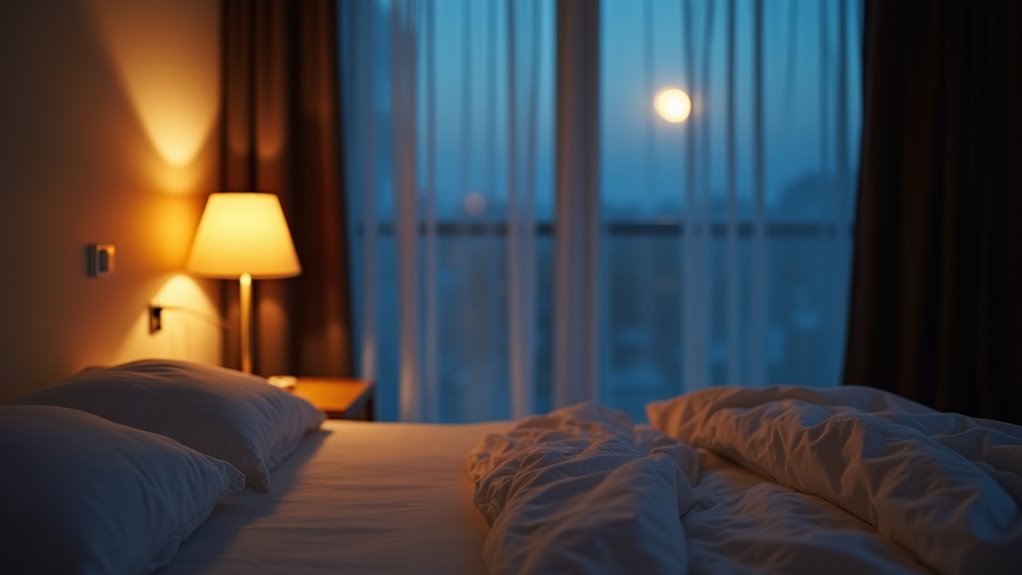
You’ve probably noticed how difficult it’s become to wind down at night, especially after spending hours under harsh overhead lights or staring at bright screens. Your body’s natural sleep-wake cycle depends heavily on light cues, yet most homes aren’t equipped with lighting systems that support healthy circadian rhythms. The right combination of smart controls can transform your evening routine and dramatically improve your sleep quality, but choosing the wrong approach could make things worse.
Understanding Circadian Rhythm and Light’s Impact on Sleep Quality

While you sleep soundly through the night, your body operates on an internal 24-hour clock called your circadian rhythm that’s constantly responding to light cues around you.
These circadian rhythms control when you feel alert or sleepy by regulating melatonin production. Natural light during the day keeps you energized, but blue light exposure from artificial lighting in the evening disrupts this process by suppressing melatonin release.
Blue light from screens and artificial lighting in the evening tricks your body into staying alert when it should be preparing for sleep.
When you’re exposed to warmer color temperature lighting at night, your body receives proper signals to wind down.
However, disrupted circadian rhythms from poor lighting systems can cause sleep disorders and health issues. Understanding this relationship between light and sleep quality helps you make informed decisions about optimizing your environment for better rest.
Essential Smart Lighting Control Features for Sleep Optimization
You’ll need specific smart lighting features to transform your bedroom into a sleep-optimized environment.
The most effective systems offer automated color temperature adjustment that shifts from bright, cool light during the day to warm, dim light in the evening.
Combined with programmable dimming schedules and motion-activated night modes, these features work together to support your body’s natural sleep-wake cycle.
Automated Color Temperature Adjustment
Because your body’s internal clock responds directly to light cues, automated color temperature adjustment serves as one of the most powerful tools for optimizing your sleep cycle.
These smart lighting controls shift from energizing cooler tones (5500K-6500K) during daylight hours to warmer, relaxing hues (1500K-3000K) in the evening, supporting your natural circadian rhythms.
When you’re exposed to warmer light during evening hours, your brain considerably increases melatonin production, which directly improves sleep quality.
Circadian lighting systems gradually adjust both color and intensity, mimicking natural sunlight progression throughout the day.
This technology proves especially valuable if you’re dealing with jet lag, as it helps realign your internal clocks.
Healthcare and hospitality environments increasingly integrate these automated systems to optimize recovery and satisfaction.
Programmable Dimming Schedules
As evening approaches, programmable dimming schedules automatically reduce your lighting intensity according to preset parameters, creating an environment that naturally encourages melatonin production.
You can align these dimming schedules with your circadian rhythm, ensuring lighting shifts mirror natural daylight progression and enhance sleep quality.
Smart lighting systems let you customize schedules based on personal preferences and specific sleep needs.
Research demonstrates that implementing these automated features greatly reduces disruptive effects of bright artificial light during nighttime hours, improving both sleep duration and quality.
You’ll benefit from integration capabilities that connect dimming schedules with other smart home systems.
These automated adjustments respond to time of day and user activity, creating seamless changes that support ideal sleep conditions throughout your evening routine.
Motion-Activated Night Modes
Motion-activated night modes transform your bedroom into a sleep-friendly environment by automatically providing minimal illumination when you need to move around during nighttime hours.
These systems use dim amber or warm white ambient lighting to reduce blue light exposure, protecting your natural melatonin production and supporting better sleep quality.
You can program motion-activated night modes to activate during specific hours, aligning with your circadian rhythms.
Advanced motion sensors distinguish between human movement and pets, ensuring lighting adjustments only occur when necessary.
This smart home technology offers complete customization, letting you tailor brightness levels and timing to your personal preferences.
The result is seamless navigation without harsh lighting that disrupts your sleep cycle or makes it difficult to return to rest.
Tunable White LED Systems for Dynamic Color Temperature Adjustment
When you’re looking to optimize your sleep environment, tunable white LED systems offer the most sophisticated approach to dynamic color temperature adjustment.
These systems automatically shift from energizing cooler light (5000K-6500K) during daylight hours to warmer light (1500K-3000K) in the evening, supporting your natural circadian rhythms. By mimicking sunlight’s natural progression, they help regulate melatonin production and improve sleep quality.
You’ll benefit from enhanced sleep onset and duration, particularly valuable in hotels and healthcare facilities.
These systems maintain a Color Rendering Index above 90, ensuring vibrant, natural colors while promoting wellbeing.
Beyond optimizing sleep, tunable white LED systems deliver superior energy efficiency by reducing the need for additional fixtures compared to traditional fixed-temperature lighting solutions.
Automated Scheduling Controls for Natural Light Cycle Simulation
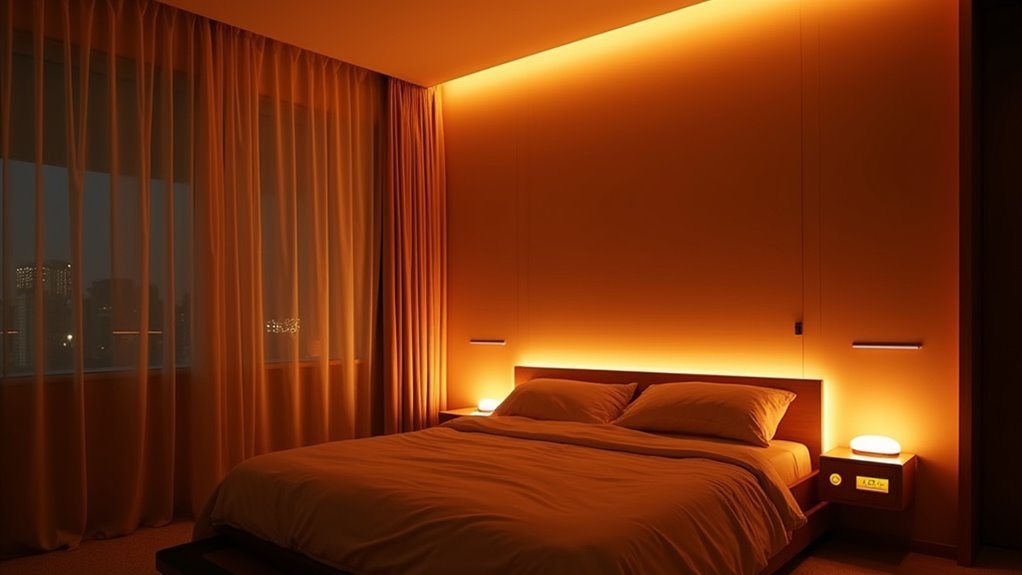
You can transform your indoor environment into a sleep-promoting sanctuary by implementing programmable circadian rhythm systems that automatically adjust your lighting throughout the day.
These systems follow pre-set schedules that mimic natural sunlight patterns, gradually shifting from bright, cool-toned light in the morning to warm, dim light in the evening.
Smart sensor light adaptation takes this further by continuously monitoring outdoor conditions and adjusting your indoor lighting to maintain ideal circadian alignment regardless of weather changes or seasonal variations.
Programmable Circadian Rhythm Systems
As technology advances, programmable circadian rhythm systems have emerged as sophisticated solutions that automatically adjust your lighting throughout the day to mirror natural sunlight patterns.
These systems modify lighting intensity and color temperature to replicate morning brightness (5500K-6500K) and evening warmth (1500K-3000K), promoting natural alertness and relaxation cycles.
Automated scheduling controls eliminate guesswork by pre-setting ideal light changes throughout your day. Integrated sensors enable real-time adjustments based on outdoor conditions, ensuring your indoor environment consistently supports your health and well-being.
You can customize these systems to match your personal schedule and preferences, making them particularly effective for irregular work hours or frequent travel.
Research demonstrates that effective circadian lighting leads to enhanced sleep quality, reduced fatigue, and improved mood, making these systems valuable investments for enhancing your rest environment.
Smart Sensor Light Adaptation
Smart sensors revolutionize lighting control by detecting ambient light conditions and automatically adjusting your indoor environment to match nature’s rhythm. Smart sensor light adaptation eliminates manual adjustments while supporting your circadian rhythms through seamless automated controls.
| Time Period | Color Temperature |
|---|---|
| Morning | 5500K-6500K (Cool) |
| Afternoon | 4000K-5000K (Neutral) |
| Evening | 3000K-4000K (Warm) |
| Night | 1500K-3000K (Very Warm) |
These systems monitor ambient light levels and adjust color temperatures accordingly, shifting from energizing cool tones during daylight to relaxing warm tones as evening approaches. This natural progression reduces melatonin suppression during vital evening hours, greatly improving sleep quality. By automatically regulating your sleep-wake cycles, smart sensor technology creates ideal lighting changes that prepare your body for restorative sleep without requiring constant manual intervention.
Dimming Controls and Gradual Light Transitions for Evening Routines
When evening approaches, dimming controls become your most powerful tool for signaling your body’s natural shift from day to night.
These controls allow gradual light changes that reduce intensity over 30 to 60 minutes before bedtime, promoting melatonin production and preparing your mind for rest.
You’ll benefit most from warm light tones during evening hours, as research shows they greatly enhance sleep quality compared to harsh, bright lighting.
Smart lighting systems can automate these dimming schedules, aligning perfectly with your circadian rhythms without requiring manual adjustments.
Studies reveal that environments with effective dimming controls deliver 20-30% improvements in overall sleep satisfaction.
Blue Light Filtering and Warm Light Settings for Nighttime
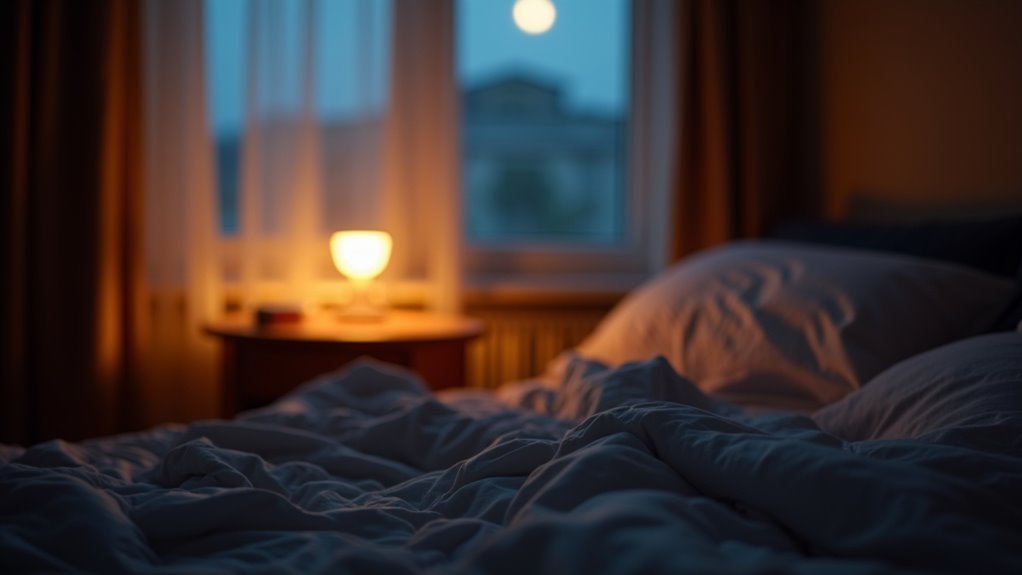
Blue light from screens and overhead fixtures acts like an artificial sunrise to your brain, suppressing melatonin production even when you’re ready to wind down.
You’ll need blue light filtering technology in your lighting controls to protect your circadian rhythm during evening hours. Smart lighting systems automatically shift to warm light settings between 1500K and 3000K, signaling relaxation and promoting natural sleep preparation.
Your sleep environment benefits greatly when you reduce blue light exposure before bedtime. Studies show this simple change improves sleep quality and duration.
Dimmable lighting controls let you easily switch to warmer tones, creating a calming atmosphere that supports healthier sleep cycles. Whether you’re at home or in hospitality settings, implementing these technologies aligns your lighting with your body’s natural rhythms for ideal rest.
Motion Sensors and Occupancy Controls for Sleep-Friendly Lighting
Motion sensors transform your sleep environment by automatically adjusting lighting levels when you move during nighttime hours, providing just enough illumination for safe navigation without the jarring brightness that disrupts your rest.
These systems work alongside occupancy controls to dim or turn off lights after periods of inactivity, naturally supporting your circadian rhythms.
You’ll benefit from dimmable lighting that creates gradual changes from bright to soft illumination as bedtime approaches.
Smart systems let you personalize brightness and color temperature settings that align with your body’s natural sleep-wake cycle.
Studies show motion sensors and occupancy controls greatly reduce nighttime awakenings by minimizing disruptive light exposure, ultimately improving your sleep quality while conserving energy through intelligent automation.
Smart Switch and App-Based Controls for Personalized Sleep Environments
You can transform your sleep environment with smart switches and mobile apps that automatically adjust your lighting throughout the day.
These systems let you program circadian rhythms directly into your lighting controls, shifting from energizing cool light during morning hours to warm, sleep-promoting tones as bedtime approaches.
Your smartphone becomes a powerful tool for creating personalized lighting schedules that sync with your body’s natural sleep-wake cycle.
App-Based Circadian Programming
As technology advances, app-based circadian programming transforms how you control lighting in your sleep environment.
These smart lighting systems let you customize schedules and color temperatures that align with your individual circadian rhythm. You can remotely adjust brightness through personalized lighting adjustments, shifting from energizing cool light during daytime to relaxing warm evening tones.
Your lighting controls integrate seamlessly with home automation, automatically responding to time of day and outdoor conditions. Features like gradual dimming and pre-set scenes help signal your body when it’s time to wind down, reducing disruptive light exposure.
Research shows that mimicking natural daylight cycles through app-based circadian programming greatly improves sleep patterns and reduces sleep onset latency, enhancing your overall sleep quality and well-being.
Smart Switch Automation
Smart switch automation revolutionizes bedroom lighting by putting complete control at your fingertips through intuitive smartphone apps.
You can customize your lighting environment by adjusting intensity and color temperature to match your personal preferences. These systems automatically shift to warm tones during evening hours, effectively signaling your body to increase melatonin production and prepare for rest.
Integration with circadian lighting systems guarantees your lights follow natural sunlight patterns throughout the day, supporting your sleep-wake cycle.
You’ll benefit from scheduling features that establish consistent bedtime routines, while voice control compatibility lets you make personalized adjustments without disrupting your wind-down activities.
This automation helps reinforce your body’s natural circadian rhythm through carefully timed lighting changes.
Integration With Sleep Tracking Devices and Home Automation Systems
Modern sleep tracking devices can transform your bedroom lighting into a responsive system that adapts to your unique sleep patterns.
Integration with sleep tracking devices enables real-time data collection, allowing your lights to adjust automatically based on your individual sleep cycle needs. Home automation systems synchronize lighting changes with your sleep schedule, using gradual dimming to promote melatonin production and enhance sleep onset.
Smart lighting systems automatically adapt to your sleep patterns, gradually dimming to boost melatonin production and improve sleep quality.
These systems create personalized lighting scenarios that shift from cooler tones in the morning to warmer hues in the evening, aligning with your circadian rhythms.
Smart lighting responds to sleep tracking feedback, increasing brightness during light sleep phases for easier waking. Geolocation features guarantee ideal lighting for sleep by adjusting indoor lighting based on external conditions, regardless of season.
Budget-Friendly DIY Solutions for Circadian Lighting Control Setup
While sophisticated sleep tracking systems offer impressive automation, you don’t need to invest hundreds of dollars to create effective circadian lighting control in your bedroom. You can achieve natural daylight simulation using smart plugs or timers that gradually adjust lighting schedules throughout the day.
| Solution | Cost Range | Key Benefit |
|---|---|---|
| Dimmable LED bulbs with color temperature control | $15-40 | Mimics natural daylight exposure during day, warmer lighting at night |
| DIY blackout curtains using foam board/fabric | $10-25 | Blocks artificial light, enhances melatonin production |
| Blue light filters for devices | $0-15 | Maintains natural sleep cycles during evening screen time |
Establish a consistent bedtime routine by dimming lights one hour before sleep, creating ideal conditions for quality rest.
Frequently Asked Questions
What Type of Lighting Is Best for Sleep?
You’ll sleep best with warm, dim lighting around 1500K-3000K in the evening. Avoid blue light from screens before bedtime, as it disrupts melatonin production and keeps you alert when you should be winding down.
How Do You Optimize a Sleep Environment?
You’ll optimize your sleep environment by maintaining cool temperatures, using blackout curtains, minimizing noise, choosing comfortable bedding, keeping electronics away, and ensuring proper ventilation for consistent, quality rest.
What Color LED Light Helps You Sleep?
You’ll sleep better with warm-colored LED lights around 2700K to 3000K. These amber-toned lights encourage melatonin production and mimic sunset’s natural warmth, signaling your body it’s time to wind down.
What Type of Light Affects Sleep?
Blue light from screens disrupts your sleep by suppressing melatonin production. Bright artificial light at night signals wakefulness, fragmenting your sleep cycles. You’ll sleep better by avoiding harsh lighting before bedtime.

Leave a Reply