
You’re probably using your smartphone to track your sleep, but most apps barely scratch the surface of what’s really happening during your eight hours of rest. While basic sleep trackers count hours and detect movement, truly effective sleep optimization apps go far beyond simple metrics. They combine cutting-edge sensor technology with personalized analysis to transform how you understand and improve your sleep quality—but only if they get the fundamentals right.
Comprehensive Sleep Tracking Technology and Sensors
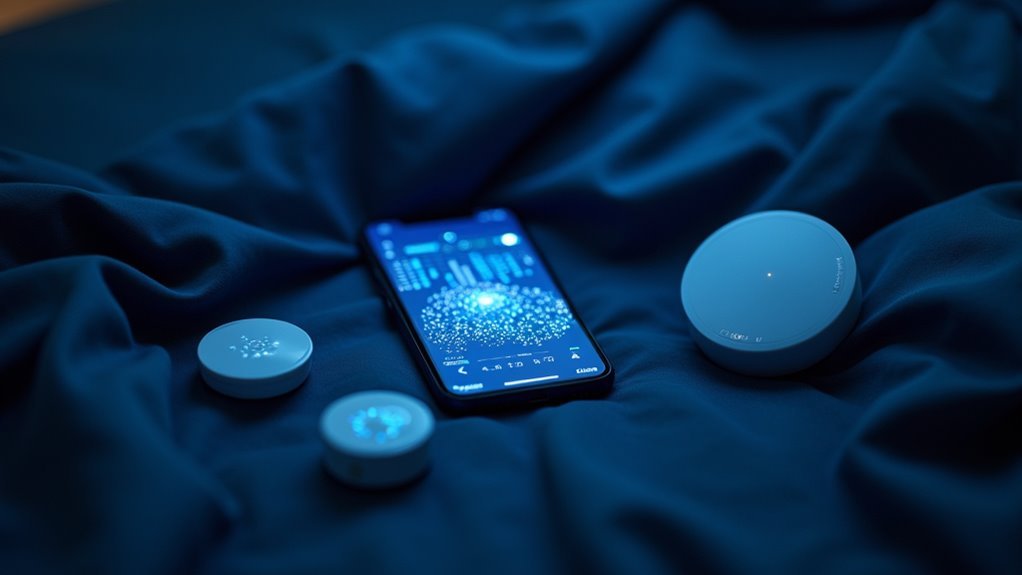
While you sleep, your smartphone or wearable device works tirelessly to monitor your body’s subtle movements and physiological changes through sophisticated sensors.
Extensive sleep tracking relies on accelerometers, optical heart-rate monitors, and sound detection to accurately estimate your sleep stages throughout the night. These sensors work together to identify when you’re experiencing light sleep, deep sleep, or REM sleep cycles.
Advanced algorithms analyze this sensor data to enhance tracking accuracy and provide detailed insights into your sleep quality over time. The technology becomes more precise with consistent use, adapting to your individual sleep patterns.
Some devices incorporate additional metrics like body temperature and heart rate variability, creating a complete picture of your sleep health and helping optimize your wake-up times.
Intelligent Sleep Stage Detection and Analysis
You’ll benefit from intelligent sleep stage detection that combines accelerometers, sound analysis, and optical heart-rate monitoring to accurately identify your light, deep, and REM sleep phases.
This advanced technology doesn’t just track when you’re asleep—it analyzes the quality and duration of each sleep stage to give you precise insights into your nightly rest patterns.
The system’s machine learning algorithms continuously adapt to your unique sleep behavior, creating increasingly personalized recommendations that help you optimize your sleep health over time.
Advanced Detection Technologies
Since sleep occurs in distinct cycles that your body naturally shifts through each night, advanced detection technologies have revolutionized how sleep optimization apps monitor and analyze these critical stages.
You’ll find these apps utilize accelerometers, sound detection, and optical heart-rate monitoring to estimate your sleep stages, providing detailed insights into light, deep, and REM cycles.
Machine learning algorithms continuously analyze your sleep patterns and disturbances, adapting to your unique behaviors over time. This advanced sleep tracking enables more accurate sleep stage analysis and delivers personalized sleep recommendations based on your historical data.
You’ll also benefit from time-stamped recordings of disturbances that help identify factors impacting your rest. Most importantly, precise detection enhances smart alarm functions, waking you during lighter phases to improve your sleep quality naturally.
Sleep Phase Accuracy
The effectiveness of these sophisticated monitoring systems ultimately depends on their ability to accurately identify and analyze your specific sleep phases throughout the night. A quality tracking app uses intelligent algorithms to differentiate between light, deep, and REM sleep stages with increasing precision over time. This sleep phase accuracy directly impacts how well you’ll understand your sleep architecture and cycles.
| Sleep Stage | Detection Method | Accuracy Rate | Key Metrics | Benefits |
|---|---|---|---|---|
| Light Sleep | Accelerometer/Heart Rate | 85-90% | Movement patterns | Sleep onset tracking |
| Deep Sleep | Heart Rate Variability | 80-85% | Recovery indicators | Physical restoration |
| REM Sleep | Combined sensors | 75-82% | Cognitive metrics | Mental recovery |
| Wake Periods | Motion detection | 90-95% | Interruption frequency | Sleep continuity |
| Sleep Changes | Algorithm analysis | 70-80% | Phase duration | Cycle optimization |
The most reliable apps correlate their findings with polysomnography standards, providing numeric scores that help you improve sleep quality through actionable insights.
Personalized Pattern Recognition
How does your sleep app transform weeks of scattered data points into meaningful insights about your unique rest patterns?
Advanced analytics in superior sleep optimization apps analyze your sleep data across multiple nights, identifying consistent trends and potential disturbances that define your personal sleep fingerprint.
This personalized pattern recognition goes beyond basic sleep tracking by correlating your sleep metrics with lifestyle factors like exercise and diet.
You’ll discover how your daily habits directly impact your rest quality through intelligent sleep analysis.
The app reveals which activities enhance or disrupt your sleep, enabling targeted improvements.
Personalized Insights and Actionable Recommendations
Most sleep optimization apps excel by analyzing your unique sleep patterns, habits, and environmental factors to deliver tailored recommendations that actually work for your lifestyle.
These personalized insights transform raw data into actionable recommendations you can implement immediately.
Apps like SleepWatch and Pillow provide detailed sleep reports that identify specific disturbances and suggest practical solutions, such as adjusting your bedtime routine or reducing screen time.
Smart Home Integration and Environmental Controls
While personalized insights provide the foundation for better sleep, smart home integration takes sleep enhancement to the next level by automatically controlling your bedroom environment. Top-tier sleep enhancement apps seamlessly connect with smart devices to regulate lighting, temperature, and noise levels without manual intervention.
| Environmental Factor | Smart Device Integration | Sleep Impact |
|---|---|---|
| Temperature | Smart thermostats | Enhanced sleep quality |
| Lighting | Smart bulbs/blackout curtains | Faster sleep onset |
| Sound | Smart speakers | Masks disturbances |
| Air Quality | Smart purifiers | Improved breathing |
| Humidity | Smart humidifiers | Ideal comfort |
These apps create personalized sleep routines by coordinating multiple devices simultaneously. When bedtime approaches, your sleep environment automatically adjusts—lights dim, temperature drops, and white noise begins. This all-encompassing automation guarantees your bedroom becomes an enhanced sanctuary for rest.
User-Friendly Interface and Seamless Experience
Beyond environmental automation, the success of any sleep optimization app hinges on how effortlessly you can navigate and interact with it. A user-friendly interface transforms complex sleep data into clear, interpretable insights through color-coded graphs and straightforward metrics.
Apps like SleepWatch demonstrate how seamless integration with devices like Apple Watch eliminates manual input, creating a hassle-free experience that automatically tracks your sleep patterns.
The best sleep tracker app combines intuitive design with thorough tools that enhance your understanding of sleep quality. Features like personalized reminders, favorite content flagging, and educational resources create a more engaging experience.
Exceptional sleep apps merge user-friendly interfaces with comprehensive analytics to deliver actionable insights and meaningful engagement through personalized features.
When your app offers sound options for relaxation alongside detailed analytics, you’re equipped with everything needed to optimize your sleep routine effectively and sustainably.
Data Privacy and Security Protection

When you entrust a sleep optimization app with your personal health information, you’re sharing some of your most intimate information—from sleep patterns and heart rate to bedroom audio recordings.
That’s why robust data privacy and security protection aren’t optional features—they’re essential requirements.
Here’s what you should demand from any sleep app:
- HIPAA compliance to protect your personal health information according to medical standards
- Strong encryption that safeguards your data from unauthorized access and breaches
- User control over data sharing, deletion, and consent features for complete transparency
- Clear terms of service and privacy policies that explain exactly how your information gets used
Regular security updates should address emerging threats, while you maintain full control over your sensitive sleep data throughout your wellness journey.
Scientific Accuracy and Evidence-Based Features
You’ll want your sleep app to accurately detect sleep stages using proven technologies like accelerometers and heart-rate monitoring, since consumer devices can’t directly measure brain waves or eye movements.
The app’s algorithms should be clinically validated through rigorous testing against established sleep measurement standards.
Look for apps that transparently share their validation methods and continuously update their detection accuracy based on scientific research and user feedback.
Sleep Stage Detection Accuracy
While sleep apps can’t match the precision of clinical polysomnography, they’ve become surprisingly effective at tracking your sleep stages through clever use of accelerometers, sound detection, and heart rate monitoring.
Though initial accuracy varies, these trackers improve with regular use, offering valuable insights into your sleep patterns rather than absolute measurements.
Here’s how modern sleep stage detection enhances your experience:
- Biometric Integration – Apps like SleepWatch automatically collect heart rate and movement data from wearables.
- Detailed Analysis – Advanced features distinguish between light, deep, and REM sleep cycles.
- Pattern Recognition – Regular tracking reveals trends that improve accuracy over time.
- Actionable Insights – Personalized recommendations help you improve sleep habits based on detected stages.
This combination transforms raw data into meaningful guidance for better rest.
Clinical Validation Methods
Sleep apps prove their worth through rigorous clinical validation methods that compare their performance against polysomnography, the gold standard that measures brain waves, eye movements, and muscle activity. You’ll find the most reliable apps undergo extensive sleep analysis testing with research institutions to verify their accuracy in tracking sleep duration and identifying sleep patterns.
| Validation Method | Technology Used | Accuracy Level |
|---|---|---|
| Polysomnography Comparison | Brain wave monitoring | Gold standard |
| Advanced Sleep Tracking | Accelerometers/Sound detection | Variable across devices |
| Algorithm Improvement | User data accumulation | Increases over time |
| Research Collaboration | Sleep scientist partnerships | Evidence-based features |
When you choose clinically validated apps, you’re getting actionable insights grounded in scientific research rather than marketing claims. These collaborations with sleep specialists guarantee your sleep optimization tool delivers measurable improvements.
Customizable Goals and Progress Monitoring
When you’re serious about improving your sleep, setting specific targets becomes essential for success. Customizable goals in sleep optimization apps let you establish duration targets that enhance accountability and motivation for transforming your sleep habits.
Setting specific sleep targets in optimization apps creates essential accountability and motivation for transforming your nightly rest habits.
Here’s how effective progress monitoring transforms your sleep journey:
- Track patterns over time – Monitor your sleep data to identify trends and assess strategy effectiveness.
- Receive personalized recommendations – Get tailored suggestions based on your individual sleep patterns and specific issues.
- Export data for professionals – Share detailed reports with healthcare providers for integrated health management.
- Measure tangible improvements – Studies confirm users who set specific goals experience significant gains in sleep quality.
You’ll discover that combining customizable goals with robust progress monitoring creates a powerful framework for achieving better overall health through optimized sleep.
Frequently Asked Questions
What Are the Features of Better Sleep App?
You’ll find sleep tracking, smart alarms that wake you gently, personalized insights, relaxing sounds, and meditation guides. The app protects your data while helping you understand and improve your nightly rest patterns effectively.
How Do I Optimize My Sleep Quality?
You’ll optimize your sleep by maintaining consistent bedtime schedules, creating calming routines, keeping your bedroom cool and dark, tracking sleep patterns, and exercising regularly to improve overall rest quality.
Does the Bettersleep App Actually Work?
Yes, Bettersleep’s effectiveness is backed by positive user reviews reporting improved sleep duration and quality. You’ll find its customizable sound mixing and guided meditations helpful for relaxation, though it lacks advanced sleep tracking features.
What Are Optimal Sleep Metrics?
You should aim for 7-9 hours of sleep with 85% efficiency, under 30 minutes to fall asleep, and balanced light, deep, and REM stages while minimizing nighttime awakenings.

Leave a Reply