
You don’t need to spend hundreds on white noise machines or smart home devices to create the perfect sleep sanctuary. Your bedroom already contains untapped sound-masking potential – from that old box fan gathering dust to the smartphone in your pocket. With a few strategic adjustments and creative positioning of everyday items, you’ll discover surprisingly effective ways to block out disruptive noises and generate the consistent, calming sounds that signal your brain it’s time to unwind.
Use Household Items as White Noise Generators
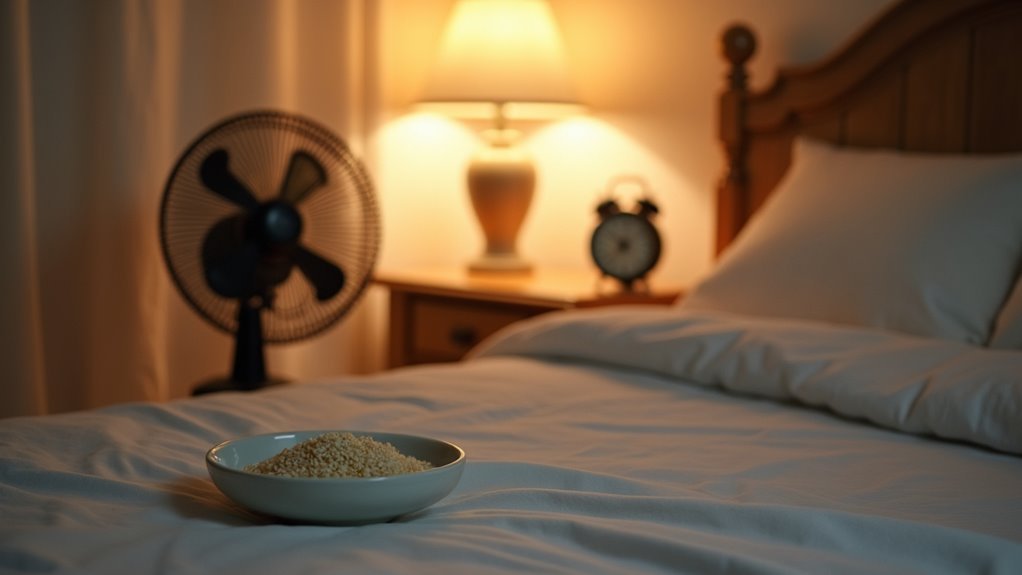
While expensive white noise machines dominate the market, you’ll find effective sound generators already sitting in your home. A box fan creates a consistent hum that masks disruptive sounds while cooling your room simultaneously.
Your smartphone apps offer built-in ambient sound capabilities, providing economical white noise without additional purchases. Place a bowl of water near your radiator to generate gentle steam sounds that promote sleep relaxation through soothing sounds.
Your smartphone’s built-in sound apps deliver free white noise alternatives, while a simple water bowl near radiators creates natural steam sounds for better sleep.
Transform ordinary household items into powerful background noise creators. Tune your radio to static for steady white noise that drowns out disturbances.
Run your dishwasher or washing machine during nighttime hours to establish consistent ambient sounds. These simple solutions prove you don’t need expensive equipment to create effective bedroom acoustics that improve your sleep quality.
Position Fans Strategically for Optimal Sound Masking
Since fan placement directly affects both sound masking and air circulation, you’ll want to experiment with different positions to find your best setup.
Strategic positioning transforms ordinary fans into powerful white noise generators that enhance sleep quality.
Consider these ideal placement strategies:
- Near windows – Creates soothing background noise while masking traffic and neighborhood disturbances.
- In corners – Maximizes airflow circulation while producing consistent, relaxation-promoting hums.
- Ceiling fans on low – Generate gentle white noise that drowns out sudden disruptions throughout the night.
- Oscillating fans centrally – Provide dynamic sound levels as they move, creating variable auditory environments.
Each position offers different benefits for sound masking.
Test various locations to balance airflow with your preferred noise level, ensuring you’ll discover the perfect combination for peaceful, uninterrupted rest.
Transform Your Smartphone Into a Sleep Sound Machine
You can turn your smartphone into a powerful sleep sound machine without spending extra money on specialized devices.
Start by downloading free sleep apps that offer white noise, rain sounds, or ocean waves, then adjust your phone’s audio settings to find the perfect volume level for relaxation.
Switch to airplane mode after starting your chosen sounds to eliminate disruptive notifications while still allowing your sleep audio to play throughout the night.
Free Sleep Apps
Why spend money on expensive white noise machines when your smartphone can deliver the same soothing sleep sounds for free? Free sleep apps like Calm and Sleep Sounds transform your device into a powerful relaxation tool, offering white noise, calming music, and nature sounds that promote anxiety reduction and improved sleep quality.
These apps provide incredible customization for your personalized sleep sound experience:
- Mix and match sounds – Combine rainfall with gentle music or layer different white noise frequencies.
- Adjust volume levels – Fine-tune each sound element to your preference.
- Set timers and alarms – Sounds fade out gradually or wake you gently.
- Access guided meditations – Additional breathing exercises enhance your bedtime routine.
Research confirms that these soothing sounds greatly improve sleep quality, making free sleep apps an essential addition to any relaxation strategy.
Phone Audio Settings
Beyond downloading specialized apps, your smartphone already contains powerful built-in audio features that can transform it into a sophisticated sleep sound machine.
Access your phone audio settings to find pre-installed calming sounds like rain, ocean waves, or white noise that play continuously throughout the night. Adjust the comfortable volume to promote relaxation without disruption.
Most sleep sound apps offer ambient sounds with customizable timers, letting you control playback duration.
Activate your phone’s Do Not Disturb feature while playing these sounds to guarantee uninterrupted sleep by silencing notifications.
Many apps include sound mixing capabilities, allowing you to blend nature sounds with soft music for a personalized bedtime experience that suits your preferences perfectly.
Airplane Mode Benefits
While optimizing your phone’s audio settings creates the perfect sleep environment, airplane mode takes this experience to the next level by eliminating every possible distraction.
Your smartphone transforms into a dedicated sleep sound machine that won’t disturb your rest with unexpected calls or notifications.
Here’s how airplane mode enhances your nighttime routine:
- Zero interruptions – All wireless communications shut off, preventing calls, texts, and app notifications from breaking your peaceful slumber.
- Extended battery life – Your device conserves power throughout the night, ensuring soothing sounds play continuously.
- Offline listening – Pre-downloaded calming sounds work without mobile data or Wi-Fi connectivity.
- Timer feature compatibility – Set your relaxing ambiance to fade out automatically as you drift off to sleep.
Create Natural Sound Barriers With Soft Furnishings
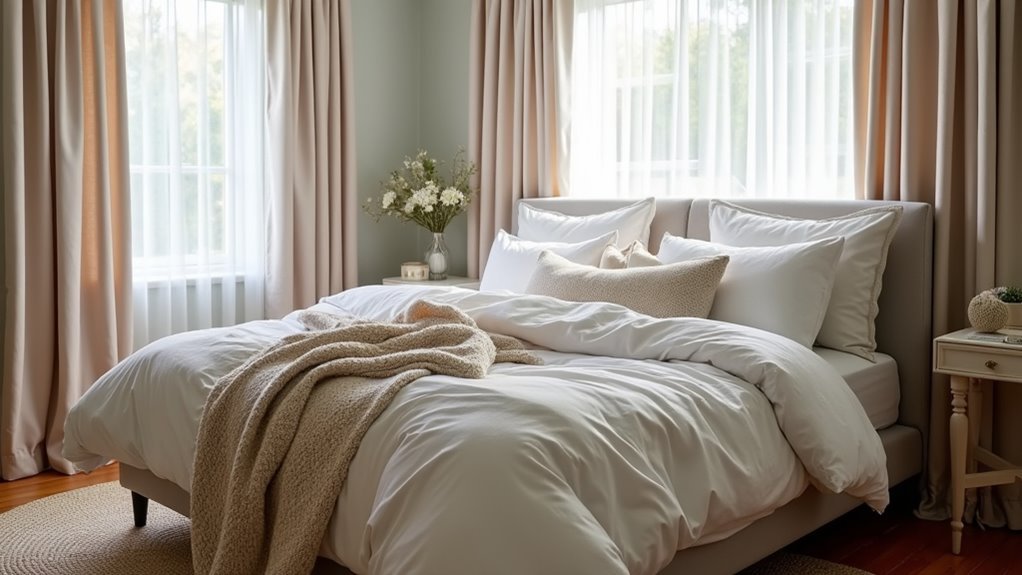
When you’re seeking a quieter bedroom environment, soft furnishings become your most effective allies in creating natural sound barriers.
Start by positioning heavy bookshelves against shared walls to block noise transmission from adjacent rooms. Layer plush rugs across your floors to minimize sound reflection while adding warmth underfoot.
Incorporate upholstered chairs or benches, as fabric absorbs sound far better than hard surfaces. Hang thick curtains over windows to create an additional noise barrier against external disturbances.
You’ll find that layering fabrics throughout your space amplifies the sound-dampening effect.
Arrange cushions and throws strategically around your room to further reduce noise levels. These simple additions create a comfortable environment that naturally absorbs sound, transforming your bedroom into a peaceful retreat without expensive equipment.
Harness Air Purifiers for Dual-Purpose Relaxation
Air purifiers offer an ingenious solution that combines clean breathing with peaceful sleeping.
These devices generate consistent white noise that can mask disruptive sounds while simultaneously working to improve indoor air quality by filtering out allergens and pollutants.
You’ll discover multiple benefits when using air purifiers for relaxation:
- Customizable sound levels – Adjustable fan speeds let you control the volume to match your comfort preferences.
- Dual functionality – Remove airborne particles while creating a soothing atmosphere for better sleep.
- Allergy relief – Reduce symptoms that might otherwise disturb your rest.
- Odor elimination – Create a calming environment by removing unwanted smells.
The gentle hum becomes a natural sleep aid, making air purifiers an excellent alternative to expensive sound machines while maintaining healthier bedroom air.
Build DIY Sound Dampening Solutions
Since noise pollution can greatly disrupt your sleep quality, creating effective sound dampening solutions doesn’t require expensive professional installation or specialized equipment.
You can strategically position thick rugs and carpets to reduce echo while absorbing unwanted noise levels. Install heavy curtains or drapes to create an effective sound barrier against external disturbances.
Transform your walls by mounting DIY acoustic panels made from sound-absorbing materials wrapped in decorative fabric. Place tall furniture like bookshelves against shared walls to minimize noise transmission.
Layer textiles throughout your space by adding cushions, throws, and other soft furnishings that naturally dampen sound.
These simple DIY solutions work together to create a peaceful environment that promotes better rest and relaxation.
Layer Textiles to Absorb Disruptive Noises
You can transform your bedroom into a quieter sanctuary by strategically layering textiles that naturally absorb disruptive sounds.
Thick rugs, heavy curtains, and upholstered furniture work together to dampen noise transmission and reduce echo throughout your space.
The key lies in understanding which fabrics offer the best sound absorption benefits and where to place them for maximum acoustic impact.
Textile Sound Absorption Benefits
While hard surfaces reflect sound waves and create echoes that can disrupt your sleep, layering textiles throughout your bedroom transforms it into a sound-absorbing sanctuary.
Textile sound absorption works by trapping sound waves in fabric fibers, preventing them from bouncing around your room.
Here’s how different textiles create a quieter environment:
- Thick dense rugs can reduce noise levels by up to 30% compared to hard flooring.
- Heavy drapery made from thick fabrics like velvet or wool blocks external sounds effectively.
- Soft furnishings such as cushions and throws add extra sound-dampening layers.
- Strategically arranging textiles like placing bookshelves with sound-absorbing materials against shared walls maximizes benefits.
These simple additions create a serene atmosphere without expensive equipment.
Strategic Fabric Placement Tips
Knowing which textiles absorb sound effectively means little without understanding where to place them for maximum impact.
Start with thick rugs on hard flooring to reduce noise levels by up to 30%. Position heavy drapery along exterior walls to block outside disruptive noises and minimize echoes. Place fabric-covered furniture against shared walls to create sound barriers between rooms.
Strategic placement of soft furnishings maximizes sound absorption throughout your bedroom. Layer throw pillows and blankets on beds and seating areas where sound waves naturally bounce.
You’ll achieve ideal results by combining multiple textile elements rather than relying on single pieces. Focus on areas where noise typically enters or reflects, such as corners, doorways, and windows, to create extensive sound dampening that transforms your space into a peaceful retreat.
Optimize Room Layout for Better Acoustics
Strategic furniture placement transforms your bedroom into an acoustic sanctuary where harsh echoes fade and unwanted noise diminishes.
When you optimize room layout with sound absorption in mind, you’ll create lasting tranquility without breaking the bank.
Here’s how to arrange your space for improved acoustics:
- Position upholstered furniture like soft sofas or padded headboards strategically to dampen sound and replace harsh reflections from hard surfaces.
- Create effective barriers by placing bookshelves or wardrobes against shared walls to minimize noise transmission from adjacent rooms.
- Move your bed away from shared walls to reduce direct exposure to disruptive sounds during sleep.
- Add plants throughout your space to naturally soften echoes while enhancing the serene atmosphere.
These soft surfaces work together to improve acoustics and establish the peaceful environment you deserve.
Combine Multiple Budget-Friendly Sound Sources
Because professional sound machines can cost hundreds of dollars, you’ll discover that combining free and inexpensive household items creates equally effective acoustic environments.
Layer your affordable gadgets strategically—run a fan for consistent white noise while playing nature sounds from your smartphone app. Position a small water fountain near your bed to add gentle trickling that enhances tranquility, then complement it with recorded ambient sounds of rustling leaves through a basic speaker.
Create your DIY sleep playlist featuring soft rain sounds and ocean waves, letting different soothing sounds work together rather than competing. This multi-source approach helps you create calming atmosphere that promotes deeper relaxation.
Frequently Asked Questions
How Do You Create a Calm Bedroom?
You’ll create calmness by using soft LED lighting, adding heavy curtains and thick rugs for sound absorption, placing furniture against shared walls, introducing essential oils, and maintaining consistent bedtime routines with relaxing activities.
How to Add Ambiance to a Bedroom?
You can enhance your bedroom’s ambiance by dimming lights, adding soft textures like throw pillows, incorporating pleasant scents through candles, displaying personal artwork, and using warm lighting to create a cozy, intimate atmosphere.
How Do I Make My Bedroom Feel Like an Oasis?
Transform your bedroom into an oasis by layering soft textiles, using calming blue-green colors, positioning plants throughout, creating a strict no-work zone, and installing ambient lighting with dimmers for mood adjustment.
How to Create a Moody Bedroom?
You’ll want to use soft, adjustable lighting and choose calming blues or purples for your walls. Add plush textures through rugs and throws, then incorporate plants and natural wood accents for tranquility.

Leave a Reply