

You’ve probably noticed how smart home systems promise convenience but often deliver frustration instead. Proprietary platforms lock you into expensive ecosystems, cloud dependencies leave you vulnerable when servers go down, and cookie-cutter automation rarely fits your actual routines. What if you could design a system that actually works the way you live? Building your own connected home isn’t just possible—it’s surprisingly straightforward once you understand the fundamental principles that major companies don’t want you to discover.
Greater Control Over Device Compatibility and Integration
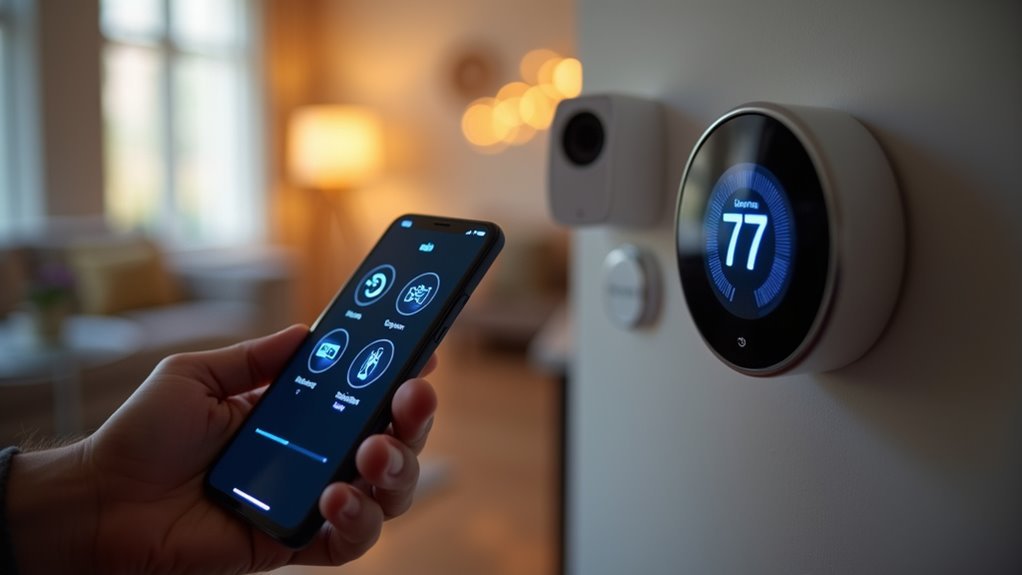
When you connect your home devices yourself, you gain complete control over which products can communicate and work together, breaking free from the restrictive compatibility walls that manufacturers often build around their ecosystems.
This DIY approach lets you select devices across multiple protocols like Zigbee, Z-Wave, and Wi-Fi, creating truly flexible smart home systems that aren’t limited by single-brand requirements.
You’ll have the freedom to troubleshoot and modify device interactions based on your specific needs, crafting personalized automations that adapt to your lifestyle.
Unlike manufacturer-controlled setups, your self-managed system can grow and evolve as you discover new devices or change your preferences.
This level of device compatibility control guarantees your smart home works exactly how you want it to function.
Cost Savings Through Strategic Device Selection
Beyond gaining control over device compatibility, connecting your own home devices opens up significant opportunities for reducing both upfront costs and long-term expenses.
You’ll achieve substantial cost savings by strategically selecting energy-efficient smart devices and appliances that can reduce your energy bills by up to 30% through optimized automation. Smart plugs and energy monitoring tools help you identify high-consumption appliances, potentially saving $100 annually by understanding your energy use patterns.
You can minimize expenses by investing in versatile smart hubs instead of multiple separate devices. Shopping during sales events or purchasing bundles reduces total costs by 20% to 40%.
When you choose compatible devices yourself, you’ll avoid replacement costs and guarantee seamless integration, maximizing both functionality and savings.
Enhanced Privacy and Data Security
Taking control of your home device connections puts you in the driver’s seat for protecting your personal information and securing your network. When you handle setup yourself, you’re limiting how much personal data gets shared with third-party companies through their services or cloud storage.
This approach gives you better control over data encryption, reducing unauthorized access risks that come with manufacturer default settings. You’ll also limit exposure to security vulnerabilities since many smart devices lack sufficient encryption, making them easy hacker targets.
With 72% of consumers concerned about data security from smart devices, managing your own configuration matters. DIY integration enables local control options that operate without internet connectivity, keeping sensitive information within your network and enhancing both privacy and data security.
Customizable Automation Based on Your Lifestyle
Since every household operates on different rhythms and routines, DIY device connections let you craft automations that genuinely match your lifestyle rather than forcing you to adapt to preset configurations. You can program lights to activate at sunset or adjust your thermostat according to your daily schedule.
This customizable automation accommodates your unique preferences while maximizing convenience.
Self-setup enables seamless integration of various manufacturers’ devices, creating a cohesive experience tailored to your habits. You’ll implement conditional automations using real-time data like temperature changes or occupancy detection, ensuring your environment adapts dynamically.
These smart home devices optimize energy efficiency considerably—smart thermostats alone can reduce heating and cooling bills by 10-15% by learning your patterns and adjusting accordingly.
Reduced Dependency on Cloud Services
While cloud-connected devices offer convenience, establishing direct connections between your home devices eliminates unnecessary reliance on external servers and puts control firmly in your hands.
You’ll experience considerably faster response times through local processing, as commands don’t need to travel to distant servers. Self-hosted systems give you complete authority over software updates and security protocols, protecting against vulnerabilities without external interference.
Your home security improves dramatically when devices operate on local networks, reducing unauthorized access risks.
You’ll maintain full functionality even during internet outages, ensuring your smart home continues working when cloud services fail. By keeping data within your home network, you minimize exposure to third-party servers and enhance privacy protection.
Better Understanding of Your System’s Functionality
Beyond the practical benefits of local control, hands-on device installation creates an invaluable learning experience that transforms you from a passive user into an informed system administrator.
When you connect devices yourself, you’ll develop a thorough understanding of how each component functions within your smart home system. This deep knowledge enables you to create sophisticated automation that perfectly matches your daily routines and preferences.
You’ll quickly grasp device compatibility requirements and master essential protocols like Zigbee, Z-Wave, and Wi-Fi. This technical familiarity empowers you to troubleshoot issues independently and optimize system performance.
Additionally, your hands-on approach reveals potential security vulnerabilities, allowing you to implement protective measures. This self-reliant setup process builds confidence and ownership, positioning you to make strategic decisions about future upgrades and integrations.
Freedom From Manufacturer Lock-In
When you connect your home devices yourself, you’ll avoid getting trapped in proprietary ecosystems that limit your choices and inflate costs.
You can choose open protocols that work across different brands, giving you the flexibility to mix and match devices based on performance rather than manufacturer compatibility.
This approach prevents vendor dependencies that could leave you stuck with outdated technology or forced expensive upgrades when companies change their support policies.
Avoid Proprietary Ecosystems
One of the biggest advantages of connecting home devices yourself is escaping the grip of proprietary ecosystems that manufacturers design to keep you buying their products exclusively.
When you connect devices independently, you’re not trapped into purchasing only compatible products from a single brand.
These proprietary ecosystems deliberately restrict integration with third-party devices, forcing you to stay within their expensive walled gardens.
Choose Compatible Protocols
Although manufacturers want to trap you in their expensive ecosystems, you can break free by choosing compatible protocols that work across multiple brands.
By selecting open standards like Zigbee, Z-Wave, or Thread, you’ll gain the freedom to mix and match devices from different manufacturers without compatibility issues.
The emerging Matter standard is revolutionizing interoperability by creating a unified protocol that connects diverse smart home devices seamlessly.
A DIY approach gives you complete control over your setup.
- Zigbee and Z-Wave create reliable mesh networks where devices communicate through each other
- Matter standard unifies previously incompatible devices under one protocol
- Open protocols prevent vendor lock-in and enable brand flexibility
- Mesh networking improves device communication and overall system reliability
- DIY installation allows complete customization of your smart home experience
Prevent Vendor Dependencies
Selecting open protocols sets the foundation for true independence from any single manufacturer’s control over your smart home.
DIY smart home setups give you complete freedom to choose devices based on your specific needs rather than being restricted to one company’s ecosystem. You’ll avoid vendor lock-in by creating a diverse network that supports interoperability among various brands and technologies.
This approach protects your investment when manufacturers discontinue products or change their business models. You can gradually upgrade components without replacing your entire system, saving money and reducing waste.
Your smart home evolves with emerging technologies instead of becoming obsolete when a vendor exits the market. Self-configuration guarantees your home automation remains functional and adaptable for years to come.
Improved Response Times With Local Processing
When you process smart home commands locally rather than sending them to distant servers, you’ll notice your devices respond almost instantly to your requests.
Local processing eliminates the delays caused by internet speed and server response times that plague cloud-based systems.
This improved response times technology transforms your home automation experience:
- Your lights turn on immediately when you flip switches or give voice commands
- Motion sensors trigger actions without waiting for cloud confirmation
- Temperature adjustments happen in real-time based on occupancy detection
- Security systems respond instantly to breaches or alerts
- Smart locks engage immediately for enhanced safety
Local processing makes your interactions feel natural and intuitive, creating seamless automation that actually works when you need it most.
Ability to Troubleshoot and Maintain Your Own System
When you install your own smart home system, you’ll develop the expertise needed to diagnose connectivity problems between devices and resolve them without waiting for technical support.
You’ll also take control of system updates, ensuring your devices receive the latest firmware and security patches on your schedule rather than relying on automated processes that might disrupt your routine.
This hands-on approach means you can quickly identify whether issues stem from network problems, device compatibility conflicts, or outdated software.
Understanding Device Connectivity Issues
Although professional installation might seem like the safer route, understanding device connectivity issues puts you in complete control of your smart home systems.
When you grasp how devices connect and communicate, you’ll troubleshoot problems faster than waiting for tech support. This knowledge transforms you from a dependent user into a capable system administrator.
Learning about device connectivity empowers you to:
- Identify interference sources affecting Wi-Fi, Zigbee, and Z-Wave signals
- Resolve bandwidth limitations causing sluggish device performance
- Select compatible devices that work seamlessly together
- Customize network configurations for peak efficiency
- Implement security protocols protecting your connected ecosystem
Mastering connectivity issues means you’re never stuck with malfunctioning devices.
You’ll diagnose problems quickly, apply effective solutions, and maintain peak system performance without external assistance.
Performing Regular System Updates
Take charge of your smart home’s health by establishing a routine for system updates across all connected devices. Performing updates isn’t just about new features—it’s vital security maintenance that addresses the concerns 55% of consumers have about smart home technology vulnerabilities.
Regular updates prevent interoperability problems between devices from different manufacturers. When you manage this process yourself, you’ll understand which devices need attention and can schedule updates to minimize disruption to your daily routines.
| Update Frequency | Device Type | Benefits |
|---|---|---|
| Weekly | Security cameras | Latest security patches |
| Monthly | Smart thermostats | Energy optimization |
| Quarterly | Smart speakers | Feature enhancements |
| As needed | Smart locks | Critical security fixes |
This proactive approach guarantees your system runs smoothly while maximizing your investment’s value.
Personalized User Interface Design
Since every household operates differently, personalized user interface design becomes essential for creating a smart home control system that truly fits your lifestyle.
You’ll customize your control app’s layout and functionality to prioritize frequently used features. Your tailored dashboard displays energy consumption data, security alerts, and device status for thorough home performance monitoring.
- Create custom device categories by room or function for intuitive management
- Set up automated routines that align with your daily schedule and activities
- Design dashboards that showcase information most relevant to your needs
- Configure personalized settings that reflect your unique preferences and habits
- Provide user feedback to continuously improve your smart home systems
This approach guarantees you’ll feel more connected to and in control of your smart environment.
Scalable Solutions That Grow With Your Needs
When you build your smart home system yourself, you’re creating a foundation that adapts and expands alongside your changing needs.
A DIY smart home foundation grows and evolves with your lifestyle, adapting to every change life brings.
A scalable solution means you can start small with essential devices and gradually add more components as your lifestyle evolves or your budget allows. Whether you’re welcoming new family members, upgrading to larger spaces, or embracing emerging technologies, your self-installed smart home grows with you.
This customizable setup prevents you from being locked into rigid, pre-packaged systems that may not accommodate future changes.
You’ll add devices at your own pace, ensuring each integration serves your specific requirements. From basic lighting controls to advanced security systems, your DIY approach creates a flexible ecosystem that continuously evolves with your household’s demands.
Quality Control Over Hardware and Software Choices
When you connect home devices yourself, you’re not stuck with whatever hardware manufacturers bundle together in their pre-configured packages.
You’ll have complete control over which devices work together and can guarantee they meet your specific performance standards rather than settling for lowest-common-denominator solutions.
This freedom lets you choose components that excel in the areas that matter most to your household while maintaining software compatibility across your entire system.
Hardware Selection Freedom
Hardware selection freedom stands as one of the most compelling advantages of connecting home devices yourself.
When you’re not locked into proprietary ecosystems, you can build smart home systems that truly reflect your priorities and needs. This autonomy allows you to research and select devices based on security features, build quality, and performance rather than brand restrictions.
Your internet of things (IoT) network becomes more robust when you can:
- Choose devices from security-focused manufacturers to address the 72% of consumer data privacy concerns
- Select hardware supporting multiple protocols like Zigbee and Z-Wave for better interoperability
- Prioritize brands known for reliability and long-term support
- Avoid vendor lock-in that limits future upgrade options
- Customize configurations for peak performance and security
Software Compatibility Control
Software compatibility control represents another essential advantage you’ll gain by managing your smart home connections independently.
When you handle device connections yourself, you can carefully select products that work seamlessly with your preferred smart home platform. This eliminates frustrating conflicts that often arise when relying on pre-configured systems that may force incompatible components together.
You’ll avoid the headaches of devices that don’t communicate properly or require workarounds to function. By researching software compatibility beforehand, you guarantee your internet of things (IoT) ecosystem operates smoothly from day one.
This control lets you build smart home systems using devices from different manufacturers while maintaining consistent performance. You’re not stuck with whatever combinations installers choose, giving you the power to create a truly cohesive smart home experience.
Performance Standards Management
Performance standards management puts you in complete control over the quality benchmarks that define your smart home’s reliability and effectiveness.
When you manage these standards yourself, you’re guaranteeing every device meets your specific requirements rather than accepting manufacturer defaults.
Through quality control over hardware selections, you’ll choose devices with strong encryption and robust security measures.
Your software choices should prioritize regularly updated applications that enhance functionality while reducing security risks.
- Establish device interoperability standards to prevent compatibility issues between brands
- Select hardware with proven encryption and security credentials
- Prioritize software with consistent update schedules and support
- Conduct regular performance assessments to identify underperforming devices
- Implement timely replacements or upgrades to maintain system efficiency
This approach guarantees seamless communication between protocols like Zigbee and Z-Wave.
Long-term Reliability Through Careful Component Selection
When you’re building a smart home system that’ll serve you reliably for years, the components you choose today determine whether you’ll enjoy seamless automation or face constant troubleshooting tomorrow. Your long-term reliability depends heavily on careful component selection that prioritizes proven technologies over flashy features.
Choose devices that don’t rely solely on cloud services—they’ll keep working during internet outages. Stick with established protocols like Zigbee or Z-Wave for better compatibility and network stability. Invest in high-quality devices from reputable manufacturers to minimize malfunctions and reduce replacement costs.
Create a curated list of recommended components to streamline your selection process.
Remember that regular firmware updates are essential for maintaining security and performance, directly impacting your smart home systems’ longevity and effectiveness.
Creative Problem-solving and Learning Opportunities
When you tackle smart home installations yourself, you’ll naturally develop troubleshooting skills as unexpected compatibility issues and connectivity challenges arise.
Each unique obstacle becomes an opportunity to innovate custom solutions that perfectly match your home’s layout and your family’s specific needs.
This hands-on experience builds your technical knowledge progressively, transforming you from a consumer into someone who truly understands how modern home automation systems work.
Troubleshooting Skills Development
Although professional installation might seem easier, connecting home devices yourself builds invaluable troubleshooting skills that’ll serve you well beyond the initial setup.
When you encounter connectivity issues or device conflicts, you’re forced to diagnose problems systematically, developing critical thinking abilities that extend far beyond smart home systems.
This hands-on experience with IoT technologies transforms you from a passive user into an empowered problem-solver. You’ll gain technical literacy through practical exposure to concepts like Wi-Fi configurations, Zigbee protocols, and device interoperability.
Benefits of developing troubleshooting skills include:
- Learning to identify root causes of connectivity problems
- Understanding network protocols and device communication
- Building confidence to tackle future technical challenges
- Developing systematic diagnostic approaches
- Gaining ability to integrate new emerging technologies
Custom Solution Innovation
DIY smart home installation releases your creative potential, transforming you from a consumer of pre-packaged solutions into an innovator who designs custom automations that perfectly match your unique lifestyle.
You’ll discover opportunities to create personalized workflows that commercial installers wouldn’t consider—like triggering specific lighting sequences based on your work schedule or customizing temperature controls for different family members’ preferences.
This hands-on approach lets you experiment freely with device configurations, testing various automation scenarios until you achieve ideal efficiency.
You’re not limited by someone else’s imagination or standard installation packages. Instead, you can adapt your system as your needs evolve, continuously refining automations to enhance daily convenience.
Your smart home becomes a living laboratory where creative problem-solving leads to innovative solutions tailored specifically for you.
Technical Knowledge Growth
Beyond creating personalized automations, installing smart home devices yourself builds substantial technical knowledge that extends far beyond basic setup procedures.
You’ll master networking protocols like Wi-Fi, Zigbee, and Z-Wave while developing deep familiarity with Internet of Things (IoT) concepts. This hands-on experience transforms you from a passive consumer into an informed technology user.
The learning opportunities you’ll encounter include:
- Programming basic automations using platforms like IFTTT or Home Assistant
- Troubleshooting connectivity issues and device compatibility challenges
- Understanding energy management principles for efficient resource conservation
- Developing coding logic skills through automation creation
- Building confidence in tech-related tasks for future learning
You’ll gain valuable insights into household functionality optimization while developing problem-solving skills that apply to emerging technologies in our evolving digital landscape.
Frequently Asked Questions
What Is the Purpose of Connected Devices?
Connected devices let you remotely monitor and control your home systems through mobile apps. They enhance security, learn your habits for energy efficiency, enable automation, and create a seamless ecosystem that simplifies daily tasks.
What Is the Point of Home Networking?
You’ll create a unified ecosystem where your smart devices communicate seamlessly, enabling centralized control, enhanced security monitoring, improved energy efficiency, and intelligent automation that responds to your habits and commands throughout your home.
Why Should We Connect Our Smart Homes?
You should connect your smart homes because they’ll provide seamless automation, enhanced security monitoring, energy efficiency, and convenient remote control. Connected devices work together, creating an integrated ecosystem that simplifies daily tasks and improves your lifestyle.
What Are the Benefits of Building Your Own Home Network?
You’ll gain complete control over device compatibility and security while saving money on installation fees. You can customize settings, store data locally, maintain functionality during outages, and develop valuable technical skills.

Leave a Reply