
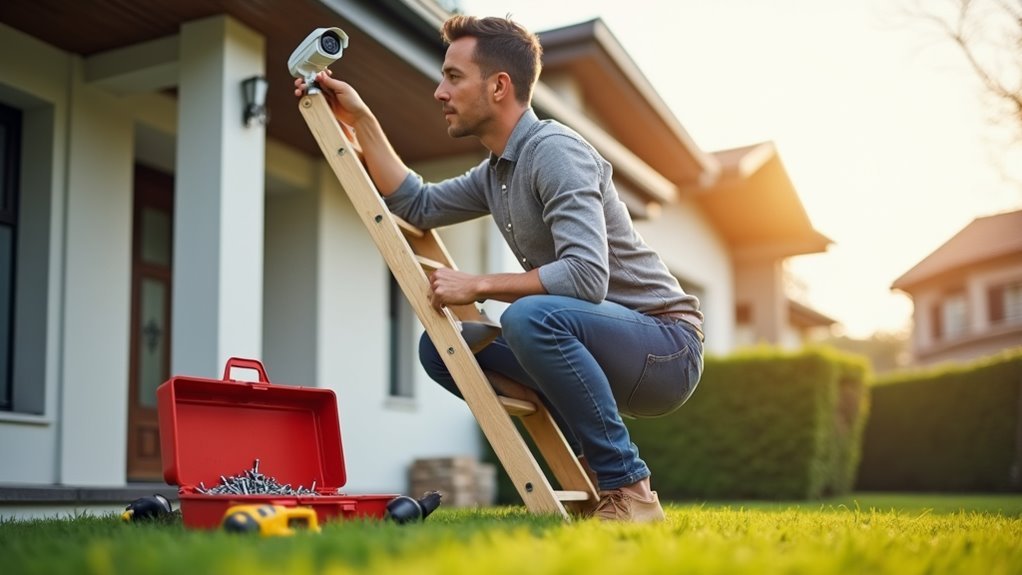
You’ve probably considered hiring professionals to install your home security cameras, but before you write that check, think about what you’re actually paying for. DIY installation isn’t just about saving money—though you’ll keep hundreds in your pocket. It’s about taking control of your home’s protection on your terms. The question isn’t whether you can handle the installation yourself, but whether you’re ready to discover just how much more effective your security system becomes when you’re the one calling the shots.
Cost Savings and Budget-Friendly Benefits

While traditional security systems can drain your budget with hefty upfront costs and ongoing fees, DIY home security camera installation offers a revitalizing affordable alternative.
You’ll find DIY home security systems ranging from $100 to $300 for starter kits, dramatically lower than professional installation costing thousands. By skipping professional installation, you’ll eliminate hundreds of dollars in installation costs and labor fees.
Self-monitoring capabilities let you avoid monthly monitoring subscriptions, providing ongoing cost savings.
These budget-friendly systems accommodate your financial situation through gradual equipment purchases over time. You’ll gain complete customization control, investing only in features that match your specific security needs.
This targeted approach prevents unnecessary expenditures on unwanted features, ensuring every dollar serves your home’s protection requirements effectively.
Complete Control Over Camera Placement and Configuration
When you install security cameras yourself, you’re in complete control of where each camera goes and how it’s configured for your specific needs.
You can position cameras at the exact angles and heights that eliminate blind spots around entry points, windows, and other vulnerable areas of your property.
This hands-on approach lets you customize motion detection settings, recording schedules, and coverage patterns that match your lifestyle and security priorities.
Strategic Camera Positioning
Since you’re handling the installation yourself, you gain complete control over where each camera goes and how it’s configured to protect your home.
Strategic camera positioning becomes your advantage, allowing you to customize camera angles and heights for peak coverage of vulnerable areas like entry points and ground-floor windows.
With DIY installation, you can eliminate blind spots by placing multiple home security cameras in high-risk zones.
You’ll monitor common areas effectively while deterring potential intruders through visible camera placement.
- Position cameras at ideal heights and angles to capture clear facial recognition footage
- Create overlapping coverage zones to guarantee no area goes unmonitored during security events
- Adjust camera locations seasonally or relocate them entirely as your security needs evolve
Customizable Security Coverage
Because DIY installations give you complete authority over every aspect of your security setup, you’ll customize camera placement and configuration to match your home’s specific vulnerabilities and layout.
Your customizable security coverage addresses unique entry points, windows, and high-risk areas that matter most to your property. The flexibility of DIY installations lets you adjust angles and settings based on real-time observations, relocating cameras as your home’s layout changes or security concerns evolve.
Installing security cameras yourself means you’ll position them in well-lit, high-traffic areas for maximum deterrent effect.
Your DIY home security system integrates seamlessly with existing smart home security devices, creating personalized monitoring solutions. These tailored security solutions adapt to your changing needs, ensuring ideal protection through strategic camera placement that professional installations might overlook.
Flexible System Adjustments
While professional installations lock you into fixed configurations, DIY camera systems offer the freedom to make adjustments whenever your security needs change.
Installing your home security camera system yourself puts you in complete control of every aspect, from camera placement to configuration settings.
With DIY security cameras, you can modify motion detection sensitivity, adjust recording schedules, and relocate devices without professional assistance.
These flexible system adjustments guarantee your security devices adapt to your evolving lifestyle and priorities. You can monitor vital areas more effectively by repositioning cameras as needed.
- Easy relocation – Move cameras to new locations when security priorities shift or living arrangements change
- Customizable settings – Adjust motion detection and recording parameters to match your preferences
- Seamless expansion – Integrate additional cameras and sensors gradually as security demands grow
Flexibility to Customize Your Security System
When you choose DIY home security camera installation, you’ll gain complete control over every aspect of your security system. This flexibility allows homeowners to customize their setup according to specific needs and preferences.
You can select camera models with features that matter most to you, whether it’s night vision, motion detection, or two-way audio.
DIY installation means you’re not limited by professional schedules or predetermined packages. You can adjust camera placements whenever needed and expand your system gradually as your budget allows.
The beauty of this approach is integrating various smart home devices to create a personalized security ecosystem. You’ll build a system that grows with you, adapting to new homes or changing security requirements without starting from scratch.
No Monthly Monitoring Fees Required
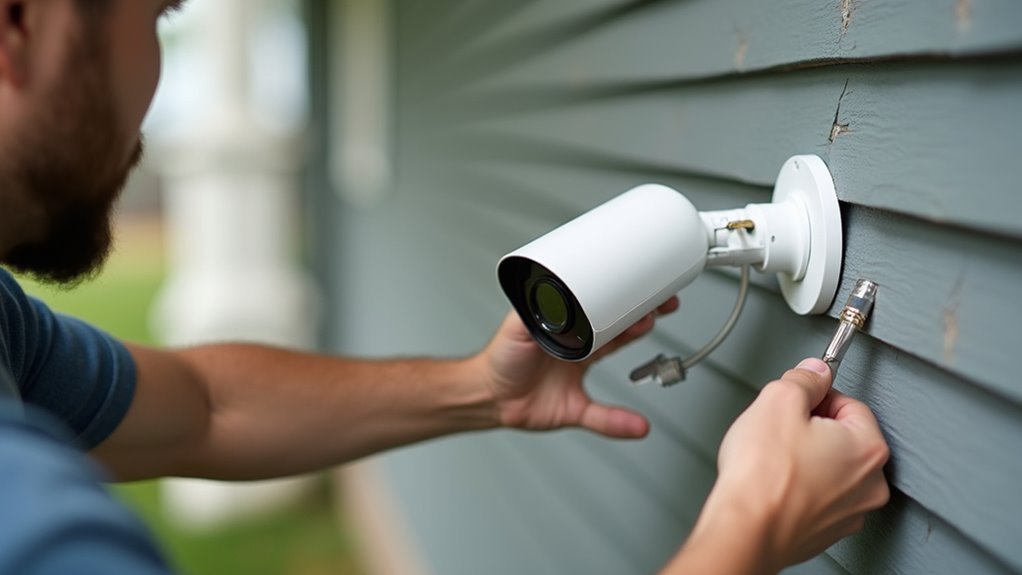
Since DIY home security camera systems eliminate monthly monitoring fees, you’ll save between $240 and $720 annually compared to professional services that charge $20 to $60 per month.
DIY systems let you take control through self-monitoring, receiving instant smartphone notifications whenever alerts trigger without additional charges.
You’ll enjoy cost-effective security with real-time access to camera feeds through mobile apps, eliminating expensive monitoring contracts. Many systems include cloud storage options that store recorded footage without ongoing subscription fees, helping you save some money for system upgrades.
Key benefits of fee-free monitoring include:
- Instant smartphone alerts for triggered events without monthly charges
- Cloud storage access to recorded footage without subscription costs
- Real-time camera feed viewing through dedicated mobile applications
This approach allows you to reinvest those monthly savings into additional security features.
Easy Installation Process for Most Homeowners
You’ll find that installing most DIY home security cameras requires nothing more than basic tools like a drill and screwdriver.
The manufacturers include straightforward installation guides that walk you through each step, making the process accessible even if you’re not particularly tech-savvy.
Wireless cameras make setup even simpler since you won’t need to run cables through walls or deal with complicated wiring systems.
Simple Tool Requirements
Most DIY home security cameras require just two basic tools: a screwdriver and a drill for mounting. The simple tool requirements make the installation process accessible to virtually any homeowner, regardless of technical experience.
You’ll find that wireless cameras eliminate complicated wiring challenges, while user-friendly installation guides walk you through each step clearly.
DIY home security systems include everything needed for quick setup:
- Pre-packaged mounting plates and screws reduce preparation time
- Step-by-step installation guides with clear visual instructions
- Wireless connectivity that eliminates complex electrical work
You can complete your entire camera installation within a few hours at your convenience.
There’s no need to schedule professional installers or purchase specialized equipment. The straightforward approach means homeowners save both time and money while maintaining complete control over their security system setup and positioning.
User-Friendly Installation Guides
Beyond the minimal tools needed, manufacturers design their installation guides to make camera setup remarkably straightforward for any homeowner.
These user-friendly installation guides walk you through each step with clear illustrations and simple language, eliminating guesswork from your DIY home security project.
You’ll find that wireless home security systems particularly shine here, as they don’t require complex wiring knowledge.
Most guides help you install a home security camera and complete the entire process within an hour.
The step-by-step instructions show you how to install and connect your cameras, then link them to your smartphone whenever you need remote access.
Whether you choose a monitoring service or prefer a self-monitoring plan, these guides guarantee successful installation.
Wireless Setup Advantages
When you choose wireless security cameras, you’ll discover that installation becomes dramatically simpler compared to traditional wired systems. The user-friendly installation process eliminates complex wiring requirements, utilizing Wi-Fi or Z-Wave technology for seamless connectivity. This self-installation process helps reduce upfront costs by avoiding expensive professional installation fees.
- Flexible camera placement throughout your home without routing cables through walls or attics
- Easy relocation and expansion capabilities that adapt to changing security needs or home layouts
- Mobile app integration providing instant access to real-time surveillance footage and notifications on your smartphone
You’ll appreciate how wireless security cameras transform home security setup from a complicated technical challenge into a straightforward DIY project that most homeowners can complete in minutes using basic mounting hardware and intuitive setup guides.
Ability to Upgrade and Expand Over Time
As your security needs change over time, DIY home security systems offer unmatched flexibility to grow alongside your requirements.
You can easily add new cameras and sensors without requiring professional assistance, thanks to modular designs that eliminate extensive rewiring. When you want to upgrade your system, you’ll integrate newer technology like enhanced night vision or improved motion detection into your existing setup.
You can customize your security coverage by adapting to changes in your home environment, whether that’s adding new entry points or monitoring additional areas of concern.
This gradual expansion approach delivers significant cost savings since you’ll invest in components only when needed, rather than committing to a complete system overhaul that professionally installed systems typically require.
Immediate Access to Your Security Footage

One of the most compelling advantages of DIY security camera installation extends beyond the flexibility to expand your system—it’s the immediate access you gain to your security footage the moment installation is complete.
Unlike professional installations requiring scheduling and waiting periods, DIY home security systems let you monitor live feeds within minutes of connecting to your Wi-Fi network.
Self-installed systems come equipped with user-friendly mobile apps that deliver instant notifications directly to your smartphone or tablet. You’ll receive alerts immediately when motion’s detected, enabling timely action against suspicious activity.
- Access recorded footage instantly without professional monitoring delays
- Customize notification settings for specific zones or times
- Review security footage remotely from anywhere with internet connection
Integration With Existing Smart Home Devices
Beyond standalone monitoring capabilities, DIY security cameras seamlessly integrate with your existing smart home ecosystem, transforming isolated devices into a unified security network.
You can control and monitor your entire system through a single app, eliminating the need to juggle multiple platforms.
Most DIY home security cameras work with popular ecosystems like Amazon Alexa, Google Assistant, and Apple HomeKit, enabling voice commands and automated responses.
Voice-activated security control through major smart home platforms makes monitoring your property as simple as speaking a command.
When your camera detects motion, it’ll automatically trigger connected devices—lights turn on, smart locks engage, or sensors activate throughout your home.
You’ll expand functionality by adding compatible smart home devices that communicate seamlessly together.
Remote access through smartphone apps lets you monitor and control everything while away, creating an all-encompassing security solution that adapts to your lifestyle.
Personal Satisfaction and Technical Skill Development
The satisfaction of completing your own home security camera installation extends far beyond the immediate security benefits you’ll gain.
When you tackle DIY home security projects, you’ll develop valuable technical skills in wiring, networking, and software configuration that’ll serve you well beyond this single project.
Your home security installation journey strengthens problem-solving abilities while building confidence in handling complex technological systems.
This hands-on experience creates genuine ownership over your home’s safety, encouraging ongoing interest in optimizing your setup.
- Gain transferable technical expertise in networking and system configuration
- Develop enhanced troubleshooting skills for future technology challenges
- Build lasting confidence in managing your home’s security infrastructure
The personal satisfaction from mastering these skills motivates you to continuously enhance your system as your needs evolve.
Frequently Asked Questions
Can You Install Security Cameras Yourself?
You can definitely install security cameras yourself using DIY systems designed for easy setup. Most come with user-friendly guides and mounting hardware, letting you customize placement while saving on professional installation costs.
Do You Have to Tell Someone You Have Cameras in Your House?
You’re not legally required to tell someone you have cameras in your house on private property. However, you should inform visitors and neighbors to maintain transparency, build trust, and potentially deter criminal activity.
Can I Install a Home Security System Myself?
You can absolutely install a home security system yourself. Modern DIY systems are designed for easy setup with minimal tools and basic skills, offering significant cost savings compared to professional installations.
Do Burglars Avoid Houses With Cameras?
Yes, burglars typically avoid houses with cameras. You’ll deter about 60% of potential intruders just by having visible security cameras, as they don’t want to risk being recorded or identified.

Leave a Reply