
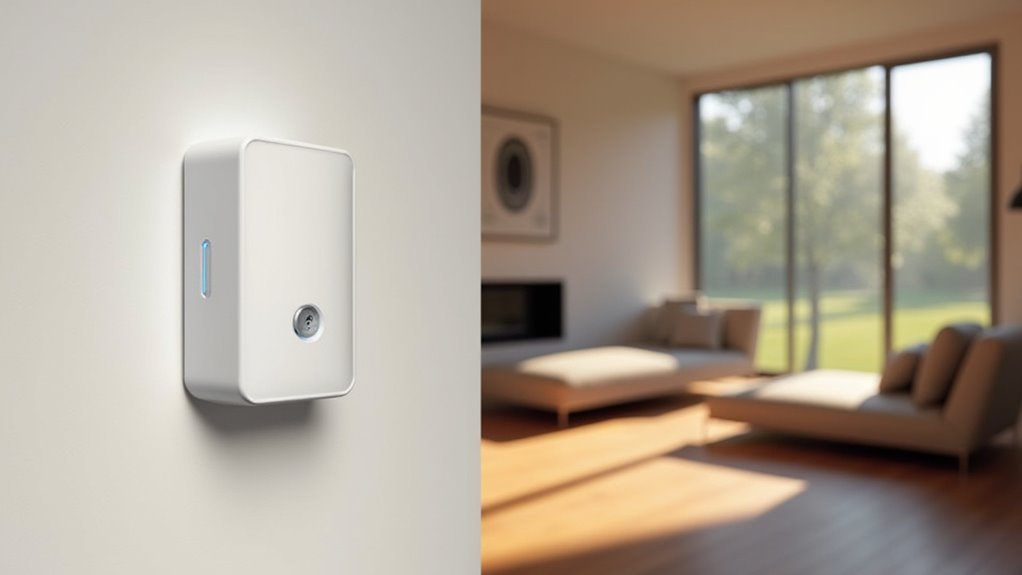
You’ve probably noticed your smart home devices struggling to detect when you’re actually present in a room. Traditional motion sensors miss you when you’re sitting still, while basic occupancy detectors can’t distinguish between you and your pet wandering through the kitchen. Thermal presence sensors solve these frustrations by reading the unique heat signature your body emits, but understanding which type works best for your specific needs requires knowing exactly how these advanced detection systems operate.
Understanding How Thermal Presence Sensors Detect Human Heat Signatures
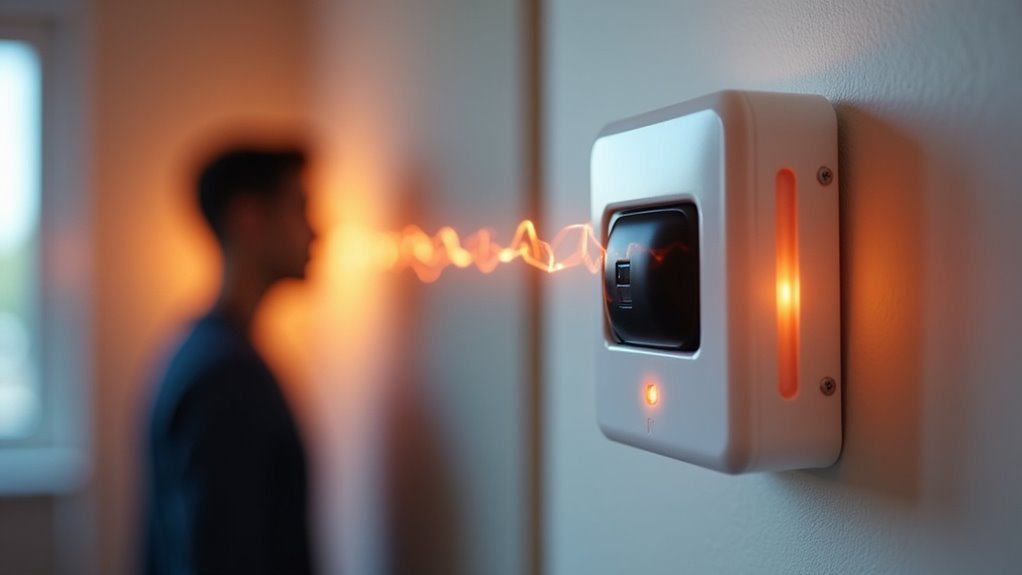
When you’re looking to understand how thermal presence sensors work, it’s essential to know they detect the infrared radiation naturally emitted by human bodies.
These thermal sensors create detailed temperature representations by analyzing heat signatures, allowing them to detect human presence with remarkable accuracy. Unlike traditional motion detectors, they monitor both moving and stationary individuals, making them highly effective for occupancy detection throughout your home.
You’ll find these sensors particularly valuable because they eliminate false positives from pets or objects, ensuring reliable performance. They function excellently in complete darkness since they don’t rely on visible light.
Their adjustable sensitivity settings let you customize detection ranges for different rooms, optimizing energy efficiency while maintaining consistent monitoring capabilities.
Key Benefits of Installing Thermal Sensors in Your Smart Home
When you install thermal presence sensors in your smart home, you’ll immediately notice two standout advantages that set them apart from traditional occupancy detection methods.
First, you’ll achieve enhanced energy efficiency as these sensors automatically optimize your lighting and HVAC systems based on actual human presence, potentially cutting your energy costs by 20-30%.
Second, you’ll maintain reliable privacy protection since thermal sensors detect heat signatures without capturing personal images or identifying data about your household activities.
Enhanced Energy Efficiency
As thermal presence sensors revolutionize how your smart home manages energy consumption, they’re delivering unprecedented efficiency gains that directly impact your utility bills.
These sensors use infrared radiation to create detailed heat maps, enabling precise presence detection that outperforms traditional motion sensors. Unlike conventional systems that miss stationary occupants, thermal sensors detect even motionless individuals, ensuring your HVAC and lighting systems operate only when spaces are truly occupied.
You’ll reduce energy consumption by up to 30% as these smart home devices automatically adjust heating, cooling, and lighting based on real-time occupancy data.
Reliable Privacy Protection
While many homeowners worry about privacy invasion from smart home monitoring systems, thermal presence sensors offer a fundamentally different approach that safeguards your personal information.
These thermal sensors detect heat signatures through infrared radiation technology without capturing images or storing personal data. You’ll receive accurate occupancy insights while maintaining complete anonymity, as the system focuses solely on heat detection rather than visual surveillance.
This privacy protection doesn’t compromise functionality. Your thermal sensors provide reliable detection in any lighting condition, seamlessly integrating with smart home systems for automated energy consumption optimization.
Unlike traditional cameras or motion detectors, you won’t risk exposure of private activities or personal habits. The non-invasive technology guarantees your family’s privacy remains intact while delivering the occupancy data needed for efficient home automation.
Choosing the Right Thermal Presence Sensor for Your DIY Project
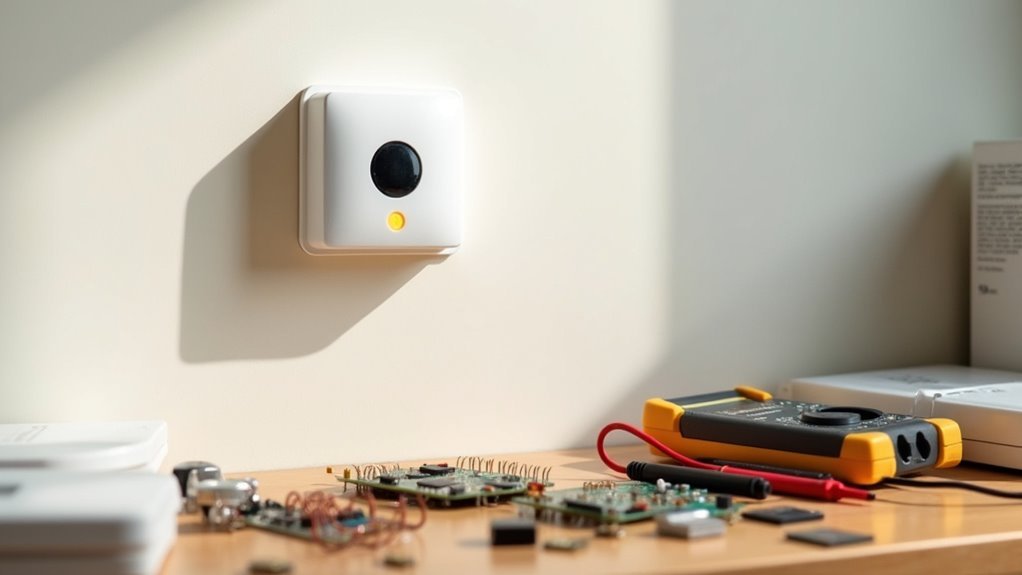
When selecting a thermal presence sensor for your DIY smart home project, you’ll need to carefully evaluate how far the device can detect human presence and whether that range matches your specific room dimensions and coverage needs.
You should also assess the complexity of installation, as some sensors require simple plug-and-play setup while others demand more technical knowledge for wiring, mounting, and system integration.
These two factors will greatly impact both your project’s success and the time you’ll invest in getting your thermal sensor operational.
Detection Range Considerations
Before you purchase a thermal presence sensor for your DIY project, you’ll need to evaluate detection range requirements based on your specific space and application.
Thermal presence sensors typically offer detection ranges between 5 to 20 meters, so measure your intended coverage area first.
Consider the sensor’s field of view, which creates a conical detection pattern that affects overall coverage. You’ll want to assess sensitivity settings since some models let you customize detection of smaller heat signatures or adjust for ambient temperature changes.
Factor in mounting height, as higher installations generally provide broader coverage areas.
Review manufacturer specifications for detection accuracy, especially since sensors may miss individuals not generating sufficient heat signatures in colder environments.
Installation Complexity Assessment
How complex will your thermal presence sensor installation actually be? First, assess your detection range needs and verify coverage won’t be compromised by environmental factors like drafts or temperature fluctuations.
You’ll find installation complexity varies greatly between models—some require complex wired connections while others offer simple wireless setups perfect for DIY projects.
Mount your sensor 6-8 feet high for ideal accuracy and minimal false negatives. Check compatibility with your existing home automation systems; many integrate seamlessly with Z-Wave or Zigbee platforms, though some need additional hubs.
Before starting, familiarize yourself with your specific model’s setup instructions and configuration settings, as these vary considerably between manufacturers and directly impact your installation’s ease and success.
Essential Tools and Components for DIY Thermal Sensor Installation
Five key components form the foundation of any successful DIY thermal sensor installation in your home.
You’ll need thermal sensor modules as the core detection element, a reliable power source to maintain continuous operation, and proper connectivity options for integration with your existing systems.
The installation process becomes straightforward when you’ve gathered the right tools and understand each component’s role.
Success in DIY thermal sensor installation depends on having the proper tools and understanding how each component functions together.
Essential tools you’ll need include:
- Mounting hardware compatible with your chosen installation location
- Basic electrical tools for wiring connections and power source setup
- Calibration equipment to fine-tune sensitivity settings post-installation
Your thermal sensors must detect heat signatures accurately within your home environment.
Proper calibration guarantees peak performance while adjusting sensitivity settings helps minimize false triggers from heat sources like appliances or sunlight.
Step-by-Step Installation Guide for Wireless Thermal Presence Sensors
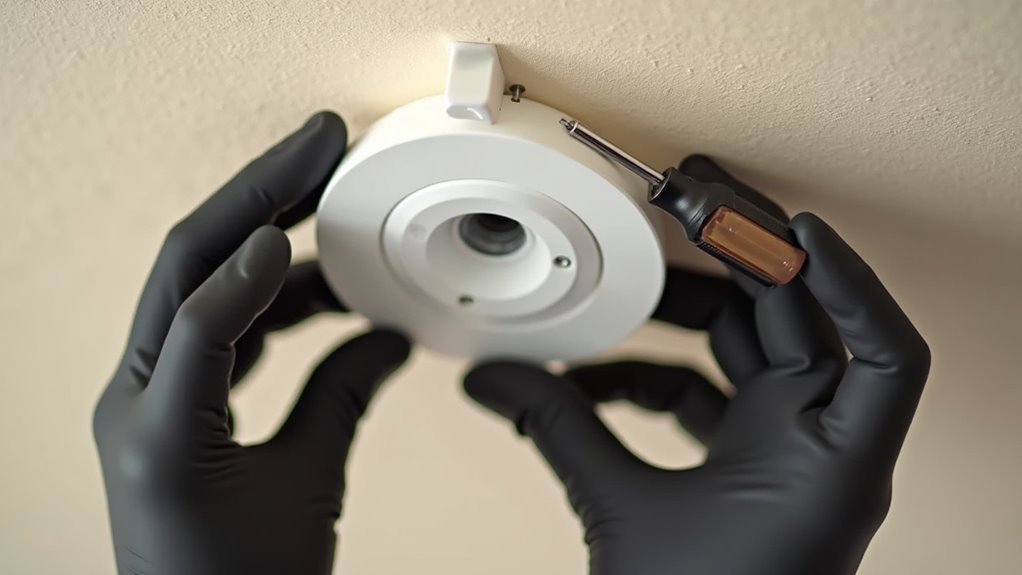
With your tools and components ready, you can now mount your wireless thermal presence sensor in the location you’ve selected. Choose a wall or ceiling position that maximizes room coverage while avoiding direct sunlight and drafts.
Verify your sensor supports your home’s wireless standards like Zigbee or Wi-Fi for seamless integration with existing smart devices.
Connect the power source following manufacturer instructions, whether installing batteries or plugging into an outlet. Use the provided app to configure critical settings including sensitivity and detection range, customizing performance for your specific environment.
Complete the installation by testing the sensor’s presence detection capabilities. Walk through its range to confirm accurate sensing and proper connectivity with your smart home system.
Configuring Multiple Detection Zones in Your Home Layout
Modern thermal presence sensors let you divide your living space into four distinct detection zones, transforming how you monitor and control different areas of your home.
Each zone operates independently, giving you precise control over occupancy patterns and automation responses throughout your house.
You’ll configure customized settings for each zone based on how you use different spaces. Your bedroom might’ve gentle lighting adjustments, while your living room triggers full climate control.
This smart space management approach maximizes energy efficiency by activating systems only where you’re actually present.
Key benefits of multi-zone configuration include:
- Targeted monitoring – Set unique alerts and responses for bedrooms, kitchens, or hallways
- Reduced energy waste – Only occupied zones receive lighting and HVAC adjustments
- Enhanced safety – Create specialized detection patterns for elderly residents or children’s rooms
Connecting Thermal Sensors to Your Existing Smart Home System
After setting up your multi-zone detection areas, you’ll want to connect these thermal sensors to your existing smart home ecosystem for seamless automation.
You can integrate thermal sensors using wireless protocols like Zigbee, Wi-Fi, or Bluetooth, ensuring compatibility with major smart home systems. The IEC62386-306 standard guarantees smooth communication with your existing infrastructure.
Once connected, you’ll access real-time occupancy data through smartphone apps, where you can adjust customizable settings and configure automated responses.
Access real-time occupancy data instantly through intuitive smartphone apps with fully customizable automation settings and intelligent response configurations.
Your thermal sensors will optimize lighting and HVAC operations based on actual room occupancy, greatly improving energy efficiency.
This integration allows you to create automated scenarios where heating, cooling, and lighting respond intelligently to presence detection, reducing unnecessary energy consumption while maintaining comfort throughout your home.
Troubleshooting Common Installation Issues and Optimization Tips
Even though thermal presence sensors offer reliable occupancy detection, you’ll likely encounter some common installation challenges that can affect their performance.
Installation issues often stem from improper height placement or proximity to environmental factors like heat sources and drafts, which compromise occupancy readings.
To optimize your thermal sensors, you’ll need to adjust sensitivity settings based on seasonal changes and varying heat signatures.
Regular testing guarantees accurate detection across different scenarios, from multiple occupants to stationary individuals.
Key optimization tips include:
- Position sensors 6-8 feet above floor level for maximum detection range
- Keep sensor lenses clean and obstruction-free for clear heat signature monitoring
- Avoid placement near HVAC vents, windows, or appliances that generate heat
These adjustments help your sensors detect presence reliably while minimizing false readings.
Frequently Asked Questions
What Is the Purpose of a Thermal Sensor?
You’ll use thermal sensors to detect infrared radiation from objects and people, enabling accurate presence detection regardless of movement or lighting conditions while providing enhanced security and automation capabilities for your specific environment.
What Are Examples of Sensors in Your House?
You’ll find motion detectors, smoke alarms, carbon monoxide sensors, door/window contacts, glass break detectors, temperature sensors, humidity monitors, light sensors, and security cameras throughout your home’s rooms.
How Does a Presence Sensor Work?
Your presence sensor detects infrared radiation that your body naturally emits. It analyzes these heat signatures through advanced algorithms, creating thermal maps that identify when you’re present, even when you’re completely still.
What Are the Different Types of Thermal Sensors?
You’ll find two main types: passive infrared sensors that detect heat signatures for basic occupancy detection, and thermal imaging sensors that create detailed heat maps for advanced monitoring applications.



Leave a Reply