
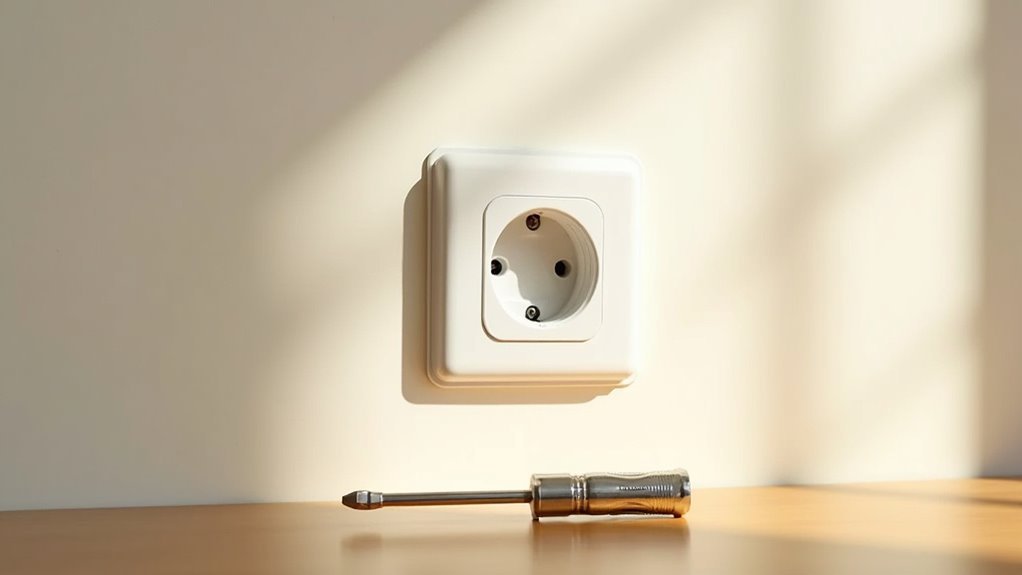
You’ve probably avoided installing smart outlets because the thought of dealing with electrical work makes you nervous. The truth is, you don’t need an electrician’s license or years of experience to upgrade your home’s outlets safely. With the right approach and a few basic tools, you can transform any standard outlet into a voice-controlled smart device in under thirty minutes. The key lies in understanding what most people get wrong.
Understanding Smart Outlets and Their Benefits

While traditional outlets simply provide power to your devices, smart outlets transform ordinary electrical connections into intelligent control points that respond to your commands from anywhere.
These innovative devices, often called smart plugs, offer remote control through smartphone apps and voice control via Amazon Alexa or Google Assistant.
You’ll dramatically reduce energy consumption by scheduling appliances during off-peak hours and eliminating phantom loads that waste up to 25% of household electricity.
Energy monitoring features reveal exactly how much power your devices consume, helping you identify usage patterns and optimize efficiency.
Smart outlets integrate seamlessly into your existing smart home system, requiring minimal installation effort while delivering maximum convenience and energy savings.
Selecting the Right Smart Outlet for Your Home
Before you purchase a smart outlet, you’ll need to verify it matches your home’s electrical requirements and voltage specifications.
You should also evaluate which smart features matter most to you, such as voice control compatibility, energy monitoring capabilities, and scheduling functions.
These considerations will help you choose an outlet that integrates seamlessly with your existing setup while providing the functionality you actually need.
Check Electrical Compatibility
When choosing a smart outlet for your home, you’ll need to verify that its electrical specifications align with your existing system to prevent potential hazards and guarantee peak performance.
To check electrical compatibility, examine the voltage ratings and amperage ratings carefully. Most homes use 15-amp or 20-amp circuits, so ascertain your smart outlet doesn’t exceed these limits to avoid circuit overload.
Next, confirm compatibility with your smart home systems like Alexa or Google Assistant for seamless integration.
Look for outlets featuring energy monitoring capabilities, which track power consumption and help reduce electricity costs.
If you need device charging options, verify the USB ports meet your requirements, including both Type A and Type C specifications for modern electronics.
Evaluate Smart Features
Once you’ve confirmed electrical compatibility, focus on the smart features that’ll maximize your outlet’s functionality and convenience.
Energy monitoring stands out as an essential feature, letting you track power consumption and reduce energy costs effectively.
Look for scheduling capabilities that automate appliance operation according to your daily routines.
Verify your chosen outlet is compatible with your existing smart home ecosystem, whether that’s Amazon Alexa or Google Assistant, for seamless voice control integration.
Consider outlets with dimmer functions for customized lighting control that enhances your living space’s ambiance.
Finally, evaluate the outlet’s physical design to guarantee it fits your space without obstructing adjacent outlets in crowded configurations.
Gathering Essential Tools and Safety Equipment

Before you begin installing your smart outlet, you’ll need to gather the right tools and safety equipment to guarantee a smooth and secure process.
Essential installation tools include a screwdriver set, voltage tester, wire strippers, and needle-nose pliers for making proper connections.
You’ll also want safety equipment like insulated gloves and should prepare a well-lit, clutter-free workspace to minimize risks during electrical work.
Required Installation Tools
Four essential tools will make your smart outlet installation safe and straightforward. Having these ready beforehand streamlines the installation process and prevents dangerous situations that might require a professional electrician.
- Screwdriver set – You’ll need this for removing the old outlet and securely mounting your new smart plug fixture. Confirm you have both flathead and Phillips head drivers.
- Voltage tester – This critical safety tool confirms no electrical current flows through wires before you begin work, preventing potentially fatal electric shock.
- Wire stripper – Essential for preparing wire ends and making adjustments to existing wiring, confirming clean cuts for peak performance.
- Needle-nose pliers – Perfect for bending and twisting wires in tight spaces, creating secure connections that’ll last for years.
Safety Equipment Essentials
Beyond the basic installation tools, three vital safety items will protect you from electrical hazards and injury during your smart outlet project. A voltage tester is your most essential safety equipment—it confirms power is completely off before you touch any wires, preventing electric shock during installation.
Your screwdriver set isn’t just for installation; it’s important for safely removing the old outlet and securing the new smart outlet connections.
Wire strippers and needle-nose pliers work together as protective tools, helping you make clean, secure connections that prevent loose wires and potential hazards.
Don’t overlook proper lighting and a clear workspace—good visibility dramatically reduces accident risks and guarantees you’ll spot potential electrical hazards before they become dangerous problems.
Turning Off Power and Preparing Your Workspace
Safety takes absolute priority when installing smart outlets, so you’ll start by switching off the power at your home’s circuit breaker. This critical step prevents electric shock and guarantees you’re working safely throughout the installation process.
Follow these essential preparation steps:
- Turn off power at the circuit breaker for the specific outlet you’re replacing
- Use a voltage tester to verify no electrical current flows through the wires before touching any connections
- Clear your workspace of obstructions and provide adequate lighting for peak visibility
- Gather necessary tools including screwdrivers, wire strippers, and needle-nose pliers
Remember to follow safety guidelines by maintaining proper clearance around the outlet and avoid overloading circuits with high-wattage devices when your smart outlet is operational.
Removing the Existing Outlet Safely

With the power safely turned off and your workspace prepared, you’re ready to remove the existing outlet from the wall. First, use a voltage tester to confirm that no electrical current is flowing through the wires. This critical safety step prevents electric shock during removal.
Next, carefully unscrew the outlet cover and store the screws safely for future use. Before disconnecting anything, document the existing wiring configuration by taking a photo or labeling the wires. This reference will prove invaluable when installing your new smart outlet that you’ll remotely control.
Now, remove the old outlet by loosening the terminal screws and gently pulling the wires away. Take care not to damage the wiring as you disconnect the wires from the old outlet completely.
Installing Your New Smart Outlet Step-by-Step
Now you can begin installing your new smart outlet using the wiring configuration you documented earlier.
Follow the instructions carefully to install Smart outlets safely and efficiently. This smart plug is easy to set up when you connect the wires properly.
- Match wire connections – Connect hot (black), neutral (white), and ground (green/bare) wires to their corresponding terminals on the smart outlet.
- Secure the outlet – Fasten the smart outlet into the wall box using provided screws for stable mounting.
- Restore power – Turn the circuit breaker back on and test with a voltage tester.
- Configure smart features – Connect to your smart home app for real-time energy monitoring and remote control.
Proper safety measures throughout installation guarantee your smart outlet functions correctly.
Restoring Power and Testing Basic Functionality
After completing the physical installation, you’ll need to restore electrical power to test your smart outlet’s functionality.
Head to your circuit breaker panel and flip the appropriate breaker back on, restoring power to the outlet. Use a voltage tester to confirm electricity is flowing properly through the smart outlet.
Next, connect your smart outlet to Wi-Fi through your smart home app. Follow the app’s setup instructions to establish the wireless connection.
Once connected, test the outlet’s basic functionality by plugging in a device. Check if USB ports charge devices correctly.
Finally, use the app to turn the outlet on and off remotely. Test scheduling features and other smart functions to guarantee everything operates as expected.
Your smart outlet installation is complete when all features work properly.
Setting Up Smart Features and App Integration
How do you release your smart outlet’s full potential? App integration transforms basic outlets into powerful smart devices that revolutionize your home automation experience.
Start by downloading your smart plug’s companion app and connecting to your Wi-Fi network. Follow these essential steps:
- Connect and Configure: Use smart plugs with the companion app to establish stable Wi-Fi connectivity and name your devices for easy identification.
- Voice Assistant Integration: Link with Amazon Alexa and Google Assistant for hands-free control of your smart devices.
- Schedule Automation: Set up timing schedules to optimize energy usage and create convenient automated routines.
- Troubleshoot Connectivity: Reset your plug and check Wi-Fi range if app integration fails.
These voice assistants enable seamless control while scheduling features maximize efficiency and convenience.
Frequently Asked Questions
What Are the Disadvantages of Smart Plugs?
You’ll face compatibility issues with older appliances, mechanical switches limiting control, Wi-Fi dependency causing connectivity problems, time-consuming testing requirements, and higher upfront costs that can offset energy savings.
What Should You Not Plug Into a Smart Plug?
You shouldn’t plug high-wattage appliances, medical devices, refrigerators, or surge protectors into smart plugs. They can’t handle the power demands, may interrupt critical functions, or create safety hazards in your home.
What Is the Difference Between a Smart Outlet and a Smart Plug?
You’ll find smart outlets replace wall outlets and require electrical installation, while smart plugs simply adapt existing outlets. Smart outlets offer permanent integration with advanced features, whereas smart plugs provide portable convenience with basic functionality.
Are Smart Sockets Worth It?
You’ll find smart sockets worth investing in since they’ll cut your electricity bills by up to 25%, provide real-time energy monitoring, offer convenient remote control, and enhance safety by preventing electrical hazards.

Leave a Reply