
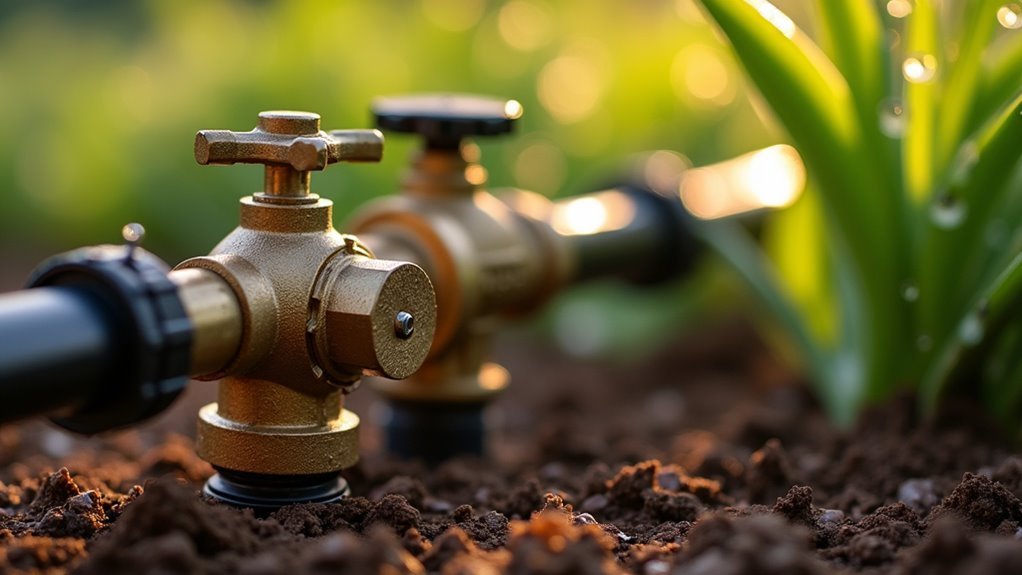
You’ve probably watched your garden struggle through dry spells while you’re away, or discovered you’ve been overwatering without realizing it. Managing irrigation manually isn’t just time-consuming—it’s often ineffective and wasteful. The good news is that automating your watering system doesn’t require expensive equipment or complex installation. With three straightforward approaches, you can transform how your garden receives water and free yourself from constant monitoring.
Start With a Simple Timer and Drip System Setup
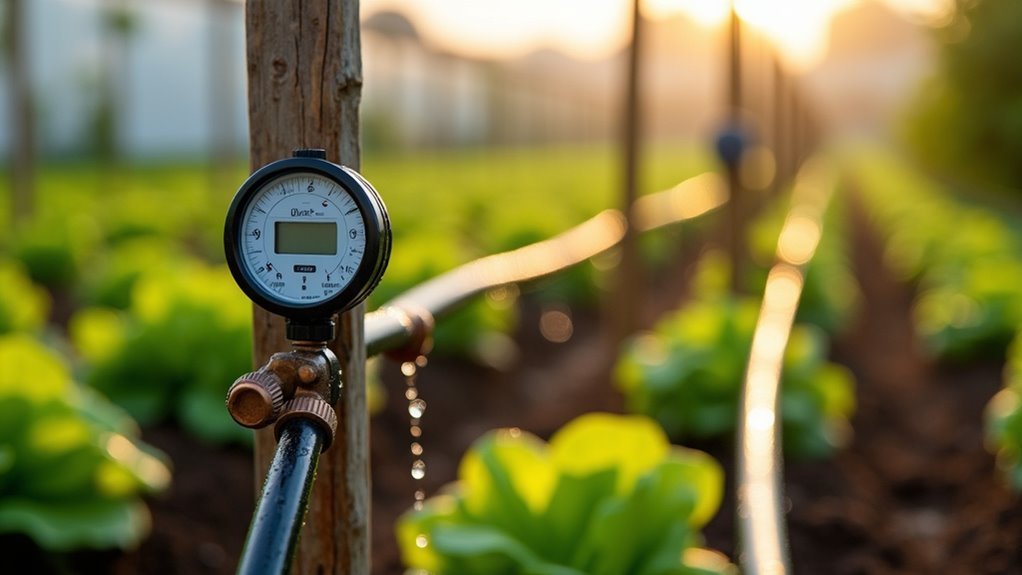
When you’re ready to transform your manual watering routine into an efficient automated system, you can create a basic timer and drip irrigation setup in just half a day.
You’ll need basic supplies: a timer, drip tubing, and a T connector for your water supply. This automated irrigation delivers water directly to plant roots, ensuring your plants receive exactly what they need while minimizing evaporation.
Install the timer on your spigot, then connect the drip tubing using the T connector. Set your timer to water your plants early morning for ideal absorption and consistent watering.
Install your timer on the spigot, connect drip tubing with the T connector, and schedule early morning watering for optimal plant absorption.
The drip irrigation system requires no specialty tools or plumbing skills, making setup accessible for any gardener. Remember to check for leaks regularly and replace timer batteries to maintain efficiency and meet your plants’ water needs.
Install Smart Moisture Sensors for Adaptive Watering
After establishing your basic timer and drip system, you’ll want to upgrade to smart moisture sensors that eliminate guesswork from your watering schedule.
These devices measure soil moisture levels in real-time, delivering precise watering only when necessary for superior water conservation.
Smart moisture sensors integrate seamlessly with automated irrigation systems, creating responsive watering schedules based on current conditions and weather forecasts.
Most models connect with smartphone apps, sending notifications and providing data analytics to enhance your garden management.
You can program specific moisture thresholds to guarantee ideal hydration without overwatering.
This technology helps reduce waste while maintaining consistent soil moisture that promotes healthier plants.
Connect Your System to a Smart Home Hub for Remote Control
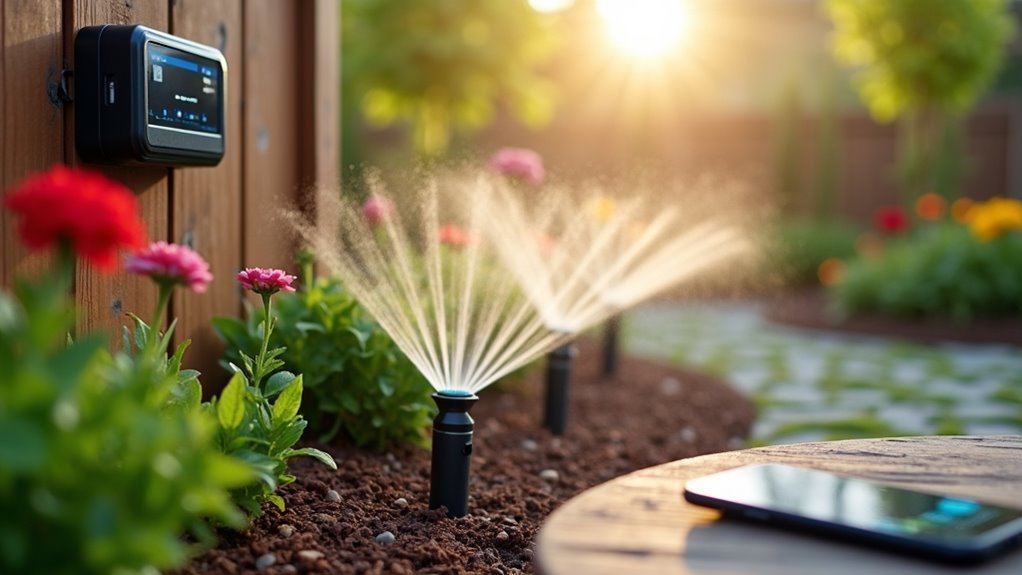
While smart moisture sensors provide excellent automation, connecting your entire irrigation system to a smart home hub like Home Assistant takes control to the next level with extensive remote management capabilities.
You’ll gain complete remote control over watering schedules directly from your smartphone or tablet, eliminating the need for manual adjustments.
Install a smart relay like the Shelly Pro 1 to integrate your system with home automation networks, enabling programmable watering times and on-demand activation.
Set up your hub with a fixed IP address to maintain stable communication and prevent connectivity issues.
Combine soil moisture sensors with your smart home hub to maximize water efficiency through real-time adjustments.
Create a user-friendly dashboard to manage watering durations, monitor system status, and receive instant notifications about operational changes.
Frequently Asked Questions
What Is the Best Way to Automate Garden Watering?
You’ll achieve best results by connecting a timer and drip hose to your spigot, adding a pressure regulator, setting watering for early morning, and installing soil moisture sensors for ideal automation.
How to Make an Automated Plant Watering System?
You’ll need a timer, T connector, pressure regulator, and drip irrigation kit. Connect the timer to your spigot, attach tubing with emitters, and run lines to plant root zones for automated watering.
What Is the 200/200 Rule for Drip Irrigation?
You’ll use the 200/200 rule to deliver 200 gallons per hour per acre through your drip irrigation system. This guarantees you’re providing adequate water coverage while preventing overwatering and optimizing your water usage efficiency.
Can You Automate Drip Irrigation?
You can absolutely automate drip irrigation using timers and smart controllers. You’ll achieve precise watering schedules, integrate soil moisture sensors for ideal efficiency, and control everything remotely through smartphone apps for consistent plant care.

Leave a Reply