
You’re losing valuable insights about your sleep every single night. While you toss and turn, wondering why you’re tired despite spending eight hours in bed, essential data about your sleep environment and patterns slips away unrecorded. Your bedroom holds the answers to better rest, but you need the right tools to capture and analyze what’s really happening during those vital nighttime hours. The solution lies in building a detailed monitoring system that never sleeps.
Essential Hardware Components for Sleep Data Collection
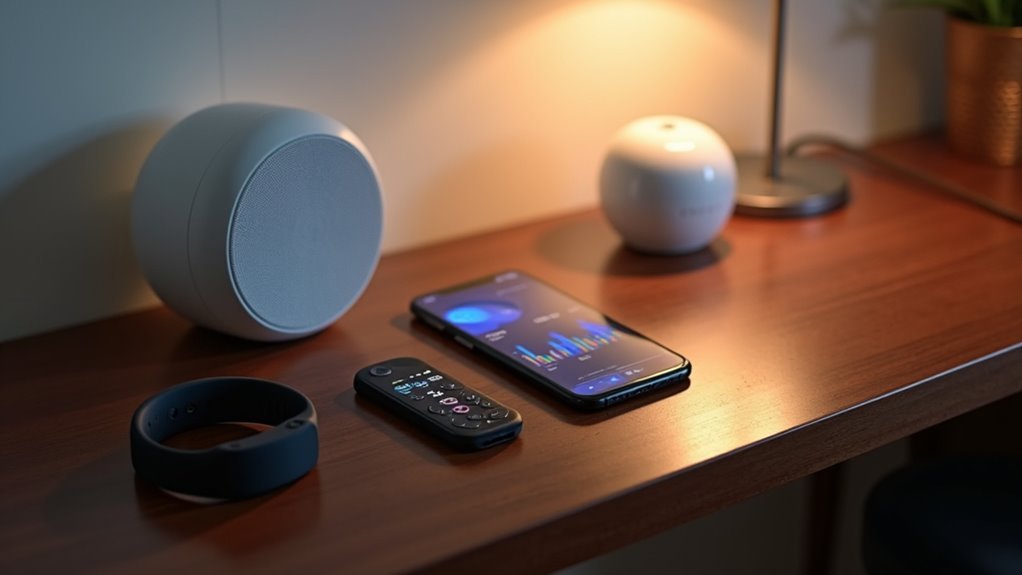
While traditional sleep studies require expensive lab visits, you can now build an extensive home sleep analytics system using readily available hardware components. Wearable devices like smartwatches and fitness trackers form your system’s foundation, continuously monitoring sleep patterns and movements throughout the night.
You’ll want to invest in home sleep testing devices, particularly portable polysomnography systems that deliver thorough assessments in your familiar bedroom environment. Advanced sensors enhance your setup by measuring critical physiological parameters including heart rate, oxygen saturation, and respiratory patterns. This multi-sensor approach greatly improves sleep disorder diagnosis accuracy.
You’ll also need sleep analytics software that integrates seamlessly with your various collection devices, enabling data aggregation and visualization. Finally, smartphone applications complement your hardware by providing user-friendly interfaces for tracking habits and delivering actionable insights.
Smart Device Integration and Connectivity Setup
Once you’ve assembled your hardware components, establishing seamless connectivity between your devices becomes your next priority.
Smart device integration begins with configuring your wearables and sleep monitors to sync via Bluetooth or Wi-Fi with your smartphone applications. This setup guarantees you’ll access sleep metrics conveniently while maintaining real-time data flow.
Next, integrate your smart home systems to control environmental factors like lighting and temperature.
Smart home integration enables automated control of lighting and temperature to optimize your sleep environment effortlessly.
Configure these systems to automatically adjust based on your sleep schedule data, creating ideal conditions without manual intervention.
Establish a centralized command center where you can visualize data from all connected devices.
This integration facilitates better decision-making regarding your sleep health management strategies, allowing you to monitor patterns and make informed adjustments to improve your overall sleep quality.
Environmental Monitoring Systems Installation
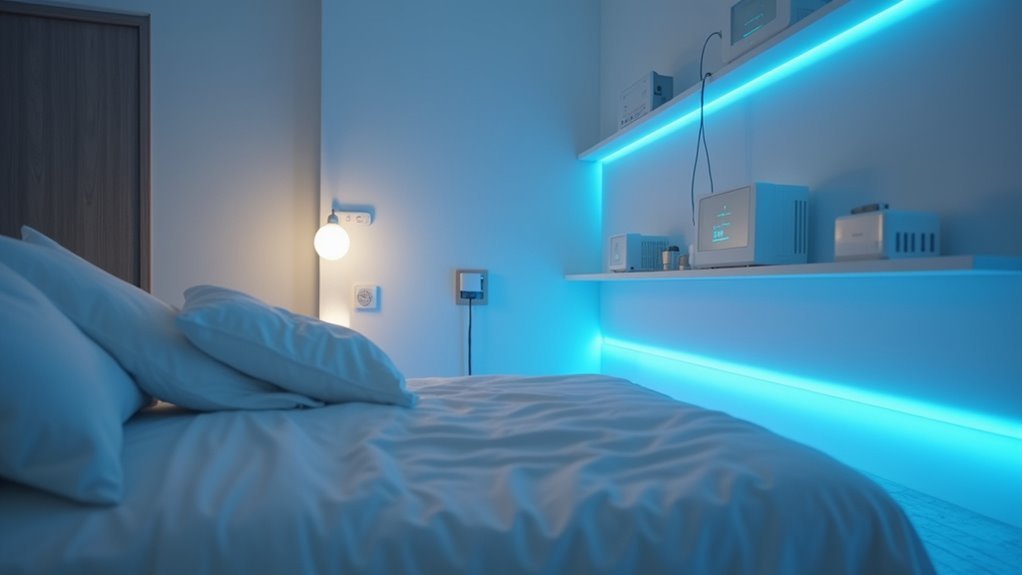
Transform your bedroom into a scientifically optimized sleep sanctuary by installing environmental monitoring systems that track the four pillars of sleep quality: air quality, temperature, humidity, and light levels.
These sensors provide real-time data that’ll help you identify what’s disrupting your sleep and make immediate adjustments to your environment.
During environmental monitoring systems installation, you’ll want to position sensors strategically throughout your bedroom for accurate readings.
Most systems integrate seamlessly with your existing smart home setup, enabling automated responses like adjusting your thermostat or dimming lights based on your sleep patterns.
The data you’ll collect becomes invaluable for spotting trends and triggers that affect your rest.
Regular analysis helps you make informed lifestyle changes while greatly enhancing your home sleep testing effectiveness.
Sleep Pattern Tracking Dashboard Configuration
After installing your environmental monitoring systems, you’ll need to configure a centralized sleep pattern tracking dashboard that consolidates all your sleep data into actionable insights.
This AI-driven platform transforms raw data from your wearable devices into personalized recommendations that align with sleep medicine principles.
Your dashboard should feature:
- Real-time visualization tools that display sleep duration, quality metrics, and disturbance patterns through intuitive graphs and charts
- Smart notification systems that remind you to maintain consistent sleep schedules and reduce pre-bedtime screen exposure
- Correlation analysis features that identify connections between lifestyle factors and sleep quality trends
The dashboard’s data-driven insights support evidence-based approaches to managing sleep disorders.
You’ll easily recognize patterns that affect your well-being, enabling targeted interventions that improve your overall sleep hygiene and health outcomes.
Data Visualization and Analytics Platform
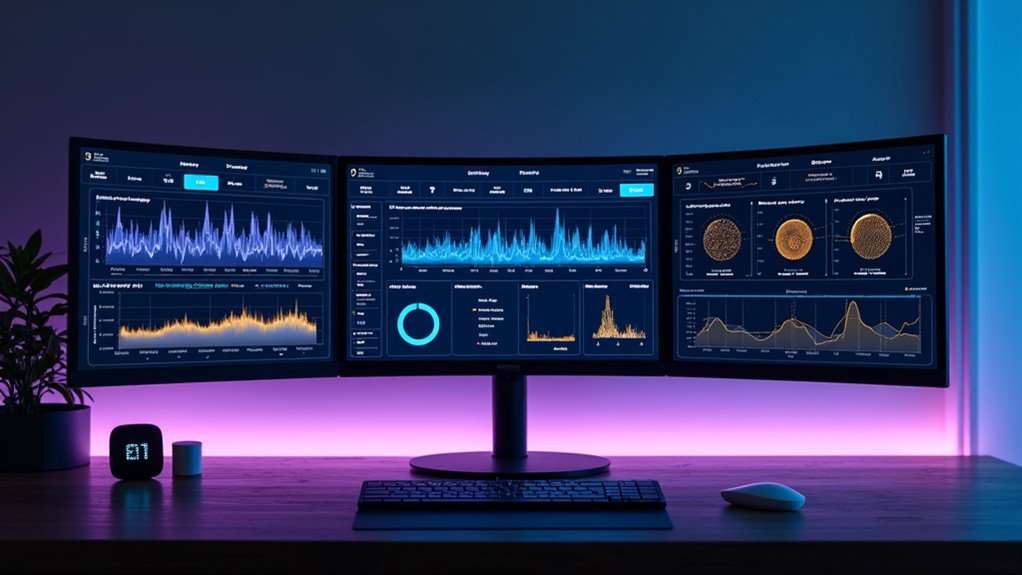
While raw sleep data provides valuable information, you’ll need sophisticated visualization tools to transform these metrics into meaningful patterns that drive better sleep outcomes.
Your data visualization platform should leverage AI to enhance diagnostic accuracy by streamlining analysis and reporting processes. Look for systems that offer predictive analytics to identify trends in your sleep patterns, enabling personalized treatment approaches with actionable insights.
Choose platforms with automated compliance reporting to maintain high care standards while reducing analysis errors.
Real-time analytics capabilities provide immediate feedback, allowing timely interventions for better sleep management. A user-friendly interface enhances your understanding of sleep metrics, promoting proactive health management.
This thorough approach increases satisfaction with sleep-related care while ensuring ongoing monitoring of your sleep patterns.
Automated Alert Systems for Sleep Quality Management
You’ll receive instant notifications when your sleep patterns deviate from normal thresholds, allowing you to address issues before they impact your health.
Your system’s threshold-based alerts can be customized to trigger warnings for specific metrics like sleep latency, wake frequency, or REM duration based on your personal sleep goals.
These data-driven interventions enable you to implement targeted improvements, whether that’s adjusting your bedtime routine or modifying your sleep environment.
Real-Time Sleep Monitoring
Sleep disruptions can slip by unnoticed, robbing you of restorative rest and potentially signaling serious health issues.
Real-time sleep monitoring transforms your bedroom into a vigilant guardian, using advanced AI technology to continuously analyze your sleep patterns throughout the night. You’ll receive instant feedback on your sleep quality, empowering you to make immediate improvements.
Your monitoring system tracks essential metrics and delivers actionable insights:
- Heart rate variability monitoring – Detects irregular rhythms and potential apnea events
- Movement pattern analysis – Identifies restless sleep and disturbances instantly
- Personalized sleep reports – Reveals trends and optimization opportunities for better rest
With wearable device integration, you’re equipped with thorough sleep data that facilitates timely interventions, leading to measurably improved sleep quality and reduced disorder symptoms.
Threshold-Based Alert Configuration
Continuous monitoring becomes truly powerful when paired with intelligent alert systems that proactively notify you the moment your sleep quality drops below ideal levels.
Threshold-based alert configuration lets you establish personalized parameters for sleep duration, interruptions, and REM cycles. When your metrics fall short, you’ll receive immediate notifications enabling timely interventions.
Configure automated alerts to monitor thorough sleep parameters simultaneously. You can set duration thresholds, track interruption frequency, and monitor REM sleep percentages.
AI technology analyzes your data patterns, delivering personalized recommendations that optimize your sleep environment and routines.
This systematic approach transforms sleep management into an engaging, accountable process. You’ll maintain consistent healthy practices while tracking progress toward quality goals, ultimately improving overall health outcomes through data-driven sleep optimization.
Data-Driven Sleep Interventions
When your sleep data reveals concerning patterns, automated alert systems spring into action with precise interventions tailored to your specific needs.
These AI-powered systems analyze your sleep metrics continuously, identifying deviations that require immediate attention. Through data-driven decision-making, your home sleep analytics command center transforms raw sleep information into actionable treatment strategies.
Your personalized intervention protocols include:
- Real-time therapy adjustments – Automatic CPAP pressure modifications based on detected apnea events
- Environmental controls – Temperature, humidity, and lighting changes triggered by sleep quality indicators
- Medication reminders – Timely alerts for sleep aids or supplements when patterns suggest intervention necessity
This proactive approach eliminates guesswork from sleep management.
You’ll receive immediate notifications when your sleep patterns deviate from established baselines, enabling swift corrections before minor issues escalate into significant sleep disorders.
Security Protocols for Personal Health Data Protection
Your Home Sleep Analytics Command Center requires robust security protocols to protect your sensitive health information from unauthorized access and breaches.
You’ll need to implement thorough data encryption standards that secure your sleep data both during storage and transmission between devices.
Additionally, you must establish strict access control measures and guarantee compliance with regulatory requirements that govern personal health information management.
Data Encryption Standards
Although sleep data may seem innocuous, it’s actually among the most sensitive personal health information you’ll generate, requiring robust encryption standards to protect your privacy.
Your home sleep analytics system should implement thorough data encryption standards that safeguard information at every stage. These protocols guarantee your sleep patterns, health metrics, and personal habits remain confidential.
Essential encryption components include:
- At-rest encryption – Protects stored data on your devices and cloud storage
- In-transit encryption – Secures data flowing between sensors, apps, and servers
- Cryptographic hashing – Shields passwords and maintains data integrity through checksum verification
These encryption layers work together to create an impenetrable barrier around your sleep data.
You’ll have peace of mind knowing your most intimate health information stays private while still benefiting from detailed analytics.
Access Control Measures
Beyond encrypting your sleep data, implementing thorough access control measures creates multiple security checkpoints that prevent unauthorized users from reaching your personal health information.
You’ll need two-factor authentication combined with expiring token systems to verify user identity before granting access to your command center. Establish a layered authorization model that restricts data visibility based on specific user roles, ensuring only necessary personnel can view sensitive health metrics.
Strengthen your security framework by implementing cryptographic hashing for password authentication and data integrity verification.
Deploy content-security-policy headers alongside cross-site request forgery tokens to block common web-based attacks. These access control measures work together to create an extensive defense system that protects your sleep analytics from both external threats and internal misuse.
Compliance Regulatory Requirements
Implementing robust access controls sets the foundation for meeting stringent regulatory requirements that govern personal health data protection in home sleep analytics systems.
You’ll need to guarantee compliance with HIPAA regulations, which mandate strict safeguarding of personal health information throughout your entire data pipeline.
Your compliance framework should include:
- Automated reporting processes with AI oversight to maintain care standards and minimize human error in data collection
- Regular security audits and protocol updates to adapt to evolving threats and regulatory changes
- Comprehensive documentation of all data handling procedures to demonstrate regulatory adherence during inspections
You must establish clear protocols for data retention, patient consent management, and breach notification procedures.
Regular compliance assessments help identify gaps before they become violations, protecting both your patients and your organization.
Workflow Optimization for Daily Sleep Insights
When you establish a streamlined workflow for processing daily sleep data, you’ll transform scattered information into actionable insights that drive better sleep outcomes.
Your command center should automatically collect data from wearables and analyze patterns while you sleep. Configure dashboards so each page opens in new windows, allowing simultaneous monitoring of multiple metrics without losing your place.
Set up automated alerts for sleep disturbances that require immediate attention. Use AI-driven analytics to identify trends over time, reducing manual scoring and enhancing diagnostic accuracy.
Schedule daily review sessions to examine overnight data and adjust interventions accordingly.
Integrate telehealth capabilities for seamless patient follow-up and guarantee your system updates regularly with latest research findings to maintain cutting-edge personalized sleep strategies.
Frequently Asked Questions
How to Create a Home Command Center?
Choose a quiet space with good lighting and electrical outlets. Set up a desk with your computer, organize supplies in labeled containers, create filing systems for documents, and establish zones for different activities you’ll manage from this central location.
How to Build and Operationalise a Hospital Command Centre?
You’ll integrate AI-powered predictive analytics, digital twin technology, and real-time data systems. Implement care coordination workflows, establish cross-functional teams, and utilize proven frameworks from successful case studies to optimize operations and patient outcomes.
What Assessing the Value of a Command Center Model in Large Health Care Delivery Systems?
You’ll assess command center value by measuring the 12:1 return on investment, 50% reduction in temporary labor costs, improved patient access serving 2000+ new patients annually, and enhanced decision-making through predictive analytics.
What Is a Command Center in Medical Terms?
You’d find a medical command center serves as a centralized hub integrating real-time data, technology, and personnel to enhance healthcare decision-making, streamline workflows, coordinate care teams, and improve patient outcomes while reducing operational costs.

Leave a Reply