
You’re probably unaware that your sleep got disrupted at least three times last night, and you’ll face the same pattern tonight unless you start monitoring what’s actually happening in your bedroom. Most people assume they know why they’re tired, but home sleep tracking reveals surprising culprits—from subtle temperature fluctuations to noise spikes you don’t consciously notice. Tonight’s data could unveil the mystery behind your restless mornings.
Understanding Sleep Disruption Patterns and Their Impact on Health
When you experience disrupted sleep patterns, your body’s natural restoration processes become compromised, creating a cascade of health consequences that extend far beyond feeling tired the next day.
These sleep disorders affect 10-15% of adults chronically, increasing your risks of cardiovascular disease, obesity, diabetes, and mental health issues.
Monitoring these disruptions reveals how conditions like Restless Legs Syndrome and Periodic Limb Movement Disorder create micro-awakenings that fragment your sleep.
Your circadian rhythms also suffer, particularly with Delayed Sleep Phase Syndrome, which throws off hormonal balance and metabolic processes.
Without proper recognition and monitoring of these patterns, you’re likely to receive misdiagnosis or no treatment at all.
Understanding your specific disruption patterns becomes essential for protecting your overall health and maintaining the best daily functioning.
Common Types of Home Sleep Disturbances You Should Track
Now that you understand how sleep disruptions impact your health, you need to identify which specific disturbances you’re experiencing at home. Common sleep disturbances vary in symptoms and diagnostic requirements, making tracking essential for proper identification.
| Sleep Disturbance | Key Symptoms | Diagnostic Method |
|---|---|---|
| Insomnia | Difficulty falling/staying asleep | Home tracking |
| Restless Legs Syndrome | Uncomfortable leg sensations at night | Pattern monitoring |
| Periodic Limb Movement Disorder | Involuntary leg movements, micro-awakenings | Sleep study required |
| Narcolepsy | Excessive daytime sleepiness, sleep attacks | MSLT testing only |
| Circadian Rhythm Disorders | Disrupted sleep timing patterns | Habit tracking |
Insomnia affects 10-15% of adults, while Restless Legs Syndrome and Periodic Limb Movement Disorder create movement-related disruptions. Circadian Rhythm Disorders require careful pattern documentation to identify timing issues effectively.
Essential Sensors and Equipment for DIY Sleep Monitoring

Several core sensors form the foundation of effective DIY sleep monitoring, each capturing different aspects of your sleep physiology.
You’ll need a pulse oximeter to track oxygen levels throughout the night, revealing potential breathing disruptions.
Respiratory effort sensors, typically soft belts around your chest and abdomen, measure breathing patterns and movement that directly impact sleep quality.
A nasal cannula or mask monitors airflow, detecting interruptions in your breathing cycle.
Don’t forget a microphone to capture snoring or irregular breathing sounds.
Data collection devices store this information for professional analysis.
However, proper sensor placement is critical—misapplied or loose sensors compromise accuracy.
These monitoring tools work together to create a thorough picture of your sleep disturbances.
Setting Up Your Smart Home Sleep Detection System
When you’re ready to build your smart home sleep detection system, you’ll need to focus on three critical areas that determine your monitoring success.
First, you’ll select devices based on compatibility, accuracy, and the specific sleep metrics you want to track.
Then you’ll position sensors strategically around your body and bedroom, followed by integrating all data streams into a unified monitoring platform.
Device Selection Criteria
The foundation of effective home sleep monitoring rests on selecting devices that capture the most vital physiological data during your rest periods.
When evaluating device selection criteria, you’ll want systems that monitor airflow, breathing effort, and oxygen levels—essential parameters for detecting obstructive sleep apnea. Look for equipment featuring multiple sensors: nasal airflow monitors, chest straps, and pulse oximeters that track oxygen saturation.
You’ll need user-friendly interfaces with clear setup instructions to guarantee accurate sensor placement. Reliable data upload capabilities are essential for transferring results to sleep specialists for proper interpretation.
Before purchasing any device for home sleep studies, consult with a healthcare professional to determine if at-home monitoring suits your specific sleep concerns and diagnostic needs.
Sensor Placement Guide
Once you’ve chosen your home sleep monitoring device, accurate sensor placement becomes your primary focus for reliable data collection. Your airflow sensor must sit directly under your nose to capture breathing patterns effectively during home sleep apnea tests. Position the breathing effort belts snugly around your chest and abdomen to monitor respiratory motion accurately.
| Sensor Type | Placement Location |
|---|---|
| Airflow | Under nose |
| Chest Belt | Around chest (snug) |
| Abdomen Belt | Around abdomen (snug) |
| Finger Probe | Secure on finger |
Your finger probe measures oxygen levels and heart rate, so make certain it fits securely to prevent movement during sleep. Avoid lotions or creams before applying sensors, as they’ll interfere with adhesion. Follow device instructions precisely for starting recordings to guarantee accurate readings throughout the night.
Data Integration Setup
After positioning your sensors correctly, you’ll need to connect your sleep monitoring devices to a centralized smart home platform for detailed data analysis.
Choose platforms like Google Home or Amazon Alexa that seamlessly integrate with your sleep tracking equipment and environmental sensors.
Configure automated schedules that respond to your sleep patterns by dimming lights and adjusting temperature at bedtime. Your smart devices should communicate effectively to create ideal sleeping conditions.
Set up data collection protocols that monitor air quality, humidity, and noise levels throughout the night. Regular review of this integrated data reveals disruptions affecting your sleep quality.
This thorough setup transforms individual sensors into a cohesive monitoring system that provides actionable insights for improving your sleep environment and establishing healthier sleep routines.
Key Metrics to Monitor During Nighttime Hours
When you’re monitoring your sleep at home, you’ll want to focus on two critical measurements that reveal how well you’re breathing throughout the night.
Breathing pattern analysis tracks the rhythm and depth of your respirations, helping identify pauses or irregularities that signal potential sleep apnea.
Oxygen level tracking measures your blood oxygen saturation, showing whether your body’s getting adequate oxygen while you sleep.
Breathing Pattern Analysis
Since breathing disruptions often occur without your awareness during sleep, home sleep studies focus on capturing essential respiratory data through multiple monitoring channels. Your breathing patterns reveal vital information about potential obstructive sleep apnea through sensors that monitor airflow, chest movement, and abdominal effort. The oxygen saturation probe on your finger detects dangerous drops in blood oxygen levels that signal breathing interruptions.
| Parameter | Normal Range | Sleep Apnea Indicator |
|---|---|---|
| Oxygen Saturation | 95-100% | Below 90% |
| Apnea Duration | <10 seconds | 10+ seconds |
| Breathing Effort | Minimal | Increased strain |
| Airflow Disruption | Continuous | Frequent pauses |
When you monitor these metrics simultaneously, you’ll identify the frequency and severity of respiratory events that disrupt your sleep quality and overall health.
Oxygen Level Tracking
While breathing patterns provide essential insights into sleep disorders, your blood oxygen levels offer an equally important window into respiratory health during nighttime hours.
At-home sleep studies utilize finger probes to continuously track oxygen saturation, helping diagnose obstructive sleep apnea through identification of hypoxemia episodes. Normal oxygen levels should maintain 95-100% during sleep, but drops below 90% signal concerning breathing disruptions that require medical attention.
Your pulse oximeter captures valuable data correlating oxygen dips with snoring or breathing pauses, revealing sleep apnea severity. These measurements also expose position-related patterns, enabling personalized treatment approaches.
Since low oxygen saturation indicates potential cardiovascular risks, monitoring these levels provides vital evidence for healthcare providers to assess your sleep disorder’s impact on overall health.
How Environmental Factors Affect Your Sleep Quality
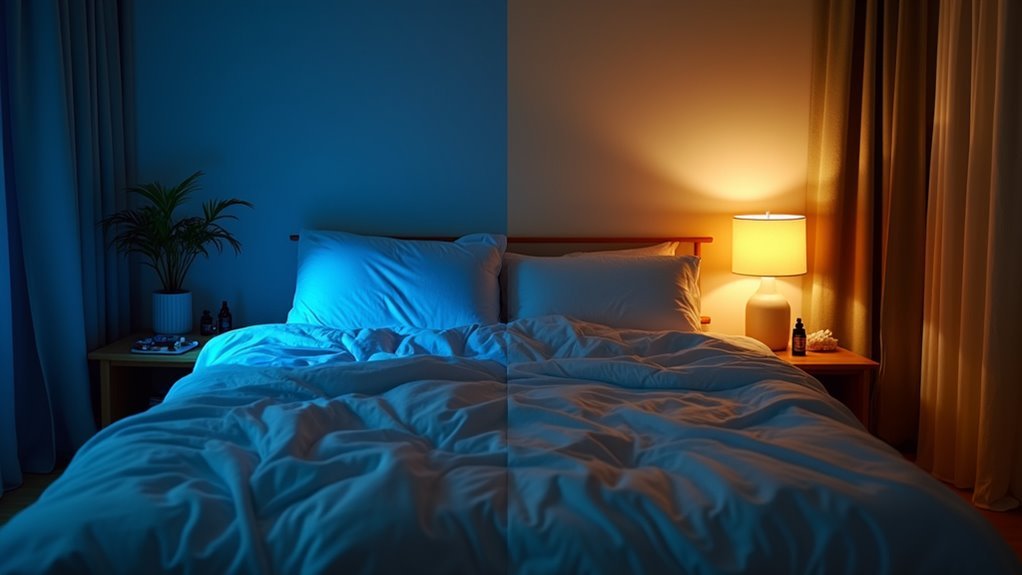
Although you mightn’t realize it, your bedroom environment acts as a powerful conductor orchestrating the quality of your sleep each night.
Environmental factors like noise, temperature, and light create the foundation for either restful slumber or constant sleep disruptions.
Excessive noise from traffic or neighbors fragments your sleep cycles, reducing both duration and quality.
Disruptive sounds from busy streets and loud neighbors break apart your natural sleep patterns, leaving you tired and unrested.
Temperature plays an equally important role – when it’s too hot or cold, your body can’t maintain comfortable rest. The ideal range sits between 60°F and 67°F.
Artificial light suppresses melatonin production, making it harder to fall asleep.
Additionally, allergens like dust mites and pet dander can trigger respiratory issues, causing breathing difficulties that interrupt your sleep throughout the night.
Automated Alerts and Notifications for Sleep Disturbances
Your sleep monitoring system can instantly alert you when it detects irregular breathing patterns, dangerous drops in blood oxygen levels, or problematic sleep positions that may worsen sleep apnea.
These real-time notifications let you take immediate action, whether that’s adjusting your position, using breathing techniques, or seeking medical attention.
You’ll receive customized alerts based on your specific risk factors and sleep patterns, ensuring you’re warned about the disturbances that matter most for your health.
Real-Time Breathing Pattern Alerts
Sleep disruptions can strike without warning, but real-time breathing pattern alerts act as vigilant guardians throughout the night. These alerts instantly notify you when breathing disorders emerge, detecting pauses or irregular patterns that signal sleep apnea.
When oxygen levels drop dangerously low, automated notifications guarantee you’re immediately aware of potential health risks.
At-home sleep monitoring systems actively track your breathing effort and oxygen saturation, delivering timely alerts throughout the night. You’ll receive instant feedback when irregularities occur, allowing you to adjust your sleep position or recognize when medical intervention’s needed.
For those managing existing sleep disorders, these real-time notifications become invaluable management tools, helping you maintain better treatment adherence and take proactive steps toward healthier sleep patterns.
Oxygen Level Drop Notifications
When breathing irregularities occur during sleep, oxygen saturation becomes the critical metric that reveals the true severity of these episodes. Home sleep studies use finger probes to continuously monitor oxygen levels throughout the night, capturing every fluctuation that might signal sleep apnea.
These systems generate automated notifications when significant drops occur, alerting you to potentially dangerous breathing interruptions that require immediate attention.
You’ll receive real-time alerts that enhance your awareness of sleep disturbances, enabling proactive management before complications develop. The continuous monitoring helps identify recurring patterns that correlate with other symptoms, providing valuable data for healthcare discussions.
Understanding these oxygen level fluctuations empowers you to make informed treatment decisions and take control of your sleep health with confidence.
Sleep Position Change Warnings
As you shift positions throughout the night, automated monitoring systems track every movement to identify sleep patterns that may worsen breathing difficulties. Your sleep position greatly impacts obstructive sleep apnea severity, particularly when you’re lying on your back.
Advanced monitoring devices integrated into your home sleep apnea test continuously record positional changes and correlate them with breathing disruptions.
When you assume problematic positions that trigger sleep apnea episodes, these systems deliver real-time alerts encouraging immediate adjustments. You’ll receive timely notifications that help you develop awareness of harmful sleep habits while promoting healthier positioning choices.
This automated feedback during your home sleep apnea test enables personalized treatment strategies, making position-based interventions more effective for managing your sleep disorder and improving overall sleep quality through conscious positional adjustments.
Data Collection and Analysis for Better Sleep Insights
Modern home sleep monitoring relies on sophisticated sensors that capture critical physiological data while you rest in your own bed. This thorough data collection transforms sleep apnea testing by tracking essential metrics through non-invasive devices that won’t disrupt your natural sleep patterns.
Home sleep monitoring uses advanced sensors to gather vital health data while you sleep naturally in your own bed.
Your sleep study at home monitors these key parameters:
- Airflow patterns – Detecting breathing interruptions and abnormalities
- Oxygen levels – Using finger probes to measure blood oxygen saturation
- Breathing effort – Chest belts track respiratory motion and strain
- Sleep disruptions – Identifying position changes and movement patterns
Sleep technologists analyze your uploaded data to reveal potential obstructive sleep apnea and other disorders.
This detailed analysis helps healthcare providers develop personalized treatment strategies while identifying ideal sleep positions and habits that’ll improve your overall sleep quality and health outcomes.
Integration With Existing Smart Home Automation Systems
The extensive data your sleep monitoring devices collect becomes even more powerful when connected to your existing smart home automation systems.
You’ll receive real-time tracking of sleep disruptions, including snoring and irregular breathing patterns. Your smart home systems can integrate with devices measuring airflow and oxygen levels, enhancing the accuracy of home sleep apnea tests.
You get instant alerts when significant changes in sleep patterns occur, prompting timely medical consultation.
Your system automatically adjusts bedroom lighting and temperature based on your preferences, optimizing conditions for better sleep quality. Voice-activated controls let you initiate monitoring or adjust settings without disrupting your rest.
This seamless integration transforms your bedroom into an intelligent environment that actively works to improve your sleep health.
Optimizing Your Bedroom Environment Based on Monitoring Results
Once your monitoring system reveals specific disruption patterns, you can transform those insights into targeted environmental improvements that directly address your sleep challenges.
Your sleep data becomes a roadmap for creating the ideal bedroom environment that supports quality rest and REM sleep cycles.
Here’s how to enhance based on your monitoring results:
- Temperature Control – Adjust your thermostat to maintain 60-67°F when monitoring shows temperature-related disruptions affecting your sleep quality.
- Light Management – Install blackout curtains or use eye masks if data indicates light interference with your REM sleep patterns.
- Sound Reduction – Deploy white noise machines or earplugs when monitoring reveals noise as a primary sleep disruptor.
- Physical Comfort – Upgrade pillows or mattress based on position tracking that shows discomfort patterns throughout the night.
When to Escalate Home Sleep Monitoring Data to Healthcare Professionals
While optimizing your bedroom environment addresses many sleep disruptions, certain monitoring results require professional medical attention rather than DIY solutions. Your home sleep study data becomes critical when revealing moderate to severe obstructive sleep apnea indicators like breathing pauses or oxygen drops.
| Warning Signs | Symptoms | Action Required |
|---|---|---|
| Moderate/severe OSA | Frequent breathing pauses | Consult healthcare professional |
| Partner observations | Loud snoring, gasping | Seek thorough assessment |
| Persistent fatigue | Despite normal results | Explore other sleep disorders |
| Medical conditions | Obesity, diabetes, hypertension | Share monitoring data with provider |
| Inconclusive results | Worsening symptoms | Discuss in-lab sleep study |
Don’t ignore persistent daytime sleepiness or concentration issues. A healthcare professional can evaluate treatment options and determine if additional sleep disorders testing is necessary for proper diagnosis.
Frequently Asked Questions
Why Is the Monitor Going to Sleep?
You’re activating the monitor to sleep so it’ll continuously track your breathing patterns, oxygen levels, and heart rate throughout the night, gathering essential data for detecting potential sleep apnea or disorders.
How Accurate Is the Home Sleep Test?
You’ll find home sleep tests are highly accurate for diagnosing moderate to severe obstructive sleep apnea, but they’re less sensitive to mild cases and can’t detect other sleep disorders requiring brain activity monitoring.
What Is a Nocturnal Polysomnogram?
You’ll undergo a thorough overnight sleep study where sensors monitor your brain waves, breathing, heart rate, and oxygen levels to diagnose sleep disorders like sleep apnea in a specialized center.
What Is a Bad Score on a Sleep Apnea Test?
You’ll receive a bad score if your Apnea-Hypopnea Index reaches 5 or higher. Moderate sleep apnea scores between 15-30 events per hour, while severe sleep apnea exceeds 30 events hourly.

Leave a Reply