
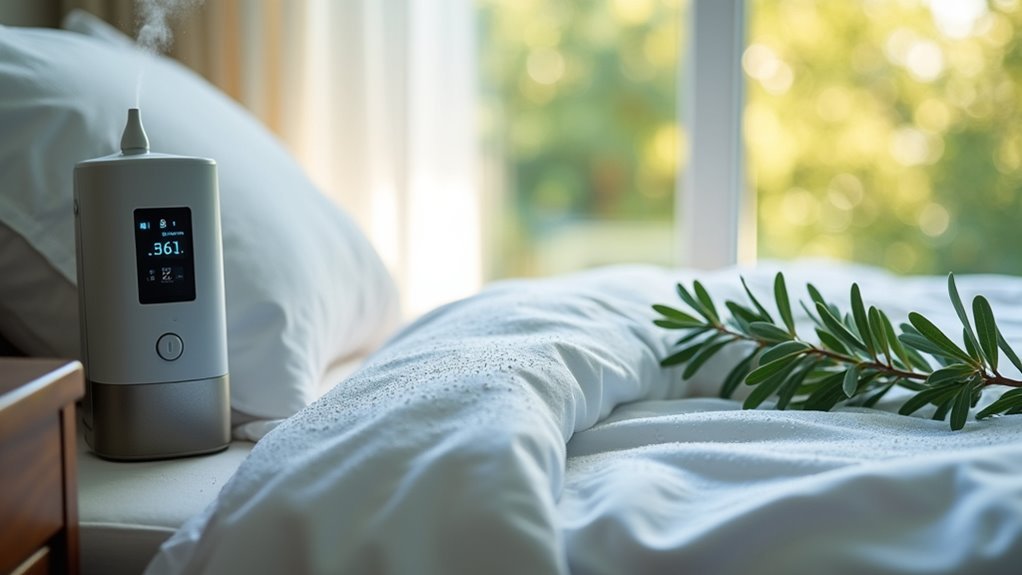
You’ve probably tossed and turned through countless nights without realizing that your bedroom’s humidity could be the culprit behind your restless sleep. When the air’s too dry, you’ll wake up with a scratchy throat and congested sinuses. Too humid, and you’ll find yourself sticky and uncomfortable all night long. The sweet spot exists between 40-60% humidity, but achieving and maintaining this balance requires more strategy than you might think.
Monitor Your Bedroom’s Humidity Levels With Smart Devices
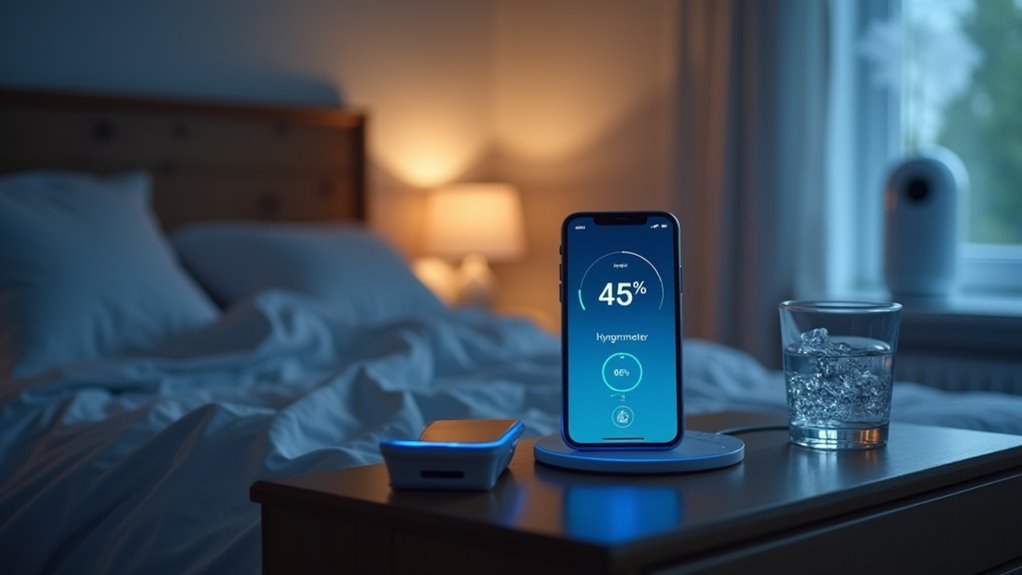
Since achieving ideal sleep requires maintaining humidity levels between 40-60%, you’ll want to invest in reliable monitoring devices for your bedroom.
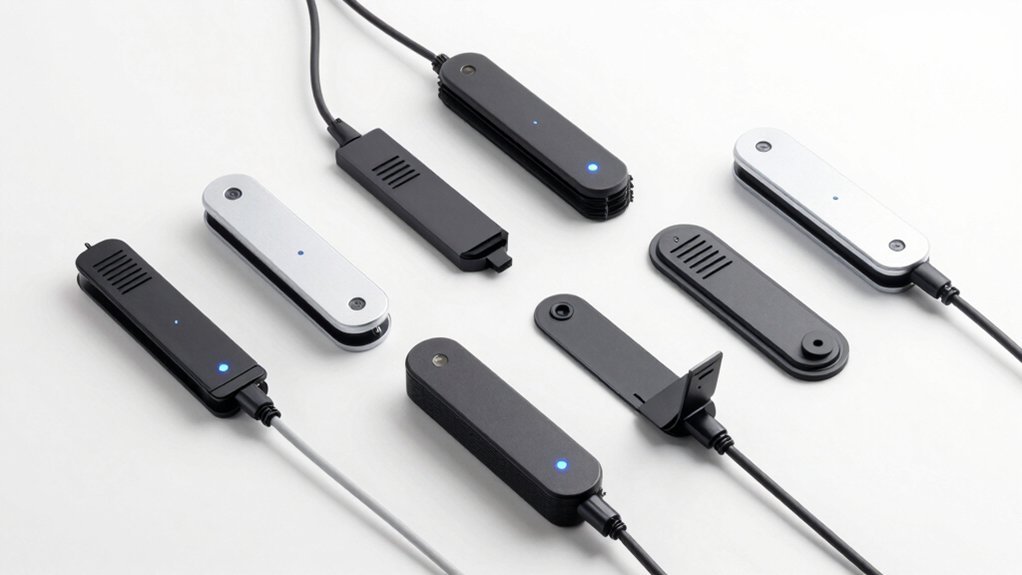
Start with a hygrometer to accurately measure humidity and guarantee you’re within the best range for comfortable sleep. Smart devices like thermostats often include built-in humidity sensors that automatically monitor environmental conditions.
A quality hygrometer provides accurate humidity readings to ensure your bedroom stays within the optimal 40-60% range for better sleep.
Consider upgrading to a smart humidistat that controls both humidifiers and dehumidifiers based on real-time readings, maintaining consistent levels without manual intervention.
Many modern HVAC systems feature integrated humidity control, seamlessly managing temperature and moisture simultaneously.
Remember to regularly check and calibrate your smart devices to guarantee accurate measurements and best performance for improved sleep quality.
Use Dehumidifiers and Humidifiers for Automated Climate Control
Once you’ve established proper monitoring systems, automated climate control devices become your next step toward maintaining ideal bedroom humidity.
Dehumidifiers excel at reducing indoor humidity levels when they exceed 50%, preventing mold growth that compromises sleep quality. Conversely, humidifiers add essential moisture in the air during dry winter months when levels drop below 30%.
For truly automated climate control, consider these key components:
- Humidistat integration – automatically maintains ideal humidity between 40-60%
- Room-appropriate sizing – guarantees devices effectively maintain humidity levels
- Regular cleaning and monitoring – prevents air quality degradation
These devices work together to create consistent environmental conditions.
Proper maintenance through routine cleaning and monitoring guarantees your automated systems continue delivering the moisture control necessary for restorative sleep throughout changing seasons.
Optimize Natural Ventilation and Air Circulation Systems
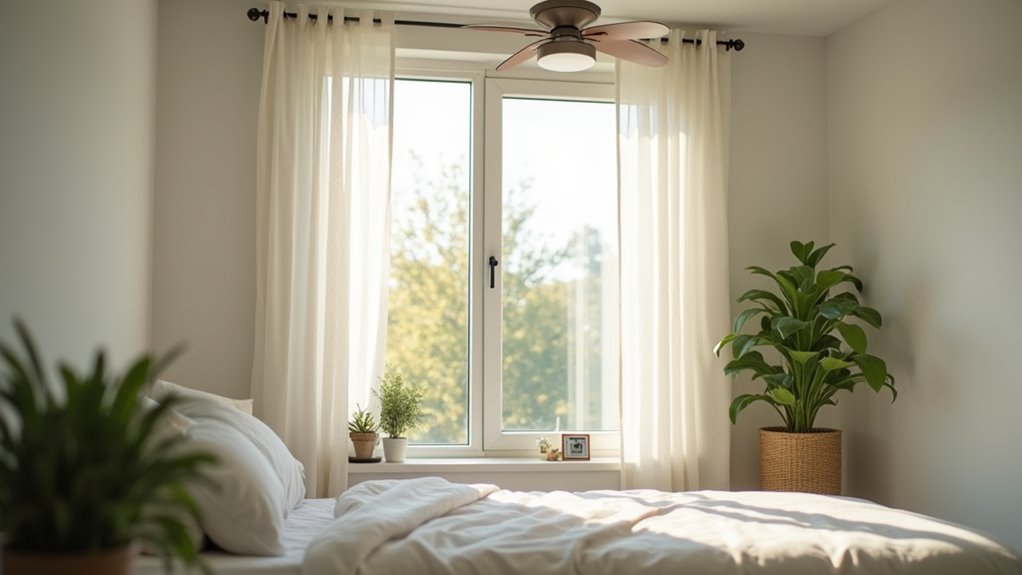
While automated devices provide excellent humidity control, natural ventilation and strategic air circulation create the foundation for maintaining ideal sleep conditions without relying solely on mechanical systems.
You’ll achieve peak humidity by opening windows during cooler evening hours, promoting cross-ventilation that circulates fresh air throughout your bedroom.
Install exhaust fans in kitchens and bathrooms to eliminate excess moisture before it spreads to sleeping areas.
Enhance air circulation with ceiling fans that distribute humidity evenly while creating a comfortable sleeping environment.
Don’t neglect your HVAC systems—regular maintenance guarantees they regulate humidity levels efficiently alongside your air conditioning.
Consider whole-house ventilation systems that automatically adjust airflow based on indoor conditions, providing consistent natural ventilation that supports restful sleep.
Select Moisture-Wicking Bedding and Breathable Materials
Your choice of bedding materials directly impacts how effectively your body regulates temperature and moisture throughout the night.
Selecting moisture-wicking bedding made from breathable fabrics helps manage perspiration in humid conditions, greatly improving your sleep comfort.
Breathable, moisture-wicking fabrics in your bedding create a cooler, drier sleep environment that combats humidity’s sleep-disrupting effects.
Natural fibers like cotton and bamboo promote superior airflow compared to synthetic materials, reducing heat retention around your body temperature.
These materials actively absorb excess moisture while allowing better air circulation through your sleep environment.
For optimal humidity management, focus on these key bedding choices:
- Choose cotton or bamboo sheets for maximum breathability
- Select lightweight sleepwear from natural fibers
- Opt for moisture-absorbing materials that regulate temperature
This combination of breathable fabrics and moisture-wicking properties creates an ideal sleep environment that counteracts humidity’s disruptive effects on your rest.
Implement Seasonal Humidity Adjustments for Year-Round Comfort
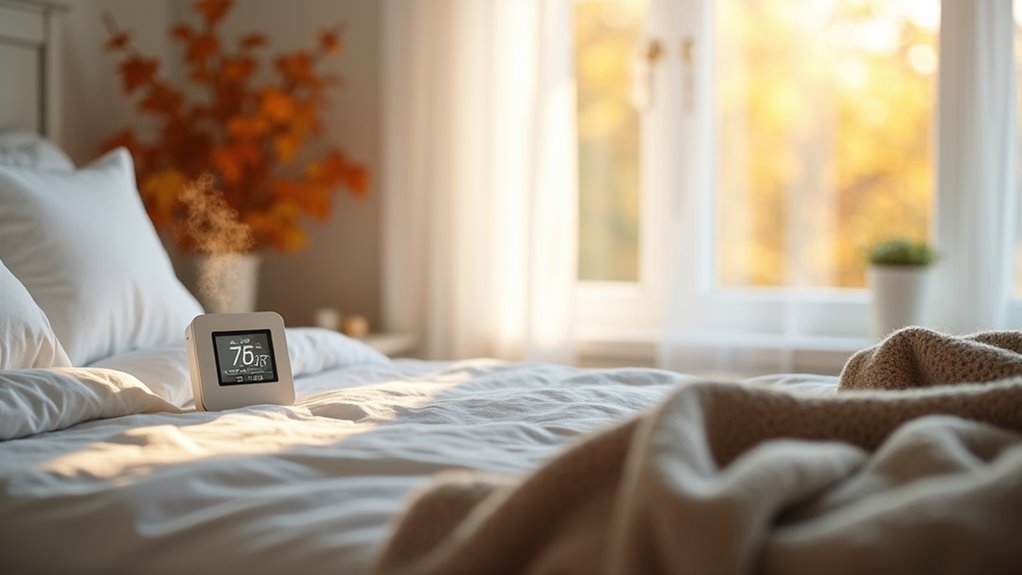
Beyond choosing the right materials, maintaining ideal sleep humidity requires strategic adjustments throughout the year as outdoor conditions shift dramatically.
You’ll need to monitor humidity using a hygrometer and make seasonal adjustments for maximum comfort. During winter, maintain indoor humidity between 30%-40% using humidifiers to prevent dry skin and respiratory issues from heating systems.
Summer demands 40%-50% humidity levels, requiring dehumidifiers to combat excessive heat and sweating that disrupts better sleep.
Implement humidifiers and dehumidifiers strategically based on seasonal needs. During milder weather, open windows to improve air circulation and naturally regulate indoor humidity.
These seasonal adjustments guarantee your sleep environment remains consistently comfortable year-round, preventing humidity-related sleep disruptions regardless of outdoor weather conditions.
Frequently Asked Questions
What Is the Ideal Humidity for Sleeping?
You’ll sleep best when your bedroom’s humidity stays between 30% and 50%. This range prevents mold growth and dust mites while avoiding dry air that can irritate your throat and skin.
Will Mold Grow at 55 Humidity?
Mold won’t likely grow at 55% humidity since it’s below the 60% threshold where growth typically begins. You’re in a relatively safe zone, though maintaining 30-50% humidity provides even better mold prevention.
How to Sleep When It’s Too Humid?
You should use a dehumidifier to lower moisture levels, choose breathable cotton or bamboo sheets, run a fan for air circulation, and set your AC to a moderate temperature for comfortable sleep.
How Can I Increase Humidity at Night?
You can increase humidity at night by using a bedroom humidifier, placing water bowls near heat sources, keeping houseplants like peace lilies, or leaving your bathroom door open after hot showers.

Leave a Reply