

You’ve probably watched your child struggle to stay focused at their traditional desk, fidgeting and losing interest within minutes. What if that same workspace could adapt to their energy levels, respond to their learning pace, and actually encourage movement instead of demanding stillness? Interactive learning desks aren’t just furniture upgrades—they’re complete reimaginations of how children engage with education. The transformation in your child’s learning behavior might surprise you.
What Makes Interactive Learning Desks Different From Traditional Furniture

While traditional desks confine children to passive, individual learning experiences, interactive learning desks transform the educational environment through integrated technology and multimedia features that actively engage young learners.
You’ll notice these desks encourage collaboration through group activities, replacing the isolation that traditional learning environments often create. Unlike static furniture, interactive learning desks offer adjustable heights and adaptable configurations that accommodate different learning styles and physical needs.
You’ll find touchscreens and sensory components built into these desks, stimulating creativity and inquiry beyond traditional learning methods.
Most importantly, they promote active participation and movement, developing gross motor skills while traditional desks keep children confined to seated positions, limiting their physical development and engagement.
Enhanced Cognitive Development Through Smart Desk Features
You’ll discover that interactive learning desks transform how your child processes information by engaging multiple senses simultaneously through touch, sound, and visual elements.
These smart features actively challenge your child’s problem-solving abilities, pushing them to think critically as they navigate complex tasks and educational games.
The technology also strengthens memory formation by creating memorable learning experiences that stick with your child long after they’ve left the desk.
Multi-Sensory Learning Integration
Interactive learning desks transform how children absorb and process information by engaging multiple senses simultaneously.
When you incorporate multi-sensory learning into your child’s education, you’re greatly improving their ability to retain information. Research demonstrates that children remember up to 80% of what they experience through multiple senses, compared to only 20% through traditional methods.
Interactive learning desks provide thorough sensory engagement through:
- Tactile surfaces that respond to touch and movement
- Auditory feedback that reinforces learning concepts
- Visual displays with vibrant, educational content
- Kinesthetic activities promoting hands-on exploration
- Collaborative features encouraging peer interaction
You’ll notice your child’s cognitive engagement increases considerably when their visual, auditory, and kinesthetic learning preferences are addressed simultaneously.
This multi-sensory approach doesn’t just improve retention—it transforms learning into an active, exploratory experience that builds critical thinking skills.
Critical Thinking Enhancement
Beyond engaging multiple senses, smart desk features actively challenge children to think analytically and solve complex problems.
You’ll find that interactive learning desks incorporate built-in puzzles and problem-solving tasks that directly stimulate critical thinking development. These systems provide real-time feedback, encouraging your child to analyze mistakes and adjust strategies, fostering a growth mindset.
When children engage with these technological tools, they develop spatial reasoning and analytical skills essential for critical thinking.
The collaborative nature of interactive learning environments promotes group problem-solving activities, enhancing teamwork and communication skills.
Research demonstrates that smart desks lead to a 25% increase in cognitive engagement and information retention compared to traditional methods, making them powerful tools for developing analytical minds.
Memory Retention Improvement
When your child interacts with smart desk features, their brain processes information through multiple pathways simultaneously, creating stronger neural connections that dramatically improve memory retention.
These innovative learning environments deliver substantial educational benefits of interactive learning by engaging visual, auditory, and kinesthetic senses together.
Memory retention improvement occurs through several key mechanisms:
- Real-time feedback systems provide immediate reinforcement, strengthening concept understanding
- Gamified learning elements increase engagement levels, leading to better information consolidation
- Multisensory experiences create multiple memory pathways for enhanced recall
- Adaptive technology adjusts to your child’s learning pace, optimizing retention rates
- Active participation features encourage deeper cognitive processing during lessons
Research shows children using interactive desks can improve information recall by up to 50%, with retention periods extending from weeks to months compared to traditional learning methods.
Building Independence and Self-Reliance Skills
When you provide your child with an interactive learning desk, you’re creating opportunities for them to make meaningful choices about organizing their workspace and managing their materials.
These daily decisions help strengthen their ability to evaluate options, prioritize tasks, and take ownership of their learning environment.
You’ll notice how quickly they develop self-management skills as they learn to set up their desk, sort supplies, and create routines that support their educational goals.
Fostering Decision-Making Abilities
As your child engages with an interactive learning desk, they’re actively developing essential decision-making abilities that’ll serve them throughout life. These workspaces create structured environments where children practice making informed choices while building self-reliance through hands-on experience.
Interactive learning desks foster decision-making through:
- Workspace organization – Children choose how to arrange materials and optimize their learning environment.
- Activity selection – Students decide which tasks to tackle and when to complete them.
- Goal setting – Kids establish personal objectives and create action plans to achieve them.
- Reflection opportunities – Children evaluate their choices and learn from outcomes.
- Consequence awareness – Students experience results of their decisions in safe, supportive settings.
This combination of choice and structure empowers children to develop confidence in their decision-making abilities while strengthening their capacity for independent thinking.
Developing Self-Management Skills
Beyond making thoughtful choices, interactive learning desks serve as powerful training grounds where children develop extensive self-management skills that build lasting independence.
You’ll watch your child master essential organizational abilities as they sort materials, categorize resources, and maintain their workspace effectively.
These desks transform the educational process into an empowering experience where children take complete ownership of their learning journey.
They’ll naturally develop confidence through independent task navigation while building self-sufficiency that extends far beyond academics.
You’ll notice your child setting personal goals and monitoring their progress autonomously.
This self-directed approach cultivates crucial self-management skills through routine activities that prepare them for future academic challenges and life decisions, creating a foundation for lifelong success.
Promoting Physical Activity and Motor Skill Development

Since children naturally crave movement and exploration, interactive learning desks transform traditional static learning environments into dynamic spaces that promote physical activity while enhancing educational outcomes.
These innovative workstations encourage children to engage their bodies while learning, creating countless opportunities for motor skill development. When you integrate interactive elements into learning spaces, you’re combating sedentary behaviors that dominate screen-heavy environments.
- Movement shifts between sitting and standing improve gross motor skills during lessons.
- Balance boards and adjustable heights enhance core strength and stability development.
- Active learning environments boost focus and retention through improved cognitive function.
- Play-integrated activities develop coordination and balance during early childhood.
- Body-engaged learning promotes healthier lifestyle habits while reducing screen-time dependency.
You’ll discover that physical activity directly supports better educational outcomes.
Fostering Social Skills and Collaborative Learning
When children gather around interactive learning desks, they naturally develop essential social skills through meaningful peer interactions and shared discovery experiences.
You’ll notice your child learning empathy and sharing as these desks encourage group activities and communal play. The collaborative learning environment promotes teamwork, helping children work together toward common goals while enhancing their interpersonal communication abilities.
These desks facilitate engaging discussions and problem-solving exercises that teach conflict resolution skills as children navigate group dynamics during projects.
The physical design encourages direct interaction, reinforcing non-verbal communication cues and strengthening relationships through shared experiences.
Research demonstrates that children participating in regular collaborative learning activities exhibit stronger social relationships and higher empathy levels compared to those learning independently.
Technology Integration for Modern Educational Needs
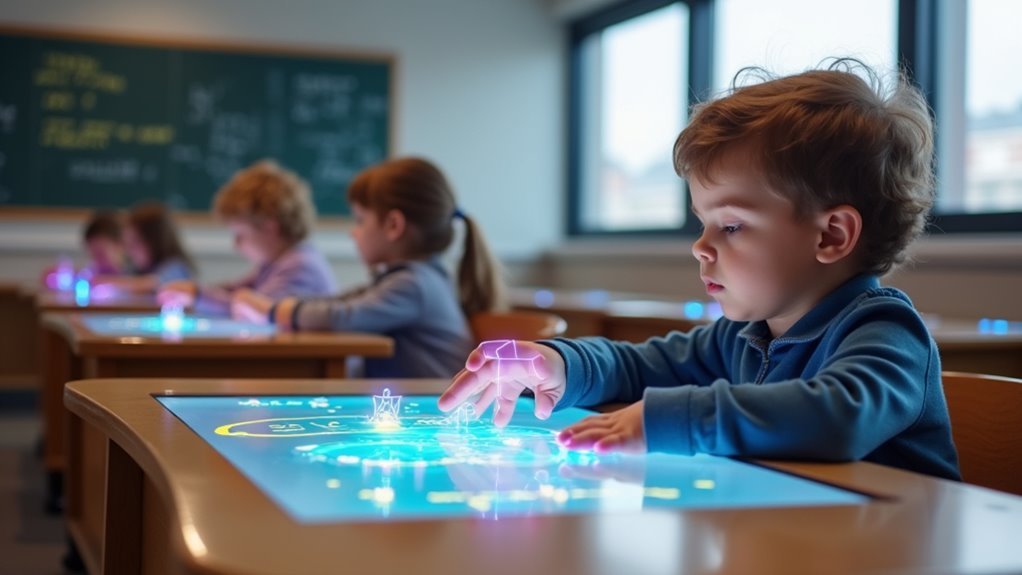
As digital natives, today’s children naturally gravitate toward technology-enhanced learning environments that mirror their everyday experiences with smartphones, tablets, and interactive media.
Interactive learning desks bridge this gap by seamlessly integrating technology into traditional classroom settings, creating educational experiences that resonate with students’ tech-savvy backgrounds.
These innovative workstations transform how you’ll approach modern pedagogy through:
- Multi-touch surfaces that enable collaborative problem-solving and teamwork activities
- Real-time feedback mechanisms allowing instant assessment and lesson adjustments
- Support for diverse educational applications tailored to individual learning styles
- Multimedia content integration enhancing engagement across subjects
- Flexible learning environments extending beyond conventional classroom boundaries
Technology integration through interactive desks guarantees you’re meeting contemporary educational demands while preparing students for an increasingly digital future, making learning more accessible and responsive to individual needs.
Adaptable Learning Environments for Different Learning Styles
While traditional one-size-fits-all classroom approaches often leave many students behind, interactive learning desks revolutionize education by adapting to each child’s unique learning style.
These flexible workstations accommodate visual, auditory, and kinesthetic learners through customizable configurations that let children choose environments matching their preferences.
You’ll find these desks equipped with multimedia technology supporting diverse learning approaches. They engage multiple senses simultaneously, which research proves increases retention and understanding.
Whether your child learns best through hands-on activities, collaborative projects, or independent study, interactive desks provide the necessary tools and setup options.
This adaptability fosters ownership over the learning process. When children can tailor their educational environment to their specific needs, they become more invested in their academic journey and take greater responsibility for their success.
Cost-Effective Solutions for Home Education Spaces
Since budget constraints shouldn’t prevent families from creating dynamic learning environments, interactive desks offer surprisingly affordable pathways to transform any home space into an engaging educational hub.
You’ll discover that cost-effective solutions for interactive learning don’t require expensive investments or professional installations.
Consider these budget-friendly approaches:
- DIY construction: Build functional desks for as little as $50 using affordable materials
- Multi-functional designs: Combine storage and workspace to eliminate additional furniture costs
- Online tutorials: Access free resources for customized solutions matching your budget
- Long-term savings: Reduce external tutoring expenses through enhanced home engagement
- Space efficiency: Maximize small areas with smart, integrated learning stations
You can create engaging educational environments using online guides and simple materials, fostering independent learning while staying within budget constraints and achieving your educational goals.
Long-Term Benefits for Academic Success and Life Skills
Beyond the immediate cost savings of creating affordable learning spaces, interactive learning desks deliver transformative educational outcomes that extend far into your child’s future.
The educational benefits of interactive learning include fostering critical thinking and creativity through problem-solving tasks and imaginative play. These desks develop essential life skills by promoting responsibility and independence through self-organizing activities, preparing your child for future decision-making.
Interactive learning desks cultivate critical thinking and creativity while building responsibility and independence through engaging problem-solving and self-organizing activities.
Physical engagement encourages gross motor development, supporting cognitive growth linked to academic achievement.
The social advantages are equally impressive—collaborative features enhance empathy, communication, and teamwork skills crucial for academic and professional success.
Most importantly, the inquiry-driven approach nurtures curiosity, establishing lifelong learning habits that fuel continuous academic and personal growth throughout your child’s educational journey.
Frequently Asked Questions
What Are the Benefits of Interactive Learning?
You’ll retain information better through interactive learning because it engages multiple senses and boosts critical thinking. You’ll develop teamwork skills, accelerate learning by 25-60%, and enjoy more dynamic lessons.
Why Is Interactive Play Important for Children?
Interactive play’s essential because it’ll boost your child’s creativity, problem-solving abilities, and motor skills while building social competence. You’re nurturing their independence, curiosity, and communication skills, creating a foundation for lifelong learning and academic success.
What Is the Goal of Interactive Learning?
Interactive learning’s goal is engaging you actively in education through hands-on activities and technology. It enhances your information retention, develops critical thinking skills, promotes collaboration, fosters curiosity, and prepares you for future academic challenges.
What Are the Benefits of Interactive Technology in Education?
You’ll experience enhanced engagement through multi-sensory learning that boosts retention by 25-60%. Interactive technology provides real-time assessments, supports diverse learning styles, develops collaboration skills, and creates more equitable educational opportunities for accelerated learning.

Leave a Reply