

You’ve probably killed more houseplants than you’d like to admit, but what if technology could help you finally succeed? An IoT planter isn’t just about keeping your plants alive—it’s your gateway into understanding how smart devices work, how sensors collect data, and how automation can solve real-world problems. This beginner-friendly project teaches you valuable tech skills while addressing something every plant parent struggles with. The best part? You’ll discover exactly how simple it can be.
Essential Components and Materials for Your First IoT Planter
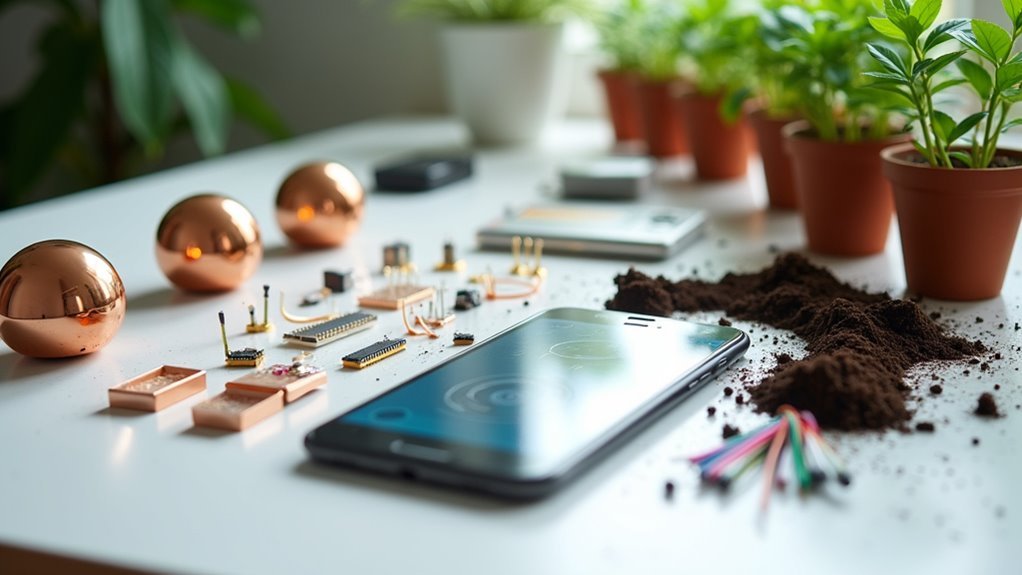
Building your first IoT planter starts with gathering the right components and materials to create a smart gardening system that monitors and cares for your plants automatically.
You’ll need a microcontroller like NodeMCU or ESP32 as your project’s brain, connecting all IoT technologies together. Soil moisture sensors are essential for detecting when your plants need water, while a water pump enables automated watering based on this data.
Don’t forget a DHT sensor for monitoring temperature and humidity levels.
For assembly, you’ll want a 3D printed planter design, waterproofing materials to protect your sensors, and a breadboard for organizing connections.
The sensor data can be visualized through platforms like Ubidots or Adafruit IO, allowing remote monitoring.
Expect to invest approximately $100 for all necessary components to complete your beginner-friendly smart planter project.
Step-by-Step Assembly Process for Beginners
Now that you’ve gathered your components and materials, you’re ready to start assembling your smart planter system.
Begin by following your wiring diagram carefully, connecting each sensor to your microcontroller with secure connections to prevent operational failures.
Secure, properly connected wiring forms the foundation of a reliable smart planter system that won’t fail during operation.
Install Arduino IDE on your computer and add the necessary libraries for your chosen IoT platform and sensors.
Upload test code snippets for each component individually to verify functionality before full integration. This approach helps you identify any issues early in the process.
Once you’ve confirmed all sensors work correctly, assemble everything into your 3D printed planter design.
Finally, set up your monitoring dashboard or mobile app to track your plant’s environmental conditions remotely. This IoT device will provide real-time data and notifications about your plant’s health.
Programming and Configuration Made Simple
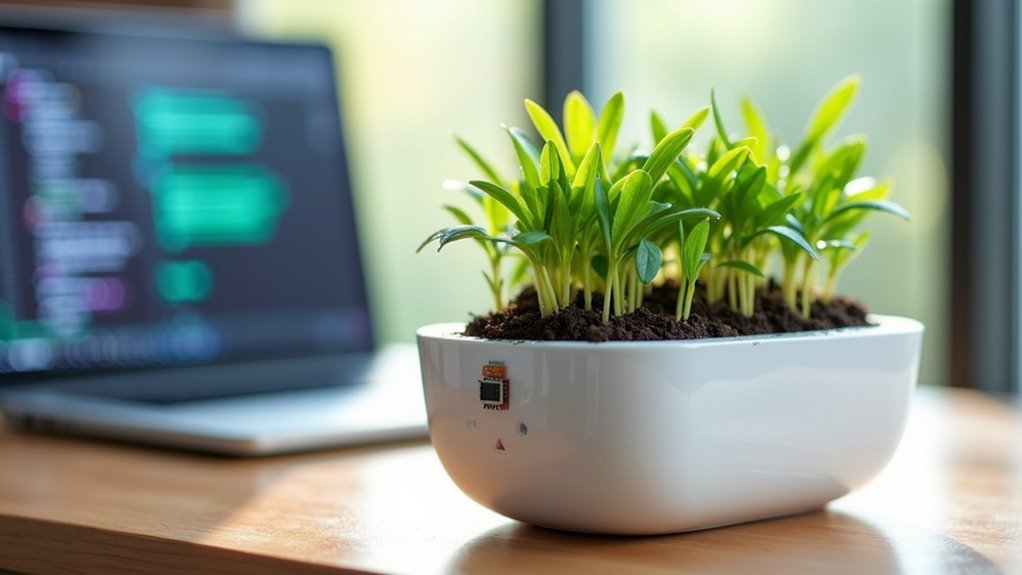
While programming might seem intimidating at first, creating code for your IoT planter doesn’t require advanced technical skills.
You’ll use beginner-friendly platforms like Arduino IDE or CircuitPython that make uploading and modifying code straightforward. Download and install these platforms, then work with pre-written templates where you’ll simply enter your Wi-Fi credentials and API keys.
Your smart planter becomes part of your home automation system through libraries like UbidotsMQTTESP8266, which handle complex data management automatically. The device automatically publishes sensor readings without requiring you to write intricate code from scratch.
Detailed wiring diagrams and step-by-step guides simplify hardware connections, needing only basic soldering skills. Online communities provide excellent support, helping you troubleshoot any challenges during your IoT project development process.
Setting Up Remote Monitoring and Control
Once your IoT planter’s basic programming is complete, you’ll transform it into a powerful remote monitoring system that keeps you connected to your plants from anywhere. Using platforms like Adafruit IO or Ubidots, you’ll create dashboards displaying real-time data from your two sensors. Your new device will send notifications when your plant needs water or when you need to change the threshold settings for temperature extremes.
| Feature | Platform | Benefit |
|---|---|---|
| Real-time Data | Adafruit IO | Live sensor readings |
| Notifications | Ubidots | Instant alerts |
| Automated Watering | Both | Prevents over/underwatering |
| Wi-Fi Connectivity | NodeMCU/ESP32 | Seamless transmission |
| User Interface | Mobile/Web | Easy monitoring |
Remote monitoring guarantees your plants receive prime care while you’re away, making gardening accessible for beginners.
Troubleshooting Common Issues and Next Steps
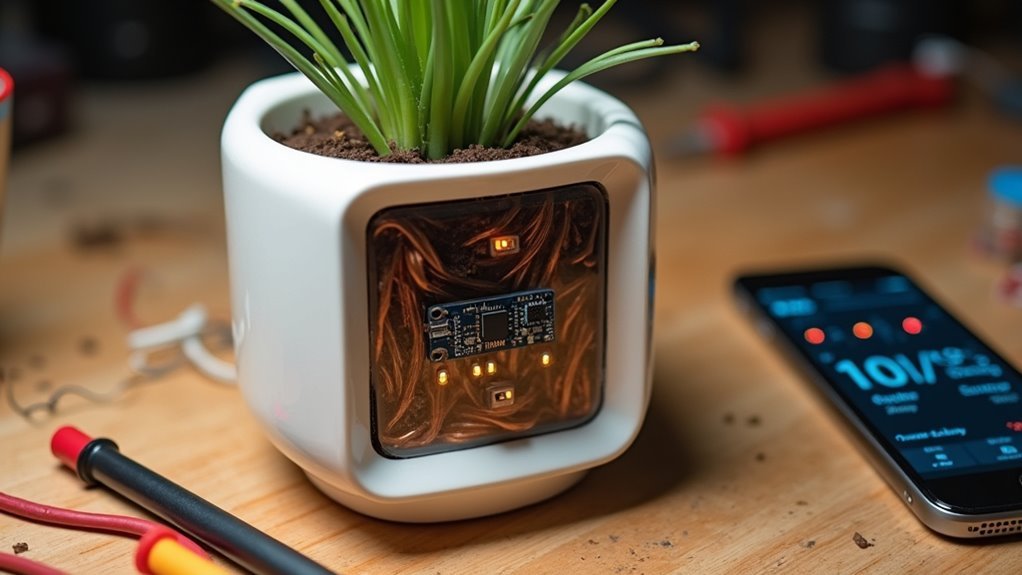
Even with careful planning, you’ll likely encounter a few hiccups when building your IoT planter, but most problems have straightforward solutions.
Start by checking wiring connections if your device isn’t connected to the network—loose connections cause most failures. Use the serial monitor for debugging and tracking error messages in real-time.
Compilation errors often stem from corrupted audio files or missing libraries. Re-record files or reinstall libraries in your development environment to resolve these issues.
Proper waterproofing is essential for your plant pot sensors—apply hot glue over exposed metal while keeping sensor functionality intact.
Once troubleshooting’s complete, consider future enhancements like low-water notifications. These additions help you take care of your plants more effectively while creating a truly responsive monitoring system.
Frequently Asked Questions
What Is the Iot Plant Care System?
You’ll use smart sensors to monitor your plant’s soil moisture, temperature, and humidity automatically. The system connects to platforms for remote monitoring, sends alerts, and can trigger automated watering when needed.
What Are the Disadvantages of a Planter?
You’ll face high setup costs, technical connectivity issues, and potential over-dependence on technology. Data privacy risks exist, and you might struggle with complex programming requirements if you’re inexperienced with electronics.
What Is a Smart Planter?
A smart planter’s an IoT device that monitors your plant’s soil moisture, temperature, and light automatically. You’ll get mobile notifications, customized settings, and automated watering systems that keep your plants healthy without constant attention.
What Makes a Good Planter?
You’ll need proper drainage to prevent root rot, adequate space for root growth, breathable materials like terracotta, and features that help you monitor soil moisture for healthy plant development.

Leave a Reply