

You’re breathing in more than just the aroma of your favorite meals when you cook. Every time you fire up that gas burner or sear a steak at high heat, you’re releasing a cocktail of invisible pollutants directly into your home’s air supply. Most homeowners remain completely unaware of the nitrogen dioxide, particulate matter, and volatile compounds accumulating in their kitchens—until the long-term health consequences begin to surface.
Hidden Pollutants Lurking in Every Kitchen
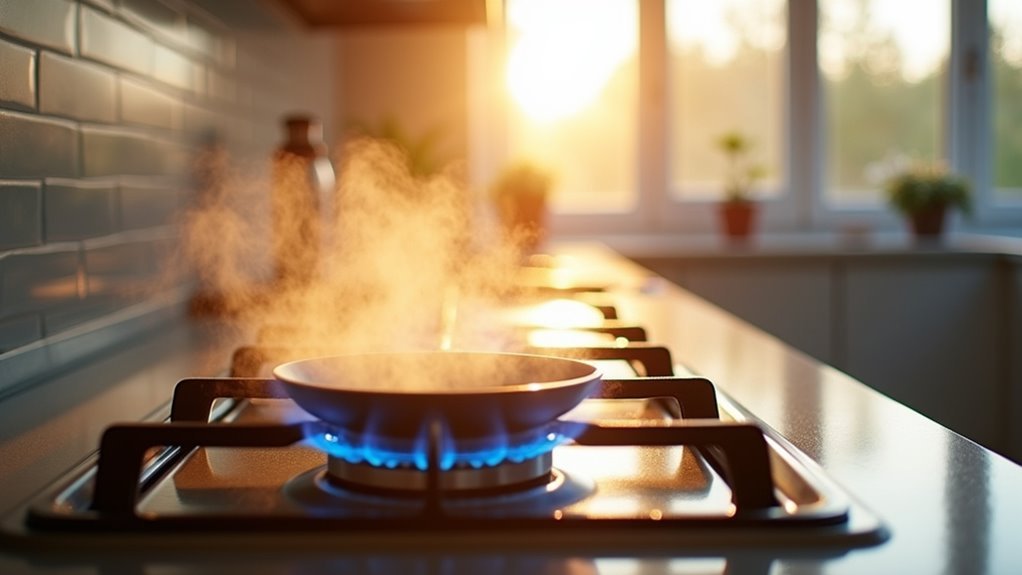
While you might assume your kitchen’s air is relatively clean, invisible pollutants are silently accumulating every time you cook. These hidden pollutants create serious indoor air pollution that threatens your respiratory health daily.
Gas stoves release nitrogen dioxide levels that often exceed outdoor safety limits, while also emitting carbon monoxide and formaldehyde. High-temperature cooking methods generate dangerous particulate matter that increases asthma risk by 20-40%.
Gas stoves emit nitrogen dioxide beyond safe outdoor limits plus carbon monoxide, formaldehyde, and particulates that dramatically increase asthma risk.
Your cookware and cleaning products continuously emit volatile organic compounds (VOCs), causing headaches and nausea. Even when you’re not cooking, gas stoves leak methane into your home. Poor moisture control leads to mold growth, triggering allergic reactions.
Without proper ventilation, these contaminants concentrate, making your kitchen surprisingly hazardous.
Gas Stoves: The Silent Indoor Air Quality Threat
Your gas stove poses a dual threat to your kitchen’s air quality through both visible and invisible contamination pathways.
When you’re cooking, the combustion process releases nitrogen dioxide, carbon monoxide, and fine particulate matter that can exceed safe indoor levels.
Even worse, your stove continues endangering your family’s health when it’s turned off, as methane leaks silently accumulate and create long-term exposure risks.
Hidden Emission Sources
Gas stoves silently compromise your kitchen’s air quality even when you’re not cooking, releasing nitrogen dioxide at levels that often exceed EPA outdoor safety standards.
These hidden emission sources continuously leak methane, creating prolonged exposure that triggers headaches and fatigue.
When you do cook, high-temperature cooking methods generate dangerous combustion byproducts including carbon monoxide and formaldehyde, severely degrading indoor air quality.
Your gas stoves produce volatile organic compounds (VOCs) and particulate matter that accumulate over time, increasing cancer risks through chronic exposure.
The constant emission of nitrogen dioxide particularly threatens children and individuals with asthma, causing serious respiratory issues.
Even during routine meal preparation, these invisible pollutants build up in your kitchen, making air quality monitoring essential for protecting your family’s health.
Health Risk Amplification
Because children breathe faster and have smaller airways than adults, they’re disproportionately affected by the nitrogen dioxide concentrations that gas stoves produce indoors.
Your kitchen’s air quality sensors can detect when pollutants reach dangerous levels, revealing how gas stoves amplify health risks through continuous exposure to harmful combustion byproducts.
The elderly face similar vulnerabilities, with their compromised immune systems struggling against formaldehyde and carbon monoxide emissions.
When you cook at high temperatures, you’re creating a 20-40% increased asthma risk environment.
Real-time monitoring becomes essential because it alerts you when indoor air quality deteriorates beyond safe thresholds.
Without proper ventilation measures and continuous monitoring, these respiratory issues compound over time, turning your kitchen into a silent health hazard that affects your family’s long-term wellbeing.
Cooking Methods That Generate the Most Harmful Emissions

When you’re cooking at high temperatures through frying, grilling, or roasting, you’re releasing notably more pollutants into your kitchen air compared to gentler methods like steaming or boiling.
Your choice between gas and electric cooking surfaces also matters – gas stoves produce nitrogen dioxide concentrations that often exceed EPA outdoor safety limits, especially during high-heat cooking.
You’ll face the greatest air quality risks when you overheat oils, which emit volatile organic compounds and harmful aldehydes that can trigger respiratory problems.
High-Temperature Cooking Dangers
Although many home cooks gravitate toward high-heat cooking methods for their speed and flavor development, these techniques pose the greatest threat to your kitchen’s air quality.
High-temperature cooking releases considerably more pollutants, including dangerous particulate matter (PM2.5) that directly harms your lungs and worsens respiratory conditions.
When you overheat oils during frying or grilling, you’re releasing volatile organic compounds (VOCs) and harmful aldehydes into your home.
Research shows cooking fumes from these methods increase asthma risk by 20-40%, especially for vulnerable family members.
Your gas stoves compound these health risks by emitting nitrogen oxides and carbon monoxide during high-heat cooking.
Peak particulate levels often exceed WHO safety thresholds, making indoor air quality monitoring essential for protecting your family’s health.
Gas Versus Electric
While both gas and electric stoves can contribute to kitchen air pollution, gas stoves pose considerably greater health risks by emitting dangerous nitrogen dioxide (NO2) at levels that often exceed EPA outdoor safety limits inside your home.
When you cook with gas stoves, you’re exposing yourself to harmful emissions including nitrogen dioxide, volatile organic compounds, and carbon monoxide that directly impact your respiratory health.
Electric stoves, particularly induction models, don’t produce these toxic gases, resulting in markedly cleaner indoor air quality. Research shows switching from gas to electric cooking can reduce indoor NO2 concentrations by 50%.
Additionally, gas stoves generate more particulate matter during high-temperature cooking and release aldehydes when oils overheat, further compromising your kitchen’s air quality.
Particulate Matter From High-Temperature Cooking
Every time you fire up your stove for high-temperature cooking methods like frying, searing, or grilling, you’re releasing fine particulate matter (PM2.5) directly into your kitchen air.
This indoor air pollution poses serious threats to your respiratory health, with cooking fumes increasing asthma risk by 20-40% in poorly ventilated spaces.
When you heat oil at elevated temperatures, you’re also generating volatile organic compounds and aldehydes that contaminate your breathing space.
Gas stoves worsen this problem by producing additional combustion byproducts.
Key concerns for kitchen air quality include:
- PM2.5 levels that can exceed WHO safety guidelines during cooking
- Nitrogen oxides and carbon monoxide from gas combustion
- VOCs and aldehydes from heated cooking oils
- Increased respiratory issues without proper air quality monitoring
Volatile Organic Compounds Released During Food Preparation
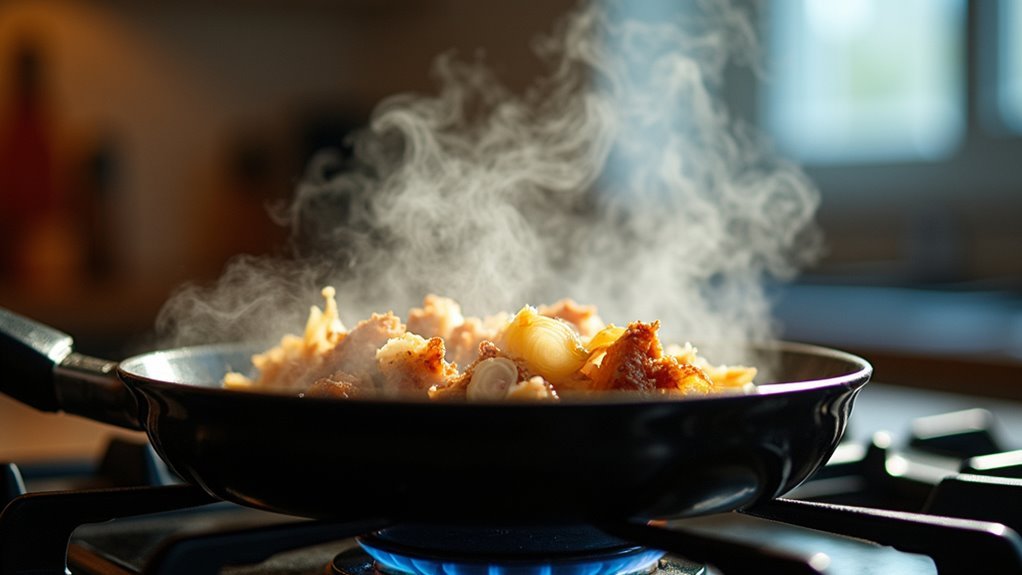
Beyond visible smoke and steam, your kitchen releases invisible volatile organic compounds (VOCs) that silently degrade your indoor air quality during routine food preparation.
You’re exposed to these harmful chemicals when cooking oils overheat during high-temperature cooking methods like frying and grilling, producing dangerous aldehydes. Your cleaning products and certain cookware also emit VOCs that accumulate in enclosed spaces.
Research shows VOC concentrations can exceed safe limits during intensive cooking, potentially causing headaches and respiratory issues while worsening asthma symptoms.
You’ll need effective ventilation to combat these invisible pollutants. However, you can greatly reduce emissions by switching to non-toxic cookware and natural cleaning products, creating a healthier cooking environment that protects your family’s respiratory health.
Health Risks of Prolonged Exposure to Kitchen Pollutants
The immediate discomfort from kitchen VOCs represents just the beginning of a much larger health concern.
What starts as minor irritation from cooking vapors quickly escalates into long-term health hazards that demand immediate attention.
Prolonged exposure to kitchen pollutants creates serious respiratory threats that worsen over time. When you’re regularly breathing contaminated air quality, your health faces mounting risks from multiple sources.
Gas stoves release nitrogen dioxide that exacerbates asthma symptoms, particularly affecting children and sensitive individuals.
Carbon monoxide buildup in poorly ventilated kitchens can cause confusion, impaired coordination, and potentially fatal poisoning.
Meanwhile, cooking fumes generating particulate matter increase your asthma risk by 20-40%.
Key health risks from prolonged kitchen pollutant exposure include:
- Chronic respiratory conditions from particulate matter inhalation
- Liver and kidney damage from volatile organic compounds
- Severe neurological effects from carbon monoxide poisoning
- Allergic reactions and breathing problems from mold growth
Why Standard Home Ventilation Falls Short
While most homeowners rely on basic exhaust fans and open windows, standard ventilation systems can’t handle the concentrated pollutant loads that cooking generates.
Your typical home ventilation often fails to remove kitchen pollutants like fine particulate matter and volatile organic compounds that exceed safe indoor air quality levels.
Gas stoves emit nitrogen dioxide at concentrations considerably higher than EPA outdoor limits, especially during high-temperature cooking.
Many conventional ventilation systems don’t effectively vent cooking emissions outdoors, creating dangerous buildup that worsens respiratory conditions like asthma.
Frying and grilling produce more pollutants than gentler methods, yet standard systems treat all cooking equally.
Without monitoring, you’ll miss pollution peaks that expose your family to hazardous air quality conditions.
Real-Time Monitoring vs. Guesswork in Kitchen Air Management
Since you can’t see, smell, or feel many dangerous cooking pollutants until they’ve already compromised your air quality, guessing when to adjust ventilation leaves your family vulnerable to harmful exposure.
Real-time monitoring transforms kitchen air quality management from reactive guesswork into proactive protection.
Stop guessing about kitchen air safety and start knowing with real-time monitoring that protects your family proactively.
Modern devices track PM2.5, VOCs, and gas stove emissions every minute, providing immediate alerts when indoor air pollution spikes during cooking activities.
This data-driven approach enables precise ventilation adjustments exactly when needed, rather than hoping your exhaust fan runs long enough.
- Track particulate matter and TVOC levels continuously during meal preparation
- Receive instant alerts when NO2 from gas appliances exceeds safe thresholds
- Make informed decisions about opening windows or increasing fan speeds
- Reduce health risks through actionable air quality insights rather than assumptions
Smart Sensors That Detect Kitchen-Specific Contaminants
Kitchen-specific smart sensors eliminate the uncertainty of traditional air quality management by detecting contaminants at the molecular level before they become health hazards. These advanced devices monitor volatile organic compounds (VOCs), particulate matter, and carbon monoxide that cooking activities release into your air. You’ll receive real-time data every minute, enabling precise ventilation control during peak contamination periods.
| Contaminant Type | Detection Range | Health Impact |
|---|---|---|
| VOCs | Chemical vapors | Respiratory irritation |
| PM2.5/PM10 | Fine particles | Lung inflammation |
| Carbon Monoxide | Toxic gas | Oxygen displacement |
| Smoke particles | Combustion byproducts | Breathing difficulties |
| Cooking odors | Aromatic compounds | Air quality degradation |
Smart sensors connect to smartphone apps, providing remote monitoring capabilities that help you understand your kitchen’s air quality patterns and reduce indoor air pollution through proactive management.
Data-Driven Ventilation: When to Turn On Exhaust Systems
Real-time sensor data transforms guesswork into precision when you’re deciding whether to activate your exhaust system.
Data-driven ventilation relies on indoor air quality monitors that detect specific thresholds for fine particulate matter, volatile organic compounds, and nitrogen dioxide. When PM2.5 levels exceed WHO’s recommended 10 µg/m³ limit, you’ll know it’s time to turn on your exhaust systems immediately.
Your cooking methods directly impact when ventilation becomes critical:
- High-temperature frying and grilling – triggers immediate need for exhaust activation due to PM2.5 spikes
- Gas stove cooking – requires ventilation to reduce nitrogen dioxide concentrations by up to 50%
- Oil-based cooking – considerably increases volatile organic compounds requiring immediate exhaust response
- Real-time data monitoring – prevents respiratory issues by maintaining safe air quality levels automatically
Comparing Air Quality Between Gas and Electric Cooking
While both gas and electric cooking methods will heat your food effectively, they create vastly different indoor air quality environments in your kitchen. Gas stoves release considerably higher nitrogen dioxide levels, often exceeding EPA outdoor safety limits and exacerbating respiratory issues. Electric stoves produce negligible emissions, making them superior for health impacts.
| Aspect | Gas Stoves | Electric Stoves |
|---|---|---|
| Nitrogen Dioxide | Exceeds EPA limits | Negligible levels |
| Combustion Byproducts | CO, particulate matter | None produced |
| PM2.5 Generation | High during cooking | Minimal emissions |
Studies show switching cooking methods reduces indoor NO2 concentrations by 50%. Electric induction eliminates combustion byproducts entirely, while gas stoves’ high-temperature techniques generate harmful particulate matter. The Inflation Reduction Act now offers tax credits for upgrading to cleaner electric alternatives.
Professional Kitchen Standards for Home Environments
Learning from commercial food service operations can transform your home kitchen’s air quality approach.
Professional kitchen standards emphasize strict monitoring of volatile organic compounds (VOCs) and pollutants from gas stove usage. You can implement these practices by installing effective ventilation systems and conducting regular air quality monitoring to prevent respiratory issues.
Key professional standards to adopt in your home:
- Install range hoods that vent outdoors for proper ventilation
- Monitor nitrogen dioxide and carbon monoxide levels regularly
- Use non-toxic cleaning agents to reduce chemical exposure
- Implement real-time air quality tracking systems
Integration With Smart Home Ventilation Systems
You can transform your kitchen’s air quality management by connecting monitoring systems directly to your smart home ventilation network.
These automated response systems instantly adjust fan speeds and airflow when sensors detect elevated pollutants like PM2.5 or cooking VOCs.
Your smartphone receives real-time alerts while the system simultaneously activates targeted ventilation to clear contaminated air before it spreads throughout your home.
Automated Ventilation Response Systems
As cooking activities release harmful pollutants like particulate matter and volatile organic compounds into your kitchen air, automated ventilation response systems can intelligently adjust airflow in real-time to protect your health.
These smart home systems continuously monitor indoor air quality through advanced sensors, immediately responding when pollution thresholds are exceeded during cooking activities.
Research shows automated ventilation can reduce nitrogen dioxide levels by up to 50% when you’re using gas stoves, markedly improving respiratory health outcomes.
The systems only operate when necessary, maximizing energy efficiency while maintaining ideal air quality.
Key benefits include:
- Real-time monitoring of cooking-related pollutants with instant ventilation adjustments
- Smart home integration for seamless control and pollution alerts
- Energy-efficient operation that activates only when pollutant levels rise
- Notable reduction in exposure to harmful indoor air contaminants
Real-Time Data Connectivity
Real-time data connectivity transforms your kitchen air quality monitor from a passive measurement device into an active health protection system that communicates seamlessly with your home’s ventilation infrastructure.
When your monitor detects elevated pollutants like PM2.5 and VOCs, it automatically triggers smart ventilation adjustments through integrated thermostats and exhaust fans. This sophisticated connectivity can reduce nitrogen dioxide levels by up to 50%, dramatically improving your respiratory health during cooking activities.
You’ll receive instant alerts through mobile apps when air quality drops below safe thresholds, enabling immediate corrective action.
The continuous data collection empowers you to make informed decisions about your kitchen air quality, optimizing both comfort and safety while creating a healthier cooking environment for your family.
Long-Term Health Benefits of Consistent Air Quality Tracking
While immediate air quality improvements offer noticeable benefits, consistent tracking creates a foundation for protecting your family’s long-term health.
Regular indoor air quality monitoring helps you identify dangerous pollutants before they cause lasting damage. Long-term exposure to emissions from gas stoves, particularly nitrogen dioxide, greatly increases cancer risk.
Detecting harmful pollutants early through consistent monitoring prevents irreversible health damage from long-term exposure to dangerous indoor air contaminants.
By tracking volatile organic compounds (VOCs) and maintaining proper humidity levels between 30-50%, you’ll prevent respiratory problems like asthma and bronchitis that disproportionately affect children and elderly family members.
- Reduces respiratory disease risk by detecting harmful pollutants early
- Prevents long-term cancer risk from gas stove emissions
- Maintains ideal humidity to prevent mold and allergic reactions
- Identifies VOCs that cause headaches and create unhealthy cooking environments
These health benefits compound over time, making consistent monitoring invaluable.
Frequently Asked Questions
Why Is It Essential to Monitor the Air Quality?
You’re exposed to harmful pollutants like nitrogen dioxide, PM2.5, and VOCs that can cause respiratory issues, headaches, and asthma. Real-time monitoring helps you identify dangerous levels and take protective action.
Why Is Air Quality Assessment Important?
You’ll protect your family’s health by identifying harmful pollutants like carbon monoxide and nitrogen dioxide. Air quality assessment helps you detect respiratory hazards early, ensuring you’re breathing safe air indoors.
Why Is Ambient Air Quality Monitoring Important?
You’ll protect your health by detecting harmful pollutants like PM and VOCs before they cause respiratory issues. Monitoring provides real-time data that prompts immediate action, helping you maintain safer indoor environments and prevent long-term health risks.
What Is the Objective of Air Quality Monitoring?
You monitor air quality to identify pollutants like particulate matter and VOCs that harm respiratory health. You’ll assess whether concentrations meet safety guidelines and determine when you need better ventilation strategies.




Leave a Reply