

You’ve probably struggled with poor sleep quality without knowing exactly why your bedroom environment isn’t working for you. Motion sensors can change that by continuously monitoring your sleep patterns and automatically adjusting your room’s lighting, temperature, and sound levels throughout the night. Unlike expensive sleep studies, these affordable devices learn your unique sleep stages and create personalized conditions that optimize your rest—but there’s more to this technology than simple automation.
How Motion Sensors Transform Sleep Tracking Technology
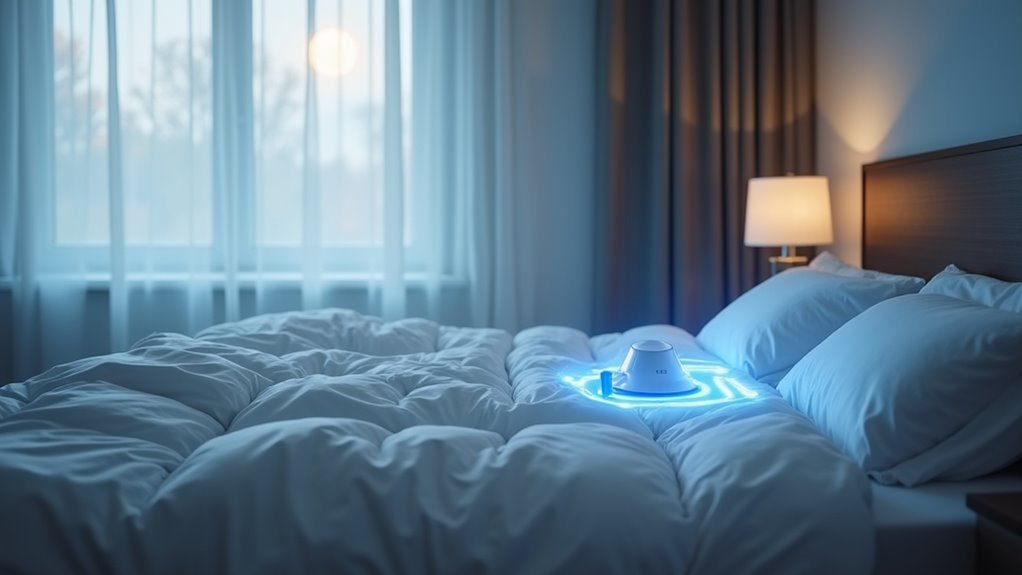
Although traditional sleep studies required overnight lab visits with cumbersome equipment, motion sensors have revolutionized how you track your sleep from the comfort of your own bed.
These accelerometer-based devices monitor your body movements throughout the night, distinguishing between light, deep, and REM sleep stages through precise motion detection. You’ll receive detailed insights into your sleep quality as sensors capture subtle movements like tossing and turning that disrupt rest.
Modern accelerometer technology transforms your bedroom into a sophisticated sleep laboratory, tracking every movement to decode your nightly rest patterns.
Advanced algorithms analyze this data collection to generate personalized sleep reports, revealing patterns in your sleep environments.
The technology enables smart alarms that wake you during your lightest sleep phase, ensuring you feel more refreshed. This thorough sleep tracking transforms raw movement data into actionable insights for optimizing your nightly rest.
Real-Time Sleep Pattern Detection and Analysis
While you sleep, motion sensors continuously analyze your body movements to provide instant feedback about which sleep stage you’re experiencing at any given moment.
This real-time sleep patterns detection allows you to understand your changes between light, deep, and REM sleep phases throughout the night. Your sleep monitoring device processes this movement data using advanced algorithms that deliver accurate assessments of your sleep quality and duration.
The system correlates your sleep data with lifestyle factors like bedtime routines and environmental conditions, generating personalized insights that help you optimize your rest.
Additionally, motion sensors enable smart alarms that wake you during your lightest sleep phase, ensuring you feel more refreshed and alert when starting your day.
Automated Bedroom Environmental Controls
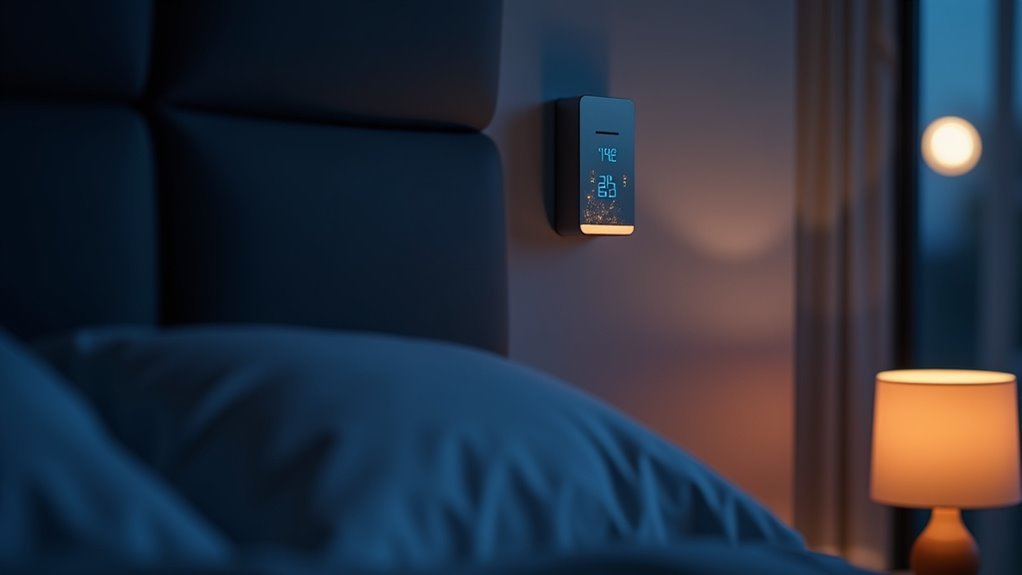
Your bedroom’s environment directly impacts your sleep quality, and motion sensors can automatically optimize it without your intervention.
These smart systems integrate temperature control to maintain the ideal 60-67°F range, adjust lighting based on your movements, and manage sound levels throughout the night.
You’ll experience seamless environmental changes that respond to your sleep patterns, creating the perfect conditions for deeper, more restorative rest.
Temperature Control Integration
Since your body temperature naturally drops during sleep preparation, automated bedroom environmental controls can work in harmony with this biological process to enhance your sleep quality. Smart systems automatically maintain the ideal 60-67°F temperature range throughout the night, adjusting heating and cooling based on your sleep stages.
| Feature | Benefit | Technology |
|---|---|---|
| Personalized temperature zones | Individual comfort preferences | Smart mattress pads |
| Humidity control automation | 40-60% ideal levels | Smart humidifiers |
| Air quality monitoring | Pollutant removal | Smart purifiers |
These integrated systems don’t just control temperature—they orchestrate your entire sleep environment. Smart mattress pads provide personalized temperature control for couples with different preferences, while humidity control and air quality management work together, creating the perfect conditions for restorative sleep without requiring manual adjustments.
Lighting Adjustment Systems
As darkness falls and you move through your bedroom, intelligent lighting systems respond instantly to your presence, creating the perfect ambiance for your body’s natural wind-down process.
These motion sensors detect your activity and automatically dim lights to promote healthy circadian rhythm regulation. Your lighting adjustment systems work seamlessly with sleep tracking technology, adapting illumination based on your current sleep phase to maximize sleep quality.
When you need gentle nighttime navigation, sensors provide soft lighting that won’t fully wake you. The gradual brightness changes enhance your body’s melatonin production, essential for maintaining natural sleep cycles.
Sound Environment Management
Every sound in your bedroom becomes carefully orchestrated when motion sensors integrate with automated environmental controls, creating an acoustic sanctuary that adapts to your sleep needs.
These intelligent systems monitor your sleep patterns and detect restlessness, automatically adjusting your sound environment to promote deep sleep.
Your motion sensors work tirelessly to eliminate sleep interruptions by:
- Muting disruptive ambient noise from traffic and household activities during your rest hours
- Playing soothing white noise when you’re tossing and turning to calm your mind
- Analyzing your movements to customize real-time audio adjustments that enhance quality sleep
Research proves that well-managed sound environments dramatically improve sleep satisfaction.
When your bedroom responds intelligently to your needs, you’ll experience fewer disturbances and achieve the restorative rest you deserve.
Smart Lighting Systems for Optimal Sleep Cycles
Your body’s natural sleep-wake cycle depends on consistent light exposure patterns, and smart lighting systems can automatically sync with your circadian rhythms to optimize sleep quality.
These systems adjust brightness and color temperature throughout the day, promoting alertness when you need it and encouraging relaxation as bedtime approaches.
You’ll benefit from automated controls that respond to your presence and sleep patterns, creating the ideal lighting environment without requiring manual adjustments.
Circadian Rhythm Optimization
While motion sensors excel at detecting movement during sleep, smart lighting systems take sleep enhancement a step further by targeting your body’s internal clock directly.
Circadian rhythm enhancement adjusts color temperature and brightness throughout your day, promoting alertness when you need it and sleepiness when it’s time to rest.
These smart lighting systems automatically reduce blue light exposure during evening hours, protecting your natural melatonin production.
You’ll experience better sleep quality as your lights gradually dim at night and simulate sunrise each morning, naturally regulating your sleep patterns.
Research shows remarkable improvements for users:
- 30% boost in sleep efficiency compared to traditional lighting
- Significantly better sleep duration with automated adjustments
- Enhanced overall sleep quality through motion sensors maintaining ideal conditions
Your body’s internal clock finally gets the support it deserves.
Automated Brightness Control
Automated brightness control systems take this circadian support to the next level by precisely managing light intensity throughout your entire day.
These smart lighting systems automatically adjust both brightness and color temperature based on time, promoting your natural circadian rhythm for enhanced sleep quality. When evening approaches, they dim lights and reduce blue light exposure that disrupts melatonin production, creating ideal lighting conditions for sleep preparation.
During nighttime hours, motion sensors guarantee minimal disturbance by providing just enough illumination when you move, then quickly returning to darkness.
This seamless integration maintains your sleep environment without jarring interruptions. Research confirms that proper darkness during sleep greatly improves sleep efficiency and reduces nighttime wakefulness, making automated brightness control essential for maximizing your rest.
Temperature Regulation Based on Sleep Stages
As you progress through different sleep stages, your body’s temperature naturally fluctuates, and motion sensors can detect these changes to automatically adjust your bedroom’s climate.
These smart systems monitor your movements throughout the night, enabling precise temperature regulation that aligns with your natural sleep cycles.
Your motion sensors facilitate gradual temperature adjustments, maintaining the ideal temperature range of 60-67°F for enhanced sleep quality.
This personalized control transforms your sleep environment by:
- Extending your precious REM sleep – keeping you in restorative phases longer
- Deepening your most healing sleep stages – maximizing recovery while you rest
- Learning your unique patterns – creating a perfectly tailored climate just for you
Over time, your smart system develops an understanding of your preferences, continuously improving your sleep hygiene and overall well-being.
Motion-Triggered Sound and Noise Management
Beyond temperature control, motion sensors transform your sleep environment by intelligently managing sound and noise throughout the night.
These systems detect your movements and automatically trigger soothing white noise or calming sounds to mask disruptive disturbances that could interrupt your sleep cycles.
Your motion-triggered sound system analyzes your sleep patterns and creates personalized soundscapes that adapt to your specific needs.
Motion sensors learn your unique sleep behaviors to deliver customized audio environments that evolve with your nightly rest patterns.
When integrated with smart home technology, these sensors can lower ambient noise levels at designated times and respond to external triggers like traffic or neighbors.
This intelligent noise management approach promotes deeper, more restorative sleep by maintaining consistent acoustic conditions.
Studies demonstrate that effective motion-triggered sound systems greatly improve sleep duration and quality, directly contributing to your overall health and well-being through better sleep environment optimization.
Integration With Smart Home Ecosystem Devices
You’ll discover that motion sensors transform your bedroom into an intelligent sleep sanctuary when they connect with your smart home ecosystem.
Your sensors can automatically coordinate with thermostats, lighting systems, and smart blinds to create ideal sleep conditions based on your movement patterns throughout the night.
This seamless connectivity guarantees all your devices work together, sharing data and adjusting settings without requiring manual intervention from you.
Automated Environment Control Systems
When you integrate motion sensors with smart home ecosystem devices, you’re creating an automated environment control system that transforms your bedroom into a responsive sleep sanctuary.
These sophisticated systems monitor your presence and adjust lighting, temperature, and air quality in real-time to match your individual preferences and sleep stages.
Your smart thermostat learns your habits and maintains the best temperature between 60-67°F automatically. Motion sensors trigger coordinated responses from multiple smart home devices, creating seamless shifts that enhance your sleep quality.
Here’s how automated environment control systems revolutionize your sleep environment:
- Instant comfort – Lights dim and white noise activates the moment you enter
- Perfect temperature – Your bedroom reaches ideal conditions before you arrive
- Personalized recommendations – Data insights help improve your nightly routine continuously
Cross-Device Data Synchronization
Cross-device data synchronization takes these automated environment control systems to the next level by creating a unified network where your motion sensors communicate seamlessly with every smart device in your bedroom.
This integration transforms your entire sleep environment into a responsive ecosystem that anticipates your needs. When your motion sensors detect sleep initiation, they’ll instantly trigger your smart thermostat to lower the temperature while simultaneously dimming connected lighting.
Your smart mattress receives positioning data to adjust firmness, creating ideal comfort throughout the night. This cross-device data synchronization guarantees every element works together harmoniously.
Smart home systems analyze patterns across all devices, providing thorough insights into your sleep quality. The enhanced user experience means you’ll wake up refreshed as your environment dynamically responds to your unique sleep behaviors.
Seamless Ecosystem Connectivity
As motion sensors become the central hub of your smart bedroom, they orchestrate a symphony of connected devices that respond intelligently to your sleep patterns.
Your bedroom environment transforms into a responsive sanctuary where smart home devices work together seamlessly. Motion sensors coordinate with smart thermostats to maintain ideal temperature regulation between 60-67°F, while smart lighting systems automatically adjust brightness based on your movements and sleep phases.
This interconnected ecosystem delivers three transformative benefits:
- Perfect comfort – Your room maintains optimal conditions without manual intervention
- Effortless mornings – Smart blinds gradually introduce natural light to ease awakening
- Personalized insights – Continuous data analysis provides tailored recommendations for enhanced sleep quality
You’ll experience a bedroom that anticipates your needs, creating the ultimate sleep-enhanced smart home environment.
Personalized Sleep Environment Customization
Motion sensors revolutionize how you’ll experience sleep by creating a truly personalized environment that adapts to your unique needs. Through continuous data collection, these sensors analyze your sleep patterns and automatically trigger personalized adjustments to your mattress firmness and pillow support throughout the night.
You can customize sleep environment settings by integrating motion sensors with smart home devices that respond to your movements. When sensors detect restlessness or snoring, they’ll automatically adjust room temperature and lighting to maintain ideal conditions.
| Sleep Factor | Sensor Response |
|---|---|
| Movement Patterns | Mattress firmness adjustment |
| Temperature Needs | Climate control activation |
| Disturbance Detection | Real-time environment modification |
This intelligent system promotes improved sleep hygiene by learning your preferences and creating conditions that support deeper, more restorative rest.
Privacy and Data Security in Motion Sensor Systems
While motion sensors enhance your sleep experience through personalized automation, they simultaneously collect intimate data about your nightly habits that requires careful protection.
These systems track your movements, sleep patterns, and bedroom activities, creating detailed profiles that could expose your most vulnerable moments.
Your data security depends on three critical factors:
- Manufacturer encryption practices – ensuring your personal information stays protected during transmission and storage
- Third-party data sharing policies – understanding who gains access to your intimate sleep data
- GDPR compliance and legal protections – knowing your rights under data protection regulations
You must research privacy policies thoroughly before installing motion sensors.
Regular software updates and secure network connections are essential.
Cost-Effective DIY Motion Sensor Installation Guide
Since you’ve established privacy protocols for your motion sensor system, installing these devices becomes your next priority—and fortunately, it’s both affordable and straightforward. Cost-effective motion sensors under $50 provide professional sleep monitoring capabilities without expensive sleep studies.
| Installation Aspect | Details |
|---|---|
| Time Required | Under 1 hour for complete DIY installation |
| Tools Needed | Minimal equipment – basic mounting hardware |
| Placement Strategy | Position strategically near bed for ideal sleep patterns tracking |
Your DIY installation process involves mounting sensors to monitor sleep patterns effectively. These devices track nighttime movements, delivering valuable data about sleep disturbances and overall sleep hygiene. Smart home integration capabilities allow automated environmental adjustments based on detected sleep patterns, enhancing temperature and lighting without additional costs.
Frequently Asked Questions
How Does Sleep Tracking Improve Sleep?
Sleep tracking analyzes your movement patterns to identify disruptions and restlessness during the night. You’ll receive personalized recommendations based on your unique data, helping you adjust routines and optimize your environment for better rest.
How Accurate Is the Sleep Cycle App?
You’ll find the Sleep Cycle app’s accuracy varies based on your phone’s placement and movement sensitivity. While it’s reasonably reliable for tracking sleep duration and general patterns, it can’t match medical-grade polysomnography devices.
How Does Your Sleep Cycle Monitor Your Sleep?
Your phone’s microphone detects breathing sounds and snoring while the accelerometer tracks your body movements throughout the night. Sleep Cycle analyzes this motion and audio data to determine your sleep phases and quality.
How Does a Sleep Sensor Work?
Your sleep sensor detects movement using accelerometers, monitors heart rate changes, and tracks breathing patterns. It analyzes this data through algorithms to identify sleep stages and cycles, providing personalized insights about your sleep quality.

Leave a Reply