

You’ve probably experienced that jarring moment when you walk from a warmly lit living room into a stark, bright kitchen – the lighting disconnect instantly breaks your home’s flow. Creating seamless multi-room lighting scenes isn’t just about dimming switches or fancy fixtures; it’s about orchestrating an experience that guides you naturally through your spaces. The secret lies in understanding how light behaves as it travels with you from room to room.
Plan Your Lighting Flow Across Connected Spaces
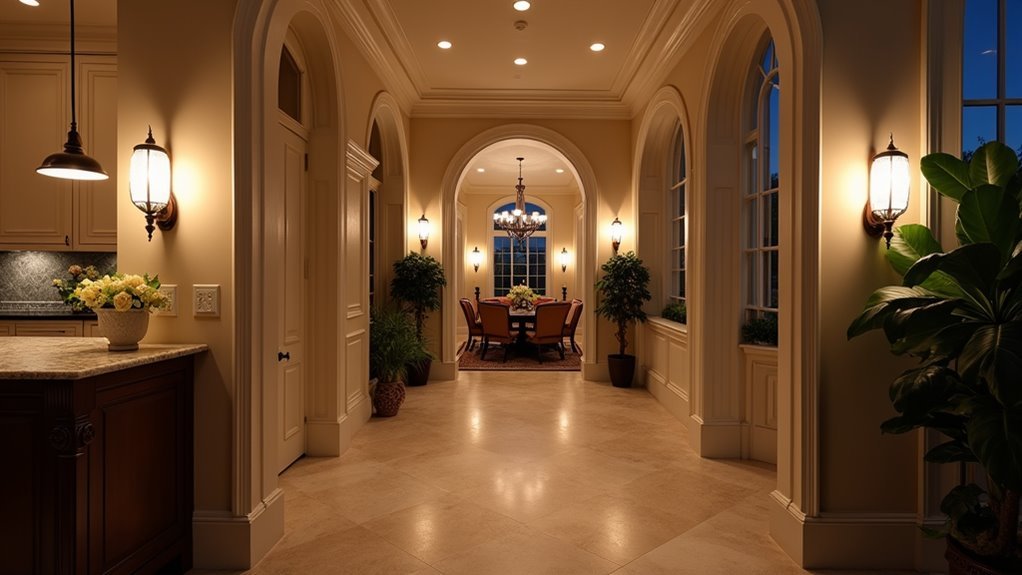
When you’re designing lighting for multiple connected spaces, you’ll need to think beyond individual rooms and consider how light flows throughout your entire home.
Start by creating a cohesive plan that maintains consistent lighting temperatures across all areas. This guarantees seamless visual shifts as you move from room to room.
Maintain uniform lighting temperatures throughout connected spaces to ensure smooth, natural transitions as you move between rooms.
Implement layered lighting techniques by combining ambient lighting for general illumination, accent lighting for visual interest, and task-focused fixtures like table lamps for specific functions.
This approach adds depth while maintaining style consistency.
Smart lighting systems allow you to control multiple rooms simultaneously, creating synchronized scenes that enhance the connected experience.
Position fixtures strategically to guide the eye naturally between spaces, establishing a harmonious flow that unifies your entire living environment.
Match Color Temperatures and Brightness Levels
Maintaining consistent color temperatures across your multi-room lighting scheme creates the visual cohesion that makes your home feel unified and intentional. You’ll want to select fixtures ranging from 2700K to 3000K for that warm, inviting atmosphere throughout connected spaces.
| Element | Recommendation | Purpose |
|---|---|---|
| Color Temperature | 2700K-3000K | Warm, cohesive visual flow |
| Brightness Levels | Comparable lumens | Even illumination |
| Bulb Type | Dimmable LED bulbs | Flexible adjustment |
Smart indoor fixtures with adjustable brightness levels prevent jarring shifts between rooms. Implement layered lighting techniques using ambient, task, and accent lighting while maintaining consistent temperatures across all layers. These lighting techniques guarantee depth without sacrificing uniformity. Test and adjust regularly to verify seamless shifts throughout your space.
Create Transition Zones Between Rooms

Strategic placement of lighting fixtures at doorways and entry points transforms awkward spaces into welcoming passage zones that guide you naturally from room to room.
You’ll want to establish these areas using consistent light sources that maintain visual continuity throughout your home.
Implement layered lighting techniques by combining ambient, task, and accent lighting in each passage space.
Position smart indoor fixtures like sconces or floor lamps near doorways to create inviting entry points.
Use similar design elements in adjacent rooms to reinforce the connection between spaces.
Highlight architectural features such as archways with accent lighting throughout these zones.
This approach helps create passage zones that feel intentional rather than accidental, ensuring your lighting flows seamlessly from one room to the next.
Use Smart Controls for Synchronized Timing
Smart lighting systems revolutionize how you manage illumination across multiple rooms by providing centralized control that lets you adjust brightness and color temperature throughout your entire home from a single app or control panel.
These smart controls enable you to create customized lighting scenes with synchronized timing across different spaces.
- Set automated schedules that shift your indoor and outdoor lighting seamlessly throughout the day
- Create personalized lighting scenes that synchronize multiple fixtures for specific activities or moods
- Use voice-activated commands to adjust settings instantly without manual intervention
- Integrate with smart home systems for effortless coordination between rooms
- Optimize energy-efficient operations through automated dimming and scheduling features
This technology transforms your home’s atmosphere while maximizing convenience and energy savings.
Test and Adjust Scene Boundaries

Once you’ve implemented smart controls across your multi-room lighting system, you’ll need to fine-tune how each space connects visually with its neighbors. Test each room’s lighting separately to evaluate how fixtures interact with unique colors and materials. Adjust brightness levels between adjacent spaces to create seamless shifts without jarring illumination changes.
| Room Shift | Color Temperature | Brightness Level | Emotional Impact | Smart Control Setting |
|---|---|---|---|---|
| Living to Kitchen | 2700K-3000K | Gradual decrease | Cozy to functional | Scene 1 |
| Hallway to Bedroom | 2800K | Soft dimming | Peaceful transition | Scene 2 |
| Dining to Patio | 3000K | Balanced flow | Welcoming atmosphere | Scene 3 |
| Office to Living | 2900K | Moderate shift | Relaxing boundary | Scene 4 |
| Kitchen to Dining | 2800K | Gentle blend | Seamless entertaining | Scene 5 |
Use consistent color temperatures and smart technology for effortless atmosphere adjustments throughout your spaces.
Frequently Asked Questions
What Are the 3 Basic Types of Layered Lighting in a Room?
You’ll use three basic types of layered lighting: ambient lighting for general illumination, task lighting for specific activities like reading or cooking, and accent lighting to highlight artwork or architectural features.
How to Evenly Light a Room?
You’ll achieve even lighting by combining ambient, task, and accent sources with similar color temperatures. Place fixtures strategically to eliminate shadows, use diffusers for soft distribution, and install dimmers for flexible control.
What Lighting Can Provide a Lot of Flexible Lighting Options?
You’ll get the most flexible lighting options with smart LED systems that offer bi-color temperature control, dimming capabilities, and app-based management, letting you instantly adjust brightness, warmth, and create custom scenes.
How Can You Best Increase the Sense of Spaciousness of a Room With Lighting?
You’ll maximize spaciousness by layering recessed lights with accent lamps, using consistent color temperatures, strategically placing mirrors to reflect light, and installing dimmable fixtures to eliminate harsh shadows while creating soft, open ambiance.

Leave a Reply