
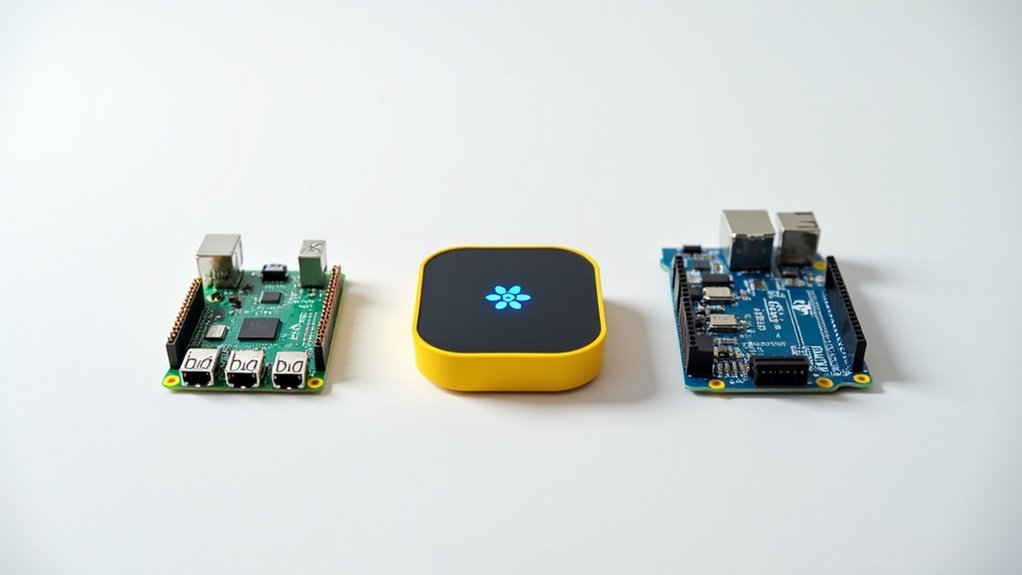
You’re probably tired of being locked into expensive proprietary smart home ecosystems that limit your device choices and compromise your privacy. Open source home automation controllers offer a compelling alternative, giving you complete control over your data while supporting virtually any smart device on the market. But with several powerful platforms available, each with distinct strengths and learning curves, selecting the right controller for your specific needs requires careful consideration of key factors.
Understanding Open Source Home Automation Controllers
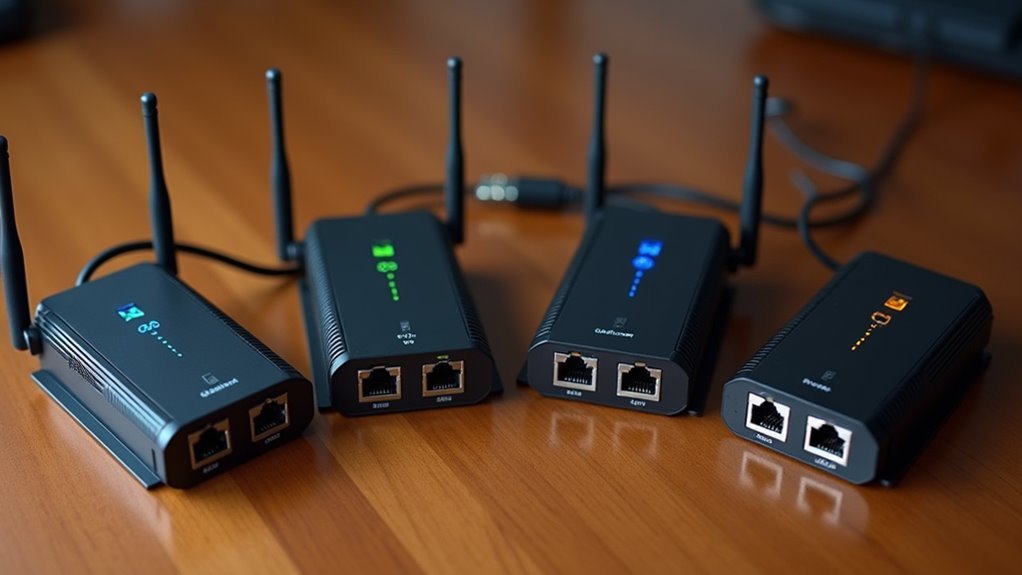
While traditional smart home systems often lock you into a single manufacturer’s ecosystem, open source home automation controllers break down these barriers by providing flexible platforms that work with virtually any connected device.
These controllers, including Home Assistant, openHAB, and Domoticz, support over 1,000 brands and countless protocols, giving you unprecedented freedom to mix and match devices from different manufacturers.
Open source controllers like Home Assistant and openHAB eliminate vendor lock-in by supporting thousands of device brands seamlessly.
Open source home automation platforms prioritize your privacy by storing data locally rather than sending it to cloud servers.
You’ll benefit from extensive customization options through pluggable architectures and advanced automation engines that let you create complex, tailored automations.
Active community support provides invaluable resources for troubleshooting, sharing ideas, and contributing to platform development, ensuring you’re never alone in your automation journey.
Key Benefits of Open Source Smart Home Platforms
When choosing between proprietary and open source smart home platforms, you’ll discover that open source solutions deliver compelling advantages that extend far beyond simple cost savings.
Open Source Smart Home platforms like Home Assistant and openHAB transform how you manage your connected devices:
- Break free from vendor imprisonment – You’ll never face compatibility nightmares or forced obsolescence when manufacturers discontinue support.
- Gain complete control over your data – Your personal information stays within your home’s walls, not sold to third parties.
- Unlock unlimited customization options – Tailor every aspect to match your lifestyle perfectly, creating automation routines that proprietary systems can’t match.
- Join a passionate community – Access thousands of contributors sharing solutions, troubleshooting tips, and innovative features.
These benefits create a truly personalized, secure smart home experience.
Essential Features to Look for in Home Automation Controllers
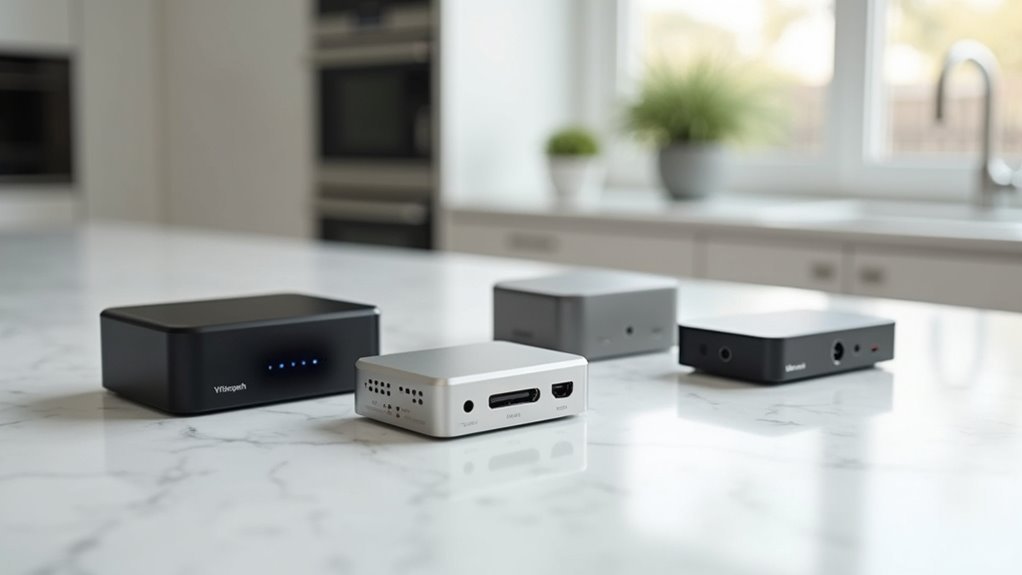
When selecting an open-source home automation controller, you’ll want to prioritize three critical features that determine your system’s effectiveness and longevity.
First, examine the device integration capabilities to guarantee your controller supports the widest possible range of smart home products and protocols.
You’ll also need to evaluate the automation engine’s sophistication and the platform’s approach to privacy and security to create a truly personalized and protected smart home environment.
Device Integration Capabilities
Since smart homes contain devices from multiple manufacturers using different communication standards, you’ll need a controller that acts as a universal translator.
The device integration capabilities of open source software determine how seamlessly your smart devices work together.
Look for controllers supporting multiple protocols like Zigbee, Z-Wave, and Wi-Fi to maximize compatibility. The most robust platforms can integrate with over 1,000 devices, creating endless automation options for your connected home.
Key integration features include:
- Protocol versatility – Support for multiple communication standards guarantees you’re not locked into one ecosystem
- Pluggable architecture – Easy expansion with new technologies as they emerge
- Extensive device libraries – Pre-built integrations save setup time
- Custom scripting support – Advanced automation engines let you create personalized solutions
Automation Engine Features
While device integration gets your smart home components talking to each other, the automation engine transforms those connections into intelligent, responsive behaviors.
You’ll want event-based triggers that let you create conditional rules, ensuring your smart home systems respond exactly when needed. Look for robust scripting capabilities in your automation software – this enables complex logic that orchestrates multiple devices into seamless workflows.
A user-friendly interface with visual programming tools makes control and customization accessible without extensive coding knowledge.
Protocol compatibility remains essential, allowing your engine to manage diverse devices from different manufacturers.
Don’t overlook extensive notification systems that alert you about device statuses and automation results, keeping you informed about your home’s automated activities and enhancing overall management efficiency.
Privacy and Security
Although automation engines handle the intelligence behind your smart home, privacy and security features determine whether your personal data stays protected or becomes vulnerable to external threats.
Open-source platforms give you unprecedented control over your home’s data handling practices, ensuring transparency that proprietary systems can’t match.
When evaluating controllers, prioritize these critical privacy and security elements:
- Local control capabilities that keep your personal information within your home’s network instead of sending it to unknown third-party servers.
- Secure communication protocols like HTTPS and MQTT that encrypt every data transfer between your connected devices.
- Active community support providing immediate security patches when vulnerabilities emerge.
- Comprehensive privacy policies that clearly outline exactly how your data gets handled and stored.
Home Assistant: The Most Popular Open Source Platform
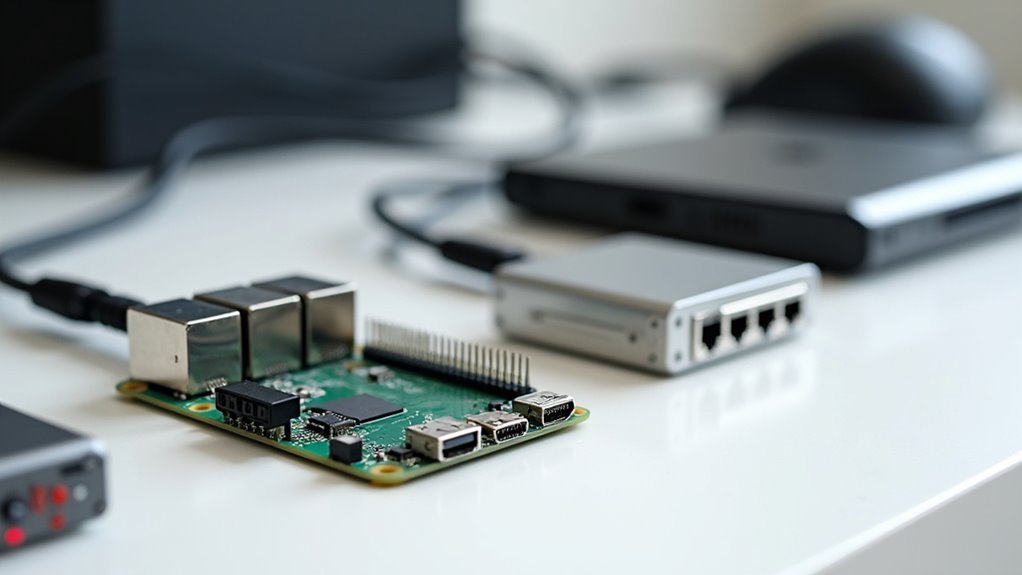
When you’re exploring open source home automation platforms, Home Assistant stands out as the clear leader with its impressive array of features and functionality that support over 1,000 different brands and devices.
You’ll find that getting started involves a straightforward installation and setup process, though you’ll want to understand the various deployment options available.
Most importantly, you’ll appreciate how Home Assistant prioritizes your privacy and security by keeping your data local while still offering the flexibility of cloud integration when needed.
Features and Functionality
Since Home Assistant stands as the most widely adopted open source home automation platform, its robust feature set directly addresses the core needs of smart home enthusiasts.
You’ll discover extensive smart home automation capabilities that transform your house into an intelligent living space.
Here’s what makes Home Assistant exceptional:
- Connect Everything – You’ll enjoy seamless integration with over 1,000 brands and devices, ensuring your entire ecosystem works together flawlessly.
- Create Your Perfect Environment – You can build highly customizable automations triggered by specific conditions that match your lifestyle perfectly.
- Control with Confidence – You’ll manage everything through intuitive dashboards designed exactly how you want them.
- Protect Your Privacy – You’ll benefit from local data storage that keeps your personal information secure and private.
Installation and Setup
Home Assistant’s impressive features become accessible once you complete the straightforward installation process. You can install Home Assistant on various platforms including Raspberry Pi, Windows, macOS, and Linux. For Raspberry Pi installations, you’ll simply flash an SD card, while other systems require running an installer.
The Home Assistant Operating System simplifies your setup by providing a dedicated environment for peak performance. You’ll find extensive documentation and community support to guide you through configuration steps.
Once your installation is complete, you can integrate over 1,000 different smart devices and platforms. The setup process allows you to customize your home automation experience while choosing between local control and cloud integration, ensuring your privacy and data security remain protected throughout.
Privacy and Security
Unlike cloud-based smart home platforms that store your personal data on remote servers, Home Assistant keeps your information secure within your own home network.
This privacy-first approach means you’re not vulnerable to massive data breaches that plague cloud services.
Your security benefits include:
- Complete data ownership – You’ll never worry about corporations selling your personal habits to advertisers.
- Zero external dependencies – Your smart home works even when internet fails, protecting your family’s routines.
- Transparent code audit – You can examine every line of open-source code for potential vulnerabilities.
- Custom privacy controls – You decide exactly what data gets stored and how it’s handled.
The open-source community continuously patches security flaws, ensuring your home remains your private sanctuary.
OpenHAB: Vendor-Agnostic Automation Software
When you’re tired of being locked into a single manufacturer’s ecosystem, OpenHAB offers an invigorating alternative as a vendor-agnostic home automation platform that supports over 400 different technologies and systems.
This Open Source solution provides seamless integration across diverse smart home platforms, eliminating vendor lock-in concerns that plague proprietary systems.
You’ll benefit from OpenHAB’s powerful automation engine, which creates time and event-based triggers, custom scripts, and personalized notifications tailored to your specific requirements.
Since this home automation system operates entirely on local hardware, your data stays private and secure without depending on cloud services.
The openHABian image simplifies installation on devices like Raspberry Pi, making setup accessible for beginners while maintaining the flexibility that advanced users demand.
Domoticz: Lightweight Controller for Beginners
If you’re new to home automation and want something that won’t overwhelm you, Domoticz offers exactly what you need.
You’ll appreciate its straightforward installation process that gets you up and running quickly without complex configuration steps.
The platform’s intuitive interface lets you control lights, sensors, and cameras without requiring extensive technical knowledge.
Simple Installation Process
Getting started with Domoticz couldn’t be easier, as this lightweight controller eliminates the technical barriers that often intimidate newcomers to home automation.
The simple installation process works seamlessly across Windows, Linux, and Raspberry Pi platforms, requiring minimal technical knowledge to get your smart home system running.
Here’s what makes installation effortless:
- Download and run – Precompiled binaries mean you’ll skip complex configurations and start immediately.
- Package manager support – One-click installations through your system’s package manager save precious time.
- Low hardware requirements – Your existing devices can handle Domoticz without expensive upgrades.
- Guided setup assistance – Active community support provides step-by-step tutorials when you need help.
You’ll have your home automation controller operational within minutes, not hours.
User-Friendly Interface Features
Once you’ve completed the quick installation, Domoticz greets you with a clean, dashboard-style interface that puts everything you need within easy reach.
You’ll find controlling lights, sensors, and cameras remarkably straightforward through its intuitive design. The user-friendly interface eliminates complexity, letting you monitor your entire smart home from a single screen without confusion.
What sets this open source controller apart is how easily you can create custom automation scenarios. You don’t need programming experience to set up rules that trigger lights based on motion sensors or schedule devices to activate at specific times.
The interface streamlines configuration tasks, making advanced home automation accessible to beginners. Everything’s organized logically, so you’ll spend less time figuring out controls and more time enjoying your automated home.
Node-RED: Visual Programming for Smart Homes
While traditional smart home programming often requires extensive coding knowledge, Node-RED transforms automation into an intuitive visual experience that anyone can master. This open-source platform revolutionizes smart home development through its drag-and-drop interface, eliminating complex coding barriers.
You’ll discover incredible possibilities with Node-RED’s capabilities:
- Deploy anywhere – Run it on your Raspberry Pi or any platform, giving you complete control over your smart home infrastructure.
- Connect everything – Access thousands of pre-built integrations supporting countless devices and communication protocols.
- Experience lightning-fast responses – Local deployment guarantees minimal latency and instant automation triggers.
- Join a thriving community – Benefit from continuous innovations and support from passionate developers worldwide.
Node-RED empowers you to create sophisticated automation workflows without writing a single line of code.
Calaos: French-Developed Home Automation Solution
Elegance meets functionality in Calaos, a sophisticated home automation platform that brings French engineering excellence to your smart home setup. This open-source solution delivers thorough control through its server application, touchscreen interface, and mobile apps, making configuration straightforward regardless of your technical background.
French engineering precision meets open-source flexibility, delivering sophisticated home automation control through elegant touchscreen and mobile interfaces.
You’ll appreciate Calaos’s extensive protocol support and device integration capabilities, which provide the flexibility to customize your system exactly as needed. The intuitive graphical interface streamlines setup processes, eliminating complexity while maintaining powerful functionality.
What sets Calaos apart is its active community of contributors who continuously enhance the platform through updates, support, and shared knowledge.
Whether you’re connecting smart devices for the first time or expanding an existing network, Calaos adapts to your expertise level while delivering reliable performance.
OpenMotics: Hardware-Integrated Control System
You’ll find OpenMotics stands out with its modular hardware architecture that lets you build and expand your system piece by piece.
The platform integrates energy monitoring directly into its hardware, giving you real-time insights into your home’s power consumption without additional devices.
Its broad device compatibility range guarantees you won’t face restrictions when connecting various smart home brands and technologies to your setup.
Modular Hardware Architecture
When designing a smart home system that adapts to your evolving needs, OpenMotics delivers a modular hardware architecture that puts flexibility at the forefront.
You’ll customize your setup with specialized modules targeting specific functions like lighting, HVAC, and energy management. The system’s scalable design lets you start small and expand gradually.
What makes this modular hardware architecture truly compelling:
- You’ll feel empowered knowing you can tailor every aspect of your home automation to match your unique lifestyle.
- You’ll experience peace of mind with local control keeping your personal data secure and private.
- You’ll enjoy seamless integration as the system works with your existing smart devices and protocols.
- You’ll appreciate the freedom to grow your system without costly replacements or complicated reconfigurations.
Energy Monitoring Integration
OpenMotics transforms your modular hardware setup into a powerful energy intelligence center by integrating extensive monitoring capabilities directly into its control system.
You’ll gain real-time insights into your energy consumption patterns, identifying inefficiencies and potential cost savings across all connected smart home devices. The open source platform’s built-in monitoring tools track usage data continuously, giving you granular visibility into how each component affects your overall energy footprint.
You can optimize your home’s performance by analyzing detailed consumption reports that highlight peak usage times and energy-hungry devices.
The system’s thorough energy monitoring works seamlessly with its hardware control features, enabling automated responses based on consumption thresholds. This integration guarantees you’re not just controlling devices but actively managing energy efficiency throughout your entire home automation ecosystem.
Device Compatibility Range
Although smart home ecosystems often struggle with device compatibility issues, OpenMotics eliminates these barriers through its extensive support for multiple communication protocols and connection types.
This hardware-integrated system’s device compatibility range extends across lighting, heating, and energy monitoring systems, making it one of the most versatile smart home tools available.
You’ll appreciate how OpenMotics handles both wired and wireless devices seamlessly:
- Connect legacy devices – Your existing home systems won’t become obsolete
- Expand effortlessly – Third-party integrations through APIs mean endless possibilities
- Monitor everything – Track energy efficiency across all connected devices in real-time
- Control centrally – Manage diverse systems from one unified platform
This flexibility guarantees you’re not locked into specific brands or technologies.
HomeGenie: Web-Based Automation Platform
Since many homeowners want extensive control over their smart devices without vendor lock-in, HomeGenie provides an open-source, web-based automation platform that puts you in the driver’s seat.
This home automation solution supports multiple protocols and devices, creating seamless integration with your existing setup.
You’ll find HomeGenie’s intuitive interface makes creating custom automation rules straightforward, even without programming expertise.
The open-source nature guarantees community-driven improvements while keeping your data private and under your control.
The platform includes a mobile app for remote management, letting you monitor and adjust your home systems from anywhere.
You can manage lighting, security, HVAC, and other connected devices through one centralized dashboard, making thorough home automation accessible and customizable.
Comparing Performance and Device Compatibility
When choosing between open-source home automation platforms, performance metrics and device compatibility become the deciding factors for most users.
You’ll find significant differences in how these controllers handle your smart home ecosystem.
Performance and compatibility highlights that’ll impact your decision:
- Home Assistant dominates with 1,000+ supported brands – making nearly every device you own instantly compatible.
- openHAB’s 400+ technology integrations provide solid coverage for most setups while maintaining flexibility.
- Local control beats cloud dependency – you’ll get faster response times and better security.
- Community support matters – Home Assistant’s 23,000+ discussions mean you’ll find solutions quickly.
Your device compatibility needs will ultimately determine which platform delivers the performance you’re seeking for your automated home.
Installation and Setup Requirements
Getting your open-source home automation controller up and running varies dramatically depending on which platform you choose.
OpenHAB offers the most streamlined experience with its openHABian image—you’ll simply flash an SD card and boot your Raspberry Pi with pre-configured settings.
Home Assistant requires more attention to installation guidelines, varying by platform whether you’re using Raspberry Pi, virtual machines, or Docker containers.
Domoticz provides straightforward setup across Windows, Linux, and macOS by downloading software and following website instructions.
Node-RED caters to visual programming enthusiasts with user-friendly installation options for Raspberry Pi or Docker.
Each platform’s robust community support, including forums and extensive documentation, guarantees you’ll get help during setup, making the process smoother for beginners.
Community Support and Development Resources
While technical capabilities matter enormously in choosing your home automation platform, the strength of community support often determines your long-term success with any open-source controller.
Community support transforms technical home automation platforms from intimidating projects into collaborative learning experiences that ensure long-term success.
These platforms excel in fostering collaborative environments where you’ll find the guidance needed for complex configurations and troubleshooting challenges.
- OpenHAB’s massive community – Over 22,000 active members sharing daily examples and tutorials that’ll accelerate your learning curve considerably.
- Rich knowledge bases – Access to 240,000+ posts and 23,000 discussions providing solutions you’ve likely never considered before.
- Beginner-friendly guidance – Domoticz offers dedicated support guaranteeing you won’t struggle alone with installation hurdles.
- Living documentation – Home Assistant’s community-driven updates and events keep you connected to cutting-edge developments.
This open-source ecosystem guarantees you’re never isolated when tackling automation projects.
Choosing the Right Controller for Your Smart Home Needs
How do you navigate the maze of open-source controllers to find the perfect fit for your smart home? Start by evaluating device compatibility – platforms like Home Assistant support over 1,000 devices and brands, ensuring broader integration possibilities.
Consider your technical expertise when choosing between user-friendly options like Domoticz for beginners or advanced systems like Node-RED for complex automation.
Community support matters greatly. Open source platforms such as openHAB offer extensive documentation with over 23,000 discussions to help troubleshoot issues.
Prioritize local control for enhanced data privacy and security, reducing cloud dependency.
Finally, assess installation complexity. Some controllers provide pre-configured images for quick Raspberry Pi deployment, while others require more setup time but offer greater customization flexibility for your specific smart home requirements.
Frequently Asked Questions
What Is the Most Popular Open Source Home Automation?
Home Assistant’s your top choice for open-source home automation. You’ll find it integrates with over 1,000 brands and devices, plus you’ll benefit from a vibrant community of 22,000+ members providing ongoing support.
Is There an Open Source Home Assistant?
Yes, Home Assistant is a popular open-source home automation platform. You’ll get local control, privacy-focused data storage, integration with 1,000+ devices, and a community-driven development approach that’s completely free.
What Is the Best Platform for Home Automation?
You’ll find Home Assistant is the best platform for home automation since it supports over 1,000 devices, prioritizes local control and privacy, and offers extensive customization options for users.
What Is the Best Smart Home Control App?
You’ll find Home Assistant offers the best balance of compatibility, privacy, and user-friendliness among smart home control apps. It supports over 1,000 devices while keeping your data local and secure.



Leave a Reply