
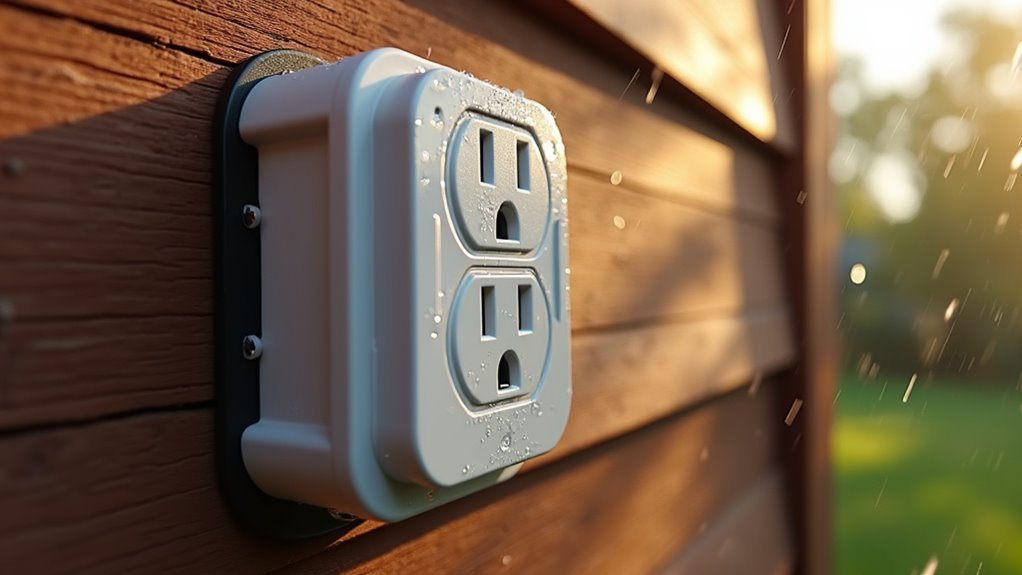
You’ve probably wondered why some smart outlets survive brutal winters and scorching summers while others fail within months. The difference isn’t just about price—it’s about specific engineering features that determine whether your outdoor smart outlet will withstand nature’s relentless assault. From mysterious IP ratings to specialized materials you’ve never heard of, there’s a science behind what separates the survivors from the casualties in your backyard.
Understanding IP Rating Systems for Smart Outlets

When shopping for weather-resistant smart outlets, you’ll encounter IP ratings that determine how well these devices can withstand outdoor conditions.
The IP rating system uses two digits to classify protection levels. The first digit indicates how well the enclosure blocks solid particles like dust, while the second digit shows liquid ingress protection against water.
For outdoor smart outlets, you’ll commonly see ratings like IP64, which means the device is completely dust-tight and can handle water splashes from any direction.
However, it won’t survive being submerged in water. Higher ratings such as IP65 offer even better protection against water jets, making them ideal for areas with heavy rain or pressure washing exposure.
Essential Weather Protection Features
Beyond understanding IP ratings, you’ll need to evaluate several critical protection features that determine how well your smart outlet survives harsh outdoor conditions. A weather-resistant cover stands as your first line of defense, shielding connections from moisture and debris during non-use periods. UV-resistant plastic construction prevents sun damage that causes cracking and material breakdown over extended exposure.
| Protection Feature | Primary Function |
|---|---|
| Weather-resistant cover | Shields from moisture and debris |
| UV-resistant plastics | Prevents sun degradation |
| GFCI protection | Guards against electrical shock |
| Sealed gaskets | Blocks water infiltration |
| Corrosion-resistant contacts | Maintains electrical integrity |
These features work together, creating multiple barriers against environmental threats that could compromise your outlet’s safety and functionality.
Temperature Tolerance and Extreme Weather Performance

Temperature extremes test your smart outlet’s durability more than any other environmental factor. Your outdoor smart plug must withstand scorching summer heat and freezing winter cold without compromising performance. Quality units like the TP-Link Kasa EP40 operate reliably from -4°F to 122°F, ensuring year-round functionality regardless of climate conditions.
During winter months, properly rated outdoor smart plugs undergo rigorous testing to prevent damage from freezing temperatures. The engineered materials resist thermal expansion and contraction that could crack housings or damage internal components.
UV-resistant materials protect against sun degradation during hot summers, while specialized compounds maintain flexibility in sub-zero conditions. This temperature tolerance means you won’t experience seasonal failures or need to remove devices during extreme weather, making your outdoor automation truly dependable.
Waterproof Vs Water-Resistant Smart Outlet Differences
While temperature tolerance forms the foundation of outdoor durability, understanding your smart outlet’s water protection level determines whether it’ll survive the next storm.
Water-resistant smart outlets offer protection against splashes and moisture through sealed covers and gaskets, but they can’t handle submersion. These typically carry IP64 to IP66 ratings and work fine during light rain.
However, waterproof outlets with IP67 or higher ratings can withstand complete immersion and heavy downpours thanks to robust enclosures.
You shouldn’t rely on water-resistant outlets during extreme weather conditions, as they still pose water damage risks. Regular inspection becomes essential since environmental factors compromise their protective features over time.
Choose waterproof options for areas prone to flooding or severe weather exposure.
GFCI Protection Requirements for Outdoor Installation

When installing smart outlets outdoors, you’ll need GFCI (Ground Fault Circuit Interrupter) protection to meet safety codes and prevent potentially fatal electrical shocks.
The National Electrical Code mandates GFCI protection for all outdoor circuits, especially important in wet environments where moisture can create dangerous electrical conditions.
Your GFCI installation must include these essential components:
- Weatherproof enclosures that protect the GFCI outlet from rain, snow, and other elements
- Monthly testing schedule using the test and reset buttons to verify proper operation
- Professional installation to guarantee compliance with local electrical codes and safety standards
Non-GFCI outlets pose significant safety risks outdoors since they can’t detect ground faults that occur when water creates unintended electrical paths.
GFCI protection cuts power instantly when detecting these dangerous conditions.
Proper Enclosure Selection and Installation
You’ll need to select enclosures with proper IP ratings and guarantee they meet weatherproof standards for your outdoor smart outlet installation.
Your setup must include GFCI protection to prevent electrical hazards, which is mandatory for all outdoor electrical circuits.
You’ll also want to master proper cover installation techniques that create watertight seals and provide easy access when needed.
Weatherproof Rating Requirements
Before installing smart outlets outdoors, you must understand that proper weatherproof ratings serve as your first line of defense against moisture damage and electrical hazards.
These weatherproof rating requirements guarantee your outdoor smart plugs operate safely in various conditions.
You’ll want to focus on these essential IP ratings:
- IP64 – Provides complete dust protection and guards against water splashes from any direction.
- IP65 – Offers dust-tight sealing plus protection from low-pressure water jets.
- IP66 – Delivers maximum dust protection and withstands powerful water jets.
You must verify that your chosen smart outlet meets these minimum standards.
Additionally, you’ll need to pair proper IP ratings with GFCI protection and weather-resistant covers.
Regular inspection of seals and protective elements maintains long-term weatherproofing effectiveness.
GFCI Protection Standards
When you’re installing outdoor smart outlets, you’ll need a qualified electrician to guarantee proper GFCI compliance with local codes.
These devices prevent dangerous electric shocks that can occur when moisture creates unintended electrical paths. Your GFCI-protected smart outlet will trip immediately if water infiltration causes ground faults, potentially saving your life.
You can identify GFCI protection by the distinctive “test” and “reset” buttons on the outlet face, which you should test monthly for proper operation.
Cover Installation Techniques
Choose enclosures specifically designed for outdoor electrical applications, as standard indoor covers won’t withstand prolonged exposure to UV rays, temperature fluctuations, and moisture.
You’ll need to secure your weather-resistant cover properly to prevent moisture ingress and protect against dust accumulation.
Follow these essential installation steps:
- Secure mounting – Verify the weather-resistant cover fits snugly against the outlet box with proper gasket sealing.
- Check alignment – Confirm that hinged covers close completely without gaps that could allow water penetration.
- Test operation – Validate the cover opens and closes smoothly while maintaining tight seals around all edges.
Always follow manufacturer installation guidelines precisely to guarantee maximum protection.
Regular inspection of your covers helps identify wear and tear before environmental factors compromise their effectiveness.
Protective Cover Design and Material Quality
You’ll need to focus on three critical aspects when evaluating protective covers for your weather-resistant smart outlets.
The rubber cover’s durability directly impacts how well it’ll withstand repeated use and exposure to temperature extremes over time.
You should also examine the weatherproof materials used in construction and guarantee the secure closure mechanisms can maintain tight seals against moisture and debris infiltration.
Rubber Cover Durability
The backbone of weather-resistant smart outlets lies in their rubber cover durability, where superior protective cover design and material quality determine how well your devices withstand harsh outdoor conditions.
You’ll find that higher-grade rubber materials offer exceptional resistance to UV rays and extreme temperatures, preventing premature deterioration that compromises protection.
When evaluating rubber cover durability, consider these critical factors:
- Reinforced rubber construction that resists cracking and tearing over extended use
- UV-resistant materials that maintain flexibility and sealing properties despite sun exposure
- Temperature stability ensuring covers don’t become brittle in cold or soft in heat
Quality rubber covers maintain your outlet’s IP rating by creating reliable seals against water and dust infiltration.
You’ll benefit from flaps and sliding covers that securely close, minimizing elemental exposure.
Weatherproof Materials Used
Beyond rubber covers, manufacturers select specific weatherproof materials that form the foundation of truly resilient smart outlets.
You’ll find these weather-resistant smart outlets constructed from high-quality polymers and reinforced plastics that withstand UV rays, extreme temperatures, and moisture exposure. The housing materials resist cracking, fading, and degradation over time.
Internal components receive protection through specialized gaskets and seals that prevent water ingress during heavy rainfall. These precision-engineered barriers maintain the outlet’s integrity while preserving electrical safety.
The combination of durable exterior materials and internal sealing systems creates products with IP64 or IP65 ratings, indicating superior protection against dust and water jets. This material selection directly reduces electrical hazards and extends your smart outlet’s operational lifespan in challenging outdoor environments.
Secure Closure Mechanisms
While durable materials provide the foundation, secure closure mechanisms serve as your smart outlet’s first line of defense against harsh weather conditions.
These protective covers utilize tightly fitting designs that prevent water and dust ingress, typically achieving IP65 ratings or higher when outlets aren’t in use.
Your weather-resistant smart outlet’s closure system includes three critical components:
- Latch or snap mechanisms that keep covers tightly sealed during storms and high winds
- Rubber gaskets and seals positioned around closure areas to block moisture penetration
- High-quality thermoplastic or rubber covers engineered to withstand extreme temperatures and UV exposure
You’ll need to regularly inspect these secure closure mechanisms for wear and tear, as compromised seals can lead to moisture damage and electrical hazards over time.
Power Capacity Considerations for Outdoor Use
When selecting a weather-resistant smart outlet for outdoor use, you’ll need to guarantee it can handle at least 15 amps of maximum load capacity to safely power typical outdoor devices like string lights, water fountains, and garden equipment.
Power capacity considerations for outdoor use become critical when you’re connecting multiple devices simultaneously. You should assess your outdoor outlet’s power requirements to prevent dangerous overloading that causes overheating and fire hazards.
Look for smart plugs offering dual outlets to enhance flexibility while managing various devices. Don’t forget to install GFCI protection for electrical shock safety in wet conditions.
Monitor your connected devices’ power consumption through compatible apps to detect unauthorized access or excessive usage that could compromise your system’s safety.
Wi-Fi Signal Stability in Outdoor Environments
When you install outdoor smart outlets, you’ll quickly discover that Wi-Fi signals don’t travel as far or remain as stable outside your home’s protective walls.
Distance from your router becomes a critical factor, and you might find your smart outlets losing connection if they’re positioned too far from your wireless access point.
Weather conditions like heavy rain, snow, and even thick foliage can interfere with your Wi-Fi signal, causing frustrating connectivity drops when you need your outdoor devices most.
Signal Range Limitations
Several factors can compromise your outdoor smart plug’s Wi-Fi connectivity, making signal range limitations one of the most common challenges you’ll face. Your smart plug typically operates on 2.4 GHz Wi-Fi, which offers longer range but struggles with physical obstructions like walls and dense vegetation that greatly reduce effective coverage for outdoor use.
Three key strategies can improve your signal strength:
- Position closer to router – Minimize distance between your smart plug and Wi-Fi source
- Install Wi-Fi extender – Boost signal reach to overcome range limitations
- Ensure clear line-of-sight – Remove obstructions blocking the signal path
Weather conditions like rain and snow further complicate connectivity by absorbing radio waves.
Electronic interference from nearby devices can also disrupt signal consistency, requiring regular placement adjustments to maintain reliable performance.
Weather Interference Effects
Beyond physical obstructions, atmospheric conditions create dynamic interference patterns that’ll directly impact your outdoor smart outlet’s Wi-Fi stability.
Weather interference effects become particularly pronounced when rain, snow, and fog introduce moisture into the air, causing significant signal attenuation between your router and smart outdoor devices.
Your outlet’s 2.4 GHz Wi-Fi connection, while offering extended range, becomes increasingly vulnerable to these atmospheric disruptions.
Moisture particles scatter and absorb radio waves, weakening the signal strength that reaches your device. This degradation intensifies when your smart outdoor outlet sits far from your router or access point.
You’ll notice connectivity drops during heavy weather events.
Combat these issues by regularly monitoring signal strength and strategically repositioning your router to minimize the distance and atmospheric interference affecting your outdoor smart outlets.
Safety Certifications and Standards Compliance
Since electrical safety becomes paramount when dealing with outdoor installations, weather-resistant smart outlets must meet stringent safety certifications and standards compliance requirements.
You’ll find that reputable outdoor smart outlets carry UL (Underwriters Laboratories) and ETL (Intertek) certifications, which demonstrate they’ve undergone rigorous testing for insulation, grounding, and fire resistance.
These safety certifications guarantee your outdoor smart outlets meet three critical standards:
- Electrical shock prevention through proper insulation and grounding systems
- Fire resistance capabilities that protect against overheating and electrical fires
- Weatherproof ratings like IP65 or higher for dust and water resistance
Manufacturers provide detailed safety guidelines and installation warnings to guarantee you’re using these devices correctly.
When you choose certified products, you’re getting peace of mind knowing they’ve met established safety requirements for outdoor environments.
Installation Best Practices for Maximum Protection
You’ll need to select proper weatherproof enclosures with adequate IP ratings to shield your smart outlets from moisture and debris.
Your installation must include GFCI circuit protection to prevent electrical shock hazards in wet outdoor conditions.
Position your weatherproof covers strategically to block direct rain exposure while ensuring they’re easily accessible when you need to use the outlets.
Proper Enclosure Selection
When installing outdoor smart outlets, choosing the right enclosure serves as your first line of defense against harsh weather conditions.
You’ll need to prioritize specific features that guarantee your smart outlet remains functional throughout changing seasons.
Focus on these critical selection criteria:
- IP Rating Requirements – Select enclosures with IP65 or higher ratings to assure protection against dust infiltration and water ingress from rain or snow.
- Material Durability – Choose weather-resistant materials that withstand extreme temperatures, UV exposure, and moisture without cracking or degrading over time.
- Ventilation Design – Confirm proper airflow prevents overheating while maintaining weather protection.
Install your enclosure strategically to minimize exposure to heavy precipitation.
Regular inspections help identify wear signs early, maintaining ideal protection for your smart outlet’s continued performance.
GFCI Circuit Requirements
Beyond selecting the right enclosure, your outdoor smart outlet installation demands proper GFCI circuit protection to meet National Electrical Code requirements and safeguard against electrical hazards.
You’ll need GFCI outlets for all outdoor circuits since they automatically cut power when detecting ground faults, preventing electric shock in wet conditions.
Position your GFCI outlets where you can easily access them for testing and resetting. You should test these devices monthly to verify they’re functioning correctly and providing adequate protection.
Install weatherproof covers on your GFCI outlets to shield them from rain and snow while maintaining safe operation of connected devices. This protection becomes especially critical when moisture exposure increases the risk of electrical faults that could damage your smart outlets or create dangerous situations.
Weatherproof Cover Positioning
Effective weatherproof cover positioning requires strategic placement that shields your smart outlets from direct water exposure while maintaining easy access for operation.
Your weatherproof cover’s location determines its protection effectiveness. Position outlets under protective structures whenever possible to minimize direct rainfall exposure. The cover itself must fit your specific outlet model perfectly – improper compatibility creates gaps that allow moisture infiltration.
Follow these positioning principles for ideal protection:
- Install under eaves or awnings to reduce direct weather exposure
- Guarantee complete compatibility between your weatherproof cover and outlet model
- Maintain secure closure when the outlet isn’t actively being used
Regular inspection of your weatherproof cover reveals wear or damage that compromises protection.
Always follow manufacturer guidelines for installation and maintenance to guarantee safety compliance and maximum weather resistance for your smart outdoor outlets.
Maintenance and Inspection Guidelines
Although outdoor smart outlets are designed to withstand harsh conditions, they require consistent maintenance to perform reliably over time. You’ll need to regularly inspect your weather-resistant cover to guarantee it’s intact and properly sealed against moisture and debris.
| Inspection Area | Check Frequency | Key Warning Signs |
|---|---|---|
| Weather-resistant cover | Monthly | Cracks, loose seals, missing parts |
| Power cords | Weekly | Fraying, exposed wires, discoloration |
| GFCI connection | Quarterly | Tripped breakers, loose connections |
You should also examine power cords for fraying or damage that could create safety hazards. Ascertain your outlet connects to a GFCI-protected circuit for electrical shock protection. Clean the outlet area periodically to prevent dirt accumulation, and store devices indoors during extreme weather conditions.
Common Weather-Related Failure Points
When water infiltrates your smart outlet’s entry points, it creates the most frequent cause of weather-related failures. Inadequate sealing around cord entry points allows moisture penetration, causing electrical shorts that’ll disable your outlet completely.
Your outlet’s vulnerability increases greatly when these critical components fail:
- Weather-resistant cover quality – Flimsy covers detach during storms, exposing outlets to rain and debris.
- IP rating limitations – Lower ratings like IP64 provide insufficient protection against heavy rain conditions.
- Internal component corrosion – Prolonged humidity exposure causes malfunctioning and complete failure.
Poor insulation and grounding compound these problems, creating electrical shock and fire hazards when you’re using smart outlets in wet conditions.
You’ll need proper protective measures to prevent these dangerous situations from occurring.
Choosing the Right Smart Outlet for Your Climate
Your climate determines which smart outlet features you’ll need most, so start by evaluating your local weather patterns before making a purchase.
Look for an IP rating of at least IP64, which guarantees protection against dust and water splashes in most climates.
Check the temperature range—models like the TP-Link Kasa EP40 operate effectively from -4 to 122 degrees Fahrenheit.
The smart plug you choose should include weather-resistant covers protecting unused outlets from moisture and debris, especially vital in rainy or snowy regions.
Research maximum load capacity since outdoor equipment often demands higher power.
For extreme weather areas, prioritize outlets with GFCI protection to prevent electric shock in wet conditions.
Frequently Asked Questions
Can Smart Outlets Be Used Outdoors?
You can use smart outlets outdoors if they’re specifically designed with proper IP ratings like IP64 or higher. You’ll need GFCI protection and weather-resistant covers for safety and functionality.
What Makes a Weather Resistant Outlet?
You’ll find weather-resistant outlets feature sealed enclosures with IP64+ ratings, weatherproof covers, and durable materials that withstand temperature extremes. They’re designed with special gaskets and seals that prevent moisture ingress effectively.
Do Smart Plugs Work in Cold Weather?
Yes, you’ll find that outdoor-rated smart plugs work in cold weather when they’re designed for temperature ranges like -4 to 122°F. You should check manufacturer specifications and confirm proper installation for peak performance.
What Is the Best Outdoor Smart Plug?
You’ll find the TP-Link Kasa EP40 is the best outdoor smart plug. It’s rated for -4 to 122°F, features voice control and scheduling, costs under $30, and works with Alexa and Google Assistant.

Leave a Reply