

You’ve probably noticed motion-activated lights in stores or offices, but you might not realize these same PIR sensors can transform your home into a smarter, more efficient space. These passive infrared devices detect body heat and movement, automatically triggering lights, adjusting thermostats, or activating security systems without any input from you. While they seem simple on the surface, understanding how they work and where to place them determines whether you’ll experience seamless automation or frustrating false triggers.
Understanding PIR Technology and Detection Principles
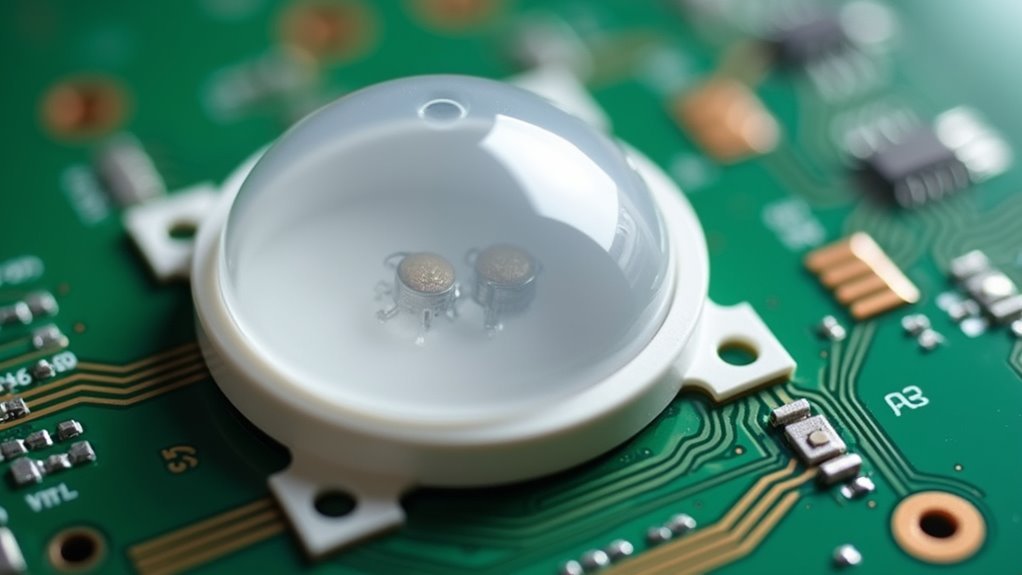
Motion detection forms the backbone of modern home automation, and PIR (Passive Infrared) sensors lead this revolution through their elegant simplicity.
These passive infrared devices excel at detecting motion by monitoring variations in infrared radiation emitted by warm objects like humans and animals. You’ll find that PIR sensors don’t emit energy themselves—they’re purely receptive sensor technology that responds to thermal changes.
The detection principles revolve around the pyroelectric effect, where two pyroelectric elements generate electrical charges when thermal radiation shifts occur. This creates differential signals as warm bodies move across the sensor’s field of view.
You can minimize false alarms by positioning sensors where anticipated movement occurs perpendicular to their detection range, optimizing sensitivity for reliable home automation integration.
Components and Hardware Requirements for PIR Sensors
When you’re setting up PIR sensors for home automation, you’ll need to understand the core hardware components that make detection possible.
Your sensor’s effectiveness depends on choosing the right power supply configuration and ensuring proper installation methods.
Let’s examine the essential hardware elements, power options, and mounting requirements that’ll determine your PIR sensor’s performance.
Essential PIR Hardware Components
Understanding the core components that make PIR sensors function effectively will help you make informed decisions when selecting devices for your home automation system.
Every PIR sensor contains several critical hardware elements that work together to enable reliable motion detection:
- Pyroelectric sensing element – Detects changes in infrared radiation when warm objects move within range
- Fresnel lens – Focuses infrared light onto the sensor, boosting sensitivity and extending detection coverage
- Electronic circuitry – Amplifies and processes signals from the sensing element to determine motion occurrence
- Protective housing – Shields internal components from dust, moisture, and environmental damage
- Power supply options – Choose between battery-operated designs for flexible installation or hardwired configurations for permanent setups
These components collectively guarantee your PIR sensors deliver consistent performance in home automation applications.
Power Supply Options
Two primary power supply approaches enable PIR sensors to operate effectively in home automation systems: battery-operated units that offer installation flexibility and hardwired installations that deliver continuous, uninterrupted operation.
| Power Type | Voltage Requirements | Battery Life |
|---|---|---|
| Battery-operated (AA) | 1.5V per battery | 6 months – 2 years |
| Battery-operated (9V) | 9V single unit | 3 months – 1 year |
| Hardwired installations | 12V – 24V low-voltage power supplies | Continuous |
You’ll find integrated power management features in modern PIR sensors, consuming just one watt-hour daily during standby mode. Battery life depends heavily on sensor activity frequency. Inadequate power supply options directly impact performance and can cause complete sensor failure, making proper power consideration essential for reliable home automation integration.
Installation and Mounting Requirements
Beyond selecting the right power source, proper installation determines whether your PIR sensors will function reliably in your home automation system.
Meeting mounting requirements guarantees ideal detection range while helping minimize false alarms through strategic proper placement.
Consider these essential installation factors:
- Height positioning: Mount PIR sensors 6-8 feet high for maximum coverage area and ideal performance.
- Clear line of sight: Confirm unobstructed views of anticipated movement patterns within the detection zone.
- Environmental factors: Install away from heat sources, radiators, and direct sunlight to prevent temperature-related false triggers.
- Adjustable sensitivity: Configure sensor settings based on your specific home automation needs and room characteristics.
- Secure mounting: Use appropriate screws or adhesive for wall/ceiling installation, guaranteeing stable positioning.
Most PIR sensors integrate seamlessly with existing home automation systems through simple wired or wireless connections.
Benefits of PIR Sensors in Smart Home Systems
You’ll find PIR sensors offer compelling advantages that make them essential components in modern smart home systems.
Their energy-efficient operation means you won’t worry about constantly replacing batteries or driving up electricity costs, while their enhanced security features provide reliable motion detection for thorough home protection.
You can integrate these sensors seamlessly with your existing smart devices, creating automated routines that respond intelligently to your presence throughout your home.
Energy Efficient Operation
When you’re looking to reduce your home’s energy consumption, PIR sensors deliver exceptional efficiency by operating on just one watt-hour per day.
Their low power consumption makes them perfect for energy-efficient home automation systems that won’t increase your electricity bills.
These sensors optimize your home’s energy usage through:
- Automatic lighting control – Lights activate only when occupancy is detected, eliminating unnecessary energy waste
- HVAC systems integration – Heating and cooling adjust based on room occupancy patterns
- Passive nature operation – No energy emissions create a lower overall energy footprint than active sensors
- Multiple sensors deployment – Affordable installation costs allow extensive coverage throughout your property
- Seamless automation – Effortless integration with existing smart home systems maximizes energy savings across all applications
Enhanced Security Features
PIR sensors transform your home into a vigilant guardian by detecting the infrared radiation naturally emitted by intruders, providing reliable motion detection that immediately alerts you to potential security breaches.
These smart home systems excel at intrusion detection while covering up to 1,000 square feet per unit, ensuring thorough monitoring of critical entry points.
Modern PIR sensors enhance security through automated lighting that creates occupancy illusions, deterring potential intruders while boosting energy efficiency.
Advanced algorithms filter non-human movement, dramatically reducing false alarms from pets or environmental factors. This precision maintains your security system’s effectiveness without unnecessary disruptions.
When integrated into home automation networks, PIR sensors don’t just detect threats—they actively respond by triggering lights, cameras, and alerts, creating a multi-layered defense system that protects your property 24/7.
Seamless Device Integration
Beyond security applications, smart home ecosystems release PIR sensors’ full potential through effortless integration with multiple device categories.
These sensors create seamless integration across your home automation network, connecting lighting controls, HVAC systems, and security cameras into one unified system.
PIR sensors enable thorough monitoring while maximizing energy efficiency through intelligent automation:
- Lighting controls automatically activate when you enter rooms and shut off when you leave
- HVAC systems adjust temperature settings based on occupancy patterns, reducing energy costs
- Security cameras trigger recording and send real-time alerts upon detecting movement
- Custom automation lets you schedule specific behaviors like delayed light shutoffs
- Scalable coverage allows easy expansion without major infrastructure modifications
This interconnected approach transforms individual devices into a cohesive smart home experience.
Common Applications and Use Cases in Home Automation
Since home automation systems rely on detecting human presence to function effectively, PIR sensors have become essential components across numerous residential applications. You’ll find these motion detection devices transforming how your smart home hubs manage daily operations through intelligent automation routines.
| Application | Function |
|---|---|
| Lighting Control | Automatically turns lights on/off based on occupancy for enhanced energy efficiency |
| Security Applications | Triggers alarms and sends notifications when unauthorized movement is detected |
| HVAC Systems | Adjusts heating and cooling based on room occupancy to optimize comfort |
| Automatic Door Systems | Opens doors when approaching, eliminating manual operation needs |
PIR sensors integrate seamlessly with your existing home automation infrastructure, creating responsive environments that adapt to your presence while maximizing energy efficiency and convenience throughout your living space.
Installation Guide and Placement Considerations
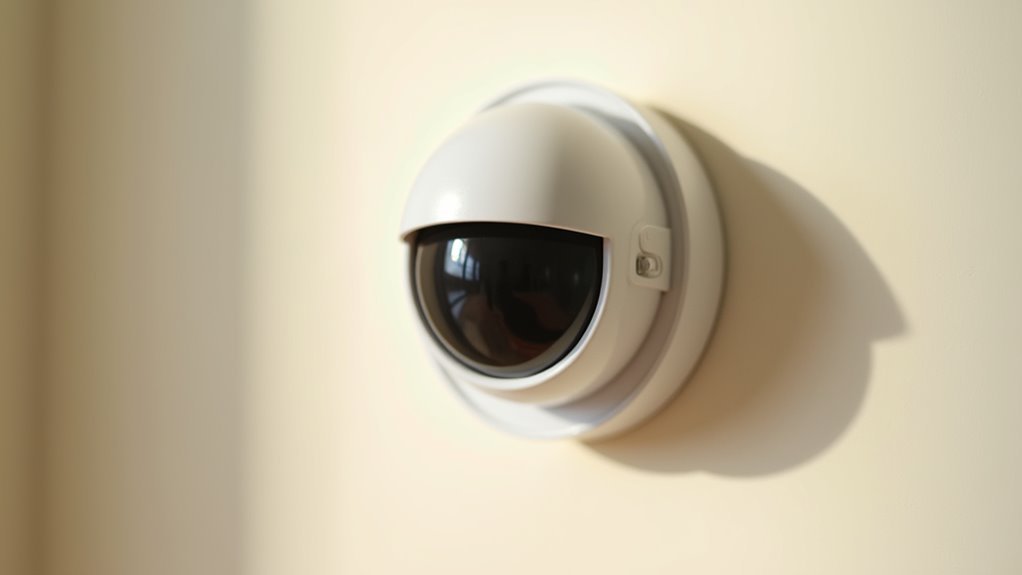
While proper installation determines whether your PIR sensors will function reliably, you’ll need to contemplate several critical factors before mounting these devices in your home.
This installation guide covers essential placement considerations to enhance detection and reduce false alarms.
- Mount at proper height: Install PIR sensors between 6.5 to 8 feet to maximize detection capabilities.
- Guarantee clear lines of sight: Avoid obstructions like furniture or walls that block infrared signals.
- Face anticipated movement: Position sensors perpendicular to expected motion paths for ideal sensitivity.
- Consider coverage area: Align sensor range with monitored space, typically 500-1,000 square feet.
- Account for environmental factors: Adjust sensitivity settings based on temperature fluctuations and sunlight exposure.
Following these placement considerations guarantees your PIR sensors deliver consistent performance throughout your home automation system.
Comparing PIR Sensors With Alternative Motion Detection Technologies
Although PIR sensors remain a popular choice for residential motion detection, they’re not your only option when designing a thorough home automation system.
PIR sensors detect infrared radiation from warm objects but face limitations compared to newer motion detection technologies. While they’re effective for security systems and basic lighting automation, they’re restricted to line-of-sight detection and prone to false positives from non-human heat sources.
Wi-Fi sensing offers superior coverage area, detecting movement through walls using existing network infrastructure. Unlike PIR sensors that typically cover 500-1,000 square feet per unit, Wi-Fi sensing can monitor up to 1,500 square feet with fewer nodes.
Additionally, Wi-Fi sensing provides enhanced integration capabilities, offering richer contextual data for advanced home automation beyond simple on/off triggers.
Optimizing PIR Sensor Performance and Troubleshooting
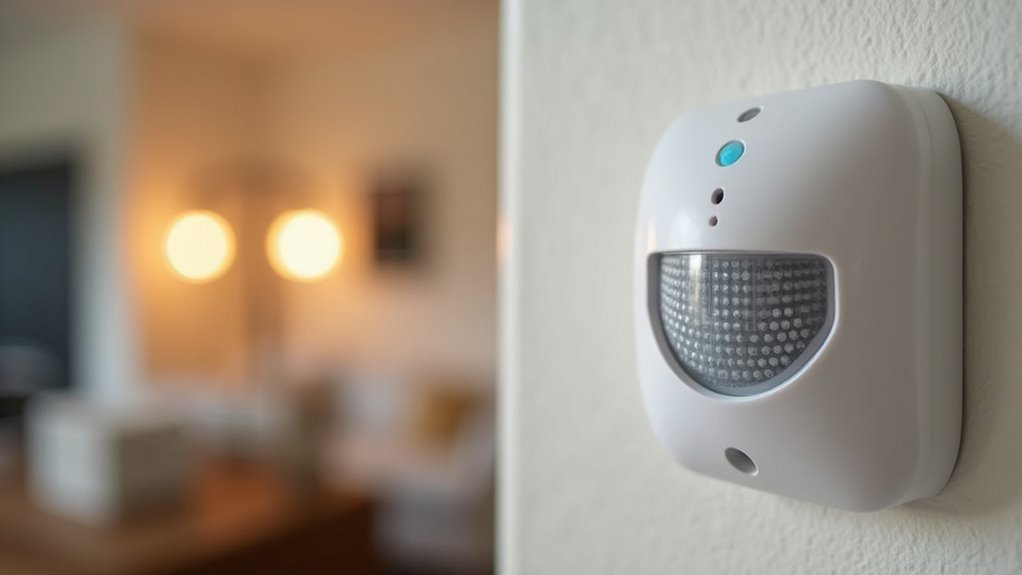
Even the best PIR sensors won’t deliver ideal results without proper installation and ongoing maintenance.
Superior PIR sensor performance requires deliberate installation planning and consistent maintenance practices to achieve optimal detection results.
To enhance performance, you’ll need strategic planning and regular troubleshooting.
Here’s how to maximize your PIR sensors’ effectiveness:
- Guarantee proper placement at 6-8 feet height, aimed toward anticipated movement paths for best detection range
- Adjust sensitivity settings carefully to reduce false alarms from small animals or environmental factors
- Perform regular maintenance by cleaning sensor lenses and housing to prevent dust obstruction
- Test coverage areas thoroughly by walking through the detection range to identify blind spots
- Monitor environmental conditions like temperature extremes and obstructions that may require recalibration
These practices guarantee your PIR sensors maintain peak performance while minimizing troubleshooting needs in your home automation system.
Frequently Asked Questions
What Is the Purpose of PIR Sensor?
You’ll use PIR sensors to detect motion by sensing infrared radiation from warm bodies, enabling automatic control of lights, security systems, and HVAC equipment while optimizing energy consumption in your home.
What Are Three Disadvantages of Using PIR Sensors?
You’ll face false positives from pets and sunlight triggering unnecessary alerts. Physical barriers like walls obstruct detection, causing missed movements. You can’t differentiate between motion types, limiting behavioral analysis capabilities.
What Is Better PIR or Motion Sensor?
You’ll find PIR sensors better for human detection with lower costs and energy efficiency, while motion sensors offer broader coverage and detect through obstacles, making your choice dependent on specific needs.
Do PIR Sensors Use a Lot of Electricity?
No, you’ll find PIR sensors don’t use much electricity at all. They consume only about one watt-hour daily in standby mode and operate passively, making them extremely energy-efficient for your home.



Leave a Reply