
You’ve probably experienced that sinking feeling when you discover your pool water has turned an unappetizing shade of green overnight. While traditional testing methods require you to manually check chemical levels daily, modern pool monitoring systems promise to eliminate these unwelcome surprises through continuous surveillance and automated adjustments. But with countless options flooding the market, understanding which features actually deliver results versus those that simply inflate the price tag becomes vital for your investment.
Core Components of Pool Monitoring Technology
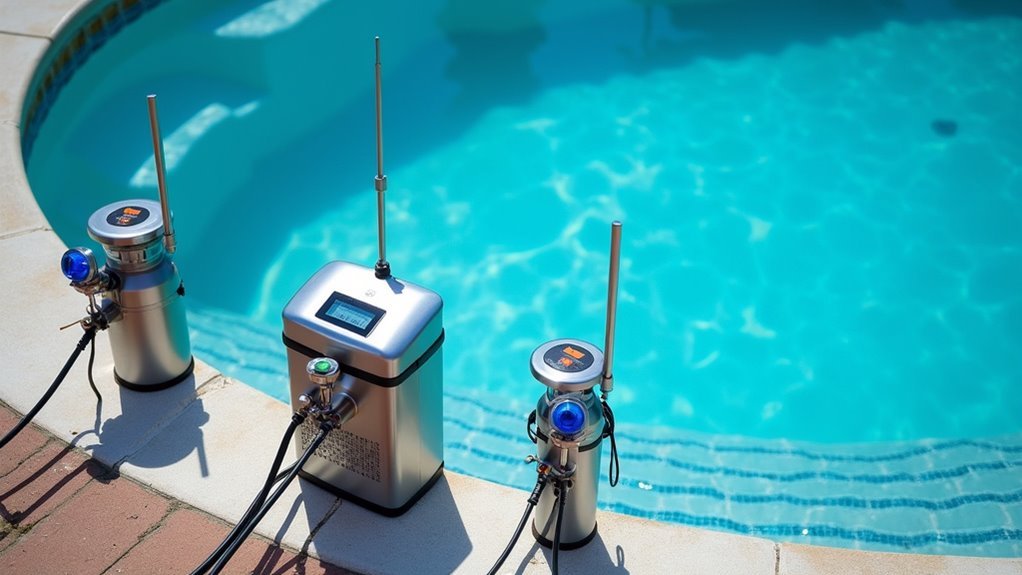
When you’re selecting a pool monitoring system, you’ll need to understand the essential sensors that form its foundation. These systems rely on specialized sensors that continuously measure critical water quality parameters including pH levels, free chlorine concentration, total alkalinity, and calcium hardness.
Each sensor plays a crucial role in maintaining proper pool water chemistry by providing accurate, real-time readings.
Modern pool monitoring systems feature advanced sensors that work together to create a thorough analysis of your water conditions. The pH sensor guarantees your water stays within the ideal 7.2-7.6 range, while chlorine sensors maintain proper sanitization levels.
Advanced sensors work in harmony to deliver comprehensive water analysis, ensuring optimal pH balance and proper chlorine sanitization levels.
Alkalinity and calcium hardness sensors prevent corrosion and scaling issues. This sensor network forms the technological backbone that enables automated chemical dispensing and real-time monitoring capabilities.
Essential Water Quality Parameters to Track
You’ll need to monitor five critical chemical parameters to maintain safe, balanced pool water that protects both swimmers and equipment.
These core measurements—pH, free chlorine, total alkalinity, cyanuric acid, and calcium hardness—work together to create ideal water conditions.
Real-time tracking of these parameters lets you catch imbalances quickly and make precise adjustments before problems escalate.
Core Chemical Balance
The foundation of any effective pool monitoring system rests on tracking five essential chemical parameters that directly impact water quality and swimmer safety.
Your core chemical balance starts with maintaining proper free chlorine levels to eliminate harmful bacteria.
You’ll need to monitor pH levels between 7.2 and 7.8 to prevent skin irritation and equipment damage.
Total alkalinity must stay between 80 and 120 ppm to stabilize your pH and prevent dangerous swings in water chemistry and pool conditions.
Calcium hardness requires monitoring between 200 and 400 ppm to avoid scaling and corrosion.
For outdoor pools, you should track cyanuric acid levels between 30 and 50 ppm, as this stabilizer protects chlorine from UV degradation while monitoring water quality effectively.
Real-Time Monitoring Benefits
Real-time monitoring systems revolutionize pool management by continuously tracking your water’s essential parameters without requiring constant manual intervention.
You’ll receive instant alerts when pH, free chlorine, total alkalinity, cyanuric acid, or calcium hardness levels shift beyond ideal ranges. This immediate detection enables you to make timely adjustments before issues escalate into costly problems like algae blooms or equipment damage.
Automated data logging eliminates the guesswork from pool maintenance while reducing your manual testing frequency.
You’ll save significant time and labor costs while maintaining superior water quality standards. The continuous monitoring helps you enhance chemical usage, reducing waste and operational expenses.
Most importantly, you’re ensuring swimmer safety by maintaining proper sanitizer levels and preventing waterborne illnesses through precise chemical balance management.
Real-Time Data Collection and Sensor Accuracy
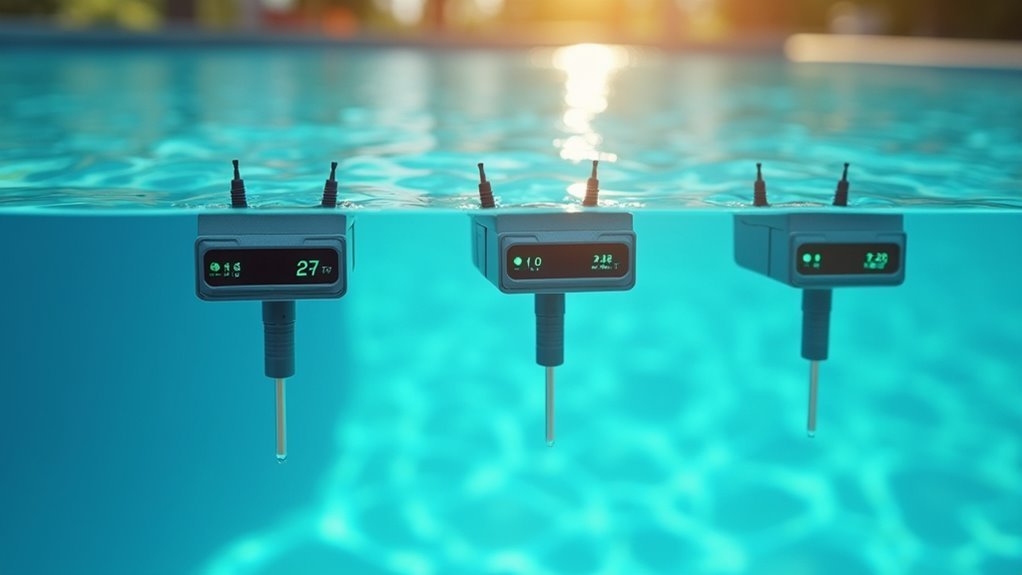
Your pool monitoring system’s effectiveness depends on its ability to continuously track water parameters without interruption, giving you instant awareness of any changes that could affect water quality.
Modern multi-sensor arrays work together to deliver precise measurements across multiple parameters simultaneously, eliminating the guesswork that comes with manual testing methods.
You’ll get accurate, reliable data that accounts for environmental variables like temperature fluctuations and lighting conditions that typically interfere with traditional monitoring approaches.
Continuous Water Parameter Monitoring
When you’re managing a pool, continuous water parameter monitoring transforms guesswork into precise science by delivering real-time data that lets you adjust chemical levels immediately. This technology guarantees peak water quality for swimmers through constant vigilance.
Accurate sensors measure critical parameters like pH, free chlorine, total alkalinity, and calcium hardness with exceptional precision. You’ll reduce the risk of harmful chemical imbalances that could endanger swimmers or damage equipment.
Advanced sensor technologies transmit data directly to your smartphone or control unit, enabling remote monitoring and informed maintenance decisions. However, you must regularly calibrate your sensors to maintain accuracy.
For example, conductivity measurements require calibration to guarantee precise monitoring of dissolved solids. Additionally, continuous monitoring alerts you to potential circulation problems or equipment malfunctions, allowing timely intervention.
Multi-Sensor Measurement Precision
Multi-sensor arrays in modern pool monitoring systems deliver unprecedented measurement precision by combining multiple detection technologies into a single, coordinated network.
You’ll benefit from multi-sensor technology that simultaneously measures pH, free chlorine, total alkalinity, and calcium hardness with exceptional accuracy. These high-precision sensors provide accurate results that eliminate guesswork from your pool maintenance routine, preventing dangerous over-treatment or under-treatment scenarios.
Real-time data collection guarantees you’ll detect chemical imbalances immediately, allowing swift corrective action before problems escalate.
Advanced sensors feature automatic calibration capabilities, maintaining measurement reliability while reducing your maintenance workload. You’ll access this precision data through integrated mobile apps and digital dashboards, empowering informed decision-making.
This coordinated sensor approach transforms pool maintenance from reactive to proactive, guaranteeing consistently safe swimming conditions.
Mobile App Integration and Remote Access Features
How can you stay connected to your pool’s health without constantly walking outside to check? Mobile app integration transforms your pool monitoring system into a powerful remote management tool.
You’ll receive real-time alerts and water chemistry updates directly on your smartphone, keeping you informed wherever you are. Remote access features let you monitor pH, chlorine levels, and other critical parameters from your office or vacation spot.
You can manually input test results through apps like Pool Shark H20 for thorough record-keeping. The system provides expert advice based on your data, guiding chemical adjustments and maintenance decisions.
Advanced integration connects with smart devices like chlorine generators, enabling automated water condition control through your phone. This convenience guarantees timely interventions and ideal pool health.
Automatic Chemical Dispensing Capabilities
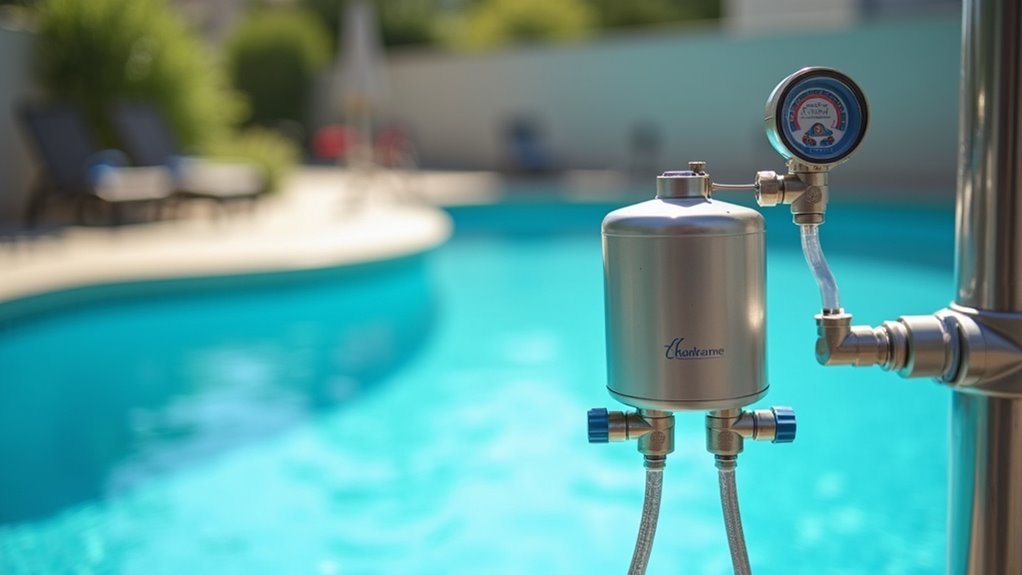
Three key advantages make automatic chemical dispensing capabilities essential for modern pool monitoring systems.
You’ll maintain precise water quality through real-time sensor readings that trigger exact chemical additions when needed. Your system dispenses chlorine and pH adjusters automatically, eliminating guesswork and ensuring swimmer safety without constant manual oversight.
Real-time sensors trigger precise chemical dosing automatically, eliminating guesswork while ensuring consistent swimmer safety without manual intervention.
You’ll reduce chemical waste and operational costs since automatic chemical dispensing only adds necessary amounts based on continuous water quality assessments. The system responds instantly to fluctuations caused by bather loads and environmental factors, maintaining ideal sanitizer levels consistently.
Integration with chlorine generators enhances efficiency by maintaining steady sanitizer supply.
Your swimming pools benefit from 24/7 chemical management that adapts to changing conditions, ensuring water remains safe and balanced while minimizing your hands-on maintenance requirements.
Alert Systems and Notification Management
While automatic chemical dispensing maintains ideal water balance, your pool monitoring system’s alert capabilities guarantee you stay informed when intervention becomes necessary.
These alert systems deliver real-time notifications about critical water chemistry imbalances, including dangerous pH fluctuations or inadequate sanitizer levels that threaten swimmer safety.
Modern notification management allows you to receive instant smartphone alerts, enabling immediate corrective action regardless of your location.
You’ll also get warnings about equipment malfunctions like pump failures, preventing circulation problems before they compromise water quality.
Customizable notification settings let you tailor alert frequency and types to match your specific monitoring requirements.
This thorough approach to notification management considerably reduces waterborne illness risks by ensuring timely interventions maintain consistently safe, clean pool water through proactive monitoring.
Battery Life and Power Management Solutions
Since reliable functionality depends on consistent power supply, most pool monitoring systems rely on C-size batteries that deliver approximately six months of operation under typical usage conditions.
WaterGuru specifically recommends Energizer batteries for peak performance based on extensive testing in their monitoring devices.
Effective power management involves several key considerations:
- Battery life indicators – Built-in displays show remaining power levels, enabling proactive replacement scheduling
- Energy-efficient designs – Low-power modes and enhanced circuits extend operational periods between replacements
- Regular maintenance schedules – Following manufacturer recommendations guarantees uninterrupted water quality monitoring
Smart power management features in modern monitoring systems help maximize battery efficiency while maintaining accurate readings.
You’ll find that replacing batteries according to system indicators prevents unexpected shutdowns and maintains continuous pool monitoring capabilities throughout the swimming season.
Installation Requirements and Setup Process
You’ll find that installing your pool monitoring system involves specific hardware placement steps and careful initial configuration to guarantee accurate readings.
Start by positioning the device near your pool’s skimmer or filtration system, making sure it fits securely in the designated opening and connects properly to power sources.
Once the hardware’s in place, you’ll need to sync the system with your smartphone app and complete the calibration process to get reliable water quality data.
Hardware Installation Steps
Before installing your pool monitoring system, confirm that the device matches your pool’s specific dimensions and configuration requirements. Different models need particular installation setups for optimal performance.
Position sensors strategically in areas with excellent water circulation, such as near skimmers or return jets. This placement guarantees your monitoring system captures accurate pool water quality readings.
Install power sources or replace batteries according to manufacturer specifications to maintain continuous operation.
Essential installation steps include:
- Connect to Wi-Fi network – Enables real-time data transmission and smartphone app monitoring
- Secure sensor placement – Follow manufacturer guidelines for optimal water circulation positioning
- Test system functionality – Verify all hardware components communicate properly before finalizing installation
Regular maintenance of hardware components, including sensor cleaning and replacing consumables like test cassettes, guarantees consistent accuracy.
Initial System Configuration
Once your hardware components are properly installed, configuring your pool monitoring system requires connecting it to your home’s Wi-Fi network and downloading the manufacturer’s mobile app.
The initial setup process guides you through essential configuration steps, including establishing communication between sensors and your smartphone.
During calibration, you’ll need to input your pool’s specific dimensions and volume to guarantee accurate readings.
The app will walk you through setting target ranges for critical water quality parameters like pH, chlorine levels, and alkalinity.
You’ll also configure alert thresholds that notify you when readings fall outside acceptable ranges.
If your system includes automated chemical dispensing, you’ll connect it to existing chlorine generators or chemical feed systems during this phase, enabling automatic adjustments based on real-time monitoring data.
Compatibility With Existing Pool Equipment
When selecting a pool monitoring system, ensuring it seamlessly integrates with your existing equipment becomes a critical factor that’ll determine both performance and cost-effectiveness.
Your monitoring systems should work harmoniously with pumps, filters, and chlorine generators without requiring extensive modifications.
Pool monitoring systems must integrate effortlessly with your existing pumps, filters, and generators to avoid costly equipment overhauls.
Modern pool equipment compatibility extends beyond basic functionality. You’ll find that systems like the Pool Shark H20 enhance your current setup while maintaining operational efficiency across both saltwater and freshwater pools.
Key compatibility considerations include:
- Automation integration – Connect to existing control systems for smartphone and tablet management
- Universal pool type support – Works with saltwater, freshwater, and hybrid systems
- Minimal installation requirements – Reduces modification costs and simplifies equipment exchanges
This compatibility approach minimizes installation expenses while maximizing your monitoring capabilities through seamless equipment integration.
Data Logging and Historical Trend Analysis
Since your pool’s water chemistry constantly fluctuates throughout the day, you’ll need robust data logging capabilities to capture and store these critical measurements over time. Historical trend analysis transforms this raw data into actionable insights, allowing you to anticipate chemical adjustments before problems develop.
| Parameter | Monitoring Frequency | Trend Analysis Benefits |
|---|---|---|
| pH Levels | Every 15 minutes | Identifies drift patterns |
| Free Chlorine | Hourly | Predicts dosing needs |
| Total Alkalinity | Daily | Correlates with usage |
You’ll discover correlations between bather load, weather conditions, and water quality changes. Advanced systems provide visual data representations, making pattern recognition effortless. This proactive approach optimizes chemical usage, reduces waste, and maintains consistently safe swimming conditions while eliminating guesswork from pool maintenance.
Cost-Effectiveness and Return on Investment
Beyond the operational benefits of trend analysis, you’ll find that automated pool monitoring systems deliver considerable financial returns through multiple cost-saving mechanisms.
The cost-effectiveness becomes evident through reduced chemical waste, as these systems dispense only necessary amounts rather than guesswork dosing. You’ll save notably on labor costs by eliminating manual testing requirements.
Your return on investment typically materializes within one season through:
Smart pool owners typically see their automated monitoring investment pay for itself within just one swimming season.
- Chemical optimization – Precise dosing reduces waste and extends chemical supply lifecycles
- Preventive maintenance – Real-time monitoring prevents costly equipment repairs and water quality disasters
- Operational efficiency – Eliminated trips to pool supply stores and reduced hands-on maintenance time
Most pool operators discover their initial investment pays dividends quickly, making automated monitoring systems financially smart choices for long-term pool management.
Maintenance Requirements for Optimal Performance
While automated pool monitoring systems operate with impressive reliability, you’ll need to perform regular maintenance tasks to guarantee they deliver consistently accurate readings.
Sensor calibration is your most critical responsibility, ensuring pH and chlorine measurements remain precise to prevent improper chemical dosing and water quality problems.
Your routine maintenance should include cleaning probes and replacing cartridges or cassettes to maintain peak performance and extend equipment lifespan.
Check connectivity and data transmission frequently, as reliable communication enables real-time alerts for accurate water quality monitoring.
Don’t forget to assess battery life regularly and replace batteries before they fail, preventing undetected issues.
Finally, maintain your pump and filtration system’s proper operation, as these supporting components directly impact your monitoring systems’ overall effectiveness in preserving excellent water quality.
Future-Proofing and System Scalability Options
When you invest in a pool monitoring system, you’ll want to choose one that adapts and grows with advancing technology rather than becoming obsolete within a few years.
Effective future-proofing guarantees your system maintains compatibility with emerging technologies like smart home integration and IoT devices.
Your scalability options should include modular sensor packages that let you customize functionality based on your specific needs. You can expand your system’s capabilities over time without replacing core components.
Key features for long-term system viability include:
- Seamless integration with existing pool technologies for effortless upgrades
- Remote monitoring capabilities through mobile apps for convenient control and alerts
- Cloud-based data storage enabling historical analysis and trend monitoring
These elements guarantee your monitoring system remains valuable and relevant as technology evolves.
Frequently Asked Questions
What Is the Best Automatic Pool Testing Equipment?
You’ll find the WaterGuru SENSE S2 stands out as top automatic pool testing equipment, measuring five critical parameters including pH, chlorine, and alkalinity while providing real-time smartphone alerts for ideal maintenance.
How Do You Tell if a Pool Is Well Maintained?
You’ll notice clear, sparkling water without debris or algae. Check that pH stays between 7.2-7.8, chlorine measures 1-3 ppm, and water temperature remains consistent around 78-82°F for ideal swimming conditions.
What Is the TDS Range for a Pool?
You’ll want TDS levels between 500-2,000 ppm for freshwater pools and 3,000-6,000 ppm for saltwater pools. Don’t let TDS exceed 1,500 ppm above your starting level to maintain proper water balance.
What Is the Best Pool Sanitation System?
You’ll get the best results combining chlorine generators with UV and ozone systems. This multi-method approach maximizes water safety, reduces chemical usage, and creates ideal swimming conditions while minimizing maintenance requirements.

Leave a Reply