
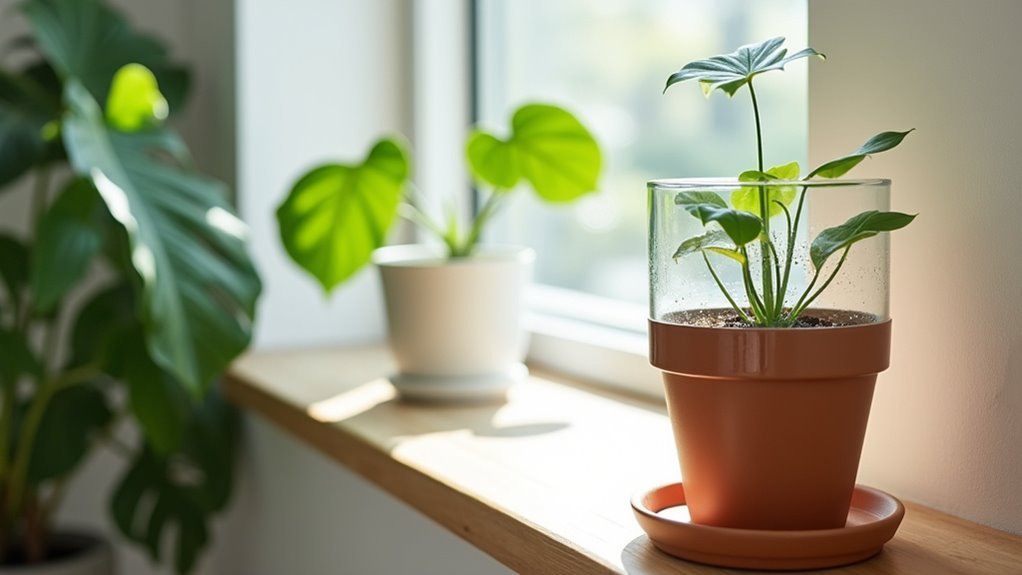
You’ve probably killed more houseplants than you’d care to admit, and it’s likely because you either forgot to water them or drowned them with too much attention. Self-watering systems using porous terracotta can solve this age-old problem by automatically adjusting moisture levels based on your plant’s actual needs. But here’s what most people don’t realize about these systems that could change everything about your plant care routine.
How Terracotta Self-Watering Systems Work
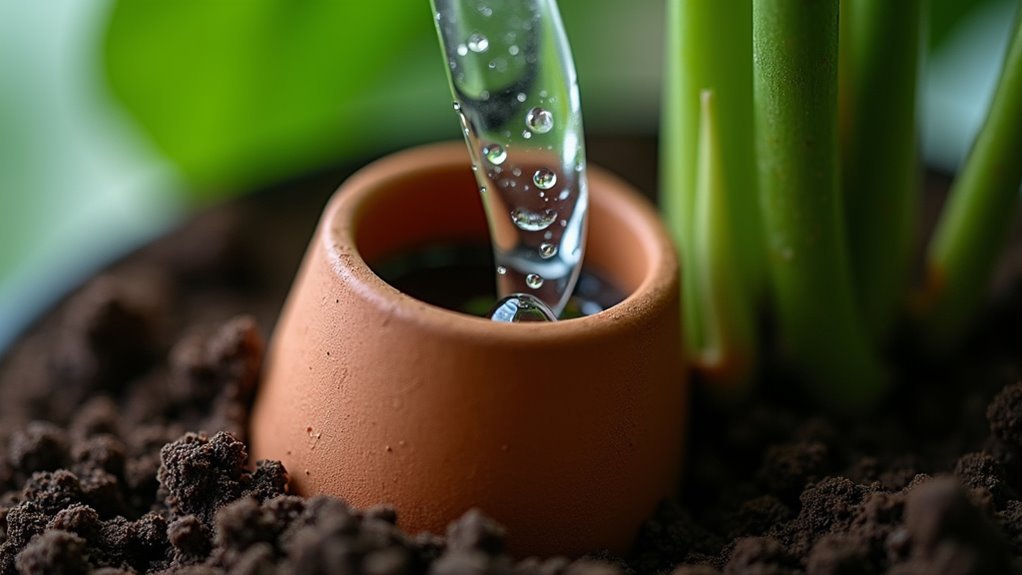
When soil moisture levels drop, terracotta self-watering systems automatically spring into action, releasing stored water through their naturally porous walls.
You’ll find this self-watering system works seamlessly by responding to your plant’s actual water needs rather than following a rigid schedule.
The terracotta material creates a natural moisture-sensing mechanism. As your soil dries out, it draws water through the porous walls of the spike or globe.
When soil becomes adequately moist, the flow automatically slows or stops, preventing overwatering damage.
You simply fill the reservoir with up to 12 ounces of water and insert it 2-3 inches deep into your plant’s soil.
The system then maintains ideal soil moisture levels for weeks, creating a balanced hydration cycle that promotes healthy root development without constant monitoring.
Benefits of Automated Plant Hydration
You’ll experience consistent moisture delivery that maintains ideal soil hydration levels without the guesswork of manual watering.
Your watering frequency drops dramatically, allowing you to go up to four weeks between refills while your plants thrive.
This precision approach enhances your plants’ longevity by preventing the stress cycles caused by overwatering and underwatering.
Consistent Moisture Delivery
Since maintaining the perfect balance between too much and too little water proves challenging for most plant owners, automated hydration systems eliminate this guesswork by delivering consistent moisture directly to your plants’ roots.
You’ll never have to worry about overwatering or underwatering again, as these systems maintain optimal soil moisture levels automatically.
Self-watering systems work continuously to monitor your plants’ hydration needs, adjusting water delivery based on environmental conditions and plant requirements.
This precision approach guarantees your indoor plants receive exactly what they need, when they need it.
The consistent moisture delivery creates ideal growing conditions that support healthier development and considerably extend plant lifespan.
You’re fundamentally providing your plants with a steady, reliable water source that mimics nature’s perfect timing.
Reduced Watering Frequency
Beyond providing steady moisture, automated hydration systems dramatically cut down how often you’ll need to water your plants.
Self-watering systems can keep your plants thriving for up to four weeks without any intervention from you. This extended care period transforms your plant maintenance routine, eliminating the stress of daily or weekly watering schedules.
The built-in reservoir technology gradually releases water as your plants need it, perfectly matching their watering needs without your constant attention.
You’ll save significant time and effort, especially during busy periods or when traveling. These systems prove invaluable for people with demanding schedules who still want to enjoy healthy indoor plants.
The consistent water delivery prevents the fluctuating moisture levels that often stress plants in traditional watering methods.
Enhanced Plant Longevity
When plants receive consistent, ideal hydration through automated systems, their lifespans increase markedly compared to traditionally watered specimens. Self-watering technology guarantees your plants maintain ideal moisture levels without the stress of irregular watering patterns.
| Plant Type | Traditional Care Lifespan | Self-Watering System Lifespan |
|---|---|---|
| Easyplants | 6 months | 36 months |
| Indoor Herbs | 3 months | 18 months |
| Houseplants | 12 months | 72 months |
You’ll eliminate the primary causes of plant mortality—overwatering and underwatering—that create unnecessary stress. The LetPot system’s customizable schedules enhance water absorption while maintaining consistent soil moisture. This automated approach reduces plant mortality risks considerably, as your plants won’t experience the shock of inconsistent care that typically shortens their lives.
Choosing Between Watering Spikes and Globes
How do you decide between watering spikes and globes for your indoor plants? Understanding their key differences will help you make the right choice for your specific needs.
Key differences to evaluate:
- Setup and convenience – Watering spikes need a separate glass or plastic bottle as a reservoir, while watering globes come ready to use as an all-in-one solution that directly holds water.
- Coverage and frequency – Spikes deliver moisture more slowly and may require multiple units for even coverage, whereas globes provide consistent hydration from a single unit and can last up to 4 weeks between refills.
- Plant compatibility – Spikes work better for larger plants, while globes offer versatility for various indoor plant types and sizes.
Setting Up Your Self-Watering Device
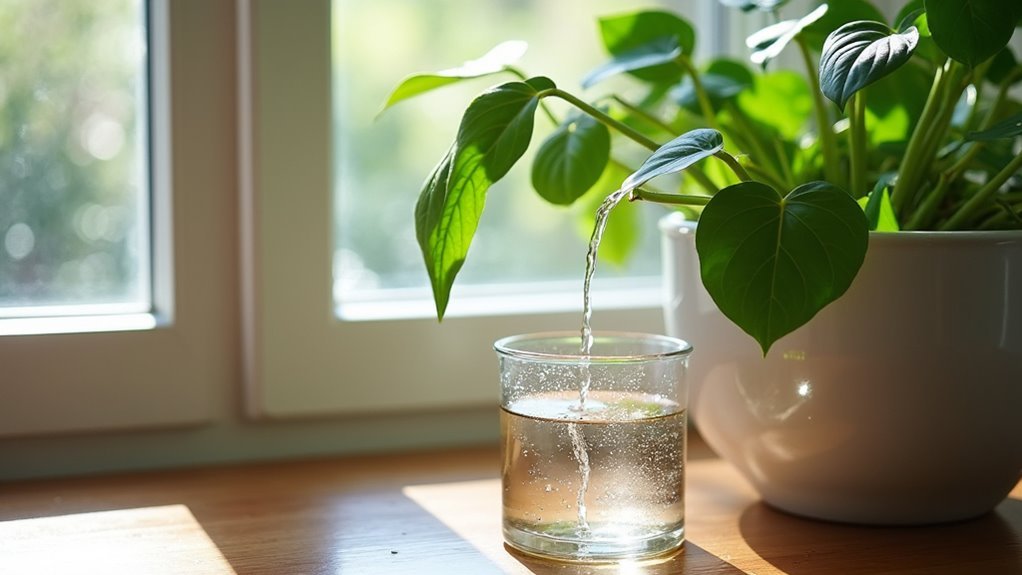
You’ll need to select the appropriate system type based on your plant’s specific watering needs and pot size.
Next, prepare your plants by checking soil moisture levels and ensuring containers have proper drainage before installation.
Finally, you’ll configure an effective watering schedule by determining how often to refill the device based on your plant’s water consumption rate.
Choose Right System Type
Selecting the appropriate self-watering system depends on your plant’s specific needs and your maintenance preferences.
You’ll want to evaluate several key factors to guarantee your chosen system delivers consistent hydration while fitting your lifestyle.
Consider these essential features when choosing your self-watering system:
- Material composition – Opt for eco-friendly terracotta spikes or globes that release water gradually as the soil dries, providing natural moisture regulation.
- Reservoir capacity – Select containers holding up to 12 ounces for extended hydration lasting up to four weeks.
- Refill convenience – Choose systems allowing easy refilling without soil removal, simplifying maintenance for busy schedules.
The right self-watering system will match your plant’s water requirements while reducing your daily maintenance tasks through efficient, automated moisture delivery.
Prepare Plants and Containers
Three essential steps will guarantee your self-watering device operates at peak performance from day one.
First, select pots with proper drainage holes to prevent water accumulation that causes root rot. Without drainage, your self-watering system can’t function effectively, creating soggy conditions harmful to plant roots.
Next, insert your self-watering spike or globe 2-3 inches deep into the soil. This depth guarantees ideal water distribution throughout the root zone. The porous terracotta material will release water gradually as the soil dries out, maintaining consistent hydration.
Finally, fill your device with water and match its capacity to your plant’s needs. Larger reservoirs holding up to 12 ounces can sustain plants for four weeks, while smaller systems work better for less thirsty species.
Configure Watering Schedule
Once your self-watering device is properly positioned, configuring the ideal watering schedule becomes the key to maintaining healthy plants without constant supervision.
The LetPot system lets you customize watering frequencies and durations through its mobile app, ensuring each plant receives precisely what it needs.
Here’s how to optimize your watering setup:
- Set individual schedules – Adjust intervals for each of your up to 20 plants based on their specific water requirements.
- Monitor water level alerts – Enable real-time notifications to prevent dehydration or overflow situations.
- Fine-tune drippers – Customize each dripper’s flow rate to match your plants’ unique hydration needs.
The system’s anti-backflow valve and dry-run protection provide reliable operation while you maintain complete remote control over soil moisture management.
Reservoir Capacity and Duration Guidelines
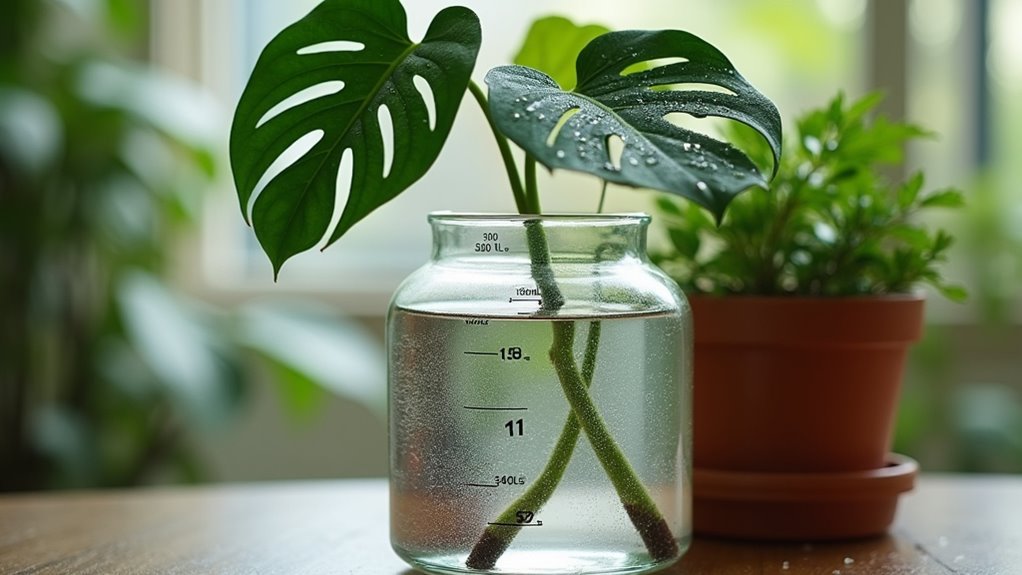
When choosing a self-watering system for your indoor plants, you’ll need to take into account reservoir capacity and watering duration to guarantee ideal plant health.
Most systems feature a reservoir that holds up to 12 ounces of water, providing consistent hydration through porous terracotta materials that gradually release moisture into the soil.
You can expect your self-watering system to maintain proper moisture levels for up to 4 weeks, making it perfect for busy schedules or vacation periods.
This extended duration allows you to reduce plant care frequency considerably while conserving water by up to 70%.
The key is ensuring your reservoir capacity matches your plants’ water requirements and the duration you’ll be away from home.
Best Plants for Self-Watering Systems
Now that you understand how reservoir capacity affects watering duration, selecting the right plants becomes your next priority for self-watering success.
Not all indoor plants adapt equally well to automated watering, so you’ll want to choose varieties that complement these systems perfectly.
Success with automated watering depends entirely on matching your plant selections to the system’s consistent moisture delivery capabilities.
The best candidates for self-watering systems include:
- Low-maintenance plants – Succulents and cacti thrive with minimal moisture requirements, making them perfect for forgetful gardeners who need reliable watering solutions.
- Moisture-loving herbs – Basil and mint flourish with consistent hydration that self-watering systems provide, ensuring healthy growth without overwatering risks.
- Humidity-dependent varieties – Ferns, peace lilies, and spider plants benefit from steady soil moisture, promoting vibrant foliage and robust growth through automated watering.
Preventing Overwatering With Precision Control
While selecting compatible plants sets the foundation for automated watering success, mastering precision control prevents the most common pitfall that destroys indoor gardens: overwatering.
The LetPot Automatic Watering System 2.0 eliminates guesswork through customizable schedules that optimize water absorption for each plant’s specific needs. You’ll receive real-time water level monitoring with low-level alerts, preventing excessive reservoir refills that lead to overwatering.
The system’s dry-run protection automatically halts operation when water runs low, safeguarding your plants from damage. With capacity for 20 plants simultaneously, you can tailor individual watering cycles and adjust flow rates precisely.
The anti-backflow valve protects against contamination while ensuring excess water doesn’t compromise soil health in your watering system.
Eco-Friendly Materials and Sustainability
You’ll appreciate that self-watering systems made from biodegradable terracotta offer significant environmental advantages over plastic alternatives.
These eco-friendly materials naturally break down over time, reducing your carbon footprint while providing precision hydration that conserves water by up to 70%.
The porous terracotta construction creates sustainable watering solutions that eliminate overwatering risks and support long-term plant health without frequent intervention.
Terracotta Material Benefits
When selecting materials for your self-watering system, terracotta stands out as an exceptional eco-friendly choice that delivers both performance and sustainability.
This naturally occurring clay material brings remarkable benefits to your plant watering routine while supporting environmental conservation.
Here’s why terracotta excels for self-watering systems:
- Water efficiency – Its porous structure releases water efficiently, reducing consumption by up to 70% while ensuring consistent moisture delivery.
- Eco-friendly composition – Being naturally biodegradable, terracotta minimizes your carbon footprint compared to plastic alternatives.
- Long-lasting durability – The shatter-resistant design eliminates frequent replacements, promoting sustainable gardening practices.
Sustainable Watering Solutions
Beyond terracotta’s individual advantages, sustainable watering solutions represent a thorough approach to eco-conscious plant care that transforms how you nurture your indoor garden.
You’ll reduce water consumption by up to 70% through precision hydration while keeping your plants healthier with minimal environmental impact. These biodegradable systems eliminate plastic waste and support conservation efforts through renewable materials.
Your watering frequency drops dramatically—some devices provide moisture for four weeks straight. You’re not just maintaining plants; you’re contributing to broader sustainability goals.
The combination of reduced water waste, eco-friendly materials, and efficient delivery creates a responsible gardening approach that benefits both your indoor plants and the environment simultaneously.
Maintenance and Cleaning Your System
Although self-watering systems are designed for convenience, they still require regular maintenance to function properly and keep your plants healthy.
Proper cleaning and upkeep guarantee peak water flow and prevent issues that could harm your plants.
Here’s your essential maintenance routine:
- Check the water reservoir monthly – Keep it filled and inspect for any debris or algae growth that might affect performance.
- Clean components every few months – Use mild soap solution or vinegar to clean the reservoir, tubing, and drippers, then rinse thoroughly to remove residues.
- Inspect for clogs regularly – Examine drippers and tubing for blockages that could cause inconsistent watering, leading to plant stress.
Always follow manufacturer instructions for specific maintenance schedules to maximize your system’s lifespan.
Troubleshooting Common Watering Issues
Even the best self-watering systems can encounter problems that affect your plants’ health.
You’ll need to address overwatering issues, diagnose inadequate water flow, and perform regular maintenance to keep everything running smoothly.
Let’s examine these common challenges and learn how to fix them quickly.
Overwatering Prevention Methods
While self-watering systems offer excellent convenience, they can sometimes deliver too much moisture and harm your plants just as severely as drought conditions.
Effective overwatering prevention requires strategic planning and the right equipment that slowly release water based on your plants’ actual needs.
Here are three essential methods to prevent overwatering:
- Install drainage holes in all containers to eliminate water accumulation that suffocates roots and promotes dangerous fungal growth.
- Use moisture meters to check soil conditions accurately before watering, ensuring you only add water when plants actually need it.
- Add Terra-Sorb crystals to your soil mix to maintain consistent hydration levels while reducing watering frequency and preventing waterlogging issues.
Inadequate Water Flow
Beyond preventing excess water, you’ll sometimes face the opposite problem where your self-watering system doesn’t deliver enough moisture to keep your plants healthy.
Inadequate water flow typically stems from blockages in your delivery system when soil particles clog spike or globe openings. You’ll need to insert watering spikes 2-3 inches deep to guarantee proper water release as your plants need moisture.
Overly compacted soil restricts flow, so use well-aerated potting mix for better drainage and moisture absorption.
Check terracotta spikes regularly for mineral buildup from hard water, which creates deposits that hinder flow through porous material.
Finally, consider your plant size—larger plants or bigger pots may require multiple spikes or globes for adequate hydration.
System Maintenance Tips
Since your self-watering system functions as an automated caretaker, you’ll want to establish a monthly maintenance routine to keep it operating at peak efficiency.
Regular upkeep prevents common issues and guarantees your plants receive consistent hydration.
Your maintenance checklist should include:
- Reservoir refilling – Check water levels monthly and top off as needed to maintain continuous operation.
- Cleaning watering spikes – Remove soil particles and debris that can clog delivery mechanisms and disrupt water flow.
- Environmental monitoring – Observe how quickly soil dries based on sunlight, temperature, and humidity changes.
Watch for overwatering signs like yellowing leaves or mold growth, which indicate excessive flow rates.
Adjust settings when plants aren’t receiving adequate moisture, as different species have unique hydration requirements that may need fine-tuning.
Comparing DIY Vs Commercial Solutions
When choosing between DIY and commercial self-watering solutions, you’ll need to weigh cost against convenience and reliability. DIY watering methods using wicking systems or repurposed bottles offer budget-friendly customization but demand more monitoring and effort. Commercial self-watering systems provide precision hydration lasting up to four weeks without intervention, perfect for busy schedules or vacations.
| Feature | DIY Solutions | Commercial Systems |
|---|---|---|
| Cost | Low-cost, budget-friendly | Higher upfront investment |
| Maintenance | Requires frequent monitoring | Minimal intervention needed |
| Water Efficiency | Variable effectiveness | Up to 70% water conservation |
| Durability | Limited lifespan | Shatter-resistant, long-lasting materials |
Commercial products feature built-in reservoirs and ideal water release mechanisms, reducing overwatering risks. While DIY options allow creativity, commercial systems deliver superior reliability and time-saving benefits for effortless plant care.
Cost-Effective Plant Care for Busy Lifestyles
While traditional plant care demands daily attention and frequent watering schedules, self-watering systems transform your approach to indoor gardening by delivering maximum efficiency with minimal effort.
These innovative solutions perfectly complement your hectic schedule while keeping your plants thriving.
You’ll discover significant advantages that make self-watering systems essential for modern living:
- Water Conservation: Save up to 70% more water compared to traditional methods, reducing utility costs substantially.
- Extended Care Duration: Large 12-ounce reservoirs provide hydration for up to 4 weeks without intervention.
- Precision Hydration: Eliminate costly plant replacements by preventing overwatering and underwatering damage.
The eco-friendly terracotta materials guarantee sustainable gardening practices while maintaining ideal soil moisture.
You’ll enjoy healthier plants without sacrificing your busy lifestyle or breaking your budget.
Vacation Plant Care Strategies
Extended trips no longer mean returning home to wilted or dying plants when you implement strategic vacation care solutions. Self-watering systems like terracotta spikes and globes provide up to four weeks of hydration, making them perfect for extended vacation care.
Before departing, use a measuring cup to determine each plant’s precise water requirements. This guarantees your self-watering systems deliver appropriate amounts throughout your absence.
| Strategy | Duration | Setup Time | Cost |
|---|---|---|---|
| Terracotta spikes | 2-4 weeks | 5 minutes | Low |
| Water globes | 1-2 weeks | 2 minutes | Low |
| Wicking systems | 2-3 weeks | 10 minutes | Very low |
| Terra-Sorb crystals | 3-4 weeks | 15 minutes | Medium |
Additionally, relocate plants to shaded areas and consider moisture-retaining additives like Terra-Sorb crystals for enhanced water retention during longer absences.
Maximizing Plant Health With Consistent Moisture
Since maintaining ideal moisture levels forms the foundation of thriving indoor plants, you’ll discover that consistent hydration prevents the stress cycles that weaken plant immunity and stunt growth.
Self-watering systems deliver precision hydration by automatically releasing water based on your plants’ specific needs, eliminating the guesswork that leads to overwatering or dehydration.
Self-watering systems eliminate watering guesswork by automatically delivering precise hydration based on your plants’ specific moisture requirements.
These innovative solutions create superior plant health through three key benefits:
- Prevention of root rot – Controlled water release stops waterlogged soil conditions
- Elimination of drought stress – Continuous moisture availability prevents wilting and leaf damage
- Enhanced nutrient absorption – Steady hydration improves your plants’ ability to uptake essential minerals
You’ll notice stronger growth patterns, vibrant foliage, and improved resistance to pests when your plants receive this consistent care.
Frequently Asked Questions
How to Self Water Indoor Plants While on Vacation?
You’ll want to insert self-watering spikes or terracotta globes 2-3 inches deep into your soil. Fill them with water before leaving—they’ll gradually release moisture for up to four weeks while you’re away.
How Do You Make a Self-Watering System for Indoor Plants?
You’ll create a wick system by placing an absorbent string between a water container and your plant’s soil. Alternatively, you can invert a plastic bottle with holes into the soil for gradual water release.
Are Self-Watering Pots Good for Indoor Plants?
You’ll find self-watering pots excellent for indoor plants since they prevent overwatering, maintain consistent moisture, and reduce your maintenance time. They’re particularly beneficial if you travel frequently or have busy schedules.
What Are the Disadvantages of Automatic Plant Watering System?
You’ll face high upfront costs, ongoing maintenance needs, and potential technology failures. These systems can’t customize watering for all plant types and risk overwatering if you don’t set them up properly.

Leave a Reply