

You’ve probably experienced the frustration of harsh overhead lighting that can’t adapt to your changing needs throughout the day. Whether you’re trying to create a cozy evening atmosphere or need focused light for detailed work, traditional lighting setups often fall short. There’s a sophisticated approach that transforms any space into a perfectly illuminated environment, and it doesn’t require expensive renovations or complex installations to achieve remarkable results.
Layer Different Light Sources Throughout Your Space
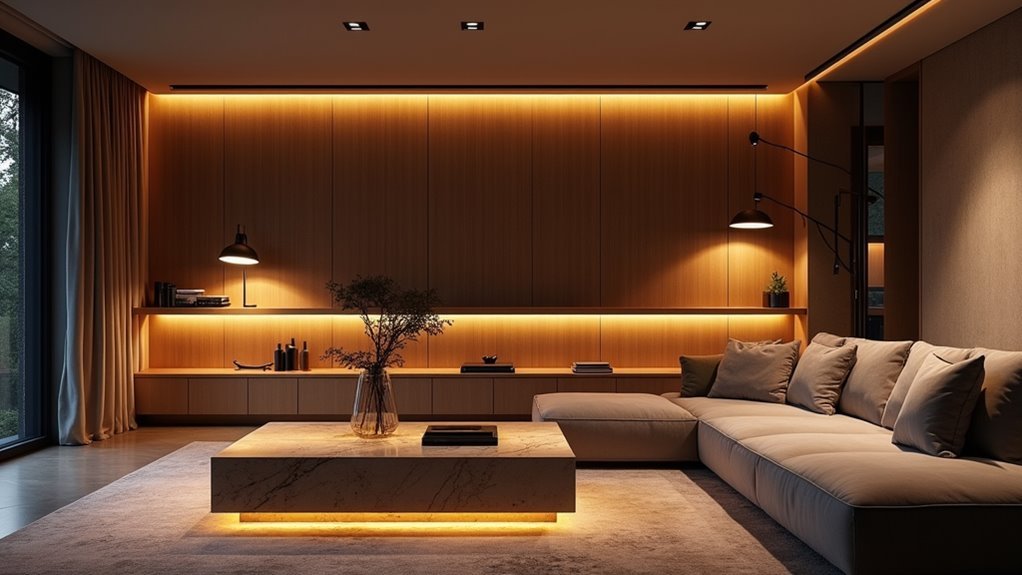
While a single overhead light might seem sufficient, you’ll achieve far superior results by layering different light sources throughout your space.
Effective layered lighting combines ambient lighting for general illumination, task lighting for specific activities, and accent lighting for visual interest. This lighting design approach involves strategically placing various lighting fixtures at different heights—think pendant lights, wall sconces, and floor lamps working together.
Modern energy-efficient lighting options make it cost-effective to implement multiple sources.
Smart home technology elevates your lighting schemes further, allowing you to adjust lighting levels automatically based on time or activity. Dimmable fixtures provide additional flexibility, letting you modify brightness as needed.
This thorough approach eliminates harsh shadows and glare while creating depth and functionality throughout your room.
Program Automated Scenes for Every Activity
Once you’ve established multiple light sources, programming automated scenes alters your lighting system into a dynamic tool that adapts to your daily activities.
Smart home technology enables you to create customized lighting schemes that enhance both functionality and atmosphere throughout your space.
Smart lighting technology transforms ordinary spaces into adaptive environments that seamlessly blend practical illumination with personalized ambiance.
These automated scenes offer thorough lighting solutions for specific activities:
- Task-focused settings adjust brightness and color temperature for reading, cooking, or working
- Entertainment modes create ambient overall illumination perfect for hosting guests
- Relaxation scenes utilize dimming capabilities for gradual evening adjustments
- Energy-efficient scheduling aligns with natural light patterns to optimize consumption
- Occupancy-based automation guarantees proper lighting when rooms are in use while conserving energy in unoccupied areas
This intelligent approach maximizes energy efficiency while delivering perfect illumination for every situation.
Install Smart Controls and Motion Sensors
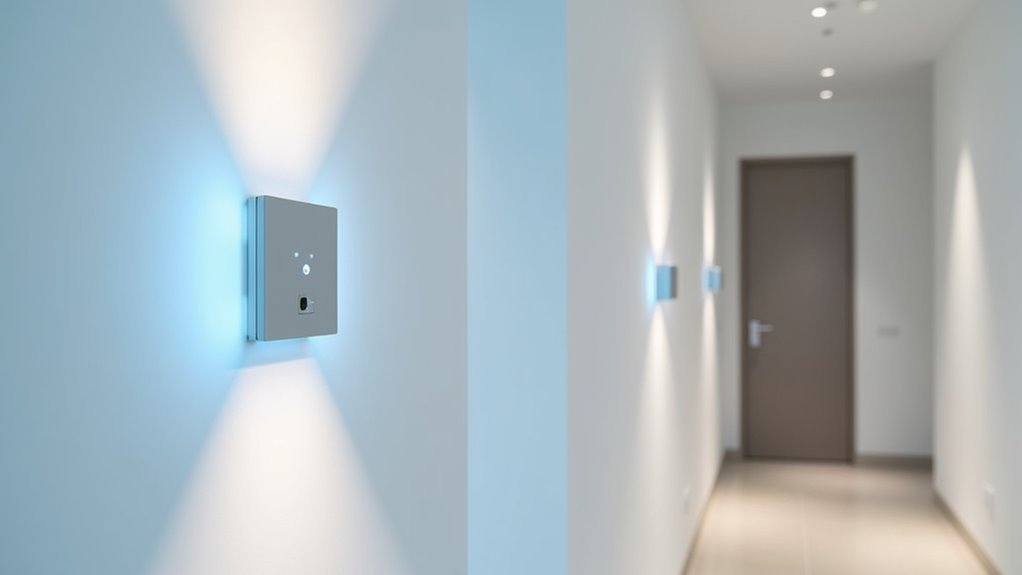
Smart controls and motion sensors transform your automated lighting scenes into a truly hands-free experience that responds intelligently to your presence and behavior.
You’ll achieve superior energy efficiency by strategically placing motion sensors in high-traffic areas, ensuring lights activate only when needed to reduce energy waste. These smart controls enable automated adjustments based on time of day while allowing you to customize lighting through mobile apps or voice commands.
Advanced motion sensors distinguish between different movement types, creating tailored responses like dimming lights during quiet activities. This intelligent activation greatly extends the lifespan of lighting fixtures by minimizing unnecessary operation.
You’ll enhance user comfort while managing multiple lighting scenes simultaneously, creating a seamless environment that adapts to your lifestyle without manual intervention.
Frequently Asked Questions
What Is the 5 7 Lighting Rule?
You should place a light source every 5-7 feet throughout your space to guarantee even illumination. This rule helps you avoid dark spots and creates balanced lighting by properly spacing fixtures in larger rooms.
What Is the Golden Rule of Lighting?
You’ll achieve perfect lighting by layering three types: ambient, task, and accent lighting. This golden rule creates balanced, functional spaces with depth and visual interest while eliminating harsh shadows and glare throughout your room.
What Are the 7 Steps in the Lighting Design Process?
You’ll start by planning and drafting, identify room functions, choose appropriate fixtures, plan sockets and circuits, consult professionals for installation, conduct final checks, and guarantee compliance with electrical codes.
What Are the Factors to Be Considered for a Good Lighting Scheme?
You’ll need to contemplate three lighting types, color temperature for mood, dimming capabilities, proper fixture placement and height, plus natural light direction to create a functional, adaptable scheme.



Leave a Reply