
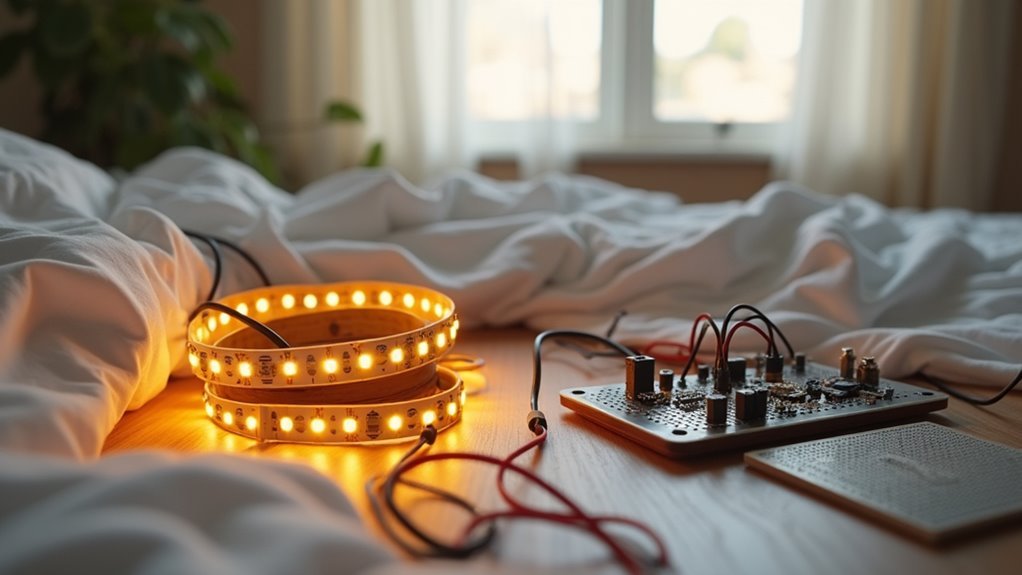
You’ve probably experienced those jarring mornings when your alarm clock rips you from deep sleep, leaving you groggy and disoriented for hours. There’s a better way to wake up that works with your body’s natural rhythms instead of against them. By creating your own sunrise alarm system, you’ll transform those brutal wake-ups into gentle shifts that leave you feeling refreshed and alert. The secret lies in understanding how light triggers your biological clock.
Understanding How Light Affects Your Sleep-Wake Cycle

Although you mightn’t realize it, light acts as a powerful conductor orchestrating your body’s internal clock every single day. Your circadian rhythm depends entirely on light exposure to regulate your sleep-wake cycle effectively.
Light silently conducts your body’s symphony, orchestrating your internal clock through carefully timed exposure that regulates your natural sleep-wake rhythm.
When morning light hits your eyes, it suppresses melatonin production, naturally boosting alertness and triggering serotonin release for improved mood.
Without adequate natural sunlight, especially during darker months, you’re at risk for seasonal affective disorder and disrupted sleep patterns. This is where sunrise alarm clocks become invaluable tools. They deliver gradual brightness increases that mimic natural dawn, helping synchronize your internal clock.
The simulated sunrise gently guides your body from sleep to wake, reducing morning grogginess while supporting healthy circadian rhythm function.
Choosing Between Dedicated Sunrise Clocks and Smart Bulb Solutions
When you’re ready to invest in a sunrise alarm solution, you’ll face a fundamental choice between dedicated sunrise clocks and smart bulb systems.
Dedicated sunrise alarm clocks, like the Philips SmartSleep Wake-Up Light, offer gradual light intensity specifically designed to wake you from deep sleep cycles. They include built-in sound alarm options and nature sounds, providing simplicity and ease of use without requiring apps or technical setup.
Smart bulbs offer customizable wake-up routines through smartphone apps, but they’ll need compatible smart home systems. While they’re flexible, brightness levels may vary, and you’ll rely on separate devices for sounds.
If you prioritize straightforward controls and effective wake-up lighting, dedicated clocks excel. Choose smart bulbs if you want integration with existing smart home setups.
Setting Up Your DIY Smart Bulb Sunrise System

If you’ve decided that smart bulbs fit your needs better than a dedicated sunrise clock, you’ll need to set up the system properly to get the most natural wake-up experience. Start by downloading the Smart Life app and creating an account for seamless control.
| Step | Action | Details |
|---|---|---|
| 1 | Install bulbs | Place smart bulbs in bedroom lamps in pairing mode |
| 2 | Set brightness | Program gradual increase from low to desired level over 30 minutes |
| 3 | Adjust colors | Start with warm oranges, shift to bright whites |
| 4 | Schedule routine | Set daily or specific day repetition through the app |
This sunrise light routine mimics natural morning progression, supporting your circadian rhythm with controlled color temperature changes for an ideal wake-up experience.
Programming Custom Wake-Up Light Schedules
Once you’ve got your smart bulb system installed, you’ll want to create personalized wake-up schedules that match your unique routine.
Start by determining your wake-up time and programming your lights to gradually brighten over 5-60 minutes for natural sunrise simulation. Most apps offer customizable brightness levels, so adjust intensity based on your room’s conditions and preferences.
Program your lights to gradually brighten over 5-60 minutes, adjusting intensity based on your room’s specific conditions and personal preferences.
Create thorough bedtime routines by programming lights to dim gradually while adding soothing sounds for better sleep shifts.
Set multiple alarms for different days to accommodate varying schedules. Smart home devices like Philips Hue integrate seamlessly, allowing you to coordinate your wake-up lighting with other morning automations.
These personalized schedules guarantee your DIY sunrise alarm perfectly matches your lifestyle while delivering consistent, gentle mornings.
Optimizing Your Sunrise Alarm for Maximum Effectiveness

Having your personalized wake-up schedules in place sets the foundation for getting the most out of your sunrise alarm system.
To maximize effectiveness, you’ll want to adjust the brightness settings so your sunrise clock can gradually increase illumination over 30 minutes, mimicking natural dawn. This suppresses melatonin production and reduces grogginess.
Customize your alarm sound by choosing soothing tones or nature sounds instead of jarring beeps. Maintain a consistent wake-up time to align with your circadian rhythm and improve sleep quality.
Experiment with sunrise duration settings between 5-60 minutes to find your ideal setting. Consider thoughtful extras like guided breathing exercises through compatible apps to enhance your bedtime routine and overall sleep experience.
Frequently Asked Questions
Do Sunrise Alarms Really Help?
Yes, sunrise alarms really help you wake up more naturally by gradually increasing light, which boosts serotonin and reduces grogginess. You’ll feel more energized and less likely to hit snooze.
What Is the Healthiest Alarm to Wake up To?
You’ll wake up healthiest with a sunrise alarm that gradually increases light over thirty minutes, mimicking natural sunlight. It regulates your circadian rhythms, boosts serotonin production, and reduces grogginess better than traditional alarms.
Can You Use a Smart Bulb as a Sunrise Alarm?
You can use smart bulbs as sunrise alarms by programming them to gradually brighten over time. They’re customizable, cost-effective alternatives to dedicated sunrise clocks, and integrate with voice assistants for easy control.
What Is the Best Alarm Clock for Sunrise?
You’ll find the Philips SmartSleep Wake-Up Light HF3520 works best, offering effective sunrise simulation with five pleasant alarm sounds and backup power. It’s highly recommended for reliable performance and enhanced morning experiences.

Leave a Reply