
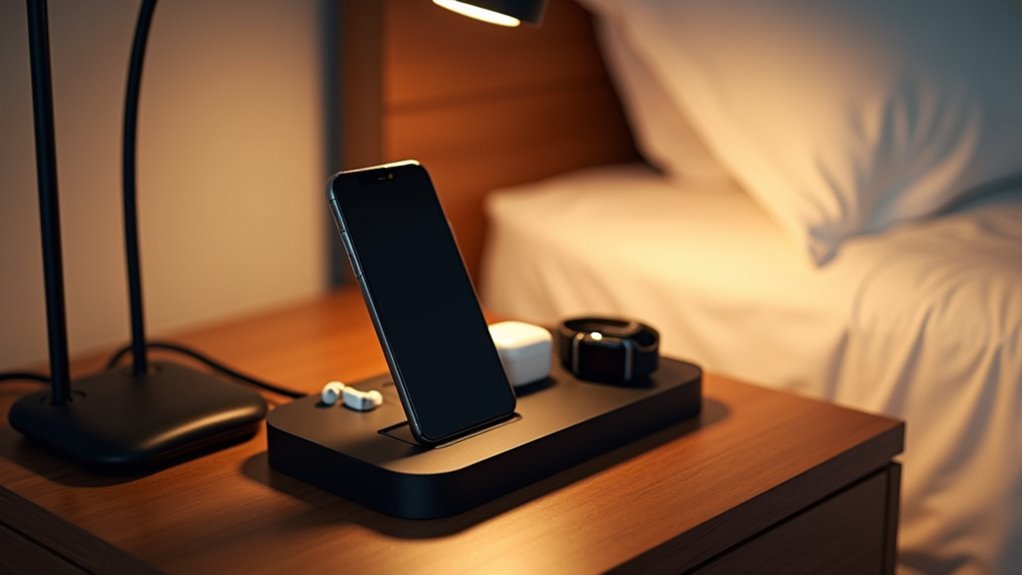
You’ve probably tried countless sleep solutions – from white noise machines to temperature-regulating mattresses – yet still wake up feeling unrested. Your bedside hub consolidates these fragmented approaches into one intelligent system that monitors your sleep patterns while automatically adjusting your environment throughout the night. Unlike standalone devices that only address single issues, this technology creates a thorough sleep ecosystem that adapts to your unique needs, but there’s more to reflect upon before making the investment.
Advanced Sleep Monitoring Technology That Works While You Rest
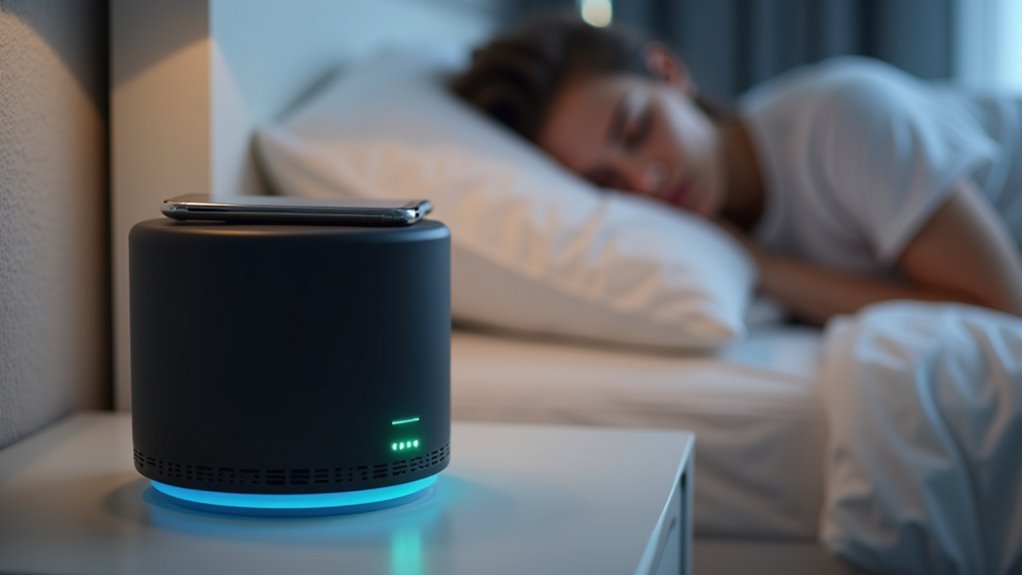
While traditional sleep trackers require you to wear devices or place sensors under your mattress, the Nest Hub revolutionizes sleep monitoring through its contactless Soli radar technology.
The second-generation Nest Hub’s Sleep Sensing feature tracks your movements and respiratory rates without physical contact, eliminating the discomfort of wearables.
This advanced radar technology monitors environmental factors like light and temperature while detecting disturbances such as snoring and coughing.
You’ll receive thorough insights into your sleep quality and sleep duration through the Google Fit app. The system provides personalized recommendations based on your tracked metrics, helping you optimize your sleep habits.
Google’s sleep tracking accuracy matches clinical-grade devices, with no statistical difference from polysomnography labs in sleep duration reporting.
Environmental Controls That Automatically Optimize Your Bedroom
Your bedroom’s environment plays an essential role in sleep quality, and smart devices can automatically maintain ideal conditions throughout the night. Smart thermostats adjust temperature control to the preferred 60-67°F range, responding to your sleep stages and habits. Smart humidifiers maintain humidity levels between 40-60%, preventing dryness that disrupts rest. Meanwhile, air quality improves through smart purifiers that continuously remove allergens and pollutants.
| Smart Home Device | Environmental Factors | Sleep Benefits |
|---|---|---|
| Smart Thermostat | Temperature 60-67°F | Deeper sleep cycles |
| Smart Humidifier | Humidity 40-60% | Reduced throat dryness |
| Smart Air Purifier | Air quality monitoring | Fewer allergen disruptions |
| Smart Mattress Pad | Individual temperature | Couple comfort optimization |
| Environmental Hub | All factors combined | Actionable insights for improvement |
These devices provide actionable insights, helping you understand which environmental factors most impact your sleep quality.
Smart Integration With Your Existing Sleep Setup
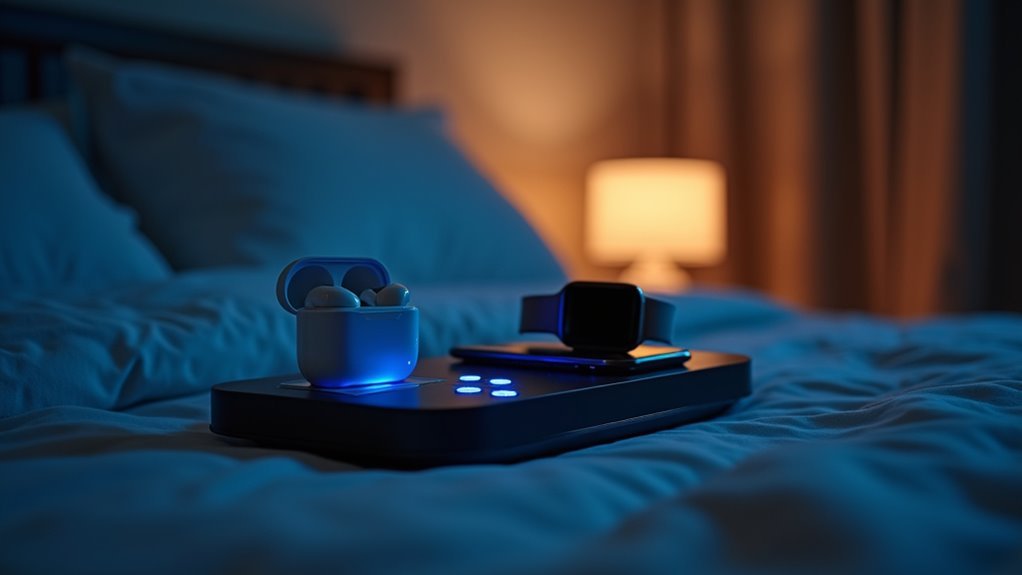
Since most people already own some smart home devices, the Nest Hub’s greatest strength lies in its ability to unify your existing sleep setup into one intelligent system.
Through smart integration, your thermostats, lights, and air purifiers work together seamlessly to enhance sleep quality. The device’s environmental monitoring automatically coordinates these smart devices, creating ideal bedroom conditions without manual intervention.
Your sleep metrics get tracked and analyzed through the Google Fit app, which delivers personalized recommendations based on your patterns.
This integration respects your privacy by operating without cameras while still providing accurate insights. Whether it’s dimming lights, adjusting temperature, or reducing noise levels, your connected devices now work as one cohesive sleep enhancement system that adapts to your specific needs.
Personalized Sleep Insights and Data-Driven Recommendations
Your Nest Hub doesn’t just collect sleep data—it transforms those nightly measurements into actionable intelligence through sophisticated analytics that reveal patterns you’d never notice on your own.
The device acts as your personal sleep coach, analyzing weeks of movement, breathing, and environmental data to deliver customized recommendations that address your specific sleep challenges.
You’ll receive targeted advice on ideal bedtimes, sleep duration adjustments, and environmental tweaks based on research-backed insights tailored to your unique sleep profile.
Smart Data Analytics
While traditional sleep tracking methods often leave you guessing about your nighttime patterns, smart bedside hubs transform raw sleep data into actionable intelligence through sophisticated analytics.
Your Google Nest Hub processes information from radar technology and environmental sensors, analyzing everything from movement patterns to room temperature fluctuations. This smart data analytics approach doesn’t just record when you’re asleep—it identifies specific factors affecting your sleep quality.
The continuous monitoring creates detailed reports that reveal correlations between environmental factors and your rest patterns.
You’ll receive personalized recommendations based on weeks or months of sleep tracking data, helping you understand why certain nights feel more restorative. This data-driven approach transforms your bedroom into an optimized sleep environment through intelligent insights.
Tailored Sleep Coaching
Beyond collecting and analyzing your sleep data, bedside hubs act as personal sleep coaches that deliver customized guidance based on your unique patterns.
Your Nest Hub transforms raw sleep tracking information into personalized insights that address your specific needs. After one week of monitoring, you’ll receive tailored recommendations to enhance your sleep quality. The coaching becomes even more precise after two weeks, offering specific bedtime suggestions based on your collected data.
Your hub continuously monitors environmental factors like temperature and light, providing targeted advice to optimize your sleep environment.
Through partnerships with organizations like the American Academy of Sleep Medicine, you receive research-backed sleep coaching that’s both scientifically sound and personally relevant to your habits.
Privacy-First Design Without Compromising Accuracy

You don’t need to sacrifice your privacy to get accurate sleep insights with the Nest Hub’s innovative approach.
The device monitors your sleep patterns without using a camera, relying instead on motion detection and environmental sensors to track your rest cycles.
All audio processing happens directly on your device rather than in the cloud, ensuring your personal sleep data stays private while delivering clinical-grade accuracy.
Camera-Free Sleep Monitoring
Privacy concerns rank among the top barriers preventing people from adopting sleep monitoring technology, but the Nest Hub addresses these worries head-on with its camera-free design.
You won’t find any visual recording capabilities that could compromise your bedroom privacy. Instead, the device leverages Project Soli radar technology and motion sensors for contactless sleep monitoring, tracking your breathing patterns and movements from a distance.
This camera-free approach doesn’t sacrifice accuracy – you’ll receive detailed insights into your sleep quality without feeling surveilled.
The Nest Hub processes your sleep data on-device, giving you complete control over data management. You can toggle sleep monitoring on or off whenever you choose, ensuring your comfort level always determines how much information you’re willing to share for better rest.
On-Device Audio Processing
While the camera-free design eliminates visual privacy concerns, the Nest Hub’s on-device audio processing takes your bedroom security even further. Your sensitive data, including snoring and coughing events, gets analyzed locally without cloud storage, ensuring complete privacy control.
The machine learning algorithms focus exclusively on sleep-related sounds while filtering out background noise from pets or partners. You’ll never worry about audio recordings being saved or uploaded—only sleep event data collection occurs.
| Privacy Feature | Function | User Benefit |
|---|---|---|
| On-Device Processing | Local audio analysis | No cloud data transmission |
| Hardware Switch | Physical tracking control | Complete user control |
| Visual Indicator | Active tracking display | Transparency in data collection |
| Sound Filtering | Sleep-specific detection | Accurate sleep tracking results |
This privacy-first approach delivers accurate sleep tracking without compromising your trust.
Voice Commands and Hands-Free Sleep Management
Three simple voice commands can transform your bedside hub into a powerful sleep management system that responds to your needs without requiring you to reach for buttons or screens.
This hands-free approach revolutionizes sleep management by letting you control your entire sleep environment through natural speech patterns.
Your voice commands grant extensive bedroom control:
Your voice commands grant extensive bedroom control, transforming simple speech into comprehensive sleep environment management.
- Ambient lighting adjustment – Dim or brighten lights to match your circadian rhythm
- Smart home devices integration – Control temperature, humidity, and air quality seamlessly
- Personalized sleep insights access – Query your sleep data without checking screens
- Motion Sense alarm dismissal – Wave your hand to stop alarms without disrupting your partner
This voice-activated ecosystem guarantees you’ll never need to fumble for controls during nighttime routines, maintaining your sleep environment’s tranquility while maximizing convenience.
Cost-Effective Alternative to Multiple Sleep Devices
When you consider the financial impact of building an extensive sleep optimization setup, a single Nest Hub at $99.99 delivers remarkable value by replacing multiple expensive devices.
This smart display consolidates sleep tracking, environmental monitoring, and temperature regulation into one cost-effective solution. You’ll eliminate the need for separate sleep trackers, smart thermostats, air quality monitors, and expensive smart mattresses that could cost hundreds or thousands of dollars combined.
The Nest Hub’s multi-functionality provides thorough sleep insights and automated data analysis comparable to specialized sleep products.
You’ll access actionable recommendations to improve sleep while controlling various smart home features from one device. This consolidation reduces both clutter and costs, making quality sleep optimization accessible without breaking your budget or overwhelming your bedside space.
Potential Drawbacks and Realistic Expectations
Despite the Nest Hub’s impressive capabilities, you’ll encounter several limitations that could impact your sleep optimization goals. Understanding these drawbacks helps set realistic expectations for your smart sleep investment.
Key concerns you should consider:
- Orthosomnia risks – Over-relying on sleep metrics can create anxiety about your sleep performance, potentially worsening sleep quality.
- Technical challenges – Connectivity issues and complex setup processes may disrupt your established bedtime routines.
- Privacy concerns – Your sensitive sleep data gets collected, stored, and potentially shared, requiring careful attention to security settings.
- Environmental impacts – Energy consumption and eventual electronic waste contribute to sustainability concerns.
While the Nest Hub offers valuable sleep insights, you shouldn’t expect miraculous overnight transformations. The device works best when combined with consistent sleep hygiene practices rather than serving as a standalone solution.
Frequently Asked Questions
Do Sleep Apps Improve Sleep Quality?
Sleep apps can improve your sleep quality by tracking patterns, providing personalized recommendations, and offering relaxation techniques. However, you shouldn’t obsess over metrics, as excessive monitoring might create anxiety about your sleep performance.
How Does My Watch Know I’m in Deep Sleep?
Your watch monitors your heart rate variability and movement patterns through accelerometers. When you’re in deep sleep, your heart rate becomes more stable and you move less, triggering the watch’s algorithms.
What Are the Disadvantages of Sleep Trackers?
You might develop orthosomnia, obsessing over sleep metrics instead of resting naturally. Privacy concerns arise from sensitive data collection, while setup complexity disrupts routines. High costs and limited scientific validation reduce their effectiveness.
How Does the Sleep Sensing on the Nest Hub 2nd Gen Work?
Your Nest Hub uses radar technology to detect your breathing, movement, and sleep patterns without touching you. It combines motion, light, and sound sensors to analyze your sleep quality and provide personalized recommendations.

Leave a Reply