

You’ve probably wondered why your smart doorbell sometimes misses visitors or alerts you about swaying trees. The answer lies in a sophisticated combination of heat detection technology and artificial intelligence that’s constantly analyzing your front door environment. While the basic concept seems straightforward, the actual mechanics involve multiple layers of sensors working together to distinguish between genuine human presence and false triggers—and understanding these systems will help you optimize your doorbell’s performance.
The Technology Behind Doorbell Motion Sensors
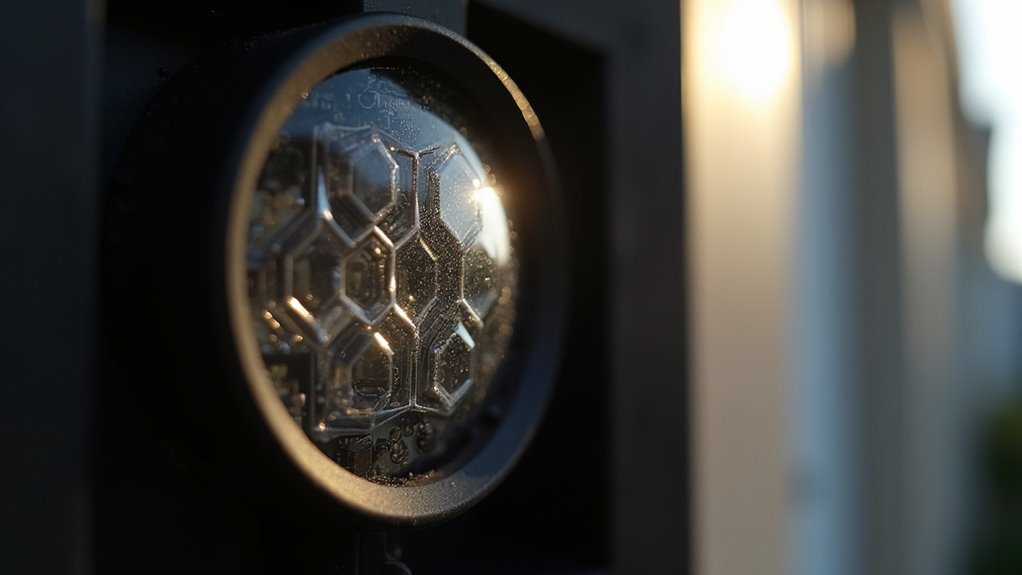
At the heart of every modern doorbell camera lies sophisticated motion detection technology that determines when someone approaches your door. Your doorbell’s motion sensor primarily relies on Passive Infrared (PIR) technology, which detects heat signatures emitted by warm bodies. When you walk within the sensor’s range, the PIR component identifies temperature changes in its field of view, triggering the initial detection process.
Most advanced doorbells don’t stop there. They employ a dual-trigger system where PIR activation prompts sophisticated video detection algorithms to analyze the captured footage. This secondary confirmation process helps distinguish between actual human movement and false triggers like swaying branches or small animals.
Some models integrate both detection methods simultaneously, optimizing performance across different weather conditions and lighting scenarios for reliable presence detection.
How Passive Infrared Detection Works in Smart Doorbells
Your smart doorbell’s PIR sensor detects the infrared radiation that your body naturally emits as heat, triggering motion alerts when it senses changes in the thermal patterns within its field of view.
The sensor’s ability to distinguish between different heat sources means it can effectively identify human movement while filtering out false triggers from smaller animals or moving objects.
However, you’ll find that environmental conditions like extreme temperatures, high humidity, or nearby heat sources can affect how well your PIR sensor performs its detection duties.
PIR Sensor Fundamentals
The heart of your smart doorbell’s motion detection lies in its Passive Infrared (PIR) sensor, a sophisticated yet elegantly simple device that monitors the invisible heat signatures around your front door.
PIR sensors work by detecting infrared radiation naturally emitted by warm objects, particularly human bodies. They don’t generate their own infrared signals—hence the “passive” designation.
Your doorbell’s PIR sensor contains two pyroelectric elements that create electrical signals when they detect temperature differences between stationary backgrounds and moving warm objects. When someone approaches your door, the sensor registers this heat pattern change and triggers motion detection.
These sensors typically cover 15-30 feet effectively while consuming minimal battery power. However, extreme temperatures, direct sunlight, and physical obstructions can impact their reliability and detection accuracy.
Heat Detection Mechanics
Building on this foundation, understanding exactly how your doorbell processes these infrared signals reveals the sophisticated mechanics behind seemingly instantaneous motion alerts.
Your doorbell’s Passive Infrared (PIR) technology operates through dual infrared sensors that constantly monitor heat signatures in their field of view. When you approach the door, your body heat creates a temperature differential between the two sensor elements, triggering motion detection.
This differential signal activates immediately as you move across the detection zones, typically effective within 10-30 feet depending on your model’s sensitivity settings. Your doorbell’s advanced algorithms then analyze these thermal patterns, distinguishing between human movement and environmental heat fluctuations like sunlight or small animals, ensuring you receive accurate alerts.
Environmental Impact Factors
While sophisticated algorithms excel at distinguishing human heat signatures from background thermal noise, environmental factors can greatly compromise your doorbell’s PIR detection accuracy.
Temperature fluctuations make it harder for your Passive Infrared (PIR) system to differentiate between humans and other heat sources, reducing reliability during extreme weather conditions.
Understanding how these sensors work helps you optimize placement and settings:
- Direct sunlight exposure creates false thermal readings that trigger unnecessary alerts
- Extreme cold or heat reduces the 20-foot detection range and sensor sensitivity
- Physical obstructions like walls, furniture, or landscaping block infrared radiation pathways
- Side-to-side motion detection works better than direct approaches toward your doorbell
Proper installation height, strategic angling, and minimizing heat source exposure considerably enhance your doorbell’s environmental performance and detection consistency.
Video Analysis and Human Shape Recognition
You’ll find that modern doorbell cameras use AI-powered shape recognition algorithms to identify human forms with remarkable precision.
This technology dramatically cuts down on false alerts by distinguishing between people and other moving objects like animals, swaying branches, or passing cars.
Your doorbell’s “People Only” mode leverages these advanced machine learning techniques to focus exclusively on detecting human presence while filtering out irrelevant environmental movements.
AI Shape Recognition
As doorbell cameras evolve beyond simple motion detection, AI shape recognition transforms how these devices identify and respond to human presence.
You’ll experience fewer false alerts since the technology differentiates between humans and non-human objects like vehicles or animals. The system processes visual data in real-time, analyzing predefined human features through advanced algorithms.
Your doorbell’s AI shape recognition capabilities include:
- Machine learning adaptation that improves accuracy by learning from your specific environment
- Infrared technology enabling reliable detection in low-light and nighttime conditions
- Customizable detection zones that respect your privacy preferences
- Real-time processing that immediately distinguishes between humans and other moving objects
This intelligent motion detection reduces annoying notifications while ensuring you’re alerted when actual visitors approach your door.
False Alert Prevention
Beyond basic motion detection, your doorbell camera’s video analysis engine works tirelessly to prevent the frustration of false alerts that plague traditional security systems.
The sophisticated system distinguishes between human shapes and non-human objects like swaying trees or passing animals through advanced machine learning algorithms. Your camera’s People Only mode specifically identifies human silhouettes and walking patterns, ensuring you’re only notified when actual people approach your door.
The dual verification system combines passive infrared sensors with video analysis, creating multiple checkpoints before triggering notifications. This layered approach dramatically reduces unnecessary alerts while maintaining reliable human detection.
Regular software updates continuously improve these recognition capabilities, adapting to diverse environmental conditions and enhancing accuracy across different lighting scenarios and weather patterns.
Environmental Factors That Affect Detection Performance

While doorbell cameras offer reliable presence detection in ideal conditions, several environmental factors can greatly impact their performance and accuracy.
Temperature fluctuations affect PIR sensors since they detect heat pattern changes, potentially causing false positives or negatives in extreme conditions. Weather elements like rain, snow, or fog reduce video clarity and motion detection sensitivity. Direct sunlight creates glare that hinders proper detection during certain daylight hours.
- Physical obstructions: Trees, furniture, or walls block the camera’s line of sight, reducing motion detection accuracy within the sensor’s range.
- Weather interference: Heavy precipitation and fog decrease video quality and trigger false alerts.
- Lighting challenges: Bright sunlight or artificial lighting causes glare, affecting detection performance.
- Installation positioning: Improper height and angle create blind spots, limiting the field of view.
Optimizing Sensitivity Settings for Better Accuracy
Once you’ve addressed environmental challenges, fine-tuning your doorbell camera’s sensitivity settings becomes the next critical step for achieving peak performance. Most devices offer multiple sensitivity levels, allowing you to customize detection range based on your specific environment.
| Setting Level | Best For | Detection Focus |
|---|---|---|
| High | Quiet residential streets | Maximum range coverage |
| Medium | Moderate traffic areas | Balanced detection |
| Low | High traffic zones | Close-range only |
Enable “People Only mode” when available, as this video detection technology focuses solely on human shapes and movements, considerably reducing false alerts from pets or vehicles. Remember to update your firmware regularly—manufacturers frequently release enhancements that improve detection capabilities. Don’t overlook camera placement either; ideal height and angle adjustments greatly impact your sensitivity settings’ effectiveness.
Strategic Placement for Maximum Coverage
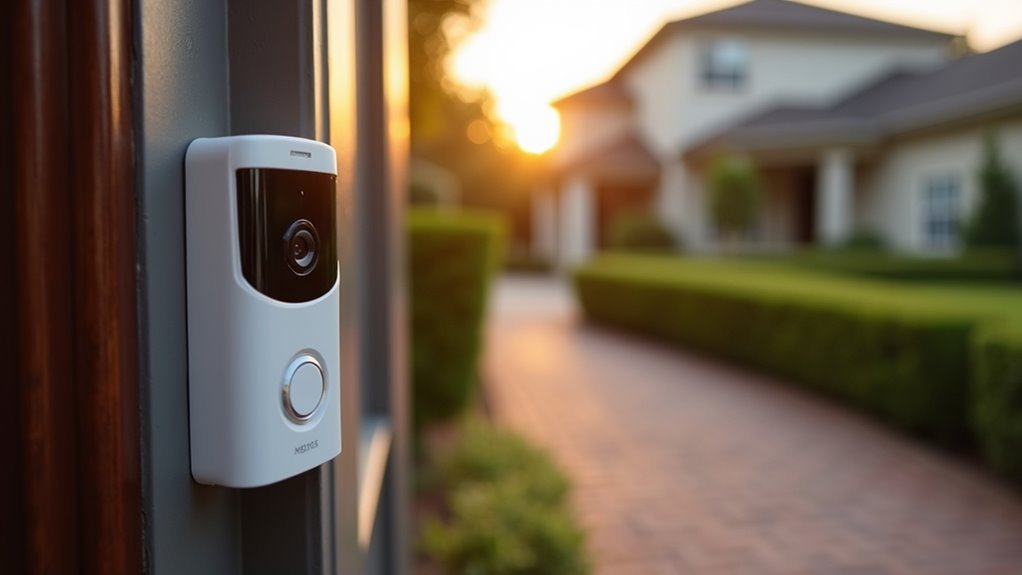
Where you position your doorbell camera determines everything from image clarity to detection accuracy. Strategic placement makes the difference between capturing clear visitor footage and missing essential details.
Your security cameras need proper positioning to maximize their motion detection capabilities and eliminate potential blind spots. The ideal installation height sits between 4 to 5 feet, perfectly capturing faces while avoiding common obstructions. Center your doorbell near the entrance for the widest possible field of view.
Optimal doorbell camera placement at 4-5 feet height with centered positioning ensures maximum facial recognition and comprehensive entrance coverage.
- Avoid direct sunlight and heavy shadows that impair video quality and detection accuracy
- Clear away foliage and objects that trigger false alerts from unnecessary movement
- Ensure unobstructed sight lines to walkways for early visitor detection
- Position centrally at entrance areas to maximize coverage and minimize blind spots
Troubleshooting Common Detection Issues
Even with proper placement, doorbell cameras sometimes fail to detect visitors or trigger false alerts that frustrate homeowners. When your motion detection isn’t working properly, start troubleshooting by examining environmental factors affecting your Passive Infrared (PIR) sensors. Temperature changes and nearby heat sources can reduce detection ranges considerably.
If you’re experiencing decreased sensitivity, reposition your doorbell to improve its line of sight and eliminate interference from physical barriers. You can also reset your device by holding the button for thirty seconds to resolve temporary glitches.
Access your mobile app’s settings and switch to “People Only” mode to filter out unwanted alerts from vehicles or animals. This adjustment improves detection accuracy greatly.
Don’t hesitate to seek community support and user feedback for additional troubleshooting insights.
Frequently Asked Questions
How Does Ring Doorbell Motion Detection Work?
Your Ring doorbell uses PIR sensors to detect heat from warm objects like humans, plus video analysis to identify shapes and movements. You’ll receive instant app notifications when motion’s detected within thirty feet.
Do Burglars Avoid Houses With Ring Doorbells?
Yes, burglars typically avoid houses with Ring doorbells. You’ll benefit from their visible deterrent effect, as studies show 60% of potential intruders won’t target homes with visible security cameras like Ring doorbells.
What Triggers a Doorbell Camera?
Your doorbell camera’s triggered by motion detection using PIR sensors that detect heat from warm bodies like humans or cars. You’ll also get alerts from advanced video detection focused on identifying human shapes.
Can Doorbell Cameras Be Used as Evidence?
You can use doorbell camera footage as evidence in court proceedings and insurance claims. The time-stamped, high-quality recordings you’ve captured are typically admissible when they meet legal privacy standards.



Leave a Reply