

You’re probably watering your garden based on guesswork, which means you’re either drowning your plants or leaving them thirsty. Smart moisture sensors can eliminate this costly trial-and-error approach by providing precise soil data that transforms how you irrigate. Whether you’re managing a small herb garden or expansive vegetable beds, the right sensor technology will save you time, reduce water waste, and boost plant health in ways you haven’t considered.
Why Soil Moisture Sensors Transform Garden Irrigation Efficiency
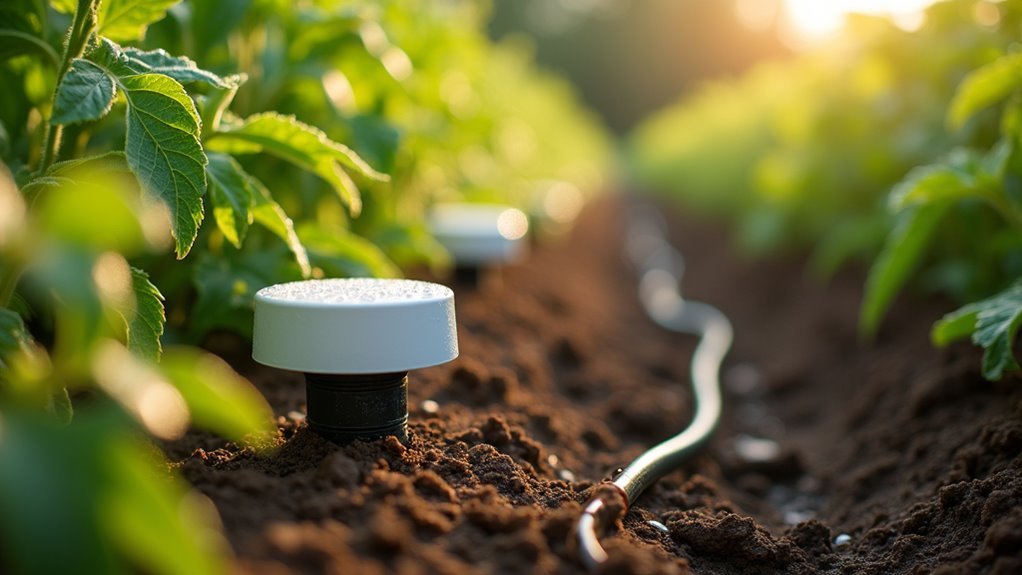
When you’re tired of playing guessing games with your garden’s watering needs, soil moisture sensors deliver the precise data you’ve been missing.
These devices eliminate irrigation guesswork by providing accurate readings of soil dampness levels, ensuring your plants receive ideal water amounts every time.
You’ll transform your garden management by monitoring moisture trends over extended periods.
This capability proves invaluable during drought conditions, allowing you to enhance watering schedules while achieving significant water conservation.
The meter readings help prevent both overwatering and underwatering scenarios that damage plant health.
Smart sensors integrate seamlessly with automated irrigation systems, creating real-time responses to changing soil conditions.
You can monitor your garden remotely through mobile apps, receiving personalized watering recommendations based on environmental data and promoting sustainable gardening practices.
Digital Vs Analog Moisture Sensors: Which Technology Works Best
When you’re choosing between digital and analog moisture sensors, you’ll need to weigh accuracy against simplicity.
Digital sensors deliver precise percentage readings and smartphone connectivity, but they’ll drain batteries and cost more than their analog counterparts.
Analog sensors offer basic color-coded results without power requirements, making them perfect if you want straightforward monitoring without breaking the bank.
Accuracy and Precision Comparison
Although both digital and analog moisture sensors serve the same fundamental purpose, their accuracy and precision capabilities differ considerably in ways that’ll impact your gardening success. Digital soil moisture sensors deliver accurate readings down to decimal points, providing precise numerical data that’s essential for monitoring exact moisture levels. These advanced meters often include pH readings and data logging features suitable for indoor or outdoor applications.
Analog moisture sensors use color-coded dials with 1-10 scales, offering basic moisture level indicators that meet most standard gardening needs. While they’re less precise, they’re user-friendly for beginners.
| Feature | Digital Sensors | Analog Sensors |
|---|---|---|
| Precision | Decimal accuracy | Basic 1-10 scale |
| Data Features | Logging, connectivity | Simple display |
| Power Requirements | Battery-operated | No power needed |
Your soil moisture meter choice depends on whether you prioritize detailed analytics or simple functionality.
Power Requirements Differences
Power requirements create a fundamental divide between digital and analog moisture sensors that directly affects their usability and maintenance needs.
When you use digital moisture sensors, you’ll need to manage battery life or charging cycles to maintain functionality. These power demands enable advanced features like data logging and smartphone connectivity, delivering highly accurate moisture readings for tech-focused gardeners.
Conversely, analog sensors require no batteries to operate effectively. You can measure soil moisture instantly using these simple Soil Moisture Tester devices without worrying about power management.
While analog moisture meters lack sophisticated capabilities, they provide immediate readings through color-coded dials, making them ideal for casual gardeners seeking straightforward solutions.
Your choice ultimately depends on whether you prioritize convenience or advanced monitoring features.
Cost Versus Features
Beyond power considerations, the price gap between digital and analog moisture sensors reflects their dramatically different feature sets.
When evaluating cost versus features, you’ll find digital moisture sensors command higher prices but deliver smartphone connectivity, data logging, and precise numerical moisture readings. These advanced gardening tools track trends over time, making them worthwhile investments for tech-savvy gardeners managing larger spaces.
Conversely, analog moisture sensors offer exceptional value through their user-friendly design and affordability. You won’t need battery replacement or complex setup procedures. Their simple color-coded dials provide accurate readings that suffice for basic moisture monitoring needs.
Your choice depends on garden size and requirements. Small indoor gardens thrive with budget-friendly analog options, while extensive gardens benefit from digital sensors’ extensive features despite ongoing maintenance costs.
ECOWITT WH0291 Wireless Soil Moisture Monitor With Bluetooth Connectivity
Smart gardeners know that guessing when to water plants often leads to disappointing results. The ECOWITT WH0291 wireless soil moisture sensor eliminates this guesswork with Bluetooth connectivity that streams real-time moisture readings directly to your smartphone.
You’ll appreciate the clear LCD screen that displays data instantly, while the probe delivers accurate measurements for both indoor and outdoor plants.
This versatile gardening tool offers custom modes for different soil types, ensuring precise irrigation recommendations regardless of your growing medium. The continuous monitoring feature tracks moisture trends over time, helping you optimize watering schedules during drought conditions.
You can confidently make better watering decisions that prevent both overwatering and underwatering. While it doesn’t measure pH, its user-friendly interface and reliable performance make it an excellent choice for serious gardeners seeking consistent results.
VIVOSUN 3-In-1 Soil Meter: Moisture, Ph, and Light Detection
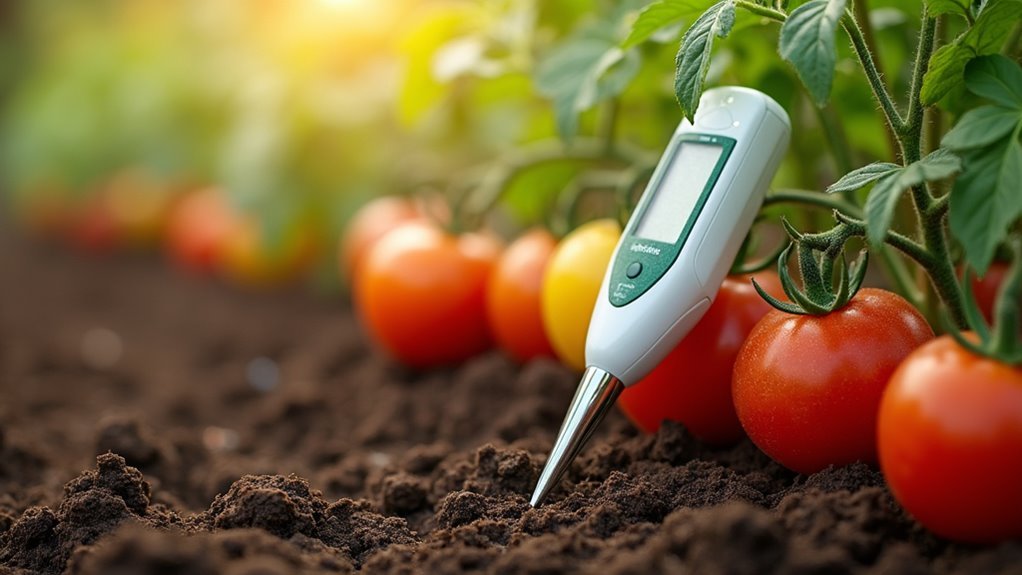
You’ll find the VIVOSUN 3-In-1 Soil Meter stands out with its triple function design that measures soil moisture, pH levels, and light intensity in one compact device.
The meter operates without batteries or electricity, using a simple probe system with a color-coded dial that you can read instantly.
This battery-free operation means you won’t need to worry about power sources or replacement costs while monitoring your garden’s health.
Triple Function Design
While single-function moisture sensors serve their purpose well, the VIVOSUN 3-in-1 Soil Meter elevates your gardening toolkit by combining moisture, pH, and light detection in one compact device.
This Plant Moisture Meter Light and PH design eliminates the need for multiple tools, streamlining your plant care routine for both Indoor and Outdoor applications.
The triple function capabilities include:
- Moisture Detection – You’ll get accurate moisture readings without batteries, using the color-coded dial to determine ideal watering times.
- Soil pH Testing – The integrated soil pH tester helps you maintain proper growing conditions with easy-to-read indicators.
- Light Measurement – Monitor light exposure levels to guarantee your plants receive adequate illumination.
The sufficient probe length allows deep soil penetration, while the non-electric design guarantees reliable performance.
You can use Soil Moisture Meter functionality across various plant species confidently.
Battery-Free Operation
Since the VIVOSUN 3-in-1 Soil Meter doesn’t require batteries, you can enjoy uninterrupted gardening assistance without worrying about power depletion or replacement costs. This battery-free operation makes it an eco-friendly choice that reduces electronic waste while providing reliable soil moisture readings.
| Feature | Benefit | Application |
|---|---|---|
| Non-electric design | No power costs | Indoor and outdoor gardening |
| Color-coded dial | Easy reading | Beginner-friendly monitoring |
| Portable size | Convenient transport | Multiple garden locations |
| Durable construction | Long-lasting performance | Year-round use |
| Multi-function capability | Extensive plant health data | Complete soil analysis |
The meter’s non-electric design guarantees you’ll always have access to essential soil moisture, pH, and light measurements. This affordable solution delivers consistent plant health monitoring without ongoing battery expenses, making sustainable gardening practices more accessible.
Budget-Friendly Moisture Sensors Under $15 for Small Gardens
When you’re working with a tight budget, finding reliable moisture sensors under $15 doesn’t mean sacrificing quality or functionality.
These affordable options perfectly serve your garden needs while providing accurate soil test kit capabilities for gardening and outdoor applications.
Budget-conscious gardeners can choose from several excellent moisture sensors that effectively monitor plant moisture level:
- VIVOSUN Plant Moisture Meter ($9.99) – Offers 3-in-1 functionality measuring moisture, light, and pH levels, ideal for small garden setups.
- Gouevn Soil Moisture Meter ($12.99) – Features color-coded indicators that simplify readings for beginners with straightforward design.
- XLUX T10 ($12.99) – Provides battery-free operation with large dial visibility, making it an affordable option for cost-conscious users.
These moisture sensors deliver reliable performance without breaking your budget.
Premium Smart Sensors With App Integration and Automated Irrigation
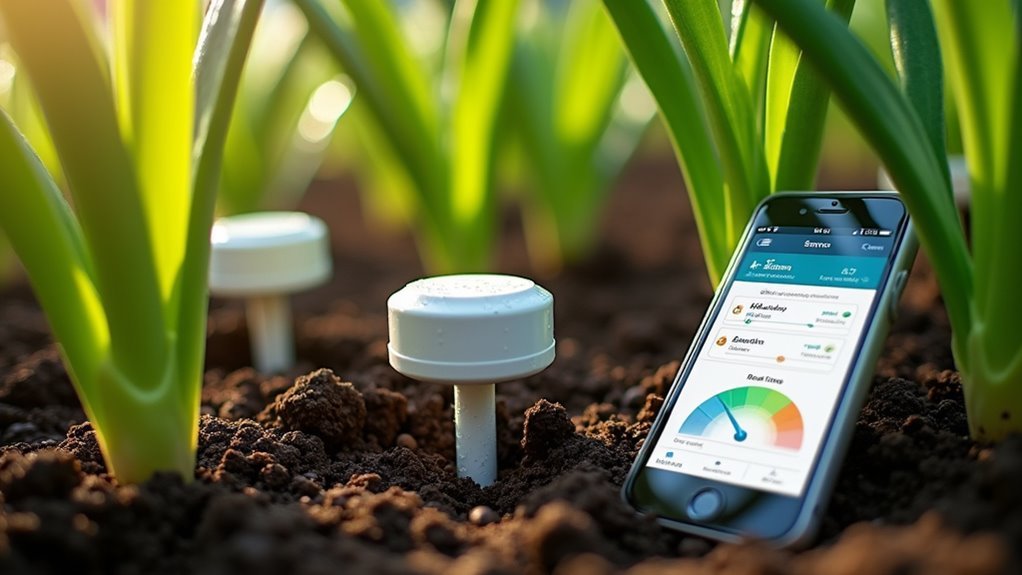
As technology advances in gardening equipment, premium smart sensors with app integration transform how you monitor and maintain your garden’s hydration needs.
These sophisticated devices offer 4-in-1 functionality, combining moisture measurement with wireless connectivity for seamless real-time monitoring through your smartphone.
Premium smart sensors like the Mosthink Wireless and Ecowitt models automatically trigger automated irrigation when soil moisture levels drop below your preset thresholds.
You’ll optimize water usage while preventing overwatering damage to your plants.
Mobile applications provide customizable watering schedules and instant alerts, delivering environmental data beyond basic moisture readings.
These sensors utilize live weather feeds to adjust irrigation timing based on current conditions.
Long-range signal capabilities and digital displays guarantee precise monitoring across larger gardens, making professional-grade garden management accessible for home gardeners.
Proper Installation and Maintenance Tips for Long-Lasting Performance
While smart moisture sensors offer advanced monitoring capabilities, their effectiveness depends entirely on proper installation and ongoing maintenance practices. Your soil meter will provide accurate readings when you insert the probe vertically about 6 inches deep into various soil conditions throughout your monitor for garden areas.
Follow these essential maintenance steps:
- Clean the probes after each use with a soft, dry cloth to prevent soil buildup that affects accuracy.
- Prevent bending by handling probes carefully and avoiding extended periods in soil, which causes corrosion.
- Store properly in dry locations and regularly check and calibrate your sensor for consistent performance.
Long probe deep use requires removing sensors between readings rather than permanent installation. This approach protects your investment while ensuring reliable soil monitoring data.
Frequently Asked Questions
What Is the Most Accurate Soil Moisture Sensor?
You’ll find the Ecowitt Soil Moisture Tester’s the most accurate option available. It’s a digital model that provides precise readings with decimal points, features long-range capabilities, and delivers consistently reliable moisture data for your gardening needs.
What Are the Drawbacks of Soil Moisture Sensor?
You’ll face accuracy issues from soil salinity, wireless connectivity problems, limited features in analog models, probe damage from hard soil, and regular calibration requirements that add maintenance steps to your gardening routine.
What Is the Difference Between a Soil Moisture Sensor and a Rain Sensor?
You’ll find soil moisture sensors measure water content in your soil continuously, while rain sensors detect precipitation from above. Soil sensors guide when you should water, but rain sensors stop irrigation during rainfall.
Which Is Better, Capacitive or Resistive Soil Moisture Sensor?
You’ll find capacitive sensors better for long-term use since they’re more durable and accurate over time. Resistive sensors work well initially but they’ll corrode and give unreliable readings eventually.


Leave a Reply