
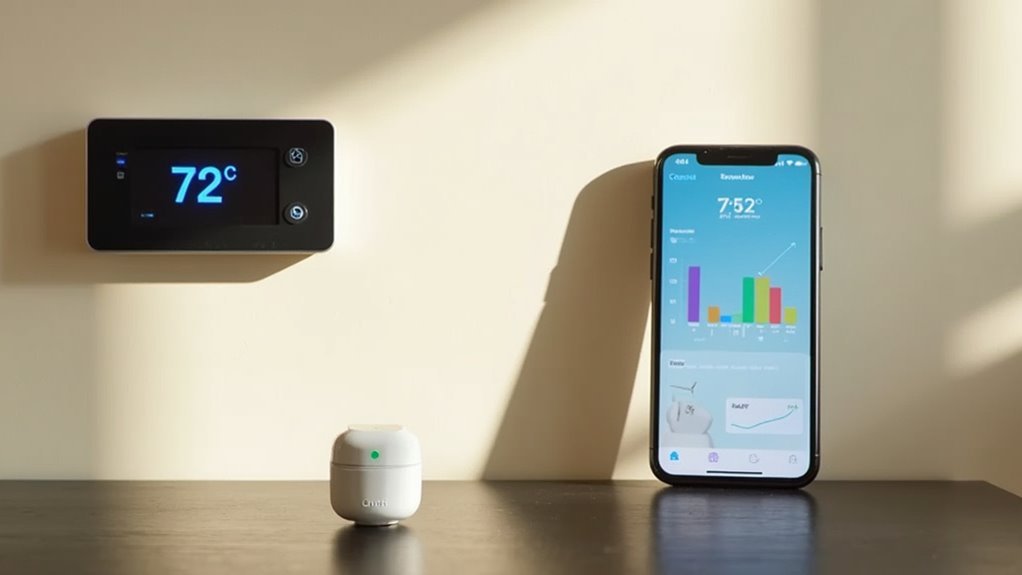
You’re likely spending more on heating and cooling than necessary because your home’s temperature isn’t properly monitored. Whether you’re dealing with hot spots in summer, cold drafts in winter, or simply want better control over your energy bills, the right temperature monitoring solution can transform your comfort and savings. The challenge isn’t finding options—it’s choosing between smart thermostats, wireless sensors, and multi-room systems that’ll actually deliver results.
Understanding Home Temperature Monitoring Technology
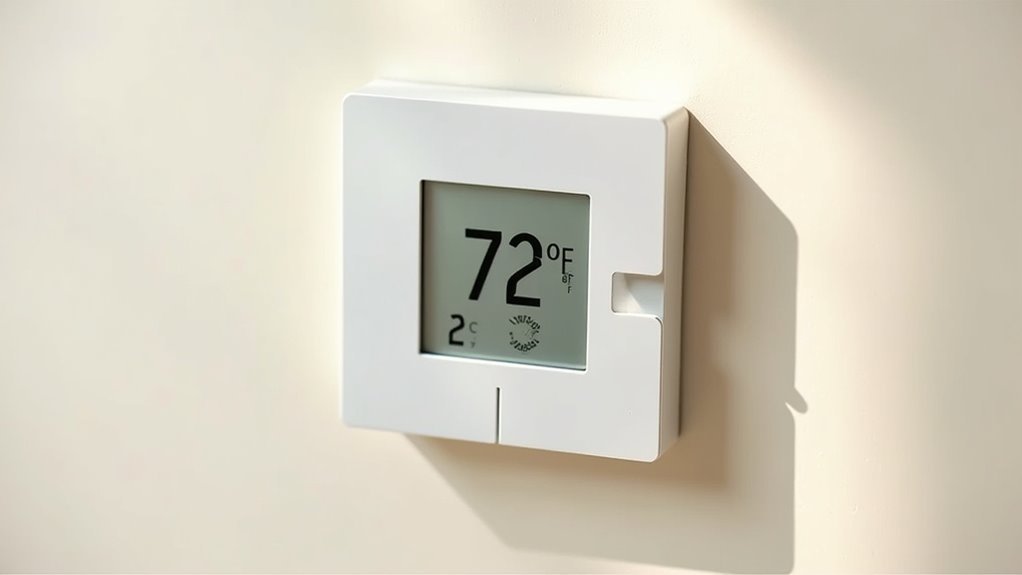
When you’re looking to maintain ideal comfort in your home, temperature monitoring technology serves as your digital climate companion.
These sophisticated systems use sensors to detect temperature and humidity levels, delivering real-time temperature monitoring data directly to your devices. You’ll gain access to continuous insights about your indoor climate through Wi-Fi connectivity and smartphone apps, letting you adjust settings from anywhere.
Modern solutions track historical data, helping you analyze patterns and optimize energy usage. Smart thermostats learn your preferences and automatically adjust heating and cooling schedules for maximum efficiency.
You can integrate these devices with voice assistants and smart home systems, creating automated responses to environmental changes that enhance both comfort and energy savings.
Key Features to Look for in Temperature Monitoring Systems
When you’re shopping for a home temperature monitoring system, you’ll want to focus on three critical areas that determine the device’s effectiveness and usability.
First, you need to evaluate the accuracy and precision standards to guarantee you’re getting reliable temperature readings that won’t mislead you about your home’s conditions.
Additionally, you should examine the connectivity options and alert features, along with the power requirements and display characteristics that’ll affect your daily interaction with the system.
Accuracy and Precision Standards
Since temperature variations as small as a few degrees can dramatically impact your comfort, energy bills, and even the health of plants or pets, you’ll want a monitoring system that delivers exceptional accuracy.
Look for devices with accuracy ratings within ±0.1 to ±0.5 degrees Fahrenheit to guarantee reliable climate control readings. These accuracy and precision standards directly affect your system’s effectiveness in maintaining ideal conditions.
You’ll also benefit from models that include hygrometers measuring humidity levels with ±2% margins of error, since humidity greatly affects comfort and health.
Choose systems offering real-time alerts for temperature deviations to prevent damage to sensitive environments. Additionally, verify your device complies with ISO/IEC 17025 calibration standards, which demonstrates adherence to precision and quality control requirements.
Connectivity and Alert Options
Modern temperature monitoring systems shine when they’re equipped with robust connectivity options that keep you informed wherever you are. WiFi temperature sensors enable seamless smartphone access, letting you monitor conditions remotely through dedicated apps. Bluetooth connectivity offers reliable short-range monitoring for immediate alerts.
| Feature | Benefit |
|---|---|
| WiFi/Bluetooth connectivity | Real-time remote monitoring |
| Customizable alerts | Instant temperature/humidity notifications |
| Historical data storage | Track environmental trends over time |
| Smart home compatibility | Integration with existing automation systems |
| User-friendly displays | Quick visual assessment capabilities |
You’ll want customizable alert systems that notify you instantly when temperature or humidity thresholds are exceeded. Historical data storage lets you analyze patterns and optimize your indoor climate. Choose devices compatible with smart home ecosystems for enhanced automation possibilities.
Power and Display Features
Power management and display features form the backbone of reliable temperature monitoring systems.
You’ll need to take into account battery types like AAA or CR2032, understanding that larger displays with backlighting consume more power but offer superior readability. While bigger screens drain batteries faster, they’re vital for quick temperature assessments, especially in low-light conditions.
Look for models offering plug-in options to guarantee continuous operation without battery interruptions. Clear, large numbers are essential for instant readings, and backlighting becomes invaluable during nighttime checks.
Advanced models now include wireless connectivity, letting you monitor temperatures remotely through smartphone apps.
Think about devices with historical data tracking and real-time alert functionalities—these features notify you immediately of temperature deviations, enabling proactive environmental management throughout your home.
Best Overall Home Temperature Monitor
When you’re selecting the best overall home temperature monitor, you’ll want to focus on three critical areas that separate exceptional devices from mediocre ones.
Key performance features, accuracy and reliability, and display connectivity options determine whether your investment will provide long-term value and practical daily use.
These factors work together to create a monitoring solution that’ll consistently deliver the precise environmental data you need to maintain ideal indoor comfort.
Key Performance Features
While many temperature monitors flood the market with unnecessary features, the AcuRite Digital Mini Hygrometer with Thermometer delivers exceptional performance through its core capabilities.
You’ll get pinpoint accuracy within a 0.5-degree range, ensuring reliable readings for ideal climate control. The device excels beyond basic temperature monitoring systems by simultaneously tracking humidity levels and recording daily highs and lows automatically.
You don’t need to squint at tiny numbers—the large, clear display makes quick assessments effortless. The unit runs on just two AAA batteries, eliminating cord clutter while providing consistent power.
Whether you’re monitoring your home office, greenhouse, or pet’s environment, you’ll appreciate how this compact device maintains precision without complexity. It’s straightforward functionality that actually works.
Accuracy and Reliability
Performance features mean nothing without dependable accuracy, and the AcuRite Digital Mini Hygrometer consistently delivers readings you can trust.
You’ll get temperature measurements within 0.5 degrees Fahrenheit, guaranteeing precise monitoring of your indoor environment. This level of accuracy makes it reliable for critical applications where exact conditions matter most.
The device’s reliability extends beyond temperature to humidity tracking, recording both high and low levels automatically.
You won’t need to constantly monitor fluctuations since it captures essential data continuously. Whether you’re maintaining ideal home comfort or caring for sensitive plants in a greenhouse, this monitor’s consistent performance gives you confidence in your environmental control decisions.
The large display guarantees you can quickly verify readings without squinting or guessing about your indoor climate conditions.
Display and Connectivity
Two standout features make the AcuRite Digital Mini Hygrometer exceptionally user-friendly: its generous display size and simple operation design.
The large display enhances visibility, allowing you to read temperature and humidity measurements from across the room without squinting or moving closer to the device.
You’ll appreciate these key display advantages:
- Clear readability – The oversized screen shows both current readings and historical high/low data simultaneously
- No connectivity required – Unlike smart monitors, you won’t deal with Wi-Fi setup, app downloads, or network troubleshooting
- Instant access – Real-time readings appear immediately without waiting for data syncing or device pairing
This straightforward approach means you can focus on monitoring your home’s climate rather than managing complicated technology.
The display’s simplicity matches its reliable 0.5-degree accuracy perfectly.
Most Affordable Temperature Monitoring Solution
Budget-conscious homeowners don’t need to sacrifice quality when monitoring their indoor climate. The ThermoPro TP49 Digital Indoor Hygrometer Thermometer stands out as the most affordable temperature monitoring solution, typically priced under $20.
You’ll get essential functionalities including a large, easy-to-read display and the ability to track high and low temperature and humidity readings.
This budget-friendly device maintains impressive accuracy within ±0.5 degrees Fahrenheit, ensuring reliable home monitoring.
You’ll appreciate the three mounting options that provide flexible placement throughout your home without additional accessory costs. The unit runs on two AAA batteries (not included), keeping initial costs low while remaining energy-efficient.
Despite its affordability, you won’t compromise on performance or reliability.
Premium Smart Temperature Monitoring System
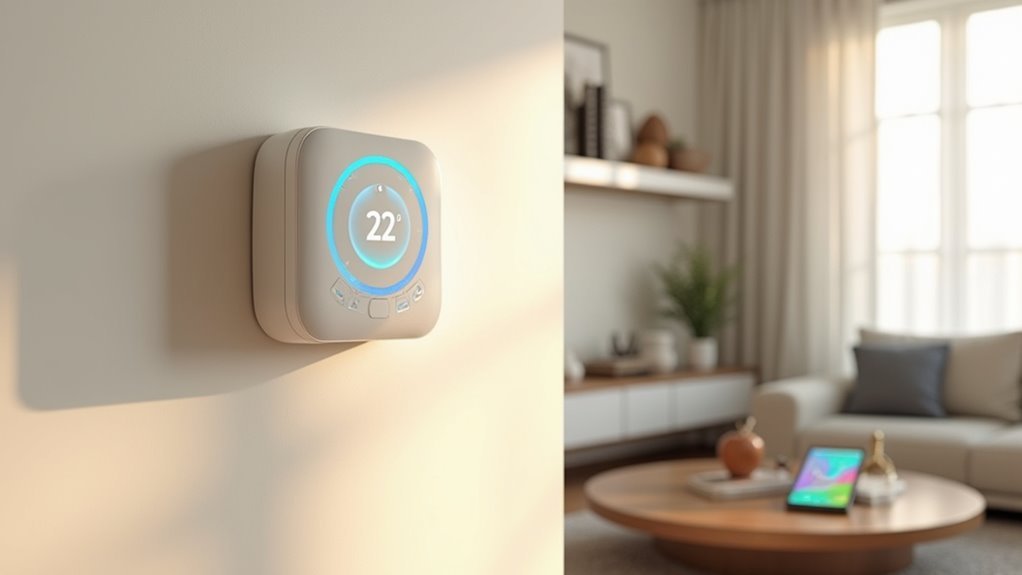
When you’re ready to invest in cutting-edge home automation, premium smart temperature monitoring systems deliver unparalleled control and intelligence that transforms how you manage your indoor climate.
These advanced solutions offer sophisticated features that standard thermostats can’t match:
- Adaptive Learning Technology – The Nest Learning Thermostat automatically adapts to your schedule and preferences, optimizing energy efficiency while maintaining perfect comfort levels.
- Zone-Based Control – Ecobee’s occupancy detection allows precise temperature management across different rooms, ensuring customized comfort throughout your home.
- Location-Aware Automation – Honeywell’s T9 uses geofencing technology to adjust settings based on your location, eliminating energy waste when you’re away.
Your premium smart temperature monitoring system provides extensive remote monitoring capabilities, giving you complete climate control from anywhere through intuitive smartphone apps.
Best Multi-Room Temperature Monitoring Setup
Managing your entire home’s climate requires strategic sensor placement and smart coordination between multiple monitoring points.
For effective multi-room temperature monitoring, you’ll want sensors like the Govee H5100 Mini Hygrometer Thermometer in each room, syncing with your smartphone app for real-time updates from different locations. Each sensor provides accurate temperature and humidity readings, essential for maintaining ideal living conditions across various spaces.
Strategic sensor placement in every room ensures comprehensive climate control with real-time smartphone monitoring for optimal home comfort.
You can set up customizable alerts that notify you of significant changes in any monitored room, enhancing overall comfort.
Systems like the SensorPush HT1 support up to 50 sensors, making them scalable for larger homes, greenhouses, or pet enclosures. Compatible smart devices like Nest Temperature Sensors optimize control by eliminating hot and cold spots throughout your home.
Top Choice for Vacation Home Monitoring
Your vacation home deserves dependable protection against temperature extremes that could cause costly damage while you’re away. The Temp Stick Wifi sensor stands out as the premier choice for vacation property temperature monitoring, delivering real-time updates directly to your smartphone.
This wireless solution excels with three key advantages:
- Precision accuracy – Within 1°F temperature and 2-3% humidity readings prevent frozen pipes and heat damage.
- Zero ongoing costs – No monthly fees or subscriptions required for continuous monitoring.
- Reliable power options – AC or battery operation ensures protection even during outages.
You’ll receive custom alerts for any temperature deviations, enabling proactive property management from anywhere.
This cost-effective system maintains ideal conditions while providing peace of mind during extended absences.
Ideal Temperature Monitor for Pet Owners
When you’re caring for pets, you’ll need a temperature monitor that’s specifically designed for animal enclosures and can track the precise environmental conditions your furry friends require.
The Govee H5051 Wi-Fi Thermometer Hygrometer stands out as the top choice for pet owners because it sends instant alerts to your smartphone when temperature or humidity levels drift outside safe ranges.
You can remotely monitor multiple pet areas throughout your home, ensuring your animals stay comfortable and healthy even when you’re not around to check on them personally.
Pet Enclosure Monitoring
Since pets can’t communicate when they’re too hot or cold, maintaining perfect temperature conditions in their enclosures becomes your responsibility as their caretaker.
The Govee H5051 Wi-Fi Thermometer Hygrometer transforms temperature monitoring into a seamless experience through smartphone connectivity and real-time alerts.
This specialized device delivers three essential benefits for pet enclosure management:
- Precision accuracy with ±0.5°F margin of error guarantees ideal comfort levels
- Instant notifications alert you to sudden temperature changes that could endanger your pets
- Historical data tracking helps you identify patterns and adjust conditions proactively
The compact design fits various enclosure types while the user-friendly app provides remote monitoring capabilities.
You’ll receive immediate alerts when conditions shift, preventing potentially dangerous situations and giving you peace of mind whether you’re home or away.
Remote Alert Features
Because pet safety depends on immediate response to environmental threats, the Govee H5051’s remote alert system delivers critical notifications directly to your smartphone the moment temperature or humidity levels drift outside safe parameters. You’ll receive instant alerts regardless of your location, whether you’re at work or traveling.
| Alert Type | Response Time | Action Required |
|---|---|---|
| Temperature Spike | Immediate | Check heating/cooling |
| Humidity Drop | Instant | Adjust moisture levels |
| Critical Conditions | Real-time | Emergency intervention |
The Wi-Fi connectivity guarantees you’re always connected to your pet’s environment. These remote alert features transform your smartphone into a thorough monitoring center, enabling proactive care that prevents dangerous situations before they escalate into health emergencies for your beloved pets.
Temperature Safety Ranges
Although different pets require varying temperature ranges, maintaining ideal indoor conditions between 68°F to 72°F (20°C to 22°C) keeps most cats and dogs comfortable and healthy.
However, you’ll need to adjust these ranges based on your specific pets’ needs.
Temperature monitoring becomes critical when you consider these safety thresholds:
- Heat stress zone: Cats and dogs face dangerous heat stress when temperatures exceed 85°F (29°C), requiring immediate cooling measures.
- Hypothermia risk: Small or short-haired pets can develop hypothermia if temperatures drop below 60°F (15°C), especially during winter months.
- Reptile requirements: Most reptiles need warmer environments between 75°F to 90°F (24°C to 32°C) during daytime hours for proper metabolic function.
You’ll want automated alerts to prevent these temperature extremes from endangering your pets.
Best Wireless Temperature Monitoring Device
When you’re searching for the best wireless temperature monitoring device, you’ll find several standout options that deliver exceptional accuracy and convenience.
The SensorPush HT1 leads the pack with real-time monitoring and smartphone alerts via Bluetooth/Wi-Fi, plus historical data storage.
For precision-critical environments, the Temp Stick WiFi sensor excels with readings within 1°F and 2-3% humidity accuracy, perfect for greenhouses and server rooms.
The Govee H5051 specializes in remote pet enclosure monitoring with instant smartphone alerts.
If you need continuous operation, LaCrosse Technology’s plug-in station eliminates battery concerns entirely.
For thorough home coverage, Govee H5100 Mini sensors enable multilocation monitoring across different rooms through smartphone app synchronization.
These wireless temperature monitoring solutions guarantee you’ll never miss critical environmental changes affecting your home’s comfort and safety.
Professional-Grade Home Temperature Systems
Professional-grade home temperature monitoring systems elevate environmental control beyond basic consumer devices, delivering laboratory-level precision and enterprise-class reliability for homeowners with critical monitoring needs.
These temperature monitoring devices offer sophisticated features that surpass standard home solutions:
Professional-grade temperature monitoring devices deliver laboratory-level precision and enterprise-class reliability that surpasses standard consumer home solutions.
- ISO/IEC 17025 NIST traceable calibration guarantees accuracy within 1 degree Fahrenheit while maintaining regulatory compliance for healthcare and food safety applications.
- Cloud-based IoT technology enables real-time remote monitoring with instant smartphone alerts for temperature deviations, eliminating monthly subscription fees.
- 24/7 customer support and customizable reporting provide immediate troubleshooting assistance and easy access to historical data tracking.
Professional-grade home temperature systems from companies like SensoScientific deliver fully automated data logging with enterprise-level reliability, making them ideal for users requiring laboratory-precision environmental monitoring in residential settings.
Smart Home Integration and Compatibility Options
You’ll find that today’s temperature monitoring systems seamlessly integrate with major smart home platforms like Amazon Alexa, Google Assistant, and Apple HomeKit for voice control convenience.
These devices typically offer multiple wireless connectivity options including Wi-Fi, Bluetooth, and Zigbee to fit your existing home network setup.
Most solutions provide extensive smartphone apps that let you monitor real-time data, set custom alerts, and adjust settings remotely from anywhere.
Popular Smart Platforms
Since smart home integration has become essential for modern temperature control, platforms like Nest, Ecobee, and Honeywell lead the market with their extensive Wi-Fi connectivity and smartphone app controls.
These smart platforms offer advanced features that’ll transform your home’s climate management:
- Adaptive Learning Technology – The Nest Learning Thermostat automatically adjusts to your behavior and preferences, creating optimized heating and cooling schedules that boost energy efficiency without sacrificing comfort.
- Voice Assistant Integration – You can control your thermostat hands-free through Amazon Alexa and Google Assistant, making temperature adjustments effortless while you’re cooking, working, or relaxing.
- Geofencing Capabilities – Systems like the Emerson Sensi Smart Thermostat detect your location, automatically adjusting temperatures when you’re away and ensuring comfort upon your return.
These platforms seamlessly integrate with smart vents and humidity sensors for thorough climate control.
Wireless Connectivity Types
When choosing a temperature monitoring solution, the wireless connectivity type determines how effectively your devices communicate with each other and your smartphone.
Wi-Fi connectivity stands as the most popular option, enabling you to monitor real-time data remotely through smartphone apps. This wireless connection provides seamless access whether you’re at home or away.
Bluetooth offers an alternative for direct smartphone communication without requiring a Wi-Fi network. Devices like the SensorPush HT1 utilize this connection type for simplified setup and operation.
IoT-enabled systems provide cloud-based storage and data analytics, helping you track historical trends and receive temperature alerts.
These wireless solutions often integrate with voice assistants like Amazon Alexa and Google Assistant, plus other smart home devices including HVAC systems for optimized control.
App Control Features
Modern temperature monitoring systems transform into powerful smart home hubs through their app control features and integration capabilities.
You’ll find today’s solutions offer sophisticated smartphone control that puts complete climate management at your fingertips.
The best app control features that’ll enhance your experience include:
- Voice Command Integration – Connect with Amazon Alexa and Google Assistant for hands-free temperature adjustments
- Real-Time Notifications – Receive instant alerts about temperature and humidity changes through devices like SensorPush sensors
- Geofencing Technology – Automatically adjust settings based on your location for ideal energy savings
These apps make managing your home’s climate effortless.
You can remotely control devices like Nest and Ecobee thermostats, coordinate with smart vents, and create personalized automation schedules that adapt to your lifestyle.
Installation and Setup Process for DIY Enthusiasts
While professional installation might seem necessary for home monitoring systems, today’s temperature monitoring devices are designed with DIY enthusiasts in mind. Most modern units feature user-friendly setup instructions that’ll have you monitoring temperatures within minutes. No professional assistance required.
Modern temperature monitoring systems eliminate the need for professional installation with intuitive DIY setup that gets you operational in minutes.
For wireless models like the SensorPush HT1, the installation process involves simply downloading an app and connecting to Wi-Fi or Bluetooth—no complex wiring needed.
Battery-powered devices such as the AcuRite Digital Mini Hygrometer require fresh batteries for peak performance, though some models don’t include them.
The setup process typically includes simple calibration prompts, with many units self-calibrating within an hour.
DIY enthusiasts can monitor multiple locations by syncing devices like the Govee H5100 with smartphone apps for real-time access.
Comparing Accuracy and Reliability Standards
Since accuracy determines whether your home monitoring system provides trustworthy data, you’ll want to understand the precision standards that separate reliable devices from mediocre ones.
Most quality home temperature monitoring devices maintain accuracy within 0.1 to 0.5 degrees Fahrenheit, ensuring you get precise readings for effective climate control.
When evaluating your monitoring solution options, consider these key accuracy features:
- Temperature precision – Look for devices with margins under 0.5°F for reliable performance
- Humidity measurement – Quality hygrometers should measure 0-99% humidity with ±2% accuracy
- Calibration compliance – Professional-grade devices following ISO/IEC 17025 standards offer superior reliability
Smart-enabled models like the SensorPush HT1 provide wireless connectivity and real-time alerts, while devices such as the AcuRite Digital Mini Hygrometer offer historical tracking capabilities for extensive environmental monitoring.
Cost Analysis and Long-Term Value Assessment
Beyond accuracy specifications, your budget will largely determine which temperature monitoring solution makes the most sense for your specific needs. A thorough cost analysis reveals basic models start around $30, while advanced Wi-Fi systems exceed $200.
However, you’ll recoup expenses through energy savings of 10-20% when smart devices optimize your heating and cooling.
Don’t overlook hidden costs like subscription fees for cloud services or monthly app charges. Higher-quality devices offer better warranties and longer lifespans, reducing total ownership costs over time.
While regular calibration adds maintenance expenses, investing in ISO/IEC 17025 certified systems minimizes compliance risks and guarantees superior accuracy.
Consider durability, ongoing fees, and potential energy savings when evaluating long-term value rather than focusing solely on upfront pricing.
Frequently Asked Questions
What Is the Most Accurate Way to Measure Indoor Temperature?
You’ll get the most accurate indoor temperature readings using a calibrated digital thermometer placed away from sunlight and drafts. Choose models with 0.1°F precision and wireless monitoring capabilities for continuous, real-time measurements.
What Is the Most Accurate Temperature Sensor?
You’ll find platinum resistance thermometers (RTDs) are the most accurate temperature sensors, achieving precision within ±0.1°F. They’re followed by thermocouples and high-quality digital sensors that typically maintain accuracy within ±0.1 to ±0.5°F.
How Can I Monitor the Temperature of My House Remotely?
You can install smart thermostats like Nest or wireless sensors such as SensorPush HT1. These devices connect to your smartphone via Wi-Fi, providing real-time temperature data and alerts from anywhere.
What Is the Best Way to Display Temperature Data?
You’ll want digital screens with large, backlit numbers for easy visibility. Choose displays offering historical data tracking, wireless smartphone connectivity, intuitive interfaces, and multi-location monitoring capabilities for thorough temperature management across your home.

Leave a Reply