
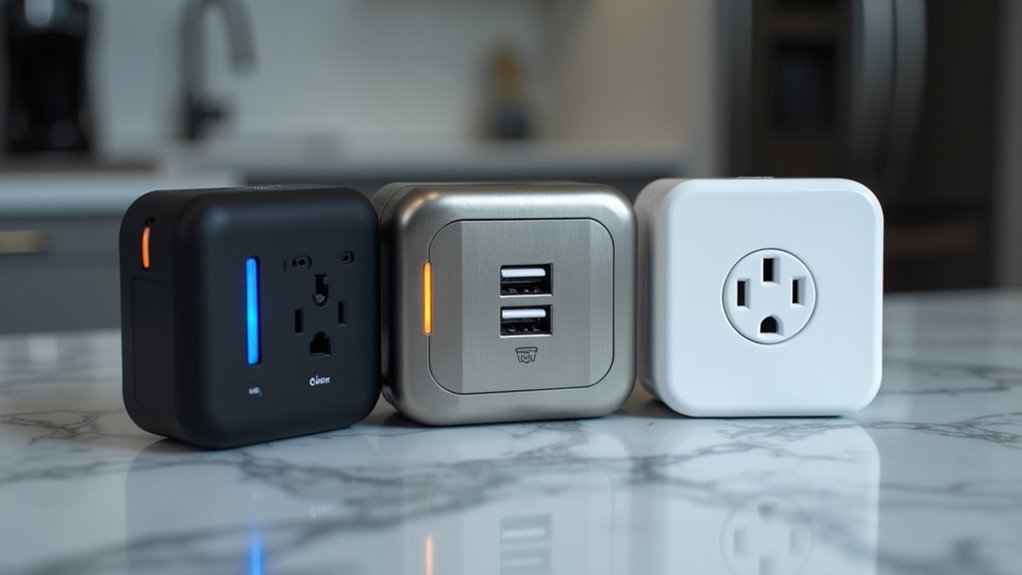
You’re probably tired of fumbling for light switches in the dark or wondering if you left that space heater running while you’re at work. Smart outlet converters can transform your regular outlets into intelligent power sources that you’ll control remotely, schedule automatically, and monitor for energy usage. But with dozens of options flooding the market, choosing the right converter isn’t as straightforward as you’d expect—especially when safety and compatibility hang in the balance.
Essential Tools and Equipment for Smart Outlet Installation
Before you begin installing smart outlet converters, you’ll need to gather the right tools and equipment to guarantee a smooth setup process.
First, confirm you have a compatible smartphone or tablet for app integration and remote control functionality. A stable Wi-Fi network is absolutely essential, so verify your router provides adequate coverage in the installation area.
For plug-and-play models, no additional tools are required. However, hardwired installations may need basic tools like screwdrivers, wire strippers, and voltage testers.
Consider models with energy monitoring capabilities to track energy usage effectively. Familiarize yourself with your device’s specific app beforehand, as it’ll guide you through installation, scheduling, and configuration steps for peak performance.
Step-by-Step Smart Outlet Converter Setup Process
Setting up your smart outlet converter takes just five simple steps that’ll have you controlling your devices remotely within minutes.
First, unpack your converter and verify you’ve got a stable Wi-Fi connection. Plug the device into any standard wall outlet.
Ensure your Wi-Fi connection is stable before plugging your smart outlet converter into any standard wall outlet to begin setup.
Next, download the mobile app specified by your manufacturer and create an account. The setup process involves using the app’s wizard to connect your smart outlet converter to your home network.
Once connected, you’ll customize settings like scheduling and energy monitoring features. Name your device for easy identification among other smart home gadgets.
Finally, test functionality by using the app or voice assistant to control any device plugged into the converter, ensuring everything works perfectly.
Compatibility Requirements and Safety Considerations
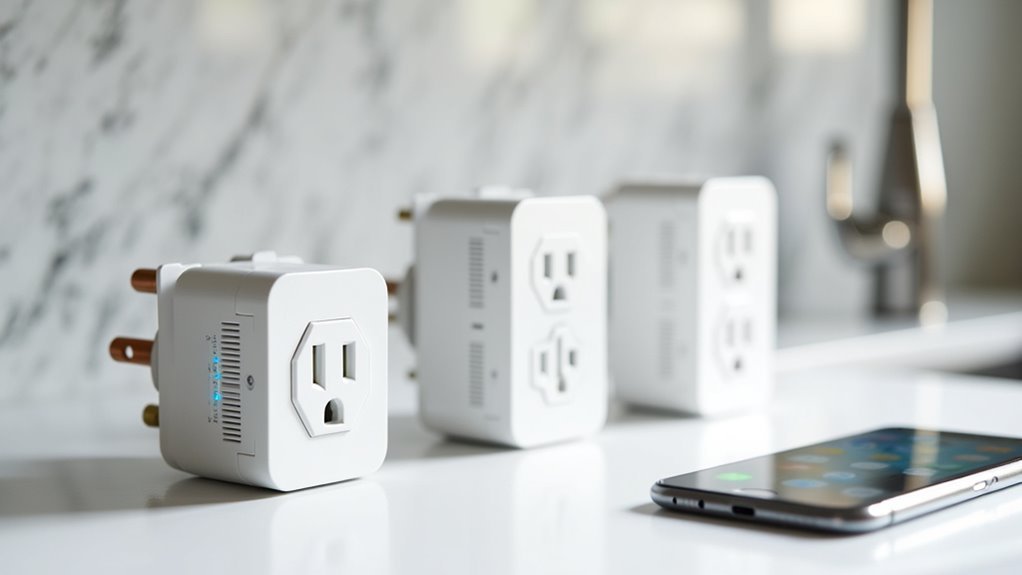
While smart outlet converters offer incredible convenience, you’ll need to verify several compatibility and safety requirements before making your purchase. First, confirm your smart outlet converter matches your home’s electrical outlet voltage and system specifications. Check compatibility requirements with your preferred smart home ecosystems and voice assistants like Alexa or Google Assistant for seamless integration.
| Safety Feature | Requirement | Why It Matters |
|---|---|---|
| Safety Certifications | UL/ETL Listed | Meets industry safety standards |
| Maximum Load Capacity | Within rated amperage | Prevents overheating and fires |
| Build Quality | Durable designs | Protects against electrical surges |
| Energy Consumption | Efficient operation | Reduces utility costs |
| Materials | High-grade components | Guarantees long-term reliability |
Always prioritize safety certifications and maximum load capacity to protect your devices and home from electrical hazards.
Frequently Asked Questions
What Is the Difference Between a Smart Outlet and a Smart Plug?
You’ll plug a smart plug into existing outlets to control devices remotely, while smart outlets replace your wall sockets entirely. Smart plugs are portable and cheaper; smart outlets offer permanent integration with advanced features.
What Should You Not Plug Into a Smart Plug?
You shouldn’t plug high-wattage appliances, medical equipment, non-dimmable lights, surge protectors, or water-related devices into smart plugs. They can exceed amperage limits, create fire hazards, or malfunction when used improperly.
What Are the Disadvantages of Smart Plugs?
You’ll face compatibility issues with older appliances, security vulnerabilities from hacking, Wi-Fi dependence problems, inaccurate energy monitoring, and bulky designs that can block adjacent outlets in your setup.
Are Smart Sockets Worth It?
You’ll find smart sockets worthwhile if you want energy monitoring, voice control, and scheduling automation. They’re affordable under $20, offer convenient remote access, and help reduce electricity bills through better usage tracking.

Leave a Reply