

You’ve probably watched your plants struggle through inconsistent watering schedules, either drowning from your weekend guilt-watering sessions or withering while you’re away on vacation. Building your own self-watering planter eliminates this guesswork entirely, delivering consistent moisture directly to your plants’ roots while cutting your costs by more than half. The real question isn’t whether you should build one, but which design will transform your gardening success.
Understanding How Self-Watering Systems Function

While traditional planters require you to guess when your plants need water, self-watering systems take the uncertainty out of plant care by using a built-in water reservoir at the bottom of the container.
This self-watering system relies on capillary action to draw moisture upward as your soil dries out, delivering consistent watering without your constant attention.
The wicking system connects the reservoir to your soil through absorbent materials that efficiently transfer water to plant roots.
As your plants use moisture, the wicking mechanism automatically replenishes what’s needed.
You’ll find features like water windows help you monitor reservoir levels, while overflow holes prevent waterlogging.
You simply fill the reservoir initially, then check water levels monthly to maintain proper hydration without over-saturation.
Essential Components for DIY Self-Watering Planters
Now that you understand the mechanics behind self-watering systems, you can gather the components needed to build your own planter.
You’ll need a container that serves as your water reservoir beneath the growing bed. Choose a separate pot for your potting soil and plants. Your wicking system requires absorbent materials like cotton or felt strips to connect the reservoir to the soil above.
Self-watering pots work best when you include proper design features. Add overflow holes to prevent waterlogging and consider installing a water level indicator for easy monitoring.
Include overflow holes and a water level indicator to optimize your self-watering pot’s performance and prevent plant damage.
The water reservoir should hold enough water for several days while the wicking system guarantees your plants receive consistent moisture through capillary action, eliminating guesswork from your watering routine.
Cost Savings Compared to Store-Bought Options
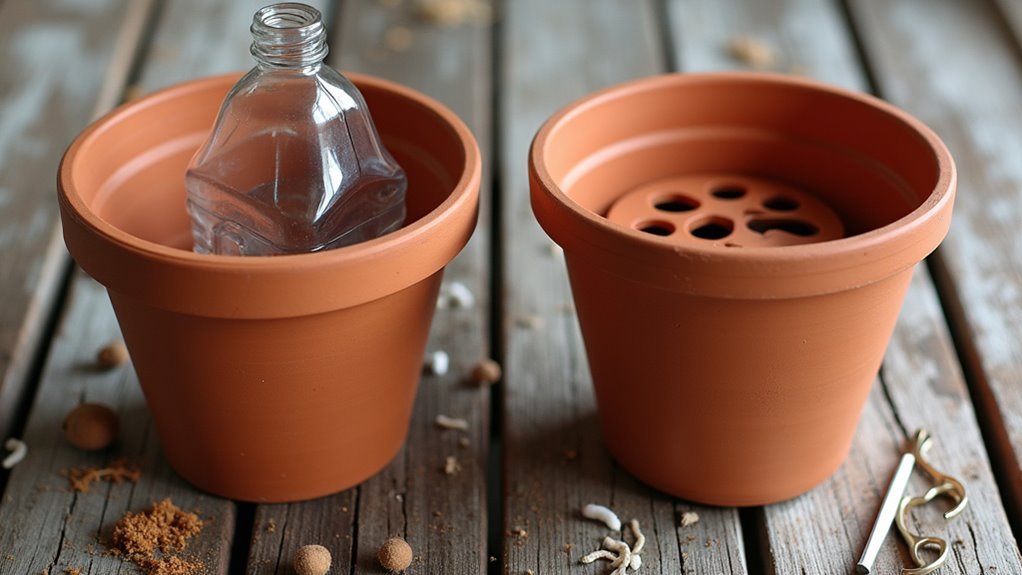
You’ll find that store-bought self-watering planters carry hefty price tags ranging from $30 to $100 each, depending on their size and materials.
In contrast, you can build your own functional version using basic supplies like plastic containers, wicking material, and potting soil for under $20 total.
This DIY approach cuts your costs by up to 50% while delivering the same watering efficiency as expensive commercial alternatives.
Store Price Analysis
Building your own self-watering planters can slash your gardening costs by more than half. When you conduct a store price analysis, you’ll discover commercial self-watering planters typically cost $100 or more, while DIY materials for homemade versions only run $20 to $50.
This dramatic price difference stems from brand premiums and marketing costs that manufacturers pass onto consumers.
Store-bought options often include unnecessary features you don’t need, inflating the final price. You’re also paying shipping fees and retail markups that further increase costs.
With DIY materials like plastic containers or wood, you can customize your planters to match your specific requirements and budget. Plus, you can repair or modify homemade planters yourself, extending their lifespan and providing ongoing savings compared to potentially needing replacement store-bought versions.
DIY Material Costs
Three main materials form the foundation of any DIY self-watering planter: a plastic container, wicking fabric, and quality potting soil.
You’ll spend just $10-$30 sourcing these diy materials, dramatically less than store-bought alternatives costing $40-$100+.
You can save costs further by repurposing household items like old buckets or storage bins instead of buying new containers. This approach lets you customize sizes to match your specific gardening requirements without purchasing multiple expensive planters.
Your upfront investment pays dividends through reduced water usage and durability that outlasts cheaper mass-produced options.
Customization Benefits for Your Specific Plants
When you create self-watering planters at home, you’re able to tailor every aspect to your plants’ unique needs. Customizing self-watering planters lets you design wicking systems that deliver the appropriate amount of water for each plant type, maintaining consistently moist soil without overwatering.
| Plant Type | Water Reservoir Size |
|---|---|
| Succulents | Small (shallow watering) |
| Herbs | Medium (moderate moisture) |
| Vegetables | Large (frequent watering) |
| Flowering Plants | Medium-Large (consistent moisture) |
| Tropical Plants | Large (high humidity needs) |
You can incorporate water level indicators and drainage systems specific to your plants’ requirements. Additionally, experimenting with different soil mixtures becomes possible when you control the planter design, allowing you to create ideal growing conditions that promote healthier, more vibrant plant life tailored to each species.
Environmental Advantages of Water Conservation
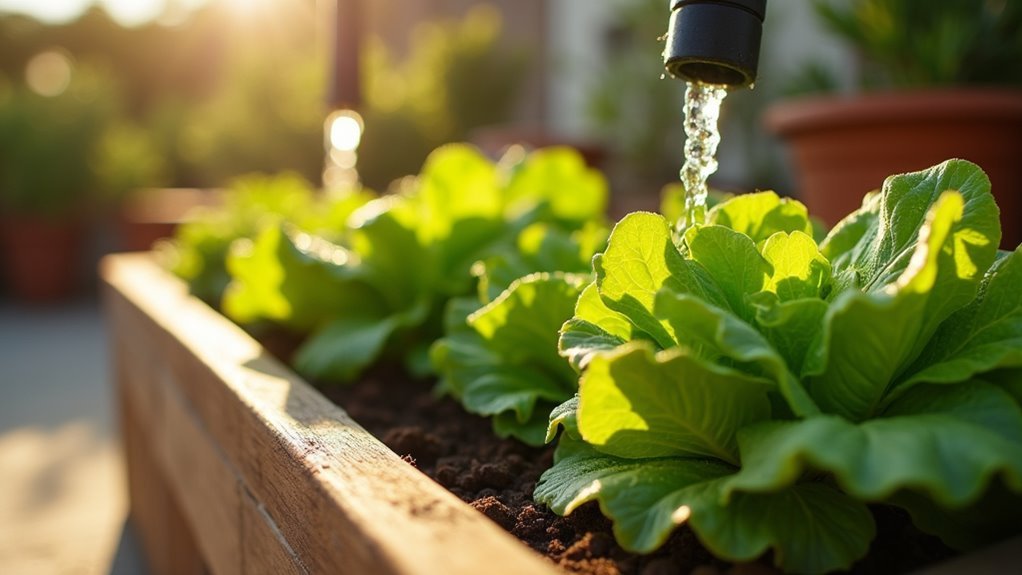
Beyond creating ideal growing conditions for individual plants, self-watering planters deliver significant environmental benefits through superior water conservation.
You’ll reduce your water consumption by up to 50% compared to conventional pots because this efficient system delivers moisture directly to plant roots, minimizing evaporation and runoff. The reservoir design in each self-watering pot guarantees zero waste through its wicking mechanism.
You’re making a responsible choice that’s especially valuable in arid regions where water scarcity threatens communities.
By reducing reliance on traditional irrigation systems, you’re contributing to broader environmental sustainability efforts. Your self-watering planters promote drought resilience while maintaining healthy plants, proving that effective gardening doesn’t require excessive water usage.
This technology transforms how you approach water conservation at home.
Reduced Daily Maintenance Requirements
While traditional gardening demands constant attention and daily watering schedules, self-watering planters dramatically reduce your maintenance workload.
With a self-watering system, your plants draw moisture directly from the water reservoir as needed, eliminating daily checks and reducing stress from both over-watering and under-watering.
Self-watering systems eliminate guesswork by delivering moisture on-demand, preventing both plant stress and daily watering anxiety.
Here’s how these systems reduce maintenance:
- Extended watering intervals – Plants stay hydrated longer without your intervention
- Automated water delivery – No more daily watering schedules to remember
- Monthly reservoir checks – Simple monitoring replaces daily plant inspection
- Travel-friendly design – Your plants thrive even when you’re away
This streamlined approach frees up time for other gardening activities while ensuring your plants receive consistent, ideal care without constant supervision.
Perfect Solution for Busy Schedules and Travel
These time-saving benefits make self-watering planters the perfect companion for today’s fast-paced lifestyles. When you’re juggling work deadlines, family commitments, and social obligations, you can’t afford to worry about daily watering schedules.
Self-watering planters eliminate this stress by maintaining consistent moisture levels automatically, allowing you to focus on what matters most.
Whether you’re traveling for business or taking that long-overdue vacation, your plants won’t suffer from neglect. The built-in reservoir system guarantees your green companions receive proper hydration for weeks without intervention.
You’ll reduce frequency of watering from daily tasks to simple weekly or bi-weekly refills. This reliability means you can finally enjoy gardening without the constant anxiety of forgetting to water, making plant ownership accessible even with the busiest schedule.
Materials Needed for Building at Home
You’ll need just a few basic materials to create your own self-watering planter system.
The essential container components include a suitable pot or container, wicking material like cotton rope, and lightweight potting soil.
Your tools and supplies list should cover drilling equipment for drainage holes and materials for a simple water level indicator.
Essential Container Components
Before you can create your own self-watering planter, gathering the right materials guarantees your project’s success from the start. Your container forms the foundation of this system, requiring durable materials like plastic, ceramic, or terra cotta that’ll withstand constant moisture exposure while supporting healthy plant growth.
The essential components you’ll need include:
- Primary container – Choose a sturdy pot that can house both soil and your water reservoir.
- Water reservoir section – Create this using an additional container or partition within your main pot.
- Wicking system materials – Select absorbent cotton or synthetic fibers for effective capillary action.
- Lightweight potting soil – Use an absorbent mix that retains moisture while ensuring proper aeration.
These core elements work together to create an efficient self-watering system.
Tools and Supplies
While the container components provide your planter’s foundation, specific tools and supplies will streamline your construction process and guarantee professional results. You’ll need basic equipment to create an effective water reservoir and install your wicking system properly.
| Tools | Materials | Optional Items |
|---|---|---|
| Drill with bits | Cotton rope/fabric strips | Clear tubing |
| Measuring tape | Lightweight potting soil | Float indicator |
| Scissors/knife | Plastic containers | Funnel |
Essential tools and supplies include a drill for creating drainage holes, measuring tape for accurate spacing, and scissors for cutting wicking materials. Your wicking system requires absorbent cotton rope or fabric strips to transport water efficiently. Don’t forget lightweight, moisture-retaining potting soil that’ll work seamlessly with your water reservoir design.
Step-by-Step Construction Process
Creating your own self-watering planter begins with assembling the right materials and tools for this straightforward DIY project.
Follow these essential steps to build your watering system:
- Prepare containers – Drill holes in the smaller pot’s bottom and the larger container’s lid to enable proper water flow from your reservoir.
- Install wicking material – Cut cotton rope or fabric strips to appropriate length, positioning one end in the reservoir and the other in the soil.
- Assemble components – Fill the large container with water and the smaller pot with potting soil, then nest them together.
- Establish system – Guarantee the wicking material stays submerged while monitoring water levels and providing top watering until roots develop.
Troubleshooting Common DIY Issues
Although self-watering planters are relatively simple to construct, you’ll likely encounter a few common issues that can affect your system’s performance. First, verify your wicks are fully submerged and properly positioned to maintain consistent moisture level delivery.
Clogged drainage holes or wicking materials create waterlogging, leading to dangerous root rot conditions. Clean these components regularly to prevent blockages.
Monitor your reservoir frequently, especially during hot weather when plants consume more water. Use lightweight, absorbent potting soil that enhances capillary action for effective water distribution.
If you notice yellowing leaves or other stress signs, adjust your watering frequency immediately. Check that your self-watering reservoir isn’t overflowing, which indicates over-saturation problems that can damage plant health and compromise your system’s effectiveness.
Best Plants for Self-Watering Systems
Avoid very thirsty plants like umbrella palms that need constantly saturated soil.
Seasonal Considerations and Adjustments
Your self-watering planters need different care throughout the year to keep your plants thriving.
You’ll want to adjust your setup when spring arrives and temperatures start rising, as your plants will demand more water and attention.
Planning for winter storage becomes equally important to protect your investment and guarantee your system’s ready for the next growing season.
Spring Setup Considerations
When spring arrives with its warming temperatures and increasing daylight, you’ll find it’s the perfect season to establish your self-watering planters. The growing season provides ideal conditions for plant establishment as they absorb more moisture during their active growth phase.
To guarantee success with your spring setup, consider these key factors:
- Size your planters appropriately – Match capacity to your chosen spring plants’ water requirements.
- Install water level indicators – Track moisture levels easily as plants increase water absorption.
- Monitor water levels closely – Particularly important in humid climates to prevent waterlogging.
- Check your water reservoir frequently – Spring’s increased evaporation rates deplete reserves faster.
Regular maintenance guarantees your plants receive sufficient moisture without oversaturation during this critical growing period.
Winter Storage Tips
As temperatures drop and growing seasons end, proper winter storage becomes essential for protecting your self-watering planters from harsh weather conditions. Start by thoroughly cleaning your planters to remove soil residue and prevent mold development. You’ll need to drain all water from the reservoir and guarantee complete dryness to avoid freeze damage.
| Material Type | Storage Method | Protection Level |
|---|---|---|
| Plastic | Indoor/garage storage | Check UV protection labels |
| Ceramic | Wrap in bubble wrap | High insulation needed |
| Terra Cotta | Blanket wrapping | Prevent cracking |
Store planters in sheltered, dry locations like garages or indoors. Plastic self-watering planters require protection from cold degradation, while ceramic and terra cotta need insulation wrapping to prevent cracking from temperature fluctuations.
Integration With Smart Home Technology
While traditional self-watering planters offer hands-off convenience, connecting them to your smart home ecosystem takes plant care to the next level.
WiFi-enabled self-watering pots integrate seamlessly with smart home technology, letting you monitor watering schedules remotely through smartphone apps.
Advanced features include:
- Soil moisture sensors that automatically adjust watering based on real-time conditions
- Low reservoir alerts sent directly to your phone to prevent plant stress
- Growth data collection that helps you enhance care over time
- Voice assistant integration for hands-free reminders and status updates
You’ll receive notifications when intervention’s needed, while sensors guarantee ideal hydration without guesswork.
This data-driven approach transforms plant care from reactive maintenance into proactive nurturing, giving you insights into your plants’ needs while maintaining the convenience of automated watering.
Long-Term Benefits and Performance Optimization
Beyond the initial convenience, your homemade self-watering planters deliver impressive long-term advantages that compound over time.
You’ll see up to 50% water conservation compared to traditional watering methods, cutting utility costs considerably. The consistent moisture levels these systems maintain promote ideal hydration for your plants, resulting in healthier root systems and higher yields for vegetables and herbs.
Your customized self-watering planters adapt perfectly to specific plant types and environmental conditions, maximizing performance year after year.
By incorporating water level indicators, you’ll reduce maintenance frequency while ensuring plants receive adequate hydration automatically. This sustainable approach minimizes over-watering risks, extends plant lifespan, and reduces replacement costs.
You’re investing in a system that pays dividends through improved plant health and resource efficiency.
Frequently Asked Questions
Are Self-Watering Planters Worth It?
Yes, you’ll find self-watering planters worthwhile if you’re busy, travel frequently, or struggle with consistent watering. They’ll promote healthier plants, conserve water, and greatly reduce your daily maintenance responsibilities.
What Plants Don’t Like Self-Watering Planters?
You’ll find that moisture-loving plants like umbrella palms, overly thirsty tropicals, aquatic varieties, water-sensitive succulents, and heavy-feeding plants don’t thrive in self-watering planters due to incompatible hydration needs.
What Are Some Disadvantages of a Self-Watering Grow Box?
You’ll face clogging mechanisms requiring regular cleaning, potential mold growth from constant moisture, water-logging risks in humid conditions, drainage complications during heavy rainfall, and inadequate hydration for plants needing consistently moist soil.
What Is the Purpose of Self-Watering Plants?
You’ll maintain consistent soil moisture for healthy plant growth while reducing watering frequency. They prevent overwatering and underwatering, conserve water through efficient distribution, and support sustainable gardening practices for busy lifestyles.

Leave a Reply